Author Archives: Vironevaeh

Editing

Editing is a word I hate. I’m one of those people that always wants to be on to a new project. Bigger, better, and newer. Realistically, nothing I write is publishable after only the first draft, and this is true for most people.

Perhaps part of my dread of editing is that I’ve read very little advice on how to go about doing it. I try to write what I write as best as I can the first time, but then what? But it’s something I have to learn to do, so I am forcing myself to learn. Here are three of my approaches, and some links to some sights that have more experience than I do.

1. Maybe leave that small error in there on the first draft, if you are debating it. It helps you get through the writing faster the first time. I find it helpful to have a toe-hold of some error you know you want to fix, and then move into the manuscript from there. I sometimes feel the urge to make the first draft as perfect as possible, but I think for me, it’s actually better to leave it rough. This also makes it easier to take a machete to it where needed, since there’s less sense of loss.

2. Leave it the hell alone after the first draft. This is two-part in motivation. One, I love it too much initially, and it guts me to rip it apart immediately. And two, I’m more likely to overlook awkward phrasings or logical leaps if it’s still too fresh in my mind. For both parts, it needs some time to gain some other-ness.

3. Work top to bottom. Does the character change behavior inexplicably? Is there a beginning, middle, and end? Big, basic stuff. Then I think about things like pacing, and then about specific sentences.

Some links that helped me think about my approach to editing:

So happy editing? It’s a miserable process for me, but it makes the fun bits worthwhile. In every worthy endeavor, there are parts that are inevitably less than thrilling, but we keep going. I welcome any suggestions from others, too, since I am learning always.


Submit Something Somewhere

This weekend, my scifi writing group held a group event called “Submit something somewhere”. The premise of this event was for everyone in attendance to submit at least one piece to at least one publishing venue. We all know that the easiest way not to get published is to not submit for publication. I know I don’t try as often as I should, and almost every writer I’ve met doesn’t either. So we got together and did some research together about venues and submitted together. It was a good activity; since we pooled our findings, I think it could be good for any group of writers.

Mostly we looked at the SFWA (scifi writers of america) professional markets (aim high =) ). This is a great website for sff market info, if you ignore the 90s-ness of it. However I also found a list of all-genre short fiction markets by length that I thought was pretty awesome.

I submitted two pieces. Hopefully they will go better than my last submissions, but I know they won’t do worse. Each time I try I get better, and I’ll eventually get there.

So go submit something somewhere! It’s better to try and fail than not to try at all!

Fun Facts 76-100!

A few posts ago, I challenged myself to post 100 facts I found interesting, to celebrate the 100th post of my blog. It was rather hard to do this all for one blog post, so I stretched them across a couple posts. So here they are, the last 25! You can find the first 50 here, and facts 51-75 here.

It was a lot harder goal than I thought it would be, but it was also fun too. Probably it was extra challenging because in the mean time, I was preparing for a huge exam, finishing a novel draft, and on vacation. Now I’m through those, so no more excuses! 25 more facts!


76. Iodine is the heaviest element commonly needed by organisms with an atomic weight of 127. Iodine is added to table salt to help people get their daily amount of iodine. Consuming too little iodine can affect the thyroid gland; pregnant women who don’t consume enough iodine can give birth to less-intelligent babies.

77. Baseball player Hack Wilson holds the single season record for RBIs, with 160. His odd physique was considered notable; he had a barrel chest and tiny legs and odd facial features. Scientists now believe he had fetal alcohol syndrome, which results in distinctive facial features.

78. Water is an unusual compound in a number of ways. For one, its most common solid phase is less dense than its liquid phase, thus why ice floats in water. There are actually 15 phases of solid ice. The chart here shows a number of them.

79. Ice XI is found in some Antarctic ice. It’s actually thought to be more stable than regular ice, but it takes millennia to form.

80. A diamond isn’t forever. Solid carbon also comes in several structures, such as diamond, coal, and buckyballs. Diamond isn’t the most stable state at room temperature and pressure, and very, very slowly converts back to coal.

81. There are 109 species of tulips.

82. In the 1630s in Europe, speculation on tulips led to a bubble and then a collapse called the “tulip mania“. It is considered the first speculative bubble.

83. The Sognefjord in Norway is one of the longest and deepest fjords in the world (127 miles long, 4300 ft deep). This is deeper than the adjacent sea.

84. There are coral reefs at the bottom of some fjords, discovered as recently as the year 2000. This is why there is often rich fishing in the fjords.

85. The number of Norwegian descendants living in the United States is roughly equal to the current population of Norway.

86. There are fewer people living permanently in the fjord country of Norway today than there were in the mid 1800’s.

87. To some extent, you can tell when a person’s family emigrated from Norway based upon where they settled. The earliest settlements were in Illinois and Pennsylvania. Settlements then moved west to Wisconsin, Minnesota, Iowa and North Dakota. (This will irrelevant to most readers, but interested me: Westby, WI is the second most Norwegian speaking town in the US, and Vernon county, WI is the 6th most Norwegian speaking county in the country.)

88. The earliest chemical evidence for the existence of beer dates back to 3500 BC, though it may have been produced as early as 9500 BC when the grains were first grown.

89. The first addition of hops (the agent which adds bitterness and also acts as a preservative) to beer was mentioned in the year 822. The India Pale Ale is known as a bitter beer because many hops were added for its journey from Britain to India. They preserved the beer and helped to conceal bad flavors too.

90. Lagers are produced by bottom-fermenting yeasts, while ales are produced by top-fermenting yeasts. Lagers also are fermented at lower temperatures. Bottom-fermenting yeasts are a relatively recent innovation, and lagers weren’t mass-produced until the mid 1800s. The world’s top-selling beers are now all lagers.

91. Hops are being investigated as possibly useful in hormone replacement treatments. They are currently used in preparations for treating menstrual cramps.

92. The Czech Republic drinks the most beer per capita of any country in the world. Beer in CZ can be bought for 28 Kr at a restaurant. The exchange rate today is 19.6 Kr to the US dollar, or $1.43 for a pint. The US is 12th per capita.

93. Cashews are a relative to poison ivy and poison sumac. The irritant is contained in the skin of the fruit. This is why they aren’t sold in their shells. People who are sensitive to poison ivy can react to contact with cashews or mangos, which are also related.

94. Coffee first arrived in Europe in the 1500s. In 1600, the pope declared it a “christian drink”, settling concerns of its Muslim origins. Some have speculated that the arrival of coffee in Europe brought about the Renaissance.

95. Finland drinks the most coffee per year, at over 12 kg of beans per person. Most of the top of the list is dominated by Scandinavian countries, doubtless to fight off the long winter nights. The US is way down at #26, with 4.2 kg per person per year.

96. The earliest recording of tea drinking was in China in 1000 BC. Tea first reached England in 1660, but it took awhile before it was an everyday drink.

97. The greatest per capita consumer of tea is Paraguay, at 11 kg per year per person. The US is way down at #70, consuming half a kilogram a year. I am doing my part to bring our average up.

98. Chocolate was cultivated at least as early as 1100 BC in central america. Most of it is produced now in West Africa, specifically Côte d’Ivoire.

99. White chocolate does in fact contain derivatives of the cocoa plant. In the US, it is required to have at least 20% cocoa butter by weight. Since it does not contain cocoa solids, it doesn’t contain caffeine.

100. There is a strong correlation between a country’s chocolate consumption and the number of Nobel prize winners it has. This result was published in the New England journal of medicine.

Thanks for reading! I hope you found the facts as interesting as I did to find them, but boy and I glad I’m done with them. =)

Achievements!

Today I submitted my second technical paper. I should know its status in a couple of months. I really hope it gets accepted, because I think it has some really good results.

I also finished binding a rough draft of my novel. I finished the draft itself last Thursday =). To reward myself, I bound a copy for myself. Then I’m going to reread the words and mark up alllllll the things that are wrong or that I want to change. I’ve never gotten this far before, though, so I wanted to recognize that achievement with a binding. I’ve included some pics below. 360 pages (including some blank pages for my comments between chapters) and 82,000 words. Hooray! Just simple photos for now, maybe I’ll get around to a nice photo shoot in a few days.

photo-1 photo-2 photo-3 photo

Souvenirs from the Beach

Last week I was at the beach. Whenever I go on vacation, I get hundreds of souvenirs: all my photos. Below are a few of my favorites from the trip. Our final day, we endured 35 mph sustained winds from Tropical Storm Andrea. In a house on stilts, that’s more fun than usual; the house rocked with every gust. I’m getting back around to my normal schedule, so you’ll be seeing more regular posts from me.

SONY DSC

Kite surfing championship

SONY DSC

Cape Hatteras Light House.

SONY DSC

Climbing the Cape Hatteras Light House.

SONY DSC

Wild grasses on the sound side. Very good of absorbing high tides from tropical storms.

SONY DSC

Science in Progress

Today I proposed my PhD and passed, which means only one test remains in a few months. So hooray for me. I’ll soon finish the first draft of the novel, and I just got back from vacation. I’ll post some pics of that later this week and finish the 100 facts post at last. Unfortunately the blog has suffered, but the worst has passed.

It’s been hectic, but the maximum pressure has relaxed a bit. The professors said the quality of my writing was very good, so here’s to the blog for improving that for me. Here’s to more improvement yet!

Interesting facts: 50-75

Today I post interesting facts 51-75. These last weeks have been incredibly intense, and it’s been tough meeting my 100 fact challenge celebrating reaching 100 posts. I will follow with the last 25 later this week or next Monday. The blog has had to take a backseat to work and to my book writing efforts; I will hit 70,000 words tomorrow and I am closing in on the finish. And without further ado, more facts!


51. Earth’s magnetic poles switch every few hundred thousand years, as a result of natural movements in iron in the crust. I wondered how this might affect migratory species using magnetic senses, but there isn’t enough evidence from the last switch 41,000 years ago to tell.

52. The creator of Kellogg’s cornflakes was at war with sexuality. The cornflakes were a part of this, as an unstimulating food. He was a strong advocate against masturbation– advocating circumcision and application of acid to the genitals.

53. Left-handed people are at a higher risk for numerous ailments, including schizophrenia, ADHD, and depression. I am what they call mixed-handed– I do some tasks with my right hand (writing), and some with the other (sports).

54. Eta Carinae is sometimes one of the brightest stars in the sky, and sometimes not. It is a system including a luminous blue variable, which grows a coat of obscuring gas, and then periodically blasts it off. In 1843, it was the second brightest object in the sky. It currently cannot be seen with the naked eye.

55. George Washington did not have wooden teeth. His dentures were made of gold, hippopotamus ivory, lead, and human and animal teeth (including horse and donkey teeth).

56. Goldfish actually have memories of about three months. As anyone who ever owned a goldfish should know.

57. Alfred Tennyson was troubled and interested by the science of his time. Themes about evolution and references to the contemporary phrase “ontogeny recapitulates phylogeny” (a since debunked scientific concept which claims an organism develops in vitro according to its phylum order) can be found in his poetry, specially In Memoriam.

58. Water-induced wrinkles are not caused by the skin absorbing water and swelling. They are caused by the autonomic nervous system, which triggers localized vasoconstriction in response to wet skin, yielding a wrinkled appearance. This may have evolved because it gives ancestral primates a better grip in slippery, wet environments.

59. Eating nuts, popcorn, or seeds does not increase the risk of diverticulitis.These foods may actually have a protective effect.

60. The Coriolis effect does not determine the direction that water rotates in a bathtub drain or a flushing toilet. The Coriolis effect induced by the Earth’s daily rotation is too small to affect the direction of water in a typical bathtub drain. The effect becomes significant and noticeable only at large scales, such as in weather systems or oceanic currents. Other forces dominate the dynamics of water in drains.

61. Abner Doubleday did not invent baseball.

62. Nikola Tesla was a badass scientist. Thomas Edison isn’t as great as you thought. Tesla pioneered AC current distribution and the lightbulb. Edison stole ideas from Tesla and attempted to undermine him to increase his own profits.

63. Paul Erdös wrote over 1500 math papers. If you’ve heard of six degrees of Kevin Bacon, this was originally known as the Erdös number, the number of degrees of separation from publishing a paper with Erdös. He was very eccentric. For years, he lived out of his suitcase, traveling across the world and collaborating on papers. He didn’t know how to open juice containers and used amphetamines to give him energy. His epitaph was “I’ve finally stopped getting dumber.”

64. Catherine the Great was the longest-ruling female monarch in Russian history. She was actually prussian, and married Peter the Great’s grandson. She probably conspired in his assassination, and took the throne. Her son changed Peter the Great’s succession laws to exclude women from rule.

65. Marie Curie was the first woman to win a nobel prize, and the only person to win in multiple sciences. She discovered polonium and radium and x-rays. She used x-rays to help diagnose injuries in WW1. She eventually died due to radiation-related illness.

66. Ramanujan was an indian-born mathematical genius. With little formal instruction, he devised many theorems that are still being incorporated into mathematical theory. He died at 32.

67. Michael Faraday was a pioneering scientist in electromagnetism, although he also received little formal education. He discovered benzene, and discovered the relationship between light and magnetism. He knew little math beyond trigonometry. The unit of capacitance, Farad, is named after him, as well as numerous constants and devices.

68. the symbol pi, π, originally referred to the perimeter of a circle. only in 1706 was it used to mean the ratio of perimeter to diameter.

69. James Tiptree Jr., a prominent science fiction writer, was actually a woman. She wrote under the pseudonym for two decades until she killed her husband and then herself.

70. In the early years of the Soviet Union, a type of genetics besides Mendelian genetics became accepted as correct, known as Lysenkoism. In Lysenkoism, the way you raised a crop determined its outcome, not the type of seed. Widespread starvation occurred in the Soviet five-year plans, partially due to Lysenkoism.

71. There are over 20,000 species of orchids, or four times the number of mammalian species. Many of them are epiphytes, meaning they grow above the ground in tree-borne habitats.

72. East germans could only buy Trabant cars. Used Trabants were more expensive than new ones, because the waiting line was shorter.

73. A girl in Sweden survived her body temperature dropping to 55 F (13 C) in 2010.

74. Hypothermia is highly correlated to age. Older people suffer hypothermia at a much higher rate.

75. The Cape Hatteras lighthouse is the tallest base to tip lighthouse in the United States. Due to shore encroachment, it was moved in 1999. Its light can be seen 20 miles out to sea.

100 posts, 100 fun facts

This list making business is slow stuff, and too interesting, so I decided to split it into two 50-fact posts. Happy memorial day, and happy 100 posts to me! Here are your first 50 factoids!

1. People from different cultures differ in what colors they perceive. As a simple example, english speakers deem pink as a different color than red. Russian speakers don’t, but they have a fundamentally different word for dark and light blue. In chinese, red and pink are red and pastel red, and likewise with blue.

2. Corrosion occurs preferentially where you can’t see it, such as under the head of a bolt or a foot or two under sea water. This is due to small concentration differences which cause a charge differential, which leads to corrosion. This is one reason trying to detect corrosion is very hard.

3. The biggest silicon wafers made are 45 cm or 17.7″, though they aren’t yet in production. The silicon is 99.9999999% pure, and monocrystaline.

4. Glass doesn’t have a set crystal structure; this is why it can cut so badly, because shards can be arbitrarily sharp. Auto glass is laminated with plastic to help hold it in place.

5. Many of the scenes in engineering in “Star Trek” and “Star Trek: Into Darkness” are filmed at the Anheuser-Busch brewery in Los Angeles. Look for the green labels reading “VF##”– these are vertical fermenters. In another part of the movie, Chekhov slides past some really shiny tanks on a red floor– these are horizontal fermenters. I used to work at an AB brewery, so I got really excited when I first noticed this.

6. A neutron star is so-called because all the electrons and protons are forced by immense gravitational pressure to combine. The whole star is nearly as dense as a nucleus, or 5.9×10^14 times denser than water. This is equivalent to the weight of a 747 in the space of a grain of sand.

7. Have you ever tried dividing by zero on a calculator? A black hole is remarkably similar to dividing by zero in space.

8. Near a black hole, forces called “tidal forces” (which are felt everywhere, but are crazy strong near a black hole) can be very strong over short distances, ripping anything apart. This is called “spaghettification” (no joke).

9.  After the death of Ivan the Terrible in Russia, three men claimed to be his lost son, Dimitri. They are collectively referred to as the false Dimitris. The first successfully became Czar for ten months, after which his was killed and cremated. His ashes were loaded into a cannon and shot towards Poland, as he was believed to be a Polish spy.

10. The word “defenestration” means “the act of being thrown from a window”. The need for such a word was precipitated by two such events in Prague.

11. The 1904 World’s Fair and Olympics were held in St. Louis. In the marathon, the man who finished first hitched a ride in a car, one favorite made himself sick eating apples, and another favorite was run off course by an angry dog.

12. Toasted ravioli, or breaded deep-fried ravioli, are a culinary delight in St. Louis. Also popular is provel, a cheese used almost exclusively in St. Louis (giving a hilarious Wikipedia by someone who seems unimpressed).

13. The Cahokia mounds are a set of artificial hills in Southern Illinois. They may look unimpressive, but they are about a thousand years old, built by a native culture which later abandoned them. An old nickname of nearby St. Louis is “mound city”, because similar mounds used to be found in the city.

14. Peter the Great of Russia was 6′ 7″. In his early adulthood, he traveled to Europe to learn about shipbuilding, a passion of his. He tried to pass off as a member of the company, but his great height continuously gave him away. The little shack where he lived in Holland still stands near Amsterdam.

15. Over 100,000 serfs died building St. Petersburg, Russia. Peter the Great commissioned the city because the only Russian port at the time, Archangel, was occluded by ice 6 months of the year.

16. 5 people died building the Empire State Building.

17.  The first electric light bulb and dynamo west of the Mississippi was on the campus of the University of Missouri at Academic Hall. The building caught fire and burned to the ground, leaving only the front columns of the building. They remain standing today.

18. Thomas Jefferson has two tombstones: one at his home of Monticello, and one at the University of Missouri. The University of the Missouri is the first land-grant university in the Louisiana Purchase, and many aspects of the university were modeled after Jefferson’s University of Virginia.

19. Cape Hatteras on the Outer Banks has had over 600 recorded shipwrecks. The most recent occurred during Hurricane Sandy in 2012.

20. In November 1956, the USSR invaded Hungary. The Hungarian water polo team fled the country after watching the invasion from nearby mountains. On December 4, the Russian and Hungarian teams met in the gold medal qualifying game of the 1956 Olympics. The game is called the “Blood in the Water” game, due to its violence. The story is told in a documentary called “Freedom’s Fury.”

21. The shortest player in the history of baseball was Eddie Gaedel, who batted for the St. Louis Browns on August 19, 1951. He stood 3’7″ tall, and wore the number”1/8″. Because he had such a small strike zone, he was walked. His contract was voided by baseball the next day.

22. Mercury is a toxic metal that used to be used in thermometers due to its consistent thermal expansion. The mad hatter concept owes to mercury poisoning in old hat makers. A researcher at Duke died in 1997 after a few drops of methyl mercury fell on her glove; organic mercury is incredibly toxic.

23. Humans now have 46 chromosomes in 23 pairs, but at some point in history, they had 48 chromosomes, the same as chimpanzees. Scientists theorize that the number changed when the human population dwindled at one point in history.

24. Splenda is chemically identical to sugar, but it is the mirror image “left-handed” sugar. The left-handed sugar tastes the same as sugar, but it can’t be digested, because the human body only handles right-handed molecules. However, brain scans of people eating sugar or splenda show that the brain registers more reward sensation with sugar. The body can be clever! (I tried to find this study; unfortunately, searching about splenda turns up a lot of nonsense to wade through.)

25. Cuttlefish can change the color of their skin for communication or for camouflage. They can make complex, varying patterns, or they can match a stationary one. Check out this video of a cuttlefish matching a chessboard.

26. Women generally have a better sense of smell than men. in particular, they are better at smelling something they’ve smelled before, where men show less improvement.

27. The Marianas Trench, the deepest ocean trench, is 6.8 miles deep at its deepest point. We still know very little about our deep oceans.

28. Giant squids have been written about since ancient times, but we took our first picture of one in 2004.

29. Only two elements are liquid at standard room temperature: mercury and bromine.

30. The world’s deepest hand dug well in is Greensburg, Kansas. Greensburg was decimated by an EF5 tornado in 2007. It has since started rebuilding, and aims to be the first LEEDS certified green city in the US.

31. Hurricane Camille came over land in Louisiana in 1969 as a category 5 hurricane. Of the 259 deaths caused, 123 were in the mountains of Virginia, in Nelson County (over 1% of the population). The storm dropped 27 inches of rain in a few hours. 133 bridges were washed out, and birds drowned in the trees.

32. Many of Thomas Jefferson’s inventions still reside at Monticello in Charlottesville, VA. There is a clock that tells the day of the week, a dumb-waiter, and a device for writing on two pieces of paper at once.

33. Blue eyes are caused by the presence of less pigment in the eye, resulting in a different light scattering pattern. Blue-eyed baseball players sometimes have much lower daytime hitting averages, because blue eyes filter out less glare.

34. Albinism is principally defined by eye defects caused by the lack of pigment during the formation of the eye. Without pigment in the iris, the eye doesn’t properly focus light, leading to numerous vision problems. It is possible to be albino while still having normally pigmented skin.

35. Catgut is prepared from animal intestine, and was used historically to make strings for instruments. Its name is probably a shortening from cattle gut, for those of us who like kitties.

36. Paper didn’t make its way to Europe until after the year 1000. It was made from old fabric and clothes. Old paper doesn’t yellow and age the same way as 1900’s paperbacks because it tended to be acid-free. Books can last centuries if the paper and ink are acid free.

37. Organisms around deep sea vents metabolize hydrogen sulfide from the vents to survive. 300 new species have been discovered around such vents; because exploration there is so hard, there are likely many more.

38. Hydrogen Fluoride is considered a weak acid, because hydrogen and fluoride bond strongly as resist dissociation. However, HF will go after just about anything including glass. HF is very dangerous to work with, because it does not hurt immediately. It seeps through the skin and begins to dissolve the bone.

39. Phosgene was used in chemical warfare in World War 1. The Japanese also used it extensively in World War 2. It smells like freshly cut grass.

40. The kite buggy was invented in China in the 1300s. It is a cart drawn by wind power. It seems hard.

41. Capillary action in trees helps fluid rise in trees. This is how tree several hundred feet tall supply water to the leaves.

42. The Negro Leagues baseball museum is in Kansas City, Missouri. Many of the negro leagues teams were fairly successful, and drew enthusiastic crowds. The exclusion of blacks from baseball was shameful, but they made something great in spite of it. You can learn about Satchel Paige or Buck O’Neal, as well as the various negro leagues teams.

43. The Eads bridge in St. Louis was the longest of its kind when it was built, over a mile wide. The supports are some of the deepest ever sunk, and 15 workers died due to decompression sickness.

44. The Anheuser-Busch brewery in St. Louis is the biggest brewery in the world. It outputs 25 million barrels per year. You can visit for free and get some complimentary beer.

45. The international rose test garden in is Portland, Oregon. It is free to visit and they have over 550 varieties.

47. The male paradise whydah grows out a foot-long feather during mating time to impress the female paradise whydah. The paradise whydah is a parasitic species that uses the nest of the melba finch.The male whydah imitates the melba finches song. In captivity, the whydah cannot reproduce without the melba finch also present.

48. The carrion flower is an enormous bloom that stinks of rotting flesh. It can be up to nine feet tall.

49. Blue is a rare color for organic molecules. This may be because the color is associated with alkaline conditions, which are relatively rare in organisms.

50. Monarch butterflies can sense the earth’s magnetic field. They use it to complete their 2000 mile migration.

Come back Thursday for 50 more interesting factoids! Happy 100 posts!

Blog changes and milestones

This post is my 99th blog post, so obviously the next one will give the big 100. I will be posting that on Monday, in the form of 100 things I find interesting. It should be fun.

I must switch to posting on this blog twice a week instead of three times a week. Work has suddenly sped up a lot, and I need to use my time (slightly) better. But I will still post a long post every Monday, and a shorter one every Wednesday or Thursday. As I approach 100 posts, I can hardly claim any kind of celebrity status, but I appreciate the people who come by and like or comment. Yesterday I reached 50,000 words on my novel draft (that just sounds crazy!). I can tell that forcing myself to sit three times a week and write about something I find interesting and trying to be clear has really improved my writing on demand. To me, it seems that this is a large component to writing a novel: shut up, stop reading writing help sites, and shackle yourself to that desk.

So I shall see you all on Monday, with 100 super awesome facts. I’ll end this post with the first fact of the next:

1. People from different cultures differ in what colors they perceive. As a simple example, english speakers deem pink as a different color than red. Russian speakers don’t, but they have a fundamentally different word for dark and light blue. In chinese, red and pink are red and pastel red, and likewise with blue. Perhaps by Monday I will find an additional example I had in mind, where 2 sets of colors are shown. In one set, Westerners can distinguish the different color 99% of the time; in the other, their success is much lower. Cultures in Africa exhibit the reverse ability to distinguish.

Udvar-Házy Air & Space Museum

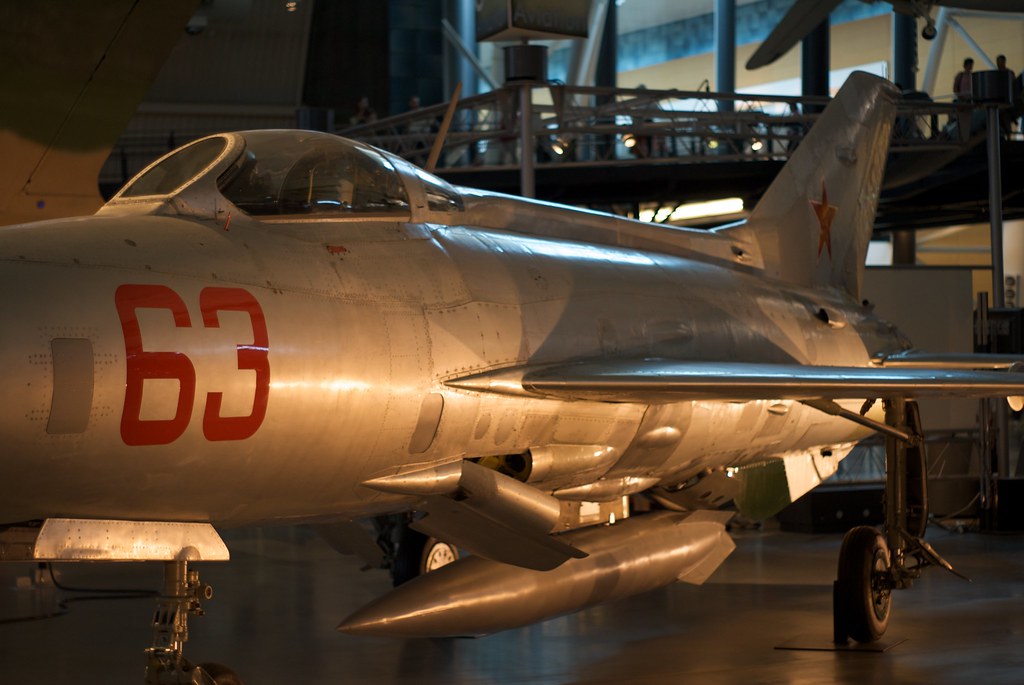
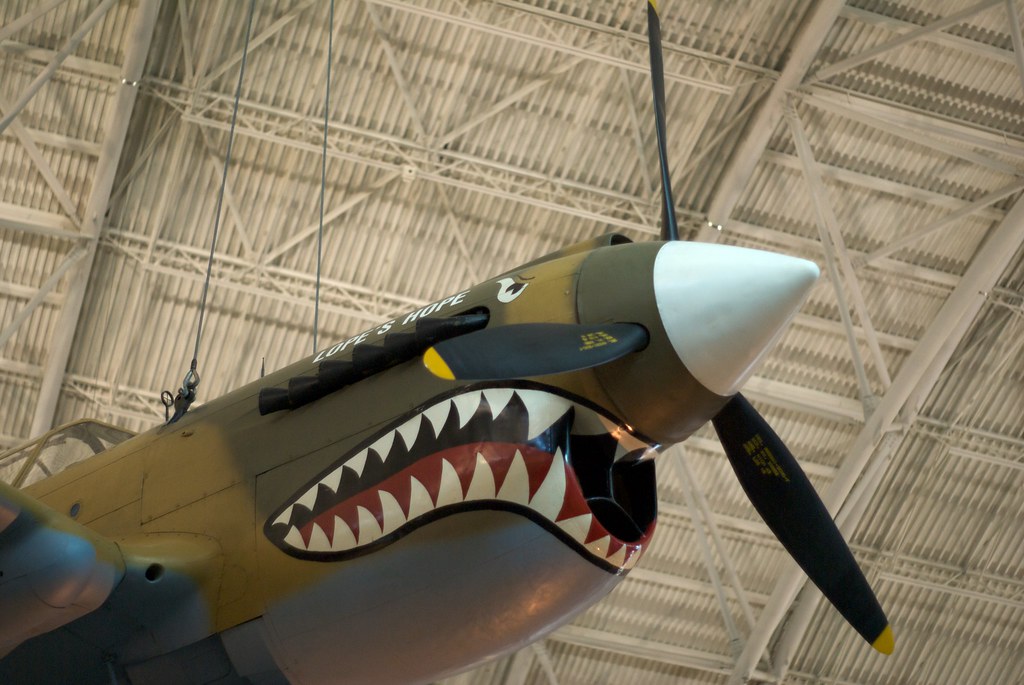
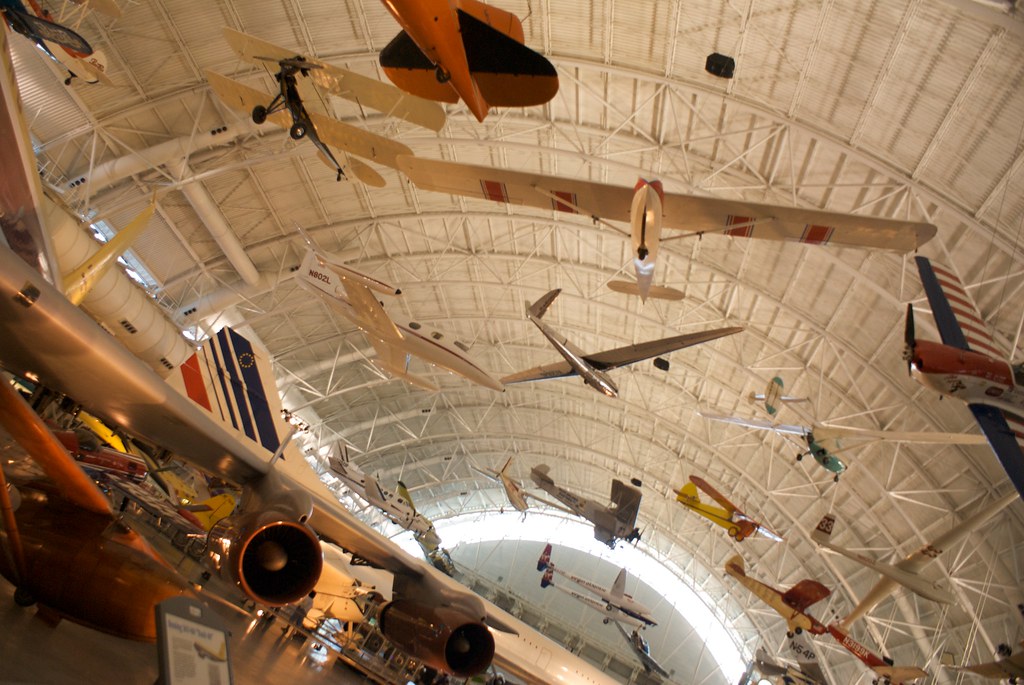
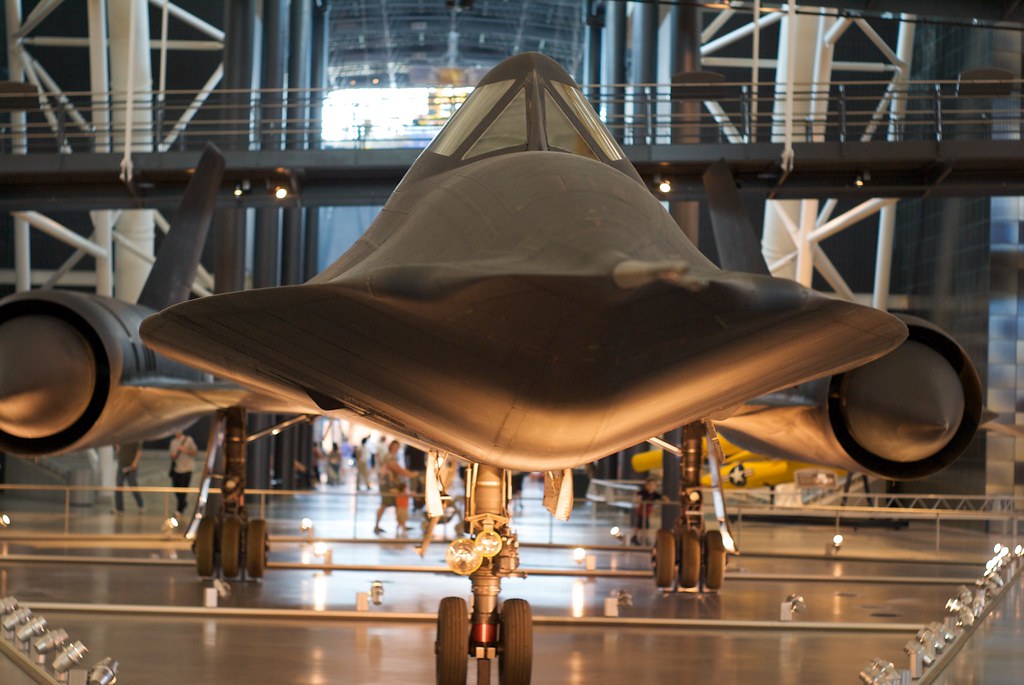
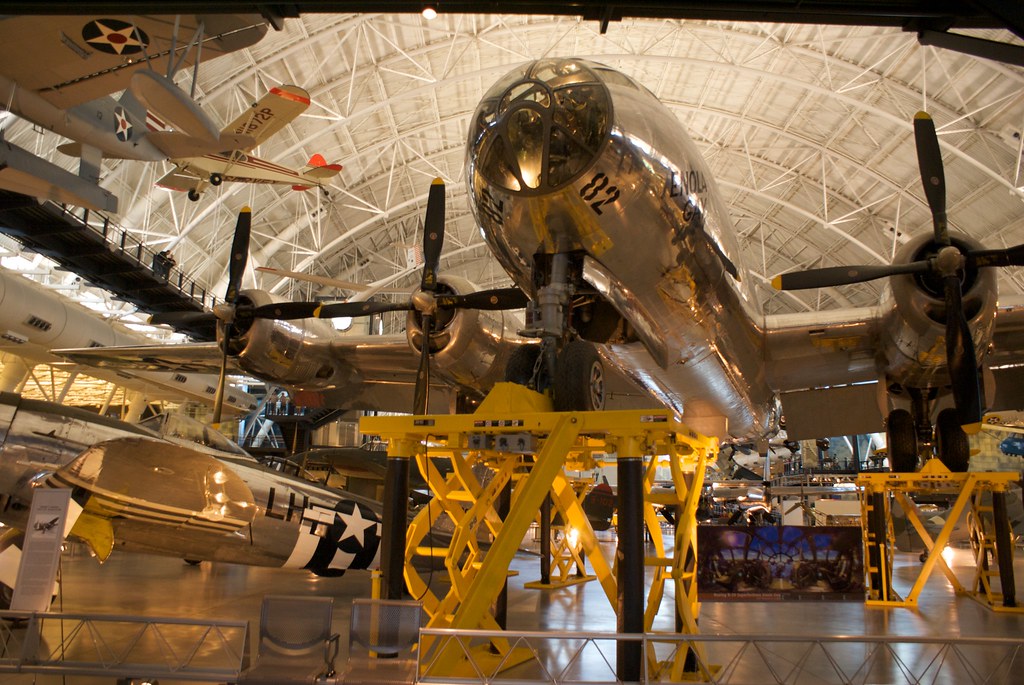
Did you know there are actually two Smithsonian Air and Space museum locations? There is one on the National Mall in Washington, DC, and a second in Virginia near Dulles Airport, called the Udvar-Házy Center. The Udvar-Házy location is an enormous hangar filled with historically significant aircrafts, aircraft parts, and spaceflight artifacts, including such highlights as the Enola Gay, an SR-71 Blackbird, and a space shuttle. If you are ever stuck at Dulles Airport and have some time to kill, there is a very cheap ($0.50 each way per person) shuttle between the airport and the museum.

For those unfamiliar with American aircrafts (as I mostly am), the Enola Gay is the plane that dropped the atomic bomb on Hiroshima. The SR-71 blackbird is the fastest plane ever built, even though it was built in the 70s. It flies so fast that at rest, its joints aren’t perfectly sealed, and it can leak fuel. This is because the metal expands significantly due to heat at high speeds. The museum also hold various antique aircrafts, aircraft oddities, engines and engine cross sections. Another area holds retired military planes, and a third area holds NASA artifacts. I went there a couple of years ago. My creative commons folder of images is here, and I include a few pictures below.

The SR-71 blackbird:

The Enola Gay: