Category Archives: writing

Editing

Editing is a word I hate. I’m one of those people that always wants to be on to a new project. Bigger, better, and newer. Realistically, nothing I write is publishable after only the first draft, and this is true for most people.

Perhaps part of my dread of editing is that I’ve read very little advice on how to go about doing it. I try to write what I write as best as I can the first time, but then what? But it’s something I have to learn to do, so I am forcing myself to learn. Here are three of my approaches, and some links to some sights that have more experience than I do.

1. Maybe leave that small error in there on the first draft, if you are debating it. It helps you get through the writing faster the first time. I find it helpful to have a toe-hold of some error you know you want to fix, and then move into the manuscript from there. I sometimes feel the urge to make the first draft as perfect as possible, but I think for me, it’s actually better to leave it rough. This also makes it easier to take a machete to it where needed, since there’s less sense of loss.

2. Leave it the hell alone after the first draft. This is two-part in motivation. One, I love it too much initially, and it guts me to rip it apart immediately. And two, I’m more likely to overlook awkward phrasings or logical leaps if it’s still too fresh in my mind. For both parts, it needs some time to gain some other-ness.

3. Work top to bottom. Does the character change behavior inexplicably? Is there a beginning, middle, and end? Big, basic stuff. Then I think about things like pacing, and then about specific sentences.

Some links that helped me think about my approach to editing:

So happy editing? It’s a miserable process for me, but it makes the fun bits worthwhile. In every worthy endeavor, there are parts that are inevitably less than thrilling, but we keep going. I welcome any suggestions from others, too, since I am learning always.


Submit Something Somewhere

This weekend, my scifi writing group held a group event called “Submit something somewhere”. The premise of this event was for everyone in attendance to submit at least one piece to at least one publishing venue. We all know that the easiest way not to get published is to not submit for publication. I know I don’t try as often as I should, and almost every writer I’ve met doesn’t either. So we got together and did some research together about venues and submitted together. It was a good activity; since we pooled our findings, I think it could be good for any group of writers.

Mostly we looked at the SFWA (scifi writers of america) professional markets (aim high =) ). This is a great website for sff market info, if you ignore the 90s-ness of it. However I also found a list of all-genre short fiction markets by length that I thought was pretty awesome.

I submitted two pieces. Hopefully they will go better than my last submissions, but I know they won’t do worse. Each time I try I get better, and I’ll eventually get there.

So go submit something somewhere! It’s better to try and fail than not to try at all!

Achievements!

Today I submitted my second technical paper. I should know its status in a couple of months. I really hope it gets accepted, because I think it has some really good results.

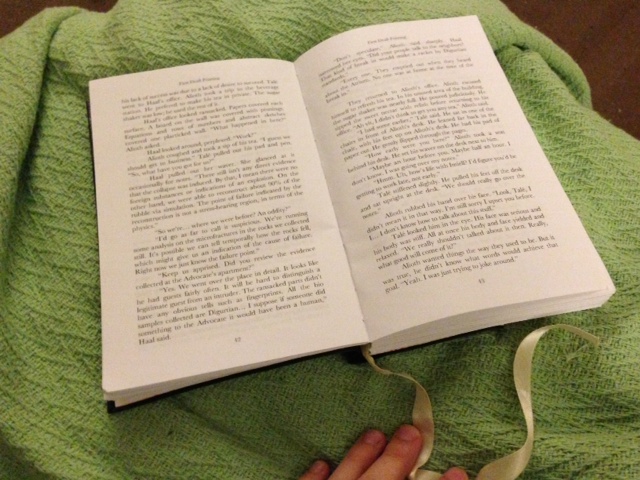
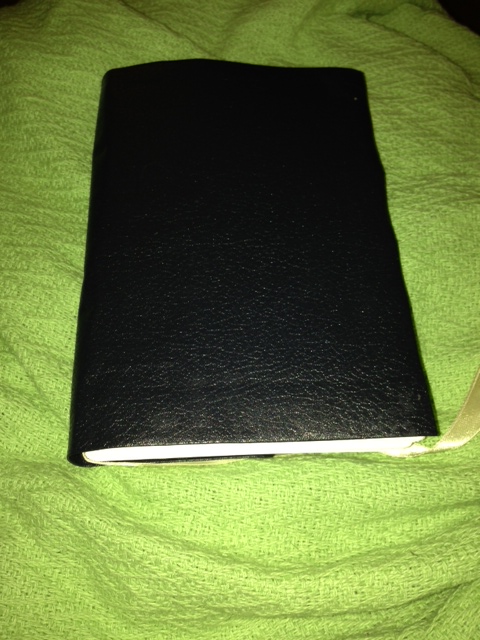
I also finished binding a rough draft of my novel. I finished the draft itself last Thursday =). To reward myself, I bound a copy for myself. Then I’m going to reread the words and mark up alllllll the things that are wrong or that I want to change. I’ve never gotten this far before, though, so I wanted to recognize that achievement with a binding. I’ve included some pics below. 360 pages (including some blank pages for my comments between chapters) and 82,000 words. Hooray! Just simple photos for now, maybe I’ll get around to a nice photo shoot in a few days.

photo-1 photo-2 photo-3 photo

100 posts, 100 fun facts

This list making business is slow stuff, and too interesting, so I decided to split it into two 50-fact posts. Happy memorial day, and happy 100 posts to me! Here are your first 50 factoids!

1. People from different cultures differ in what colors they perceive. As a simple example, english speakers deem pink as a different color than red. Russian speakers don’t, but they have a fundamentally different word for dark and light blue. In chinese, red and pink are red and pastel red, and likewise with blue.

2. Corrosion occurs preferentially where you can’t see it, such as under the head of a bolt or a foot or two under sea water. This is due to small concentration differences which cause a charge differential, which leads to corrosion. This is one reason trying to detect corrosion is very hard.

3. The biggest silicon wafers made are 45 cm or 17.7″, though they aren’t yet in production. The silicon is 99.9999999% pure, and monocrystaline.

4. Glass doesn’t have a set crystal structure; this is why it can cut so badly, because shards can be arbitrarily sharp. Auto glass is laminated with plastic to help hold it in place.

5. Many of the scenes in engineering in “Star Trek” and “Star Trek: Into Darkness” are filmed at the Anheuser-Busch brewery in Los Angeles. Look for the green labels reading “VF##”– these are vertical fermenters. In another part of the movie, Chekhov slides past some really shiny tanks on a red floor– these are horizontal fermenters. I used to work at an AB brewery, so I got really excited when I first noticed this.

6. A neutron star is so-called because all the electrons and protons are forced by immense gravitational pressure to combine. The whole star is nearly as dense as a nucleus, or 5.9×10^14 times denser than water. This is equivalent to the weight of a 747 in the space of a grain of sand.

7. Have you ever tried dividing by zero on a calculator? A black hole is remarkably similar to dividing by zero in space.

8. Near a black hole, forces called “tidal forces” (which are felt everywhere, but are crazy strong near a black hole) can be very strong over short distances, ripping anything apart. This is called “spaghettification” (no joke).

9.  After the death of Ivan the Terrible in Russia, three men claimed to be his lost son, Dimitri. They are collectively referred to as the false Dimitris. The first successfully became Czar for ten months, after which his was killed and cremated. His ashes were loaded into a cannon and shot towards Poland, as he was believed to be a Polish spy.

10. The word “defenestration” means “the act of being thrown from a window”. The need for such a word was precipitated by two such events in Prague.

11. The 1904 World’s Fair and Olympics were held in St. Louis. In the marathon, the man who finished first hitched a ride in a car, one favorite made himself sick eating apples, and another favorite was run off course by an angry dog.

12. Toasted ravioli, or breaded deep-fried ravioli, are a culinary delight in St. Louis. Also popular is provel, a cheese used almost exclusively in St. Louis (giving a hilarious Wikipedia by someone who seems unimpressed).

13. The Cahokia mounds are a set of artificial hills in Southern Illinois. They may look unimpressive, but they are about a thousand years old, built by a native culture which later abandoned them. An old nickname of nearby St. Louis is “mound city”, because similar mounds used to be found in the city.

14. Peter the Great of Russia was 6′ 7″. In his early adulthood, he traveled to Europe to learn about shipbuilding, a passion of his. He tried to pass off as a member of the company, but his great height continuously gave him away. The little shack where he lived in Holland still stands near Amsterdam.

15. Over 100,000 serfs died building St. Petersburg, Russia. Peter the Great commissioned the city because the only Russian port at the time, Archangel, was occluded by ice 6 months of the year.

16. 5 people died building the Empire State Building.

17.  The first electric light bulb and dynamo west of the Mississippi was on the campus of the University of Missouri at Academic Hall. The building caught fire and burned to the ground, leaving only the front columns of the building. They remain standing today.

18. Thomas Jefferson has two tombstones: one at his home of Monticello, and one at the University of Missouri. The University of the Missouri is the first land-grant university in the Louisiana Purchase, and many aspects of the university were modeled after Jefferson’s University of Virginia.

19. Cape Hatteras on the Outer Banks has had over 600 recorded shipwrecks. The most recent occurred during Hurricane Sandy in 2012.

20. In November 1956, the USSR invaded Hungary. The Hungarian water polo team fled the country after watching the invasion from nearby mountains. On December 4, the Russian and Hungarian teams met in the gold medal qualifying game of the 1956 Olympics. The game is called the “Blood in the Water” game, due to its violence. The story is told in a documentary called “Freedom’s Fury.”

21. The shortest player in the history of baseball was Eddie Gaedel, who batted for the St. Louis Browns on August 19, 1951. He stood 3’7″ tall, and wore the number”1/8″. Because he had such a small strike zone, he was walked. His contract was voided by baseball the next day.

22. Mercury is a toxic metal that used to be used in thermometers due to its consistent thermal expansion. The mad hatter concept owes to mercury poisoning in old hat makers. A researcher at Duke died in 1997 after a few drops of methyl mercury fell on her glove; organic mercury is incredibly toxic.

23. Humans now have 46 chromosomes in 23 pairs, but at some point in history, they had 48 chromosomes, the same as chimpanzees. Scientists theorize that the number changed when the human population dwindled at one point in history.

24. Splenda is chemically identical to sugar, but it is the mirror image “left-handed” sugar. The left-handed sugar tastes the same as sugar, but it can’t be digested, because the human body only handles right-handed molecules. However, brain scans of people eating sugar or splenda show that the brain registers more reward sensation with sugar. The body can be clever! (I tried to find this study; unfortunately, searching about splenda turns up a lot of nonsense to wade through.)

25. Cuttlefish can change the color of their skin for communication or for camouflage. They can make complex, varying patterns, or they can match a stationary one. Check out this video of a cuttlefish matching a chessboard.

26. Women generally have a better sense of smell than men. in particular, they are better at smelling something they’ve smelled before, where men show less improvement.

27. The Marianas Trench, the deepest ocean trench, is 6.8 miles deep at its deepest point. We still know very little about our deep oceans.

28. Giant squids have been written about since ancient times, but we took our first picture of one in 2004.

29. Only two elements are liquid at standard room temperature: mercury and bromine.

30. The world’s deepest hand dug well in is Greensburg, Kansas. Greensburg was decimated by an EF5 tornado in 2007. It has since started rebuilding, and aims to be the first LEEDS certified green city in the US.

31. Hurricane Camille came over land in Louisiana in 1969 as a category 5 hurricane. Of the 259 deaths caused, 123 were in the mountains of Virginia, in Nelson County (over 1% of the population). The storm dropped 27 inches of rain in a few hours. 133 bridges were washed out, and birds drowned in the trees.

32. Many of Thomas Jefferson’s inventions still reside at Monticello in Charlottesville, VA. There is a clock that tells the day of the week, a dumb-waiter, and a device for writing on two pieces of paper at once.

33. Blue eyes are caused by the presence of less pigment in the eye, resulting in a different light scattering pattern. Blue-eyed baseball players sometimes have much lower daytime hitting averages, because blue eyes filter out less glare.

34. Albinism is principally defined by eye defects caused by the lack of pigment during the formation of the eye. Without pigment in the iris, the eye doesn’t properly focus light, leading to numerous vision problems. It is possible to be albino while still having normally pigmented skin.

35. Catgut is prepared from animal intestine, and was used historically to make strings for instruments. Its name is probably a shortening from cattle gut, for those of us who like kitties.

36. Paper didn’t make its way to Europe until after the year 1000. It was made from old fabric and clothes. Old paper doesn’t yellow and age the same way as 1900’s paperbacks because it tended to be acid-free. Books can last centuries if the paper and ink are acid free.

37. Organisms around deep sea vents metabolize hydrogen sulfide from the vents to survive. 300 new species have been discovered around such vents; because exploration there is so hard, there are likely many more.

38. Hydrogen Fluoride is considered a weak acid, because hydrogen and fluoride bond strongly as resist dissociation. However, HF will go after just about anything including glass. HF is very dangerous to work with, because it does not hurt immediately. It seeps through the skin and begins to dissolve the bone.

39. Phosgene was used in chemical warfare in World War 1. The Japanese also used it extensively in World War 2. It smells like freshly cut grass.

40. The kite buggy was invented in China in the 1300s. It is a cart drawn by wind power. It seems hard.

41. Capillary action in trees helps fluid rise in trees. This is how tree several hundred feet tall supply water to the leaves.

42. The Negro Leagues baseball museum is in Kansas City, Missouri. Many of the negro leagues teams were fairly successful, and drew enthusiastic crowds. The exclusion of blacks from baseball was shameful, but they made something great in spite of it. You can learn about Satchel Paige or Buck O’Neal, as well as the various negro leagues teams.

43. The Eads bridge in St. Louis was the longest of its kind when it was built, over a mile wide. The supports are some of the deepest ever sunk, and 15 workers died due to decompression sickness.

44. The Anheuser-Busch brewery in St. Louis is the biggest brewery in the world. It outputs 25 million barrels per year. You can visit for free and get some complimentary beer.

45. The international rose test garden in is Portland, Oregon. It is free to visit and they have over 550 varieties.

47. The male paradise whydah grows out a foot-long feather during mating time to impress the female paradise whydah. The paradise whydah is a parasitic species that uses the nest of the melba finch.The male whydah imitates the melba finches song. In captivity, the whydah cannot reproduce without the melba finch also present.

48. The carrion flower is an enormous bloom that stinks of rotting flesh. It can be up to nine feet tall.

49. Blue is a rare color for organic molecules. This may be because the color is associated with alkaline conditions, which are relatively rare in organisms.

50. Monarch butterflies can sense the earth’s magnetic field. They use it to complete their 2000 mile migration.

Come back Thursday for 50 more interesting factoids! Happy 100 posts!

Blog changes and milestones

This post is my 99th blog post, so obviously the next one will give the big 100. I will be posting that on Monday, in the form of 100 things I find interesting. It should be fun.

I must switch to posting on this blog twice a week instead of three times a week. Work has suddenly sped up a lot, and I need to use my time (slightly) better. But I will still post a long post every Monday, and a shorter one every Wednesday or Thursday. As I approach 100 posts, I can hardly claim any kind of celebrity status, but I appreciate the people who come by and like or comment. Yesterday I reached 50,000 words on my novel draft (that just sounds crazy!). I can tell that forcing myself to sit three times a week and write about something I find interesting and trying to be clear has really improved my writing on demand. To me, it seems that this is a large component to writing a novel: shut up, stop reading writing help sites, and shackle yourself to that desk.

So I shall see you all on Monday, with 100 super awesome facts. I’ll end this post with the first fact of the next:

1. People from different cultures differ in what colors they perceive. As a simple example, english speakers deem pink as a different color than red. Russian speakers don’t, but they have a fundamentally different word for dark and light blue. In chinese, red and pink are red and pastel red, and likewise with blue. Perhaps by Monday I will find an additional example I had in mind, where 2 sets of colors are shown. In one set, Westerners can distinguish the different color 99% of the time; in the other, their success is much lower. Cultures in Africa exhibit the reverse ability to distinguish.

More writing progress and uh… yellow flowers

I’ve been slogging away still at the novel draft. Today I crossed 40,000 words, which is definitely the farthest I’ve ever gotten in any attempt. So, big milestone.

But because news of word counts is decidedly dull, I’ll also append some photos of yellow flowers from over the years. It’s only appropriate because my office where I write is make-your-eyes-bleed bright yellow. I have even more yellow flower pics over in my flickr set (as always, fair-use). Have a bright day!

Writing: engineer style!

As I’ve mentioned a few times, I am currently trying to write a novel. It’s a lot of writing, and I have something of a history of starting and stopping projects. So I’m happy to report that I am still on the path and plodding along. Today I reached 23,000 words. I found estimates that trade paperbacks have 200-250 words per page. So that means my progress would fill 93-115 pages of a paperback. That’s kind of fun.

I am a mad procrastinator, but one of the ways I try to motivate myself is to allow certain writing related side activities. And because I am an engineer and a grad student, that distraction right now is…. excel sheets. Yeah. Below is a chart of my day-to-day progress. The slope gives my average words per day, so it can be fun seeing that change. When I reach a hitch, I get to go put my chapter’s word count into the chart and see what my daily word count is and my overall rate. What’s more exciting than fitting data?

writing progress


There are some websites I like to use as well when progress fails to appear. Written kitten is super cute. You get a picture of a kitten as a reward every so often. Because I need lots of motivation, I set it to every 100 words. If you need punishment more than reward, writeordie is quite popular. This blog had a decent summary of both.

I suppose this stuff doesn’t make the most exciting reading, but I hear it’s good to post about this stuff. Something about peer pressure? Plus since I’m writing all the time, I have less time to go read nifty things to post about. So, Happy Friday!

Writing: Maintaining Enthusiasm

Last week I started headlong into an attempt to write my first novel. This is not my first time trying to write novel, but another attempt to finish one. I suspect this isn’t an uncommon problem. It seems to be an enormous leap of faith to write something ~80,000 words long. You have to set aside that time, in the first place. And then what if it isn’t good enough, what did you do with all that time? I think in every past attempt I reached about 25k words and said, where exactly am I? This isn’t going to get read and then I will have an 80k time sink in my hands.

I think such worries never leave. But in other areas of my life I have been able to push through worries of failure. It’s that old cliché that lack of trying guarantees failure. Each time I try, I try to do it a little different. This time I wrote it first as a short story. Then I outlined it at a rough level. As I go I outline the next part in more detail. So far it seems to be working for me. I got to figure out who my characters were in the short story. I’ve also been trying to set more realistic writing goals. I used to write as much as possible on a day that felt good. That would leave me tired and sick of writing the next few days. Then when I’d come back, the material would be unfamiliar, and I’d spend time trying to pull myself back into the mindset.

It’s still early, but this time feels better and different. I just reached 8,000 words. The idea that I have 90% or so still remaining is really daunting. Each day will help. And really, what better to do than work to improve?

Some other possibly helpful posts, since what do I know… I keep quitting each time (I thought there used to be a related articles function,  but it isn’t showing itself… so I’ll link them myself):

A quick Friday post

Today’s post will be brief. As I mentioned Wednesday, I have dived head-first into a novel-writing effort. Since then I have written 3500 words, which is a pretty rip-roaring pace for me. I work in such fits and starts I have to take the inspiration as it comes. We all work differently; above all else we have to find what works for us.

This weekend I’m taking a science fiction class by Edward Lerner. 7 hours, Saturday and Sunday. I’m looking forward to seeing what he has to say. He worked in the tech industry for many years before becoming a full-time science fiction author.

Next Monday it will be 16 years since I started writing about Vironevaeh. I’ll have to think about something fun to post for that. Happy Friday!

A novel attempt

I finally decided that I will try to write and finish a novel. Of course, I’ve been entertaining such ideas for years, as I suppose a lot of people have. So why do I feel like I can do it now, when I’ve only failed before? You gotta keep trying, but there’s that old Einstein definition for insanity: doing the same thing over and over again and expecting different results. So I am trying again, but I’m doing things differently, and hopefully this will lead to more success.

1. I first wrote the plot arc as a short story. It was originally meant to be a short story but there were so many things I wanted to touch on that I didn’t have time for, even at 7000 words in length. I know how I want the characters to develop, how they feel about each other, and what their motivations are. I know all kinds of societal details that play into the characters actions and motivations.

2. I’m in a writing group now. I know a bunch of people who might have suggestions on how to do better, or what to do if I hit a wall.

3. I’m approaching the writing differently. In the past I said, whelp, 100,000 words, here I go. Around 25k, I got bored, felt like my work was unfocused, and quit. This time I’m thinking of it as a series of short story ish chapters. I have a bunch of little stories to tell in 2-5k words or so. Per point 1, I already have a rough outline of the overall story. As I go, I’m outlining a few chapters forward with further details– what scenes happen in each chapter and where do they happen. So I have a macroscopic outline of everything and a microscopic outline subject to the flow of events. We’ll see how it goes. I’m planning on writing one chapter a week, with weeks off allowed for alternate projects.

I’ll continue to post my progress. It will be interesting to see what works for me and what doesn’t work for me. Any suggestions are welcome too! But basically, it’s time to just write. Chapter 1, here we go…