Author Archives: Vironevaeh

Book now with the Exoplanet Travel Bureau

(You may have a wait while the technology for your flight is developed.)

A lot of my first reading as a child was astronomy books and magazines. When I was little, my brother told me there was a black hole under his bed (to keep me from snooping—nerd children fight dirty), and after that, I had to know more about the enigmatic and alarming properties of the universe.

One of the things I remember was the hunt for the first exoplanet, that is, the first confirmed planet outside of the solar system. Scientists were quite sure they should exist (why wouldn’t they?), but the equipment and techniques thus far hadn’t shown them. I remember reading about some of the first exoplanets in the hazy early 90s. They were massive, close to their stars, and had outrageous properties that inspired wild imaginings.

Now confirmed exoplanets number in the thousands. And poking around the internet on an unrelated chore the other night, I found this gem: the Exoplanet Travel Bureau. NASA’s Jet Propulsion Laboratory (the extremely prestigious and awesome JPL) made travel posters for four exoplanets in the style of retro travel posters. Each of them features characteristics of their planet. I promptly printed out three and hung them in my guest room. I’m still ecstatic about them; these are the kinds of visions and dreams I had so long ago as a kid, and that I love to chase in my own art. These are awesome, and I love them, and you can download them at full size. Tell all your friends, and print your own! Here they are!

Click on the image for more image sizes. Images by the NASA Jet Propulsion Laboratory.

Click on the image for more image sizes. Images by the NASA Jet Propulsion Laboratory.

Click on the image for more image sizes. Images by the NASA Jet Propulsion Laboratory.

Click on the image for more image sizes. Images by the NASA Jet Propulsion Laboratory.

Old stuff out west: The Palace of the Governors in Santa Fe


From Wikimedia Commons.

When we think of old buildings in the United States, we think of the east: Boston, Philadelphia, Jamestown. Instead, we should think of the Southwest. Taos and Acoma Pueblos are pre-Columbian and still occupied today. And the New Mexico Governor’s Palace in Santa Fe was built in 1610 and housed local leaders until 1909.  By contrast, Thomas Jefferson’s Monticello was built in 1772. The Palace of the Governors has a century and a half on it. New Mexico is the fourth youngest state, gaining statehood in 1912. I’ve always thought of the southwest as a new area, barring poorly recorded native activity, a region discovered in the era of Cowboys and Ranches and the Indian wars of the 1800s. Visiting the Palace of the Governors reminded me what a rich history our southwest has.

The Spanish came to New Mexico in 1598. They established the capitol in Santa Fe in 1609, building the Governor’s Palace in 1610. New Mexico was a part of Spain until 1821. It was then part of Mexico until 1848, when it became a part of the United States following the Mexican-American War. So New Mexico was a part of Spain for half a century longer than it’s been a part of the US.

Much of this tumultuous history revolves around the Governor’s Palace. In 1680, the Pueblo Indians’ revolted against Spanish Rule and took the Palace for 12 years. Governor Lew Wallace wrote Ben Hur as the sitting governor of New Mexico Territory in the Palace. This video tells the tale of Bernardo López de Mendizábal, territorial governor from 1659-1660, and his wife, Teresa de Aguilera y Roche. After criticizing the Spanish government, the Inquisition arrested them on suspicion of being crypto-Jews (this term is another wild piece of history all by itself). He died quickly in custody in Mexico City, Teresa wrote about her life in New Mexico.

Today, the palace is a history museum. You can see the various ways the palace has been modified over the years. You can look at the exhaustive list of governors that ruled from the palace. It’s impossible not to feel the immensity of the history in that list. New Mexico was the frontier for a long time, not just in the United States. And living in New Mexico today one feels that spirit.

Photography prompt: Photographing light

A couple of months ago, I did some photography prompts. Recently, I reviewed these photos and was pleasantly surprised how much I still liked them. I took photos I wouldn’t normally take, and saw new things.

Now that I’m in a new place, paradoxically I am short on photo inspiration. Everything is so interesting that it can be hard to zero in, especially when work, grocery stores, bars, and walking paths are new forms of shiny distractions. So today I’m posting one of my prior photography prompts, and I hope to continue with more in the future.

Today’s prompt is “photographing light”. This is not the same as photographing shadows cast by light, it is photographing the light itself. I got this prompt from the Lynda.com photographic composition course by Ben Long. I took these pictures on the Downtown Mall in Charlottesville in the early evening, not quite at golden hour, but late enough in the day that the windows were casting reflections in interesting places.

150423-seelight-0001

In this picture, I liked the way the reflections from different buildings interacted, and how they contrasted with the brick pattern.

150423-seelight-0002

In this photo, the windows from across the street are reflecting light onto shadowed windows. The reflections allow you to see shapes in the windows that you couldn’t see by looking at them directly, plus the contrast simply pleases me.

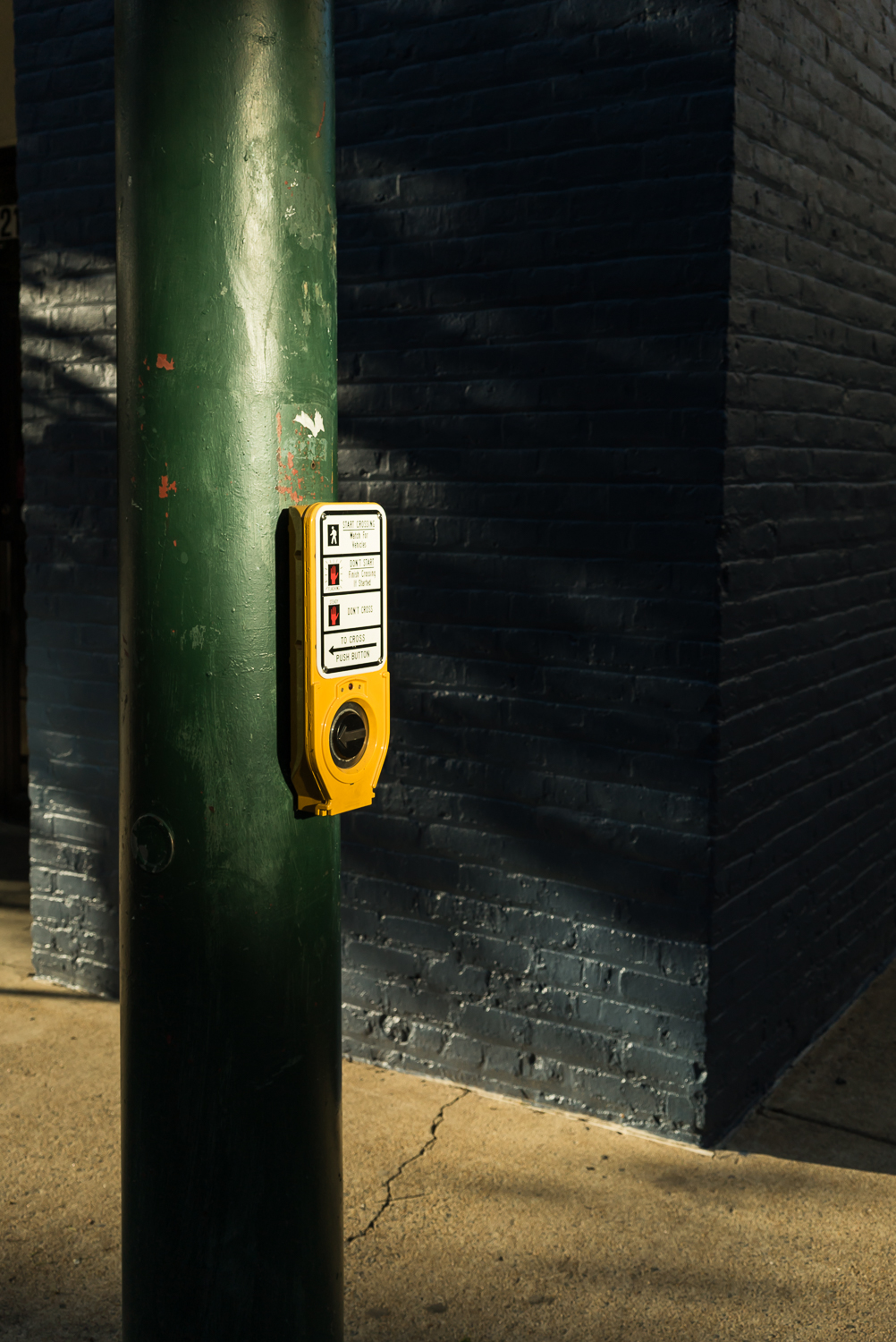
150423-seelight-0003

A distant window cast light onto this crosswalk aid. I almost ignored it, as one does with crosswalks one does not need, but with this small and brilliant beam of light, the guide suddenly was radiant. I loved the simple colors in this one, turning it b+w would have stripped it of so much.

Kasha-Katuwe Tent Rocks National Monument

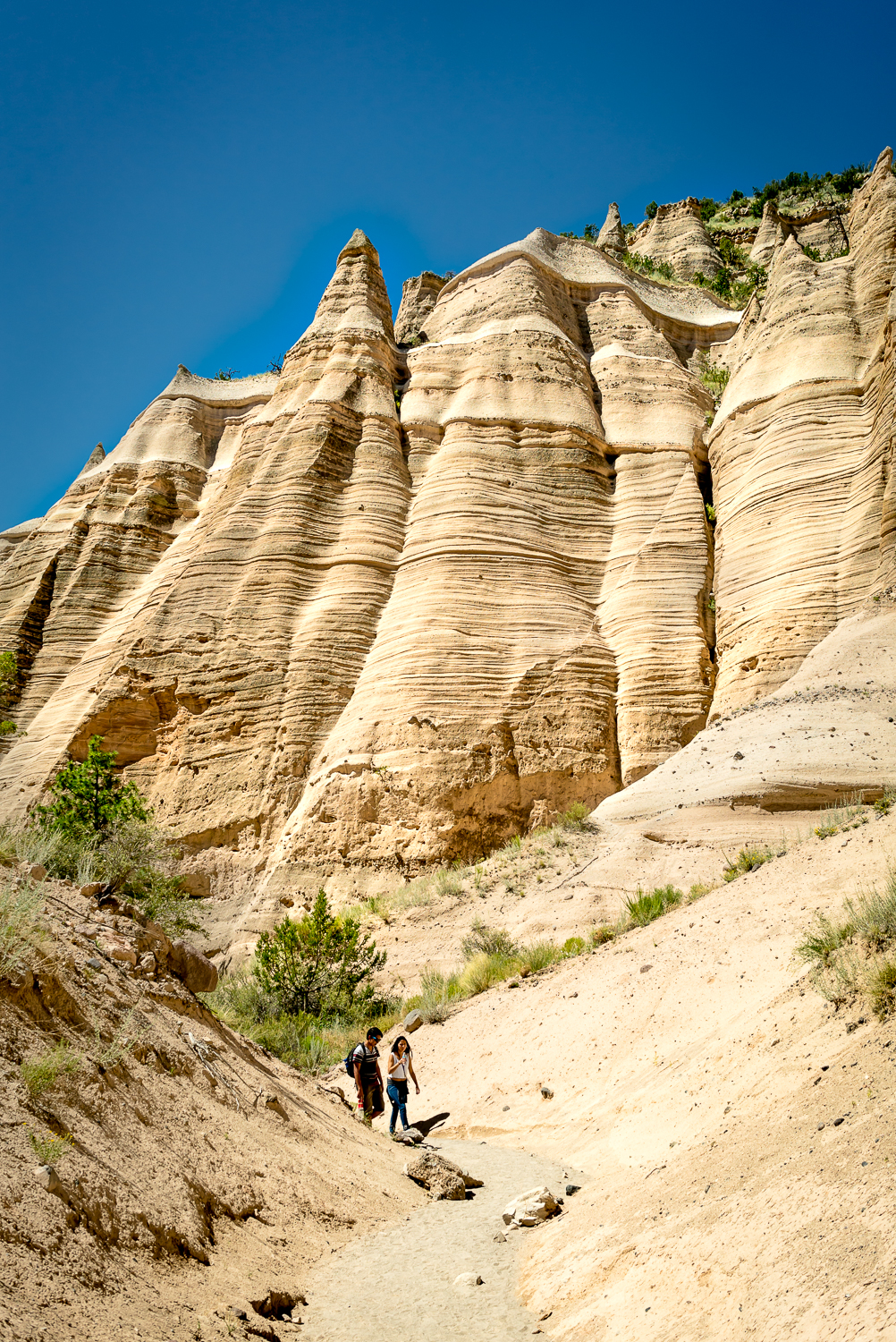
Kasha-Katuwe Tent Rocks National Monument is between  Santa Fe and Albuquerque. It’s only about a 3 mile hike, with only 600 feet in elevation rise. If you want to visit Tent Rocks, arrive early, before the heat and the tour groups, and bring lots of water.

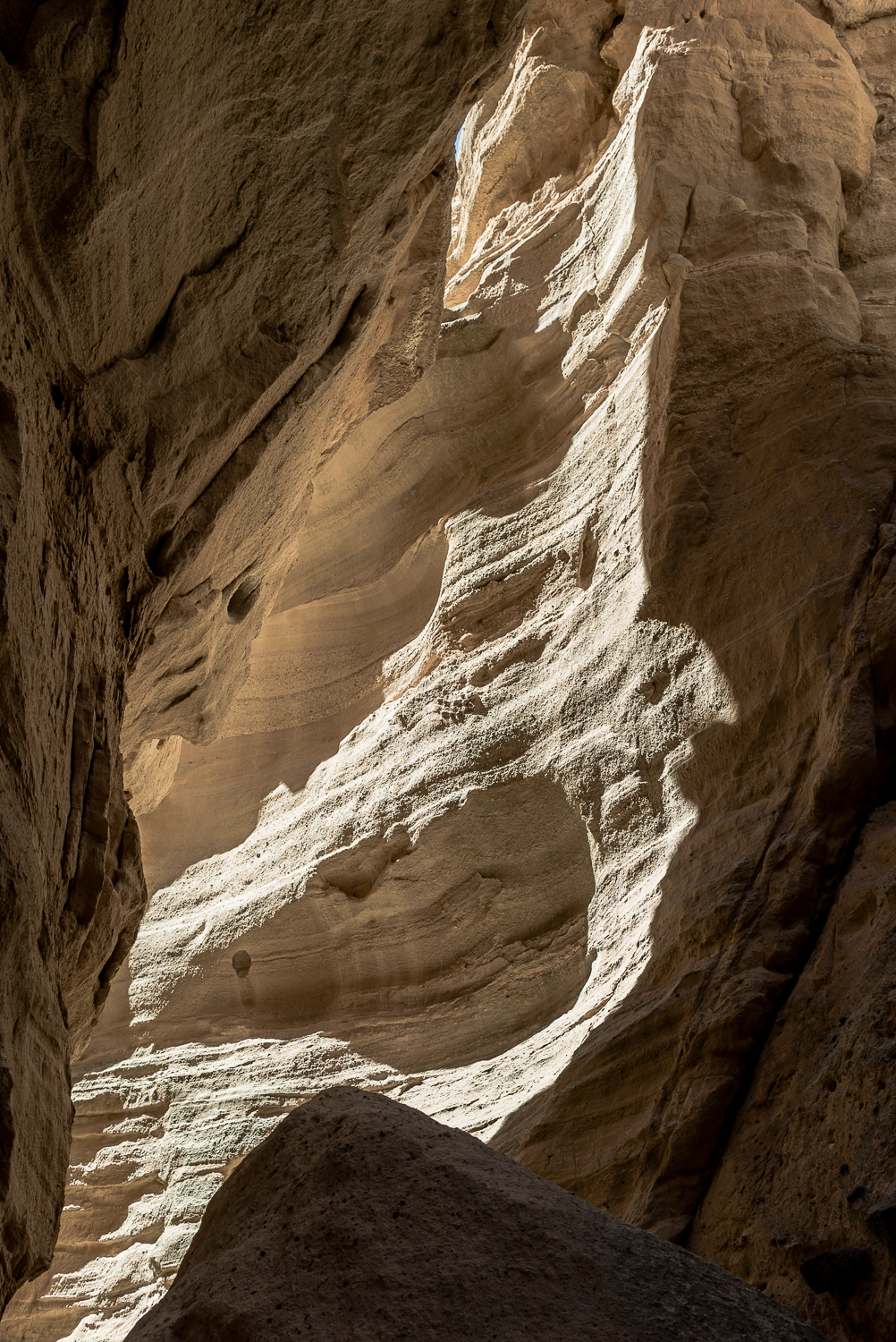
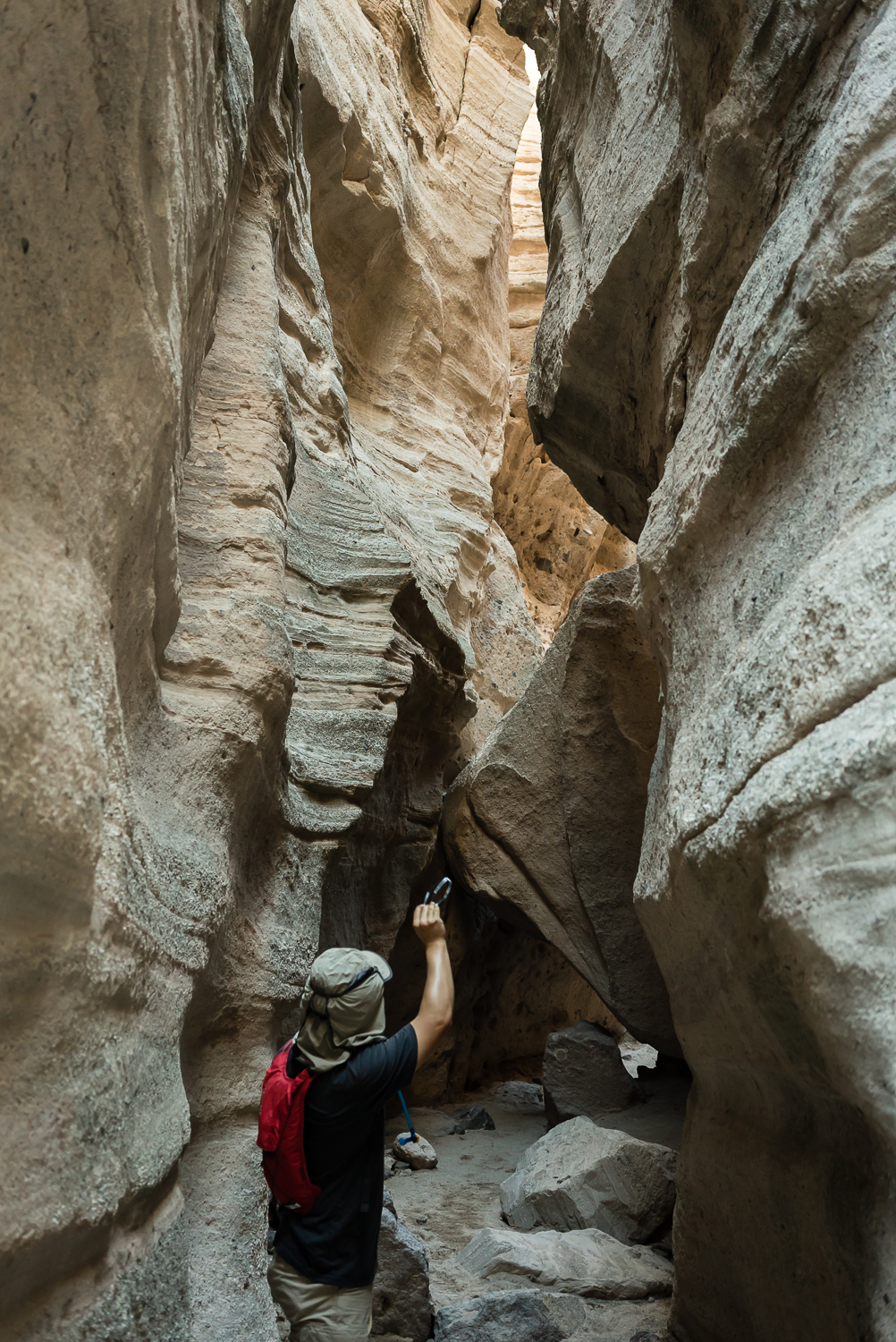
At Kasha-Katuwe Tent Rocks National Monument, you hike through a limestone slot canyon. Up above, there are formations of the most unusual shapes– some are like tents, some are like upraised fists, and some are like petrified dunes. It[s a testament to the power of wind and water in the west. My sorest muscle after this hike was my neck– from craning at all the great scenery.

150725-kasha-katuwe-tentrocks-0001-2150725-kasha-katuwe-tentrocks-0003150725-kasha-katuwe-tentrocks-0004150725-kasha-katuwe-tentrocks-0006150725-kasha-katuwe-tentrocks-0005150725-kasha-katuwe-tentrocks-0002150725-kasha-katuwe-tentrocks-0001150725-kasha-katuwe-tentrocks-0007

Writing prompt: cousins day

Time: 7 minutes. Click here to go to my list of prompts.

“Cousins day” (Inspired by this list of silly holidays.)

(author’s note: I am not a biologist, so all the biology in here is just fun and spitballing!)

The Tasmanian Flu wasn’t a type of flu at all. No one knew then, sixty years ago. It was an engineered disease that got lucky enough to absorb a favorable mutation from a wild bacteria. It didn’t develop in Tasmania. We started calling it the Tasmanian Flu after no one would admit to the disease, but it was everywhere. Well gosh, it must’ve come from Tasmania. That’s where devils come from, right?

Either you were susceptible to TF, or you weren’t. A mother would catch the disease, then all her children, but not her husband or her in-laws. Quickly, they isolated the genes responsible for susceptibility. The fear was, if it infected enough people, it would absorb another wild mutation and gain the ability to infect anyone. After Putin died of the illness, conspiracy theorists speculated that it was a targeted assassination of the Russian despot gone awry.

That didn’t to the Cousins.

That’s what they called us. They rounded up those susceptible, the Cousins, and they put us in bio-containment camps away from everyone else. We had good care. They tried to keep the infected isolated from the merely susceptible. But it didn’t work, and TF has a 50% fatality rate even with novel treatment. Then there were the side effects.

I know 200 digits of pi. I didn’t try to remember them, and before TF I had no head for numbers. With minimal training, I found I could make sense of complicated geometries and had inexplicable intuitions as to the solutions of complex systems.

For 60 years, we made up for the loss of our cousins with our gifts. There are fewer of us than there once were. And now, some whisper that perhaps TF could be useful.

Writing prompt: Stay out of the sun day

Time: 7 minutes. Click here to go to my list of prompts.

“Stay out of the sun day” (Inspired by this list of silly holidays.)

“This will be one your first exercises,” the leader wiggled his antennae sternly. “It might seem like a trivial one, but 15% of recruits fail this test.”

Ix’xin sat nervously in his seat. Everyone knew about this test. They were working to develop genetic tests to identify the trait and lower the loss rate, but until then, the best thing to do was place every recruit in a separate vehicle and only give him the opportunity to take himself out.

“We will be launching you into space shortly. Most of your experience will be exactly like your experiences in the flight simulators. Except one. You will feel drawn to fly into the sun. Most of you will be able to resist, but not all.”

Ix’xin’s wings were strapped to a sensitive interface.The interface detected small muscle movements and translated them into the motion of the ship. It was almost like flying back home.

The sun was bigger and brighter than he could have imagined. In his mind, it felt warm and inviting even though with all the shielding he didn’t feel any difference. Several seconds passed before he realized he was flying straight toward the luminous sphere. With compound eyes, he saw the twinkling of other pods travelling as he did.

He continued toward the sun.

Writing prompt: I forgot day

Time: 7 minutes. Click here to go to my list of prompts.

“I Forgot Day” (Inspired by this list of silly holidays.)

She didn’t know the face in front of her eyes. She reached out and touched the cool glass surface of the mirror. She didn’t know her own face. When had this happened? She realized she couldn’t remember her own name either. In neighboring apartments and out the small bathroom window, she heard screams and wails. She didn’t feel like screaming. She felt numb and confused. She wandered out of the bathroom into the rest of the apartment.

It was comfortable yet alien. Pictures of her unfamiliar face adorned the wall, often accompanied by a young man. The bookcase was full of books; many of them looked interesting. Pleasant music played over the speakers.

“Who are you?” it was the young man from the pictures. He wore pajamas. He looked angry.

She pointed immediately to the pictures. “I don’t know. But we know each other. You can’t remember anything either, can you?”

He looked away, acknowledging. Those screams must have been other people, lost, frightened.

A voice boomed from the sky. “Do not be alarmed! You do not remember anything, but this is for good reason. You must unlearn to relearn.” The words were mechanical, like a voice navigation system or translation. It was the most frightening thing that had happened yet.

“Please exit your domiciles in an orderly fashion in order to begin relearning.”

She exchanged a wild glance with the man. She knew that he didn’t intend to obey the big voice either.

Book Review: Pandemonium (Daryl Gregory 2008)

Note: in this review, I avoid specific spoilers beyond the first few chapters or back cover blurb. I discuss my reaction to the ending, but none of the specific events.

Rating: 3.5/5 stars

I don’t read a lot of fantasy. I chose to read Pandemonium because it was the book club selection for a book club meeting I failed to attend (sigh, moving). I devoured this book in less than 48 hours and I really enjoyed the process of reading it. For two reasons, this book forced me to contemplate the nature of science fiction versus fantasy: 1) because the book explicitly calls out the artificiality of the separation and 2) because I myself strongly tilt towards science fiction.

Pandemonium is set in a world where demonic possessions happen. They come in many flavors; there’s the Captain, who possesses soldiers and performs acts of bravery and there’s the Little Angel, who possesses little girls and releases old people from the pain of the world. Del Pierce was possessed as a child, and now as an adult he suspects that the demon never entirely left him.

Science wants to understand these possessions as much as it wants to understand cancer in our own world. Del wants to be freed of his demon, by science or otherwise. He’s damaged by what he’s endured. He talks to scientists and to their less-scientific groupies. Del’s condition isn’t considered possible by science, and he’s exasperated by the limitations of science. The characters criticize the way the scientific community regards the demonic possessions. It felt like the tired criticisms of our scientific process. Perhaps, as a scientist, I’m over-sensitive to such things.

People separate fantasy and scifi in different ways, and here’s my separation: fantasy is about exceptions to the rules and scifi is about inevitable outcomes of the rules. Harry Potter is an exceptional member of an exceptional class of people. Piers Anthony’s Xanth stories are about the people with the best magical powers. Ann Leckie’s Ancillary Justice is about one of many sentient programs that through a unique set of circumstances becomes something more. Nancy Kress’s Beggars in Spain is about the first products of genetic engineering. Both genres often focus on exceptional characters, but in scifi the character is exceptional due to circumstances and in fantasy the character is inherently exceptional in some way that cannot be explained.

In arguing a lack of separation between science fiction and fantasy, Pandemonium has the trappings of fantasy but makes several explicit science fiction references. Early in the book, a character (named Valis) quotes Philip K. Dick and asserts that “you cannot separate science fiction from fantasy.” There are references to AE van Vogt and Theodore Sturgeon. I made a mental footnote to expect something genre-defying at the end.

After the book argued for the lack of distinction between the genres, the ending didn’t challenge my definition of fantasy. For me, this was a book about demons and possession and the human psyche. Which is fine. But like Chekov’s gun, after a lot of discussion about the blurred lines between two genres, you expect to partake in a book with blurred lines. I didn’t dislike the ending, but I didn’t feel affected by it either. I flew through the book, finished it, and shrugged.

Pandemonium is a lovely read. As a mild scifi snob, I am out of its core audience, and I can’t say how those with different genre sensibilities might feel about it. For me it just felt insubstantial, like a book that will fade from my memory.

Writing prompt: “I think my house is haunted”

Time: 7 minutes. Click here to go to my list of prompts.

“I think my house is haunted”


I leaned into the corner of the room, huddling over the phone. “I think my house is haunted,” I whispered.

Gale laughed. “Haunted? I’ve seen pictures, it looks like a slice of the southwest straight from the route 66 days.”

“Yea…” I said, not following.

“Well, you know. Haunted houses are like… Victorian houses. Or Cape Cod houses with a dark past. Not adobe houses.” She sighed. “Well, maybe that’s just where I live. Why do you think it’s haunted?”

“There’s a soft spot in the floor. And sometimes it squeaks when I’m not over there.”

“Houses settle.”

“And twice now, Miss Kitty has reared up and hissed at absolutely nothing.”

“Mm hmm,” Gale murmured. She thought Miss Kitty was a psychotic cat already so I could imagine now what she was thinking.

“And…” I inhaled and looked around the room. “The other morning I think I saw the ghost of a Spanish conquistador in the garden hacking at plants.”

“Whoa.”

“After he left, I went and checked the plants and they were damaged where he’d swung his sword.”

“Why’d you lead with the first two?”

“They wouldn’t have sounded like much if I said them after. I tried to call the previous owner. He was very helpful with directions on the irrigation system and how to get the oven to light. But when I mentioned the conquistador he stuttered and hung up.”

“That’s got to be some kind of real estate faux pas,” Gale said.

Welcome to the west

I’m back online as of this week, after driving across 10 states in a compact car with my husband and two cats. I come to you now from the west, and it’s hot! This week I will get back to my regular schedule of posting writing prompts on Thursdays and regular posts on Mondays.

For the last month, I’ve been packing, unpacking, driving, assembling furniture, and creating spreadsheets of the dimensions of my furniture. I’ve been struggling all day to come up with a good topic for today’s post;  my brain is still in moving mode, uncreative but good at spatial organization. But as with writing prompts, the key to getting back into things is to start. So with this post I’m starting!

Some brief thoughts on the west:

  • Low humidity is nice. Yesterday the high was 102, but I went on a two-hour bike ride from 10-12 and did not evaporate. The humidity is 9% right now.
  • Hooray for southwestern cuisine. Charlottesville was big on the locovore movement, but that’s more about ingredients than combinations. St. Louis has its lovely paste cheese and transcendent toasted ravioli, but these are specific dishes. Here we have words for food that I have to look up: calabacitas, fideos, sopapilla, adovada, posole… Here there is an entirely different kind of food rather than a few different dishes.
  • I’m back in the land of gridded roads! Charlottesville has a handful of through streets. Windy, narrow through streets. For a town of its size, the traffic is insane. If you choose to bike, you can choose between 45 mph rural country highways with no shoulder or bike lanes placed thoughtfully between moving cars and parked cars on said over-crowded urban streets. My bike gathered cobwebs in Charlottesville.
  • Western mountains are neat. Yes, Charlottesville had mountains. Ancient, sanded mountains covered with forests. Here we have big craggy mountains. Mountains that make hikers go missing, mountains of extinct volcanos.
  • Things seem close, but they aren’t, but they kind of are. Charlottesville is 2.5 hours from DC, and 6 hours from NYC. That drive to NYC is 6 hours of eastern aggression hell. Thank goodness for the train. Here, all the cities are 6 hours away at least. But that’s 6 hours of calm, flat road. I’m looking forward to exploring the west.