Author Archives: Vironevaeh

Writing prompt with edit: preparing for a long trip

Time: 7 minutes. I then set it aside for about 30 minutes, and then edited the piece for ten minutes. Click here to go to my list of prompts.

“preparing for a long trip”

The first run: 7 minutes.

Dale looked at the empty suitcase. It wasn’t the one that would accompany him on his journey, but it was the same size. That suitcase was in a sterile environment, and everything that would eventually go into it would have to be sterilized as well. He would have to be scrubbed and cleaned up as well. But looking at this empty suitcase, not even the one that he would take, lent an air of finality. Whatever in the world that was his from now on would fit in this small space. Any memory, and hobby, any cherished treasure would go into this space or he would never see it again. This said nothing about all the people that wouldn’t fit into the box.

Lily panted in the doorway. She seemed to sense her master’s discomfort, but feared suitcases and other boxes for reasons Dale still couldn’t fully explain. Lily would be going to his sister. She might send letters with Lily’s picture, but one can’t do much with the picture of a dog. The picture of a dog can’t startle you with its wet cold nose, or rest its rest in your lap when the day was nearly too much. He couldn’t look at her, and he couldn’t look at the suitcase. After a few years, the letters would grow sparser as the separation from Earth grew. If Lily was even alive by then.

He tried to tell himself what an opportunity lie ahead. But it was hard not to feel the weight of all the opportunities closing behind him. Many a master lost a beloved pet. But where he was going, there would never be a Lily ever again. Soft fur brushed against the back of his bare leg. Lily whimpered. It was time to go for a walk, but Dale fancied some deeper sensibility.

The edit: 10 minutes. I tried to eliminate unnecessary text while still preserving Dale’s emotions. I removed scifi-ish stuff that didn’t seem to contribute to that end, regarding the suitcase, and tried to give more time to Lily and Dale, which to me ended up being the best part of my first run.

Dale looked at the empty suitcase. It had an air of finality. This space would encompass his life until this point. Any memory, and hobby, any cherished treasure would go into this space or he would never see it again.

Lily panted in the doorway, unable to come closer due to a fear of suitcases and other boxes that Dale still couldn’t fully explain. Lily would be going to his sister, Eva. Eva might send letters with Lily’s picture, but one can’t do much with the picture of a dog. The picture of a dog can’t startle you with its wet cold nose, or rest its rest in your lap when the day was nearly too much. After a few years, the letters would grow sparser as the separation from Earth grew. If Lily was even alive by then.

Dale could not deny his excitement for his future, the opportunity of a lifetime. But it was hard not to feel the weight of the opportunities closing behind him. Where he was going, there would never be a Lily ever again, never a new puppy, never an old companion. His eyes burned.

Soft fur brushed against the back of his bare leg. Lily whimpered, her eyes uneasily fixed upon the suitcase, but determined to be near him. It was time to go for a walk, but Dale fancied some deeper sensibility. He grabbed two tennis balls. One he put into the suitcase; hopefully the decontamination process wouldn’t destroy the scent of dog drool. The other he kept in his hand as he and Lily walked toward the door.
Happy 17th Anniversary, Vironevaeh!

Tomorrow is April 15th, 17 years since I did a project about a city named Vironevaeh, chock full of V’s and vowels, because why not? Somehow it never went away, and seventeen years later, it’s hard to imagine life without it. When people ask me what color the sky is in my world, I say purple; it used to be turquoise, but I thought that a white sun was more likely to diffract into the purple frequency range. That’s… usually where those conversations end.

Since the 16th anniversary, I’ve earned my PhD. I’ve started another Vironevaehn history project, and I’ve published my first story set in the Vironevaehn universe. I’ve written drafts for two different novels set in the universe.

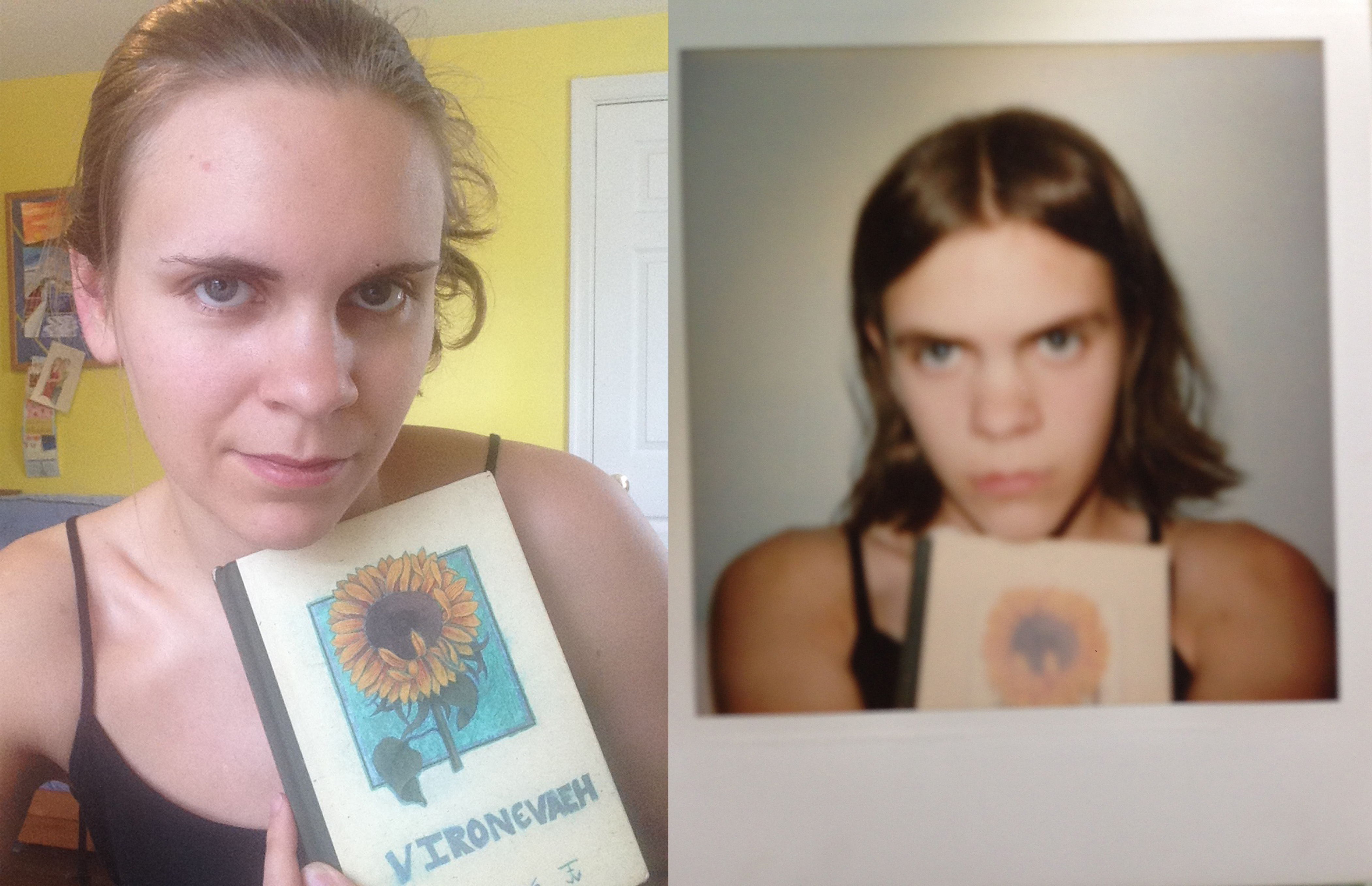
But today, I thought I’d post a blast from years farther past. In 8th grade, I wrote my first Vironevaehn book. It was just by hand, and without much planning or forethought, half of it scribbled down during orchestra while my friends patiently ignored my rantings. But I filled a whole notebook with it. 14 years later, that book is one of my most valued possessions. Here I am with it today, and there I was with it 14 years ago, in a Polaroid taken as just another offhand idea.

comparison


Create something today, even if it’s silly. The only folly is not trying.

Writing prompt: Modified pollen

Time: 7 minutes. Click here to go to my list of prompts.

“Modified pollen” (quote at bottom by Alfred Tennyson, in ‘The Lotos Eaters’)

The hazard flower came to our county five years ago. Another invasive species, blown in on winds from the south and trucks. No one knows how exactly it came to exist, going on twenty years ago now. Terrorism? Science gone bad? A chance cross-pollination?

Pollen season started yesterday, so often course we are all indoors, with the windows closed and the filtration systems on. The count is still well below two inside, so all is well. It looks so beautiful out, and I am trapped inside with canned air. The season only lasts about a week.

In the last year or two, I’ve wondered… what would it be like? The ‘Lotos Eaters,’ as they call those exposed, seem serene and at peace. Damage to the emotional center of the brain, the doctors say, not so different from a lobotomy. But they seem at peace, and right now, I do not feel at peace. I watch the yellow dust drift, and know that until the hazard crews come and hose it all off, I will remain inside. Once an injured cat lay in my yard during pollen season, and I simply watched, unable to help, but unable not to care.

It’s 75 out, a beautiful day. A lovely day to take a walk.

“Thro’ every hollow cave and alley lone
Round and round the spicy downs the yellow Lotos-dust is blown.”

Nationality Rooms at the Cathedral of Learning

This weekend, I went to the Cathedral of Learning in Pittsburgh. Among other things, this gothic skyscraper contains 29 nationality rooms–each of these rooms is decorated intricately in the design of a nation. The first 19 were built between 1938 and 1957, with ten built since 1987. The Turkish and the Swiss classrooms were dedicated in 2012, and several more are planned. If you are in Pittsburgh and have any interest in craft or design, I can’t recommend visiting enough.

To visit the classrooms, you can check out a key at the desk, or take a tour with a guide. We rented a key. Visiting each room felt like a treasure hunt; each room was so different, and full of intense detail. Each room had special walls, windows, ceilings, chairs, lecterns, and chalkboards. Even the light switches and doors were in style. Many contain intricate wood or stone carvings, or genuine artifacts. Most were designed by architects of the country.

You can learn more on the University of Pittsburgh website about the nationality rooms. This page allows you to virtually tour each room.

The Chinese nationality room.

The Chinese nationality room, dedicated in 1939.

The Czechoslovak room, dedicated in 1939. This room contains a letter from the first President of Czechoslovakia, Tomáš Masaryk, to the students of the University of Pittsburgh.

The Czechoslovak room, dedicated in 1939, 8 days before the Germans invaded in World War 2. This room contains a letter from the first President of Czechoslovakia, Tomáš Masaryk, to the students of the University of Pittsburgh. His son, Jan, spoke at the dedication of the room, foreseeing trouble in the future. Page 4 of this document details the interesting connection between Czechoslovakia and Pittsburgh.

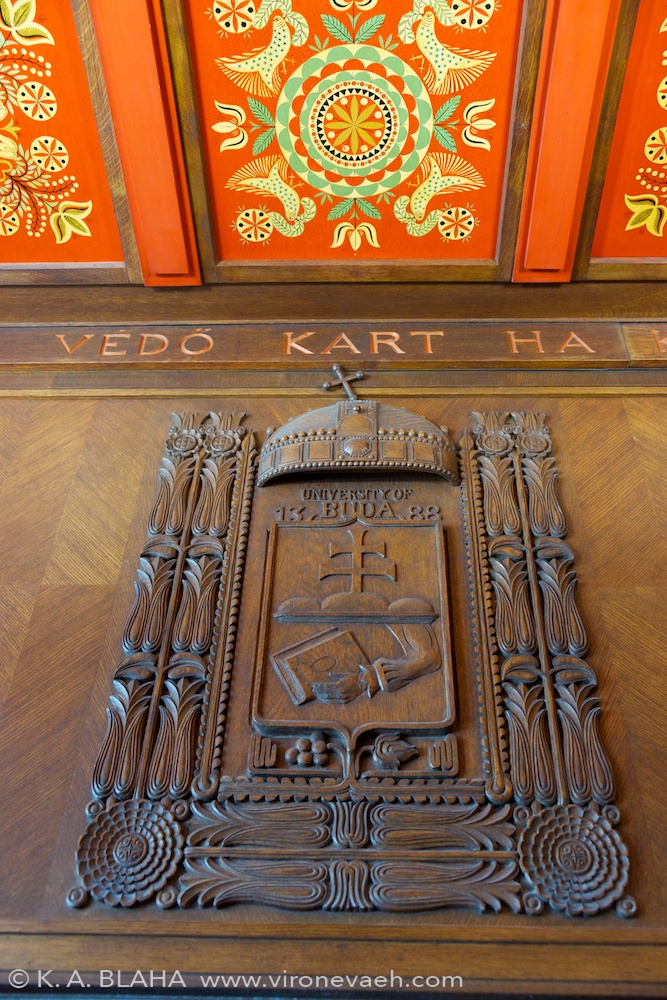
The Hungarian room was dedicated in 1939.

The Hungarian room was dedicated in 1939.

The Lithuanian room, dedicated in 1940. The walls are woven from linen in the "The Path of the Birds" design. Between the angular, abstract carvings and the painting and the walls, this was one of my favorite rooms.

The Lithuanian room, dedicated in 1940. The walls are woven from linen in the “The Path of the Birds” design. Between the angular, abstract carvings and the painting and the walls, this was one of my favorite rooms.

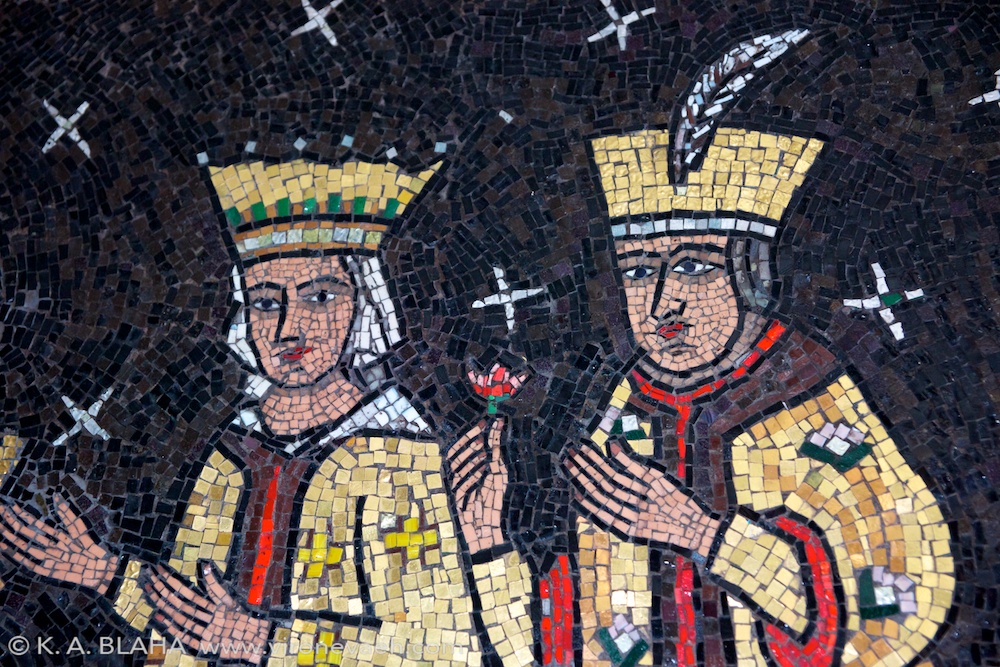
A detail from the Romanian room, dedicated in 1943. The style of this mural on the back wall reminded me of the opening of Beauty and the Beast.

A detail from the Romanian room, dedicated in 1943. The style of this mural on the back wall reminded me of the opening of Beauty and the Beast.

The Swedish room, dedicated in 1938.

The Swedish room, dedicated in 1938.

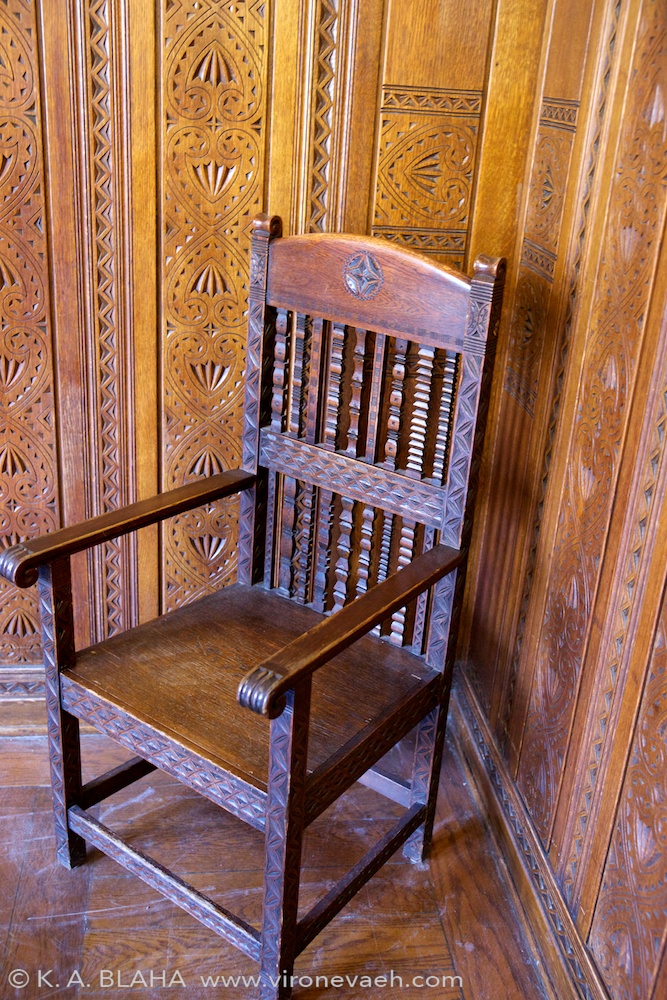
The Yugoslav room, dedicated in 1939. The carving in this room, called "notch carving" was simply amazing.

The Yugoslav room, dedicated in 1939. The carving in this room, called “notch carving”, was simply amazing.

The cathedral of learning, exterior.

The cathedral of learning, exterior.

The main hall of the cathedral of learning.

The main hall of the cathedral of learning.

The main hall of the cathedral of learning.

The main hall of the cathedral of learning.

Food and science: Why are peppers hot?

Chili peppers, such as jalapeños and serranos and habañeros, are hot because they contain a chemical called capsaicin, which is an irritant to humans.

Why capsaicin?

If it is advantageous to plants to spread their seeds, why do the fruits (peppers) contain a chemical that repels animals? It turns out that birds are not sensitive to the effects of capsaicin. Thus, capsaicin repels animals whose chewing action may destroy the seed while not repelling birds. Additionally, capsaicin may function as a antifungal.

What does capsaicin do, chemically?

Capsaicin binds to receptors for heat and pain called vanilloid receptors. Capsaicin causes the receptor’s neuron to fire, which normally occurs at higher temperatures; thus, the brain interprets this neuron signal as sensing heat.

Capsaicin is just one kind of vanilloid compound; vanilla is another member of the vanilloid family, with a similar structure, but it does not act on vanilloid receptors. Now I wonder if peppers taste at all like vanilla to birds. A mystery for the ages.

Capsaicin in peppers

As you may have noticed, some peppers are hotter than others. This is because some contain more capsaicin and related chemicals than others. The relative hotness of peppers is measured by the Scoville scale. According to this scale, habañeros are a few times hotter than ají peppers which are a few times hotter than chipotle peppers. Bell peppers actually don’t contain capsaicin due to a recessive trait.

Contrary to what I learned growing up, the seeds don’t contain capsaicin. However, the pith that surrounds the seeds has the highest concentration. This may be why the hottest peppers look like wrinkly sphinx cats; they are just packed with pith (such as the Carolina Reaper pepper, bottom). You can reduce the hotness of a pepper for cooking by preferentially removing the white spines, which is the pith.

Habañero peppers have a Scoville rating of roughly 500,000. Pure capsaicin has a rating of 16 million. Some chemical called resiniferatoxin found in Moroccan cacti has a rating of 16 billion (1,000 times higher!). 40 grams of the stuff can kill a person.

So, there’s your overview of peppers for this Friday. Don’t consider this a challenge to go find that Moroccan cactus, but when your lips tingle after eating salsa, perhaps think of capsaicin.

Carolina reaper peppers, one of the hottest according to the Scoville Scale. Just look at the wrinkles! (Wikipedia)

Writing prompt: An impending storm

Time: 7 minutes. Click here to go to my list of prompts.

“An impending storm”

Enka jabbed at the thin soil with her trowel. If the flimsy little sprouts took to this thin soil, it would be a miracle. She knew that this work was essential, but understanding its importance didn’t make it any more enjoyable. Sometimes Sasha sang when she worked, low and slow, like a dirge. That matched more with how Enka felt about the work.

Around her, people paused in the work. “The tower,” they said. Enka looked up, and indeed, there was a light in the tower. She and the others watched the light, eager to know how severe the coming storm would be. The sky was clear and purple now, but Enka knew not to trust it. She’d heard stories of how confusing the sudden weather was to the Founders. People who lived with radars and satellites and never had to rely on their instincts. Not that instincts did much in the sudden and violent weather on this planet.

Two long blinks. A bad storm was coming. She helped the others pull tarps over the delicate seedlings. Then they would have to find shelter. Sometimes she wondered what the storms must be like for the towerkeepers, so high in the air during such violence, unable to run. A few months ago, one to the north collapsed, taking its keeper and several homes with it. Enka was glad that her own home was not in the shadow of the tower.

A little part of her longed to be up in the tower. Every time the storms came, she hid, and she saw the beautiful violence afterwards. It must be enthralling to stand within. The others had already fled home. Did she really have to be in the tower to stay and watch the storm?

Vironevaeh on Mad Scientist Journal

Check out my story “Carnivorous Fog: Avoidance, Survival, and Eradication Strategies” on Mad Scientist Journal today. Mad Scientist Journal publishes stories in the form of fictitious scientific papers. This paper is set in the same place as my fairy tales, although at a different time. The inspiration for this story came from my Nanowrimo novel; the novel is sort of a wreck, but it gave me several fun ideas.

Most excitingly, this is the first thing I’ve published in the Vironevaehn universe, one that I started nearly 17 years ago. Hopefully it doesn’t take another 17 years for the next publication.

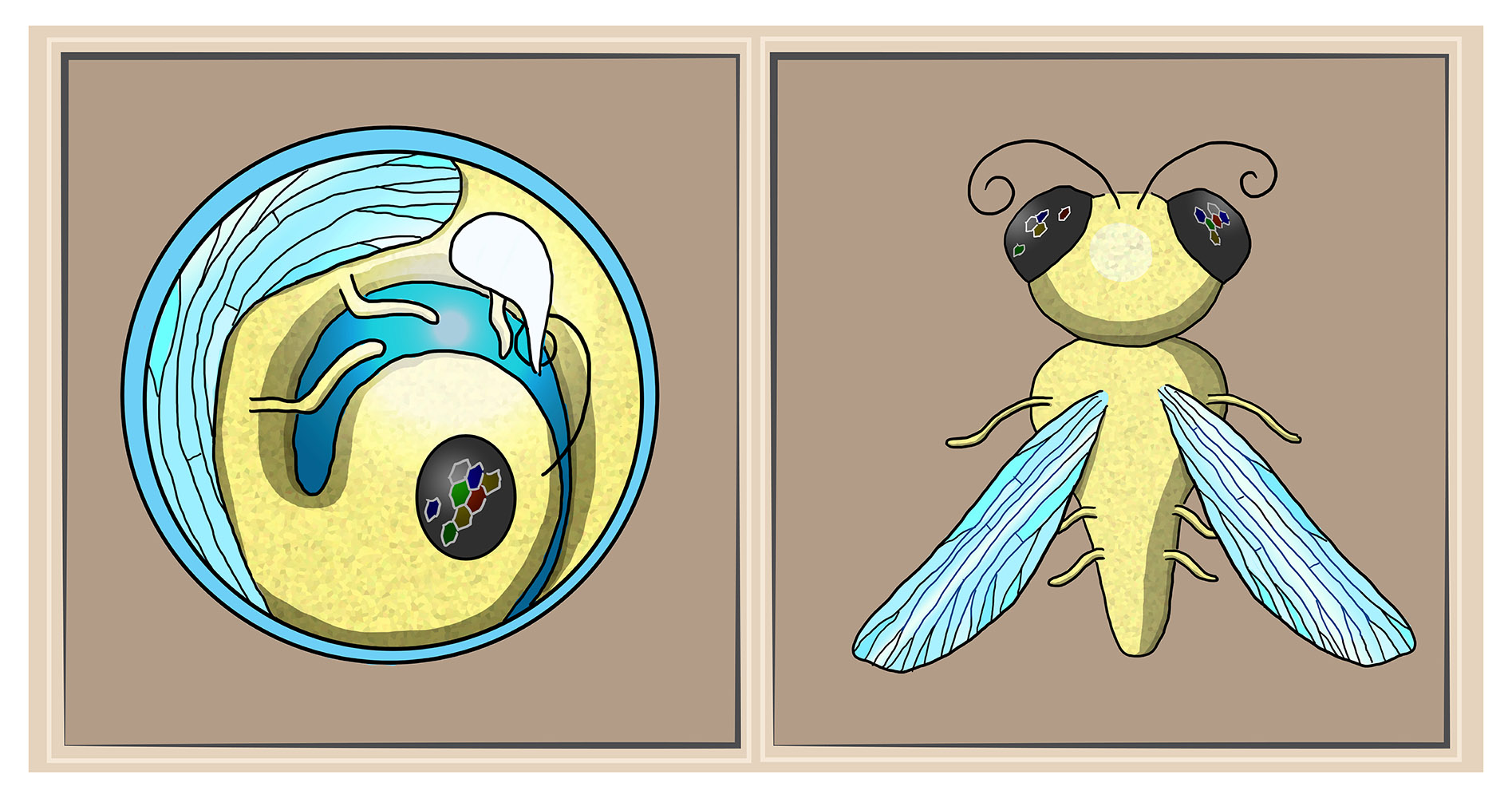
Here’s an accompanying illustration I did after the story. On the left is the “encapsulated” insect, while the free insect is on the right.

SONY DSC

Food and Science: Caramelization and the Maillard Reaction

When we cook food, we want it to be as flavorful as possible. Two types of chemical reactions contribute to browning; both of these reactions create hundreds or thousands of other molecules, which then add aroma and flavor. The higher temperature reaction you may be familiar with: caramelization is the breakdown and reaction of sugars. The Maillard reaction occurs at slightly lower temperatures (still usually above the boiling point of water); this reaction occurs between the amino acids of proteins and sugars.

Both of these reactions are so complex that scientists don’t know everything that occurs during them. We understand the basic nature of each reaction, but any plant or animal food contains literally thousands of different molecules that can all react together. Fortunately, we can still implement the process without a full understanding (and we have been for millennia), and a lot of very nice foods undergo either or both reactions.

The Maillard reaction and caramelization often occur at the same time, and produce similar results visually, so they can be tough to separate. If something contains both proteins and sugars, both reactions can occur with heat. Fortunately, they both taste good. They’re also easy to do at home. If you want to brown your food, get a skillet nice and hot. Make sure you’ve patted the food dry (this allows the surface to get hotter than the boiling point of water, thus allowing the reactions to occur), and sear away.

Writing prompt: the woods burst into flame

Time: 10 minutes. Click here to go to my list of prompts.

“The woods burst into flame”


The sky seemed to darken in an instant. Heavy clouds swirled, and lightning flashed. Only a moment ago, it had been a perfect summer day. Around Nadya and Vanya, the woods burst into flames.

“How?” Vanya cried.

Nadya grabbed Vanya’s hand and ran. Vanya had such a habit wanting to know the why of things, and as the flames licked around the great trees, the why was not currently important. Nadya saved her curiosity for the relevant time.

Flames seemed to repel them on all sides. Above, dark clouds still swirled. Flocks of bird and animals also fled the uncanny fire too, and so the air and trees were full of frightened motion. Nadya and Vanya were encircled by flames. There was nowhere to run.

Vanya sat on the ground and began to cry. “It’s so hot, I just want to go home.” He was only six, and even in her frustration with her brother, her heart ached for him. As the big sister, it was her job to provide safety, but she too was tempted to collapse onto the ground and give in. It seemed inevitable at this point.

“Vanya, come with me,” Nadya said, a sudden idea in her mind. It might not save them, but it was something. “Climb this tree with me.”

“But—” Vanya tears paused as confusion took over, “Papa says we must never climb those trees. That children who do are never seen again, or fall to their death.”

“Vanya, look around,” Nadya said, suddenly manic with the idea, “we could use a miraculous disappearance. I don’t know where we’d go, but it couldn’t be worse than here.”

Nadya and her brother climbed the tree. The texture was odd under hand, untreelike. When they neared the top, she heard a sound. It was the piercing cry of an enormous bird. Nadya was so startled she almost fell as the six-foot bird emerged from the storm clouds. One bird grabbed Nadya, and the other grabbed Vanya. The two birds flew high into the sky, and the children looked down onto the burning forest. Nadya hoped that the birds were kindly disposed to children.

Science communication

Science communication is hard, but it’s something scientists should always be striving to improve.

Specifically, we often see the difficulty in communication between scientists and the general public. The concepts discussed are often complex and not fully settled. Scientists often use jargon or scientific methods of communication that don’t translate to the public well. The final result is that scientists and the public don’t understand one another as well as they might, which is a loss for all of us.

On Friday I went to a science communication workshop run by The American Association for the Advancement of Science (or AAAS) to learn about science communication. The AAAS tries to help scientists communicate in all ways–such as with policy makers, with other scientists, and with members of the public. They outlined three points of emphasis to improve communication. We then practiced talking about our research following these guidelines (perhaps I’ll post my spiel in some future post).

  • Communication structure: Scientific papers first provide the background material before stating the outcomes or results of a paper. Popular writing starts with the results and then provides the supporting arguments. In discourse with the public, scientists must follow the conventions the public uses.
  • Audience: A scientist must understand the communication’s audience. Jargon may work within the field, but even scientists from nearby disciplines probably won’t know it. The general public or children definitely won’t.
  • Message: A brief talk or article cannot communicate an entire field. It must communicate two or three salient points. It can be tempting to explain everything to an interested member of the public, but it simply isn’t possible.

In particular, I think the public might be surprised to learn of the difficulties different scientists have in communication. I recently earned my PhD in chemical engineering. When I was writing my final dissertation, I asked my father for help with editing. He has a PhD in chemical engineering as well, and works on advanced data management. It might seem strange, but he struggles to understand my work, and I struggle to understand his. With effort, I made the more general parts of my dissertation accessible to him, but the truly technical parts would have taken him much longer to understand. This graphic of what a PhD is partially illustrates the nature of this problem.

The difficulty two people with the same kind of PhD face in communication highlights the need for us to discuss science communication. As I initially said, science communication is hard. But many important problems today have a scientific aspect or could be examined in a scientific way. As scientists learn to articulate their concerns and findings better, that paves the way for better discourse with the public.