Category Archives: Books

Book Review: The Invention of Everything Else (Samantha Hunt 2008)

There are no spoilers in this review beyond what you’d find in the first few chapters or the cover blurb.

Rating: 5/5

I absolutely adored “The Invention of Everything Else”. I’ve always meant to read more histories and biographies than I do, but sometimes they can be dry. This book, in many ways, is a fictional biography of Tesla, a famously eccentric inventor who first pioneered AC electricity and radio. To learn more about Tesla, check out this awesome Oatmeal cartoon, which has a lot more detail than I’ll include here. The book also has rich and lovely descriptions about historic New York City. And most of all, this book is a romance of eccentric people, whom I feel get far less respect than they deserve. The characters are pigeon-enthusiasts and hoarders and dreamers and inventors.

The book opens with Tesla as a very old man, broke and largely forgotten. He was a brilliant inventor, but not a businessman like Edison. He lives in a dreamlike state, remembering past glories and failures, and seeking his beloved white pigeon (see the Oatmeal cartoon). The other main character of the story is Louisa, a young vibrant woman who works at Tesla’s hotel. She likes to listen to radio dramas and to study people, so she is naturally fascinated by Tesla. Over the book, we learn a lot about Tesla and Louisa as they orbit one another.

The language of this book is wonderful. The descriptive passages evoked touchable images in my head although the descriptions were fairly brief. I could imagine being in bygone New York, and the distractions and wonders of the characters in that setting. The dirtiness of it, and the perpetual motion of it. Here is a quote from the first chapter that captures some of the loveliness of the language:

“Drawer #42. It sticks and creaks with the weather. This is the drawer where I once thought I’d keep all my best ideas. It contains only some cracked peanut shells. It is too dangerous to write my best ideas down. ‘Whoops. Wrong drawer. Whoops.’ I repeat the word. It’s one of my favorites. If it were possible I’d store ‘Whoops’ in the safe by my bed, along with ‘OK’ and ‘Sure thing’ and the documents that prove that I am officially an American citizen.”

If you are a lover of hard science fiction, this one might not be for you. The genre of this book is subtle, with the fantasy element of dreaming maybe most prominent. It seemed like every character in this book took a jump off of something, imagining they could fly. But if you love characters and setting and eccentricity, then you should like it. I loved it, and I really recommend it.
Book review: Beggars in Spain (Nancy Kress 1993)

There are no spoilers in this review beyond what you’d find in the first few chapters or the cover blurb.

Rating: 4/5

“Beggars in Spain” is a science fiction novel written in 1993; it was nominated for the top two awards in the field, the Hugo and the Nebula, though it didn’t win either. (“Red Mars” by Kim Stanley Robinson won both; it is one of the most detailed hard sf books I’ve read.) “Beggars in Spain” is one of those sf books that can be summarized by a what-if– what-if some people didn’t have to sleep at all? How would society react? What kinds of advantages would they have? How would it affect the personality of such a person?

The novel opens with a wealthy man wishing to procure advantageous genetic alterations for his to-be-conceived child in 2008. Though it is still rare, he wants his child to be sleepless. The children who have the trait have proven to be much smarter and always cheerful. Another child is conceived accidentally who is not sleepless (as a small nitpick, the science in this bit seemed fishy, but I am not familiar with what was known in 1993). Leisha is the sleepless daughter, Alice is the sleeper daughter.

Leisha is of course beautiful and brilliant. Much of the novel rotates around how she relates to sleeper people. The characters in the book didn’t always work for me; Leisha is always cheerful as a sleeper, but this is hard to relate to, and hard to imagine how it would even work. Also there is an injection of almost libertarian politics that I wasn’t sure what I thought of. The politics aren’t preachy and are presented as Leisha’s world-view rather than the author’s. I liked the first half of the novel immensely. I didn’t dislike the second half, but I found it less exciting and engaging. One consistently strong point of this book was the writing: I sometimes have to labor through harder science fiction books, which must belabor the description of complicated mechanical things. This book just flew for me, while still attacking the central question of science fiction: what would happen to people if? So if you are a fan of hard sf and only hard sf, it probably isn’t for you.

“Beggars in Spain” was also one of the most female-dominated sf books I’ve read. Most of the principal characters are female. The book is feminist without caring about it or focusing on it; these characters could just as easily be male but they simply aren’t. It’s feminist not in the sense of women’s rights, but simply having women as protagonists and examining their relationships. I’ve read umpteen scifi books with barely a woman on the pages, so this was a welcome change of pace. Nancy Kress is also one of the few premier female names in science fiction, so it also seemed appropriate.

Overall, I found “Beggars in Spain” a very worthy read. It raised a lot of thoughtful questions that even a week after finishing the book, I find myself thinking about. It never came together in a “wow” moment, as a few sf books do for me, but it was pleasant and easy to read, which is not always the rule in sf. This was the first work I’ve read by Nancy Kress, and based on this book, I want to read more from her.

Miniature Books!

This weekend at the festival of the book, I saw an exhibition about miniature books. The exhibition is a traveling show from the University of Akron including about 80 small or odd books. At the exhibition, Molly Schwartzburg, the curator of the miniature books collection at the University of Virginia, gave a talk about the exhibition and about mini books in general. The university has a collection of several thousand miniature books, which by their definition means no bigger than 3″ in any dimension when closed. Some of the mini books are made for artistic purposes, and others for practical purposes. The Knights of Columbus used to send miniature books containing short stories to soldiers during WW1, packing the tiny books with cigarettes. The Akron exhibit didn’t adhere to the 3″ limit, but all of the books were eccentric.

Below are a few pics from the collection.

photo copy 2

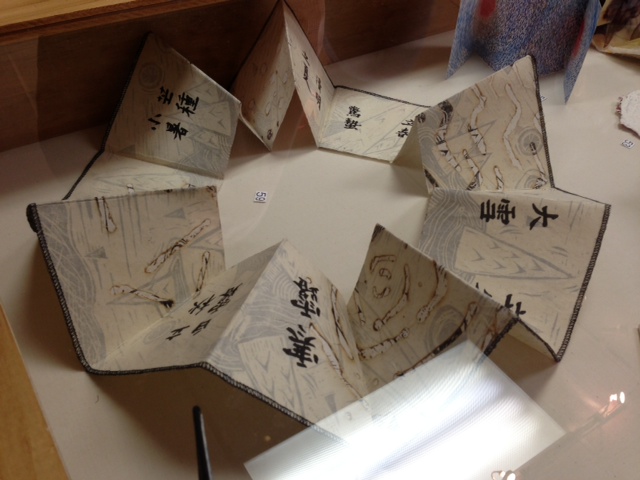
This does fold flat- “Solar Terms” by Ling Luo

photo copy 3

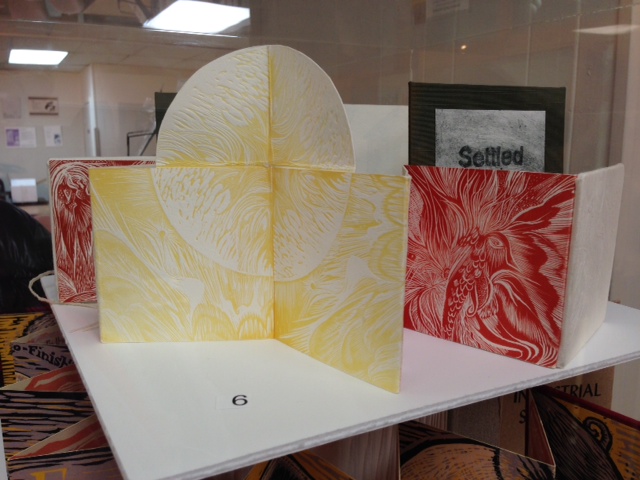
“Altar of Transformation” by Cathie Bleck

photo

A bunch of accordion style mini books.

photo copy

“Pig, hog, bacon” by S. V. Medaris, showing the life cycle of a pig on one side and bacon on the other.

photo copy 4

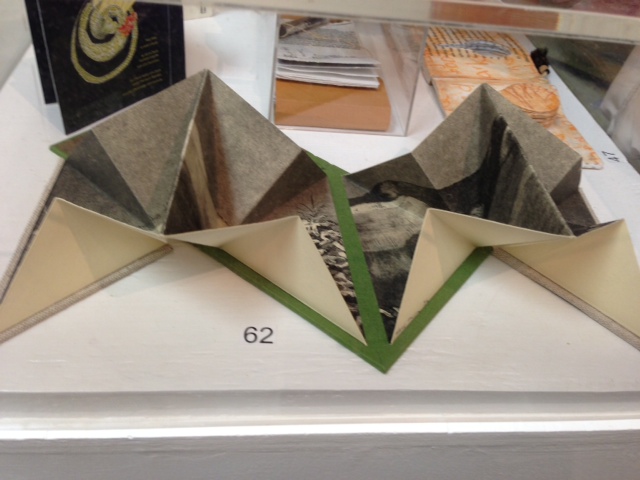
“I went to the mountains, but they were not there” by Rachel Mausier- a really cool combo of book arts and something more like origami.


Meeting goals at the Virginia Book Festival

Between attending the book festival and playing a water polo tournament, I had a very busy (but wonderful) weekend.

I went to several of the book festival sessions, which I will write about at greater length later in the week:

But the most exciting day was Saturday. I played a polo game in the morning. Then, reeking of chlorine, I went to the book fair to talk to publishers about Vironevaeh and Zish and Argo. One publisher seemed particularly interested, and I will post updates as I learn more about that. Then I popped back to the pool for some more water polo. The goal of this website and much of my work the last several months has been to get out there and try to publish something, to talk to a wider group of people and engage in a field I’ve cautiously eyed since middle school at least. So this weekend was a big step forward and I’m still high on it all.

Making Lovely Books

As my blog might reflect, I have a tendency to lurch from one area of interest to the next. Last week, my interests moved again to bookbinding. The pile of lovely paper and fabric sitting in my office called out. (hollanders.com has some lovely stuff.) So I tried a few new things.

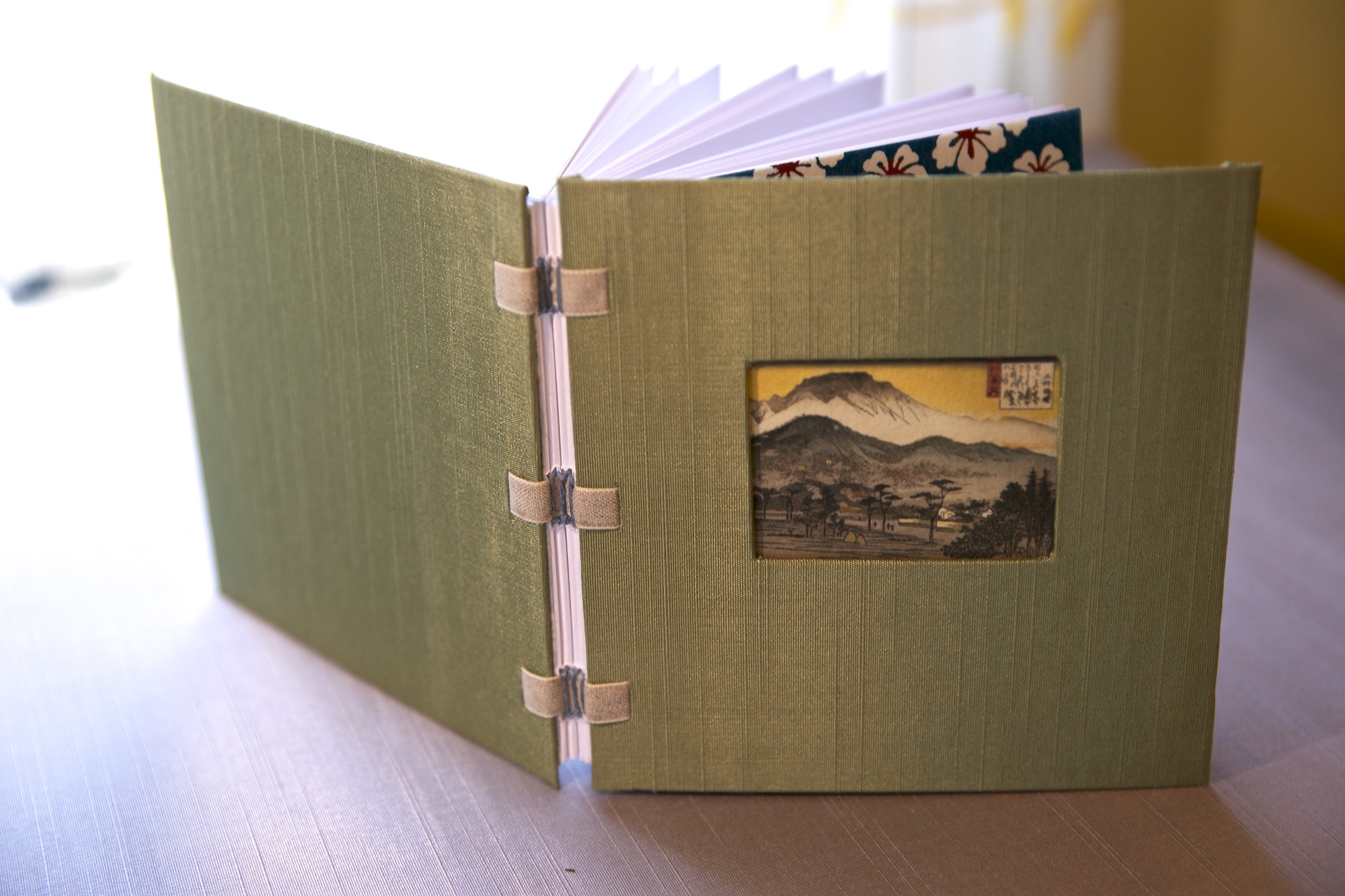
The book below is covered with Japanese linen. I used an exposed stitch on the spine, and exposed linen tape. This is the first time I’ve cut a hole in the cover. Appropriately (see last week), I found a Hiroshige painting in the creative commons to use in the hole.

SONY DSC

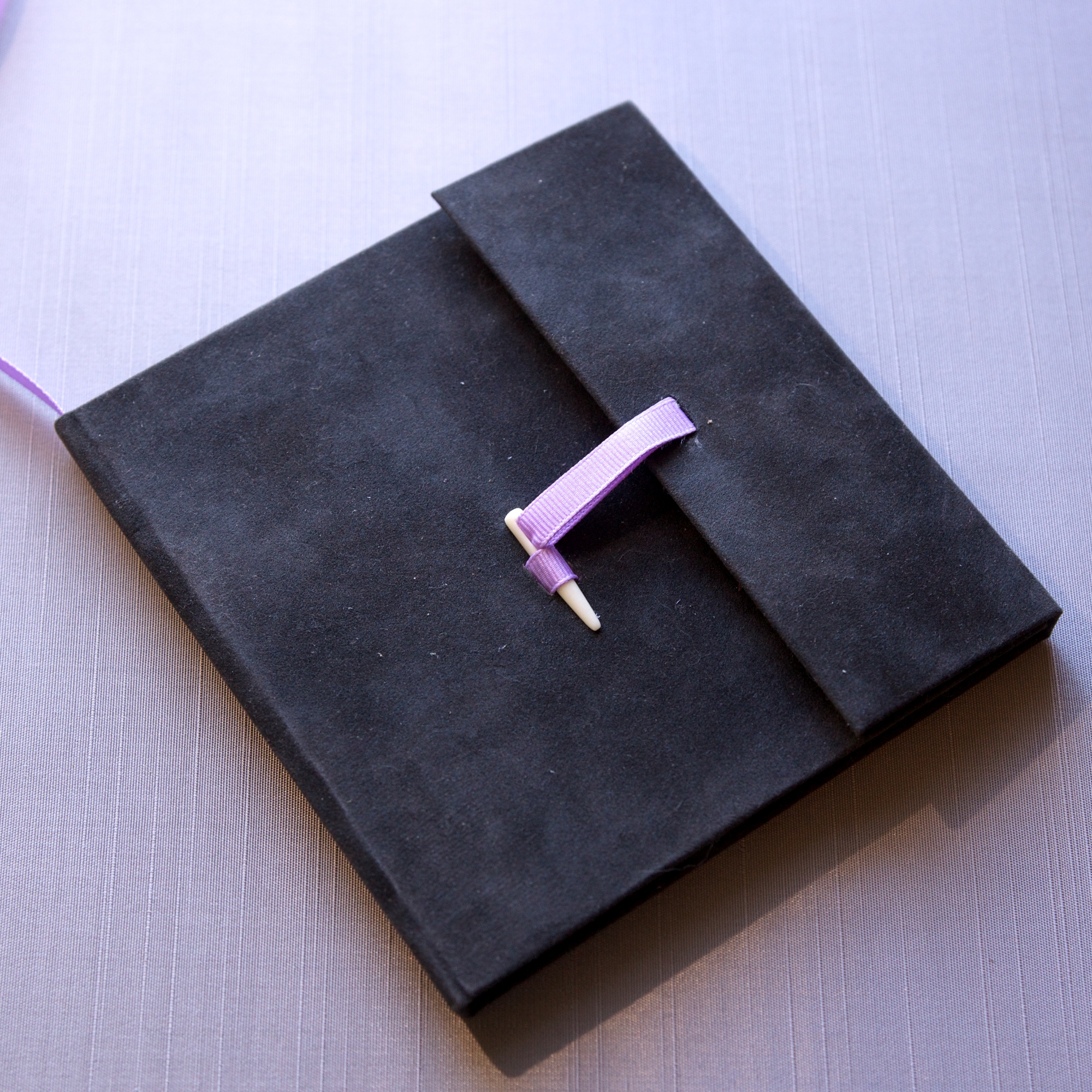
Next I made a book that closes in the front with a bone clasp. The cover is black imitation suede.

SONY DSC

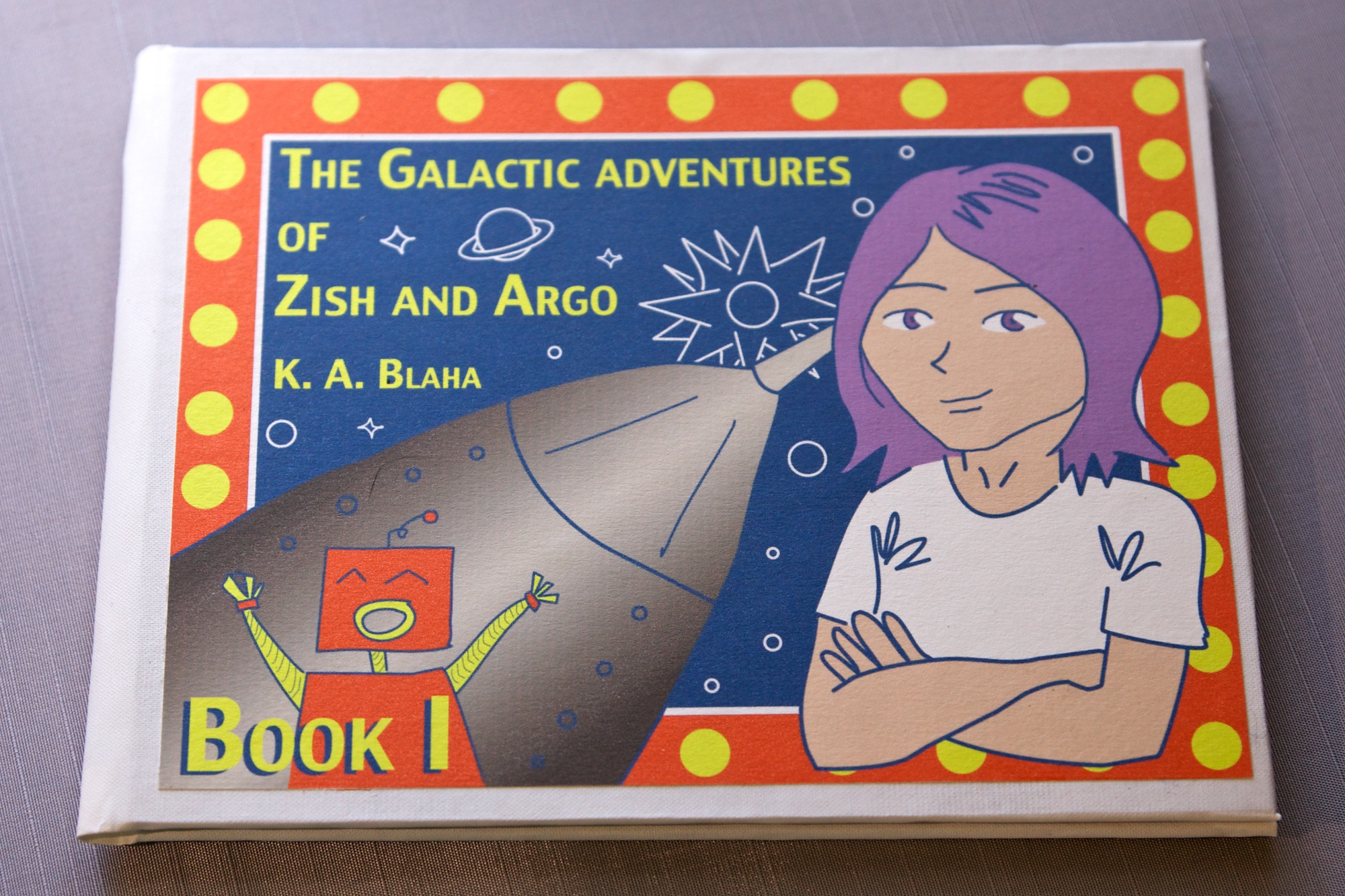
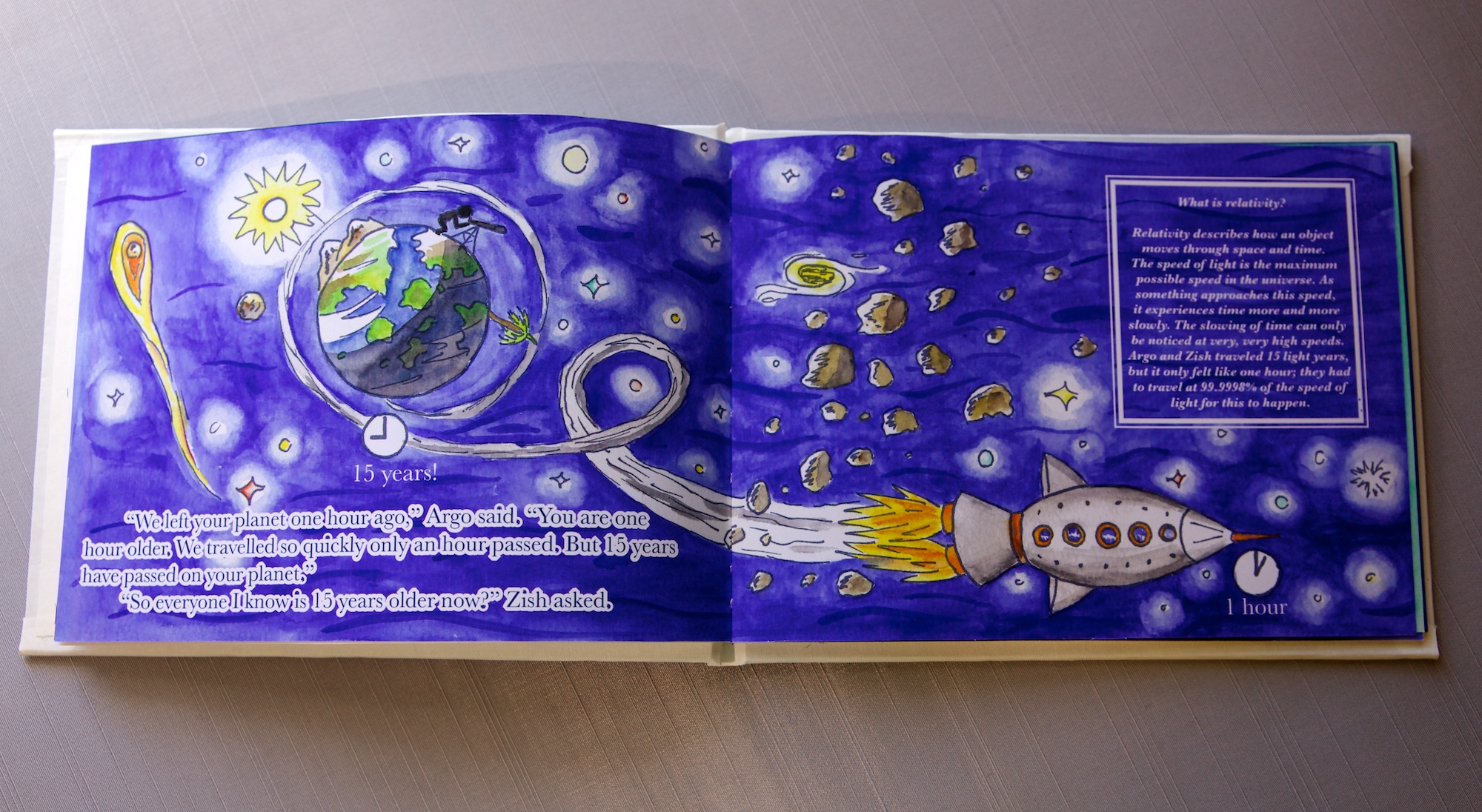
Finally I did a more formal binding of my Zish and Argo story. It’s a pretty simple binding with only a single 7 page signature, but I’m really pleased with the way it turned out. In the second picture below, you can see one of the spreads. All of the illustrations are digitized watercolor paintings.

SONY DSC SONY DSC

Zish and Argo Artwork

My biggest goal over the holidays was to complete painting for the Zish and Argo book. Last night I finished the last painting! Hooray! Champagne! Zish and Argo has 13+ full size color illustrations, painted in water colors. The picture below shows the ones I finished during the holidays. For reference, they are about 8 inches tall. In the next couple of weeks, I will pull together the art and put up book details. The featured image shows the tentative cover that I just finished as well.

Tomorrow I head back north to new projects and adventures.

SONY DSC


Beautiful Books

I love a well-made book. There is something awesome about a book with golden edges and an embossed cover. I like pages with heft and texture, and books with color illustration. However I am also a great fan of classic science fiction, and 1960s scifi seems rarely to intersect with fine binding techniques. I often go to the used book stores and find paperbacks with yellow cracked pages and broken spines. The cover art is often wonderful, but these books are dying and falling apart. Many of these books have not been reprinted recently, or are offered only for outrageous prices as ebooks.

Lovely books were always a source of inspiration as a kid. This Tasha Tudor fairy tale book was my favorite (and was a big source of inspiration for my own collection of fairy tales). I hope with the rise in ebooks, we will see a rise in beautiful books. When you need not spend space on books, perhaps that space will be spent on books that are also art objects. Lately, I feel like I’ve been seeing more attention towards the appearance of books. Right now it’s more limited to literary classics, but I hope it will grow towards science fiction, which seems like it could benefit from such visualizations. Here are a few pretty books I’ve noticed:

  • Hiroshige, by Taschen (pictured above). This book is gorgeous. Bone clasps hold together the cover, and the book is bound in the traditional Japanese stab-binding style. The paper feel like it is cotton, and it really suits the art it bears. Also at $40, it isn’t insane, and it’s even cheaper on amazon.
  • Barnes and Noble Leatherbound Classics Series. There are a ton of books in this series, from Hitchhiker’s Guide to Arabian Nights to Foundation and Grimm’s Fairy Tales. One complaint: it’s very hard to judge the contents from the web. I found in person that the older out of copyright works had many more illustrations inside. I especially like their Arabian Nights. Most of these are around $20, so they are affordable.
  • Basically anything by Folio Society. I am particularly intrigued by their Foundation Trilogy, which has some fun-looking illustrations. Folio Society is a bit pricier, so I haven’t gotten anything from them yet.

I would love to hear about any other finds as well. Good hunting! (And here’s some lovely bookcases as well.)

Style: Aboriginal Art

I like to use different art styles for my various different stories. Lately there is nothing better than trying to find attractive illustrations of various origins. A few months ago, I found a children’s book at a library sale, very much by accident–Enora and the Black Crane. Enora is a lovely story, and the illustrations are beautiful. Before happening upon this book, I had seen little aboriginal art.

I wanted to incorporate aboriginal designs into my in-progress short story collection. Luckily, I live near the only dedicated aboriginal art museum in the United States, The Kluge-Ruhe Aboriginal Art Collection in Virginia. This was a nice resource for additional inspiration. The illustrations for the collection are black and white woodblock style (as I mentioned in my previous entry). Aboriginal design uses a lot of color. I tried to capture some of the spirit while maintaining consistency with the woodblock theme. I ended up with the featured image for this entry. I ended up knowing a bit more about aboriginal design, and my final design was richer for it.

Maintaining my creative momentum

This blog is now a little over a month old, and soon the Etsy store will be a month old too. I’ve made 8 journals and 4 copies of the Fairy Tales in the last month, not to mention sourcing materials, testing color profiles, etc. Bookbinding, blogging, and website maintenance takes time, time that normally would go to my creative process. Last night this blog crossed 250 views total which of course many blogs get per day, but it felt like a big achievement. It promotes the feeling that these endeavors, so different than my normal choices, are worthy ones.

My most ambitious current writing project is a collection of short stories from different planets in a planetary alliance, the Quaiin League. Some of the stories are over 7,000 words, some are quite short. All of these stories will have at least one woodblock style black-and-white illustration, like the one featured for this entry. It will be many months before this collection is complete, probably over a year. As I share my projects with people, there are more and more tasks to keep track of. But it helps to remind myself here of my goals.

It may not be easy to begin as a writer, but I feel that momentum will continue to gather. As long as I keep pushing and caring, I will accomplish these things.

Upon Book Binding- Getting started and some useful things

Book binding is pretty simple. I do not mean it is necessarily easy or fast, but that you do not need much equipment or knowledge to get started. I think when I first started binding (not much more than a year ago) that this knowledge was a big surprise to me. So, if you are interested in trying your hand at binding, take heart!

Most of what I have learned came from three sources: observation, YouTube videos (such as this one on the coptic stitch style), and this nice book on book craft. With the help of the library, this info is all free.

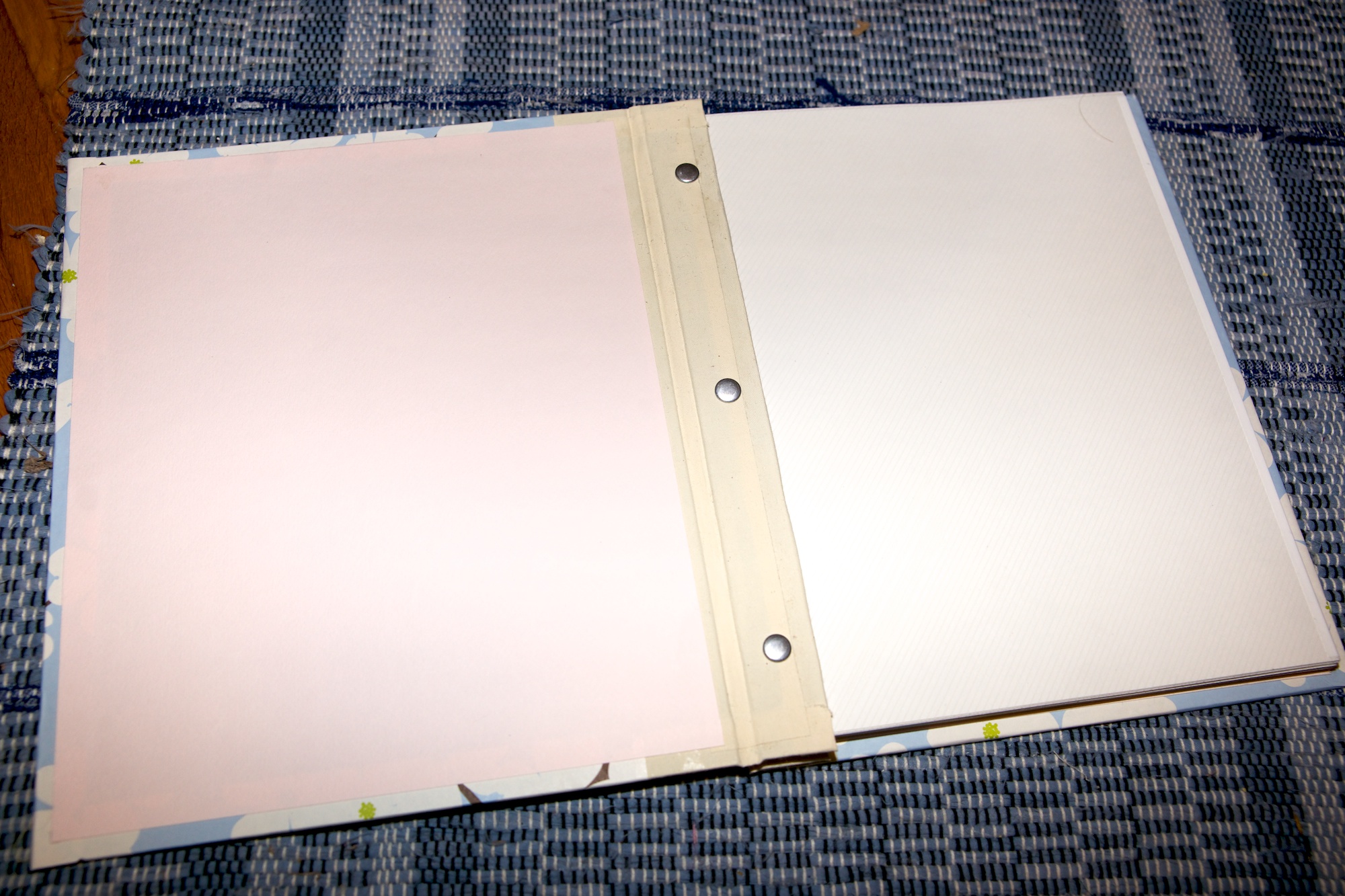
I once imagined that bookbinding required extensive tools. It is true that the books themselves take certain special materials (you can’t fake nice paper, for example), but the tools required for putting them together is dead simple. I use four g-clamps and a couple well-bound oversize books, shown below. Every book I have ever made was with these four clamps and these two books. Very soon I will be making myself some new presses according to this tutorial, except that I intend to use cutting boards instead of fiberboard.

The only truly essential materials are strong thread (beading thread or linen thread works well), paper, an awl, a cutting board, a cutting implement, book board, and copious quantities of elmer’s glue. I like to order my decorative papers and cloths from Hollanders, and most other supplies like book board, elmer’s glue, and linen thread from Amazon.

The first few times I made books, they were not great looking. There were two primary reasons for this: 1) I did not let the glue dry sufficiently before moving to the next step. Then when I did the next step, the unset material would wrinkle, bubble or tear, and 2) Some papers are really unforgiving and will bubble and wrinkle very easily. Copy paper for example is not designed to be absorptive, and thus takes some skill to handle. I recommend starting with drawing papers or high cotton content papers. These papers will not buckle with too much glue or bubble with too little.

Below are four books I did in the first six months of learning. You can’t see here, but all of them have some little wrinkle or foible here or there. Each was still really exciting; I still had made books! I hope this little discussion is helpful to anyone who is interested, or getting started. I find joy in every book I put together, sometimes to an extent that seems strange. For more pics (of more recent efforts), or if you are interested in my books, check out my Etsy store.