Category Archives: Science

Food and science: Why are peppers hot?

Chili peppers, such as jalapeños and serranos and habañeros, are hot because they contain a chemical called capsaicin, which is an irritant to humans.

Why capsaicin?

If it is advantageous to plants to spread their seeds, why do the fruits (peppers) contain a chemical that repels animals? It turns out that birds are not sensitive to the effects of capsaicin. Thus, capsaicin repels animals whose chewing action may destroy the seed while not repelling birds. Additionally, capsaicin may function as a antifungal.

What does capsaicin do, chemically?

Capsaicin binds to receptors for heat and pain called vanilloid receptors. Capsaicin causes the receptor’s neuron to fire, which normally occurs at higher temperatures; thus, the brain interprets this neuron signal as sensing heat.

Capsaicin is just one kind of vanilloid compound; vanilla is another member of the vanilloid family, with a similar structure, but it does not act on vanilloid receptors. Now I wonder if peppers taste at all like vanilla to birds. A mystery for the ages.

Capsaicin in peppers

As you may have noticed, some peppers are hotter than others. This is because some contain more capsaicin and related chemicals than others. The relative hotness of peppers is measured by the Scoville scale. According to this scale, habañeros are a few times hotter than ají peppers which are a few times hotter than chipotle peppers. Bell peppers actually don’t contain capsaicin due to a recessive trait.

Contrary to what I learned growing up, the seeds don’t contain capsaicin. However, the pith that surrounds the seeds has the highest concentration. This may be why the hottest peppers look like wrinkly sphinx cats; they are just packed with pith (such as the Carolina Reaper pepper, bottom). You can reduce the hotness of a pepper for cooking by preferentially removing the white spines, which is the pith.

Habañero peppers have a Scoville rating of roughly 500,000. Pure capsaicin has a rating of 16 million. Some chemical called resiniferatoxin found in Moroccan cacti has a rating of 16 billion (1,000 times higher!). 40 grams of the stuff can kill a person.

So, there’s your overview of peppers for this Friday. Don’t consider this a challenge to go find that Moroccan cactus, but when your lips tingle after eating salsa, perhaps think of capsaicin.

Carolina reaper peppers, one of the hottest according to the Scoville Scale. Just look at the wrinkles! (Wikipedia)

Food and Science: Caramelization and the Maillard Reaction

When we cook food, we want it to be as flavorful as possible. Two types of chemical reactions contribute to browning; both of these reactions create hundreds or thousands of other molecules, which then add aroma and flavor. The higher temperature reaction you may be familiar with: caramelization is the breakdown and reaction of sugars. The Maillard reaction occurs at slightly lower temperatures (still usually above the boiling point of water); this reaction occurs between the amino acids of proteins and sugars.

Both of these reactions are so complex that scientists don’t know everything that occurs during them. We understand the basic nature of each reaction, but any plant or animal food contains literally thousands of different molecules that can all react together. Fortunately, we can still implement the process without a full understanding (and we have been for millennia), and a lot of very nice foods undergo either or both reactions.

The Maillard reaction and caramelization often occur at the same time, and produce similar results visually, so they can be tough to separate. If something contains both proteins and sugars, both reactions can occur with heat. Fortunately, they both taste good. They’re also easy to do at home. If you want to brown your food, get a skillet nice and hot. Make sure you’ve patted the food dry (this allows the surface to get hotter than the boiling point of water, thus allowing the reactions to occur), and sear away.

Science communication

Science communication is hard, but it’s something scientists should always be striving to improve.

Specifically, we often see the difficulty in communication between scientists and the general public. The concepts discussed are often complex and not fully settled. Scientists often use jargon or scientific methods of communication that don’t translate to the public well. The final result is that scientists and the public don’t understand one another as well as they might, which is a loss for all of us.

On Friday I went to a science communication workshop run by The American Association for the Advancement of Science (or AAAS) to learn about science communication. The AAAS tries to help scientists communicate in all ways–such as with policy makers, with other scientists, and with members of the public. They outlined three points of emphasis to improve communication. We then practiced talking about our research following these guidelines (perhaps I’ll post my spiel in some future post).

  • Communication structure: Scientific papers first provide the background material before stating the outcomes or results of a paper. Popular writing starts with the results and then provides the supporting arguments. In discourse with the public, scientists must follow the conventions the public uses.
  • Audience: A scientist must understand the communication’s audience. Jargon may work within the field, but even scientists from nearby disciplines probably won’t know it. The general public or children definitely won’t.
  • Message: A brief talk or article cannot communicate an entire field. It must communicate two or three salient points. It can be tempting to explain everything to an interested member of the public, but it simply isn’t possible.

In particular, I think the public might be surprised to learn of the difficulties different scientists have in communication. I recently earned my PhD in chemical engineering. When I was writing my final dissertation, I asked my father for help with editing. He has a PhD in chemical engineering as well, and works on advanced data management. It might seem strange, but he struggles to understand my work, and I struggle to understand his. With effort, I made the more general parts of my dissertation accessible to him, but the truly technical parts would have taken him much longer to understand. This graphic of what a PhD is partially illustrates the nature of this problem.

The difficulty two people with the same kind of PhD face in communication highlights the need for us to discuss science communication. As I initially said, science communication is hard. But many important problems today have a scientific aspect or could be examined in a scientific way. As scientists learn to articulate their concerns and findings better, that paves the way for better discourse with the public.

Food and science: understanding and cheating lactose intolerance

A person is lactose intolerant when they no longer makes sufficient quantities of the enzyme lactase. Because the enzyme no longer breaks the lactose sugar down, bacteria in the large intestine do instead. The bacteria release a lot of gas when they do this, which irritates the large intestine and causes the symptoms we observe. 

Below is a quick run down to understanding lactose content in foods, and what I’ve done to continue eating awesome dairy food despite my own very inconvenient sensitivity.

What contains lactose?

As a short answer, more than you would think. Obviously ice cream and milk do. Hard cheeses contain very little. I often read that yogurt is well-tolerated by lactose-intolerants due to the bacterial culture, but I do not tolerate yogurt. Sour cream made by traditional methods is low in lactose, but many manufacturers add milk solids.

It gets more complicated. Many foods contain milk powder or whey. Milk powder is 50% lactose by weight, and whey is 10%-70% lactose. Pastries, hot chocolate mixes, pudding mixes, and even Doritos can contain milk powder and whey. Most annoyingly, products do not list the quantity of lactose contained.

Fortunately, several websites tabulate the lactose content of various foods (at least dairy– if you find one for prepared foods, I would love to hear about it). Steve Carper’s Super Guide to Dairy gives a great explanation of the lactose content of a wide variety of dairy products. This link has a decent list.

Circumventing lactose intolerance

Thanks to modern science, we can synthesize the lactase enzyme. The enzyme can be taken as pills and eaten with food, or added to the food as a liquid. I used to take the pills, but as my symptoms progressed, that method became insufficient. The stomach is a mixing chamber, and mixing is imperfect, so enough lactose still got through to cause issues.

After going a year without ice cream or yogurt, I decided to investigate my options. Online, I found the lactase liquid drops, which can be added to any liquid. In 24 hours, these drops reduce the lactose content of a product roughly 70%. I usually add more than the recommended quantity and wait three days to be extra sure. (A side note: I read in the amazon comments that some batches of the enzyme didn’t work; you can test the enzyme’s effectiveness using diabetic glucose test strips. Lactose splits into glucose and galactose, but food doesn’t normally contain glucose; a test strip indicating its presence in a treated food means the enzyme worked. I bought my enzyme in August, and did the test because heat can de-activate enzymes; it was super easy.)

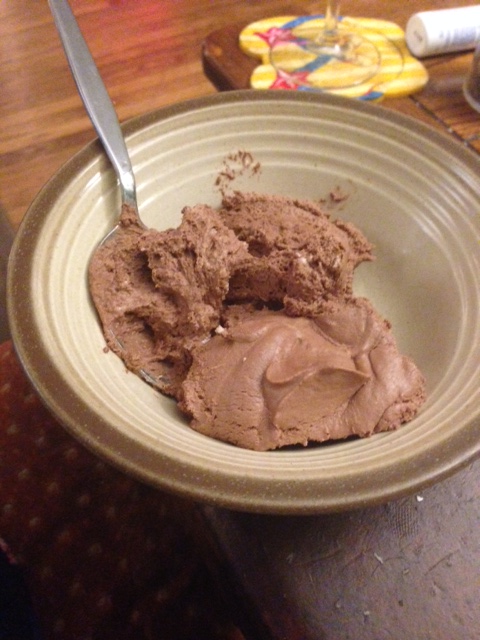
Then I made lactose-free yogurt. I made lactose-free fresh mozzarella cheese (although I wasn’t very good at it). I bought an ice cream maker and made ice cream in any flavor I wanted. I made chocolate mousse. For Thanksgiving, I made ice cream and pumpkin pie with sweetened condense milk and mashed potatoes with sour cream.

Basically, you can add the enzyme to the cream or starting dairy product, let it be for a couple of days, and then cook as you normally would. In milk, the treatment slightly changes the flavor of the milk (it becomes a little cloying, because glucose tastes different than lactose), but in prepared foods I can’t tell the difference. Below are a couple pics of some projects I enjoyed very much. Hopefully this brief run down helps a few of you, or a least gives a picture of our complicated food science lives.

photo1

Green tea ice cream, made with matcha green tea.

photo2

Chocolate mousse.


Fun science: the smell of lavender

This weekend, I visited a lavender farm, and thus smelled a lot of lavender. The sense of smell is really an amazing thing. Our vision processes light waves, our hearing processes sound waves– but smell processes many kinds of molecules at concentrations down to parts per billion. We tend to think of smell as a less important sense, but from a scientific standpoint, it’s amazing.

How does smell work?

The short answer is, we don’t fully know. We know receptors recognize different parts of molecules like ketones, alcohols and aldehydes. We don’t know how the brain assembles all the information from the various receptors. Some studies suggest that groups of neurons synchronize in different ways for different scents, while other studies suggest that the locations of receptors that fire create a spatial pattern for each smell. You can find further reading here, but fair warning, it’s tough material.

How sensitive is smell?

We can detect methyl mercaptan, the scent added to natural gas so that we can smell leaks (also the smell of asparagus pee!), down to parts per billion (ppb).

We can also tell the difference between very similar compounds. Linalool, the primary component of lavender oil, exists in two configurations called enantiomers. Both contain the same elements linked in the same way, but the two are mirror images. The left-handed linalool is the primary component of coriander seed and sweet orange flowers. The right-handed linalool is the primary component of lavender and sweet basil. (L)-linalool is sweeter and detectable to 7.4 ppb while (R)-linalool is woodier and detectable to 0.8 ppb.

Left:Left-handed linalool, the primary smell of coriander seed. Right: right-handed linalool, the primary smell of lavender oil. Image from Wikimedia commons.

Smell and Emotions

Studies suggest that the smell of lavender relieves anxiety and can promote sleep. Smell is strongly tied to emotions; the same parts of the brain that process smell store emotional memories.

I wonder if this connection is partially why we discount smell; smell is at its basic core tied to emotions rather than logic. It’s hard to put a smell into words, and science understands our others senses far better. I stood in the room full of lavender, remembering my last visit to a lavender farm with my family, and thought about how amazingly complex our response to little molecules can be.

Food and science: sous vide or water bath cooking

In sous vide cooking, food is cooked in a water-bath at low temperatures (130-150 F) for longer times. Food cooked sous vide can be radically different in texture and taste than food cooked by more traditional methods. Even better, sous vide cooking is really, really easy.

What is sous vide?

In sous vide cooking, food in plastic bags is placed in a fixed-temperature water bath. The water bath temperature is held most easily by a digital controller. Some people build their own systems on the cheap. I bought this one, which in my opinion is worth every bit of $200.

As I discussed last week, bacteria die above 125 F. Consequently, food can be cooked at any temperature above 125 F (the closer to 125 F, the longer required for sanitation). This means a steak can be cooked to 130 F and be rare throughout, but also safe. For a 1 inch thick steak, this takes about an hour.

Why is it different?

Like a crock pot, sous vide cooking can be used to make tough cuts of meat extremely tender. Unlike a crock pot, the user has precise control over the set temperature, and the food is isolated from the water in which it cooks. This means that sous vide food isn’t soggy like slow cooker food so often is.

When we cook meat, the textural and color changes we observe are due to changes in the protein of the meat. Different proteins break down at different temperatures. The controller I use (linked above) allows control down to 0.1 C or 0.5 F. With such fine control, the cook can choose the exact temperature at which they wish to cook, and thus the effect they’d like to have on the protein. Poached eggs best demonstrate the results of this control. The proteins in the yolk coagulate at lower temperatures than the proteins in the white. By changing the cooking temperature only slightly, the cook can dramatically change the textures in the poached egg. This is called the perfect egg–at the link you can see eggs cooked to a variety of temperatures.

The set-up

For my set-up, the only major cost was the controller. I clamp it to the edge of a 8 qt pot (bigger would be better, but it’s what I had). Many people vacuum-seal their food before cooking, but the sealing system is an additional cost. I put my food in ziplock bags (glad bags are reported to be BPA-free). Then I add a little oil, squeeze the air out, and seal. To start cooking, I wait for the water in the pot to heat up and I clip the bag to the edge of the pot with a clothes pin.

Recipes and further reading

  • Citizen sous vide: an excellent general guide, with links to recipes and product reviews. Recipes are sorted by meat and cut.
  • Douglas Baldwin’s A Practical Guide to Sous Vide: a more technical discussion of sous vide with straightforward and instructive videos. This guide really explains the motivations of cooking sous vide.
  • Recipe for tri-tip steak: this recipe suggests cooking a tri-tip at 130 F for 6 hours, results shown below. You can see the meat is still pink in the middle. Cooking for six hours allowed it to tenderize, and all I had to do was cut up some meat and stick it in a bag. Very easy and delicious.
  • Tri-tip steak cooked sous vide.

    Tri-tip steak cooked sous vide.

Food and science: when is food safe?

The milk we get at the store is pasteurized, and we all know that chicken must reach 165 F and pork must reach 145 F. What is the source of these numbers, and what is their purpose?

Raw foods like meat and dairy contain a certain number of pathogens that can make us sick. These pathogens die when heated above about 125 F. So why are cooking temperatures much higher than 125 F? The recommended cooking temperatures are the temperatures your food must reach in order for a large enough portion of the bacteria to die nearly instantaneously. At 140 F, the salmonella in ground beef is reduced by a factor of ten every 5.48 minutes. Salmonella must be reduced by a factor of ten million to one, so you would have to hold this temperature for a while. At 150 F, the salmonella is reduced by a factor of ten every 0.55 minutes, so this is quite a bit faster. At 160 F, the bacteria reduces fast enough that by the time you’ve measured it, enough time has passed. The process of “sous vide” cooking uses lower temperatures applied steadily for long times to cook food. I will discuss this excellent cooking method in a future post.

The process of making food safe by reducing the bacteria is called pasteurization, which you may be more familiar with from the dairy aisle than meat, but the concept is the same. Also in dairy, the time for pasteurization depends upon the temperature. Pasteurized milk is heated to 162 F for at least 15 seconds while ultra-pasteurized milk is heated to 280 F for 1-2 seconds. Eggs are not usually pasteurized, but they can be when heated to 130 F for about an hour.

Douglas Baldwin’s section on food safety in his online guide to sous vide is the source of much of the information I present here. It is full of scientific citations, but is very readable, and I highly recommend it as further reading. Happy Valentine’s Day!

Fun science: how does figure skating work?

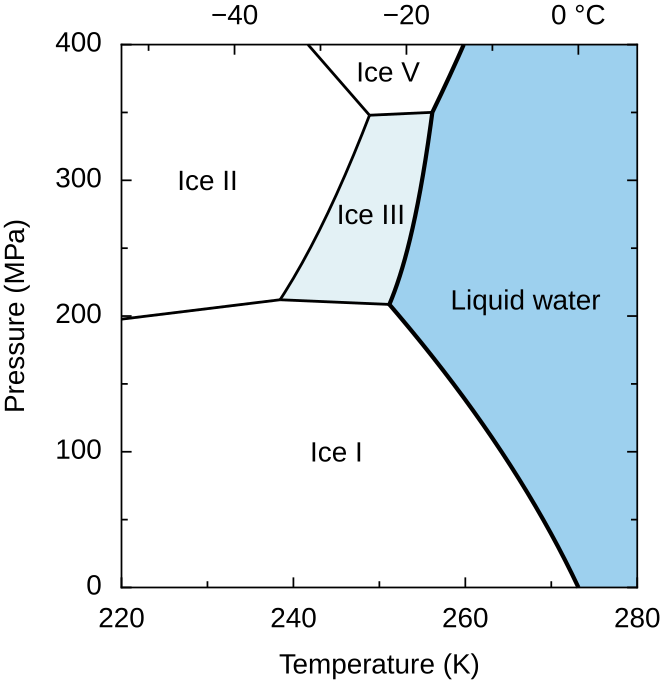
How does figure skating work? In short, we don’t fully know. You may have learned in science class that the pressure of the blade causes the ice to melt. Water does have the unusual property that solid ice is less dense than liquid water, and ice will melt under sufficient pressure. The thing is, the weight of a human body on an ice skate isn’t enough pressure to induce that melting.

Phase diagram for water. At normal atmospheric pressure, water freezes (to ice I, or normal ice) at 32 F or 273 K. At higher pressures, the freezing point is suppressed, as shown by the solid black line between the blue and white regions at the bottom. (Figure credit, Wikimedia)

So, if not the weight of the skater, what allows the blade to slide along? Well, there is a layer of liquid at the interface of the blade which allows the skater to glide. Denizens of very cold climates know that at sufficiently cold temperatures, skates do start sticking and catching on the ice (source: my mom’s many winters in Wisconsin, and science). Our best guess right now is that the surface properties of ice differ from the properties of the bulk. Perhaps at the surface of ice, the pressure *is* sufficient to cause melting (at temperatures near enough to freezing).

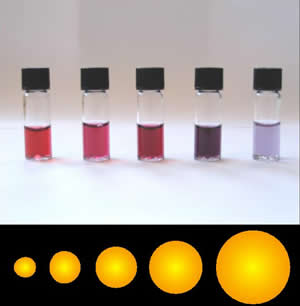
The difference between bulk properties (the properties of a big chunk of something) and surface and scale-related properties is increasingly studied. Nano-scale gold exhibits a wide variety of properties depending upon particle size, as you can see in the image below. Such colloidal gold is used in a variety of medical applications such as tumor detection and drug delivery.

Solution colors change as the gold particle sizes change. (image source Wikimedia).

When things like water and figure skating are still mysterious, who says science doesn’t leave room for wonder? Given the relatively few forces interacting in such systems, I find the richness of variation we observe entrancing. This Olympics, I’ll watch the athletes skate and consider the angstrom-scale world on which our lives glide.

Fun science: more crystals!

Months ago, I posted about the collection of crystals and minerals at the Smithsonian Natural History Museum. Well, I went again, this time armed with a nicer (and heavier!) camera, and below are a few of the finds.SONY DSC

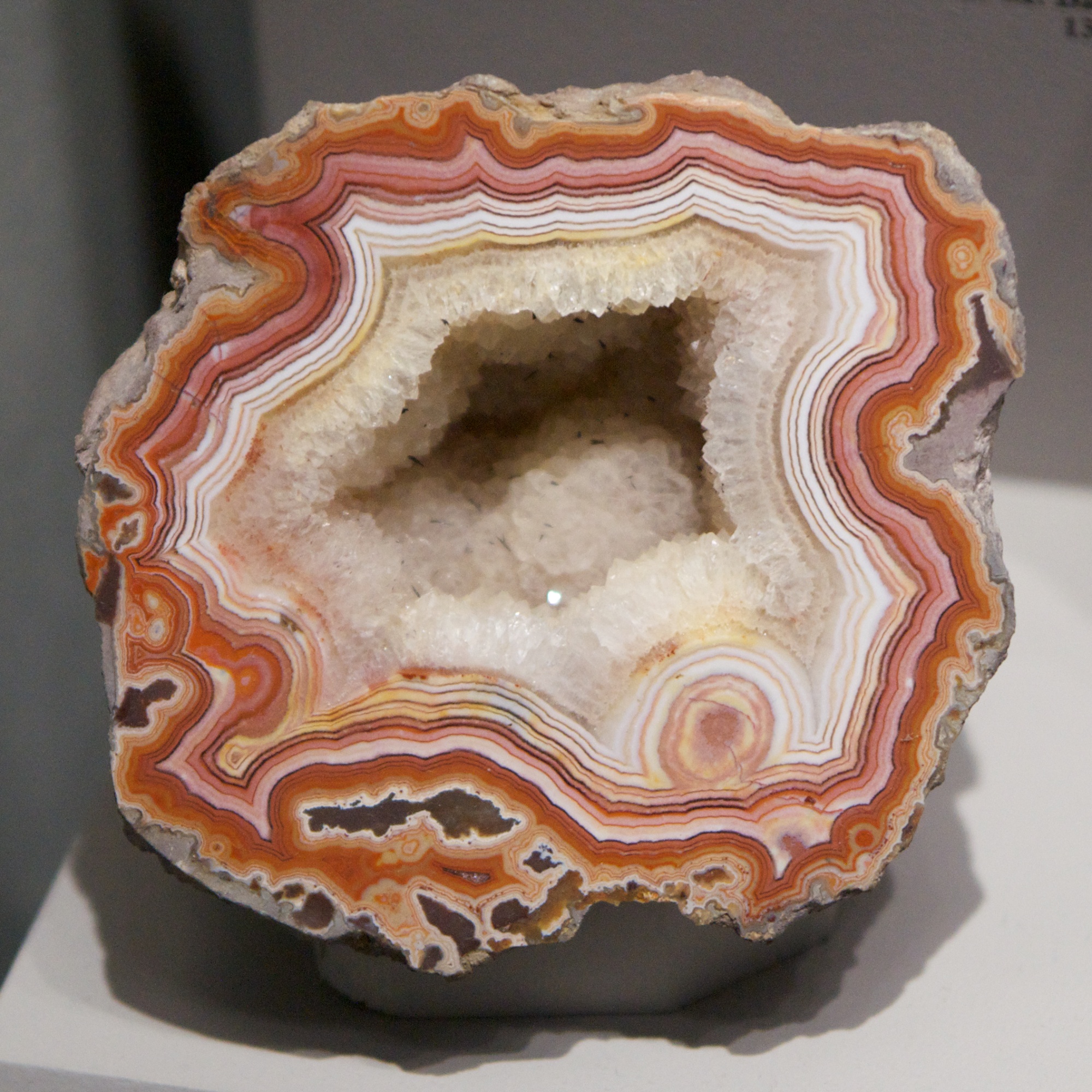
Quartz: quartz is a very common type of type of mineral (the second most common after feldspar), made up of silicon and oxygen. This variation is called agate. I used to buy agate slices as a kid, but the Smithsonian’s are slightly fancier.

SONY DSC

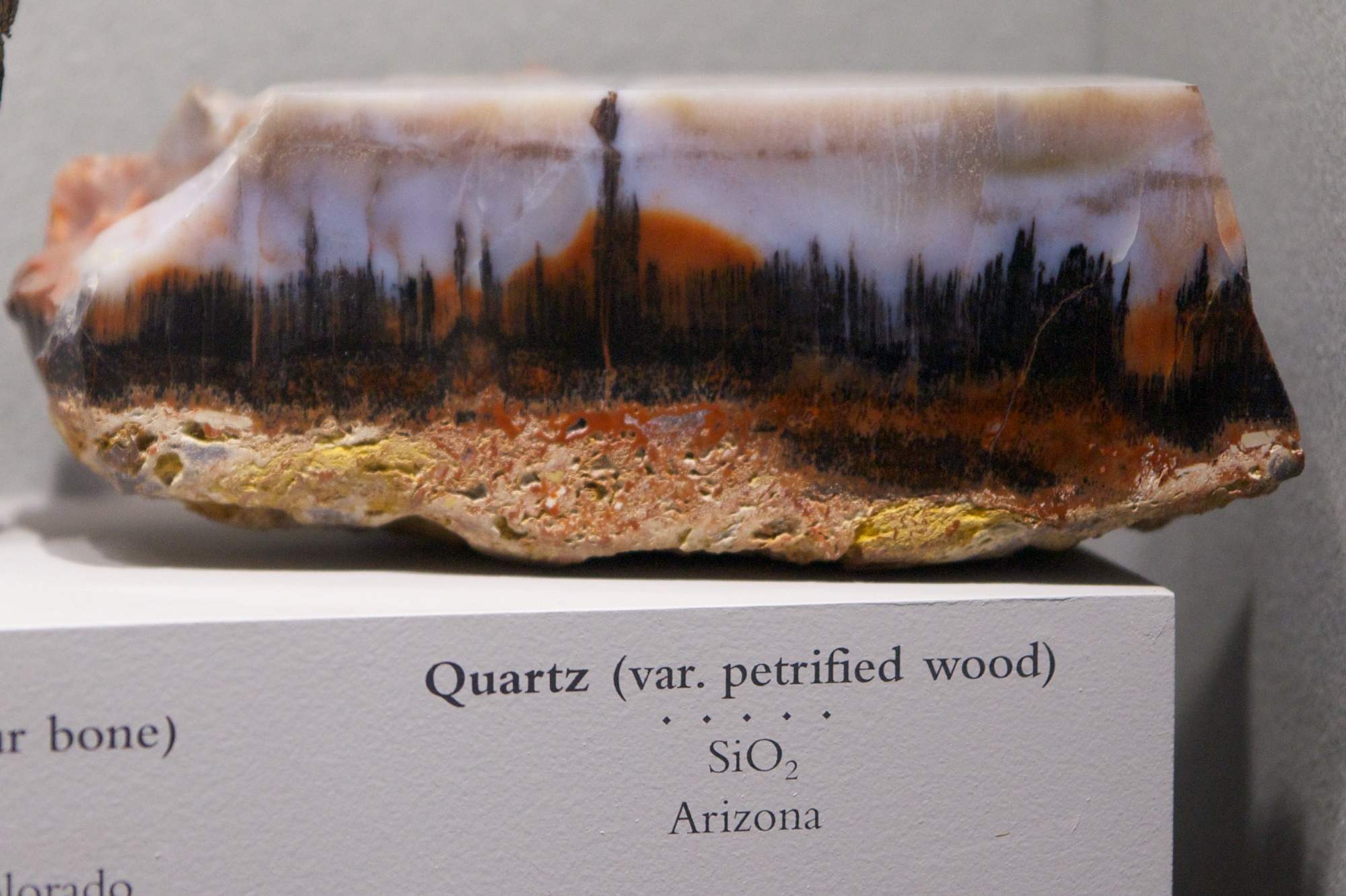
Another example of quartz. This one arose in a piece of petrified wood. I like this one because it looks like a painting of a setting sun behind a row of pine trees–almost Japanese.

SONY DSC

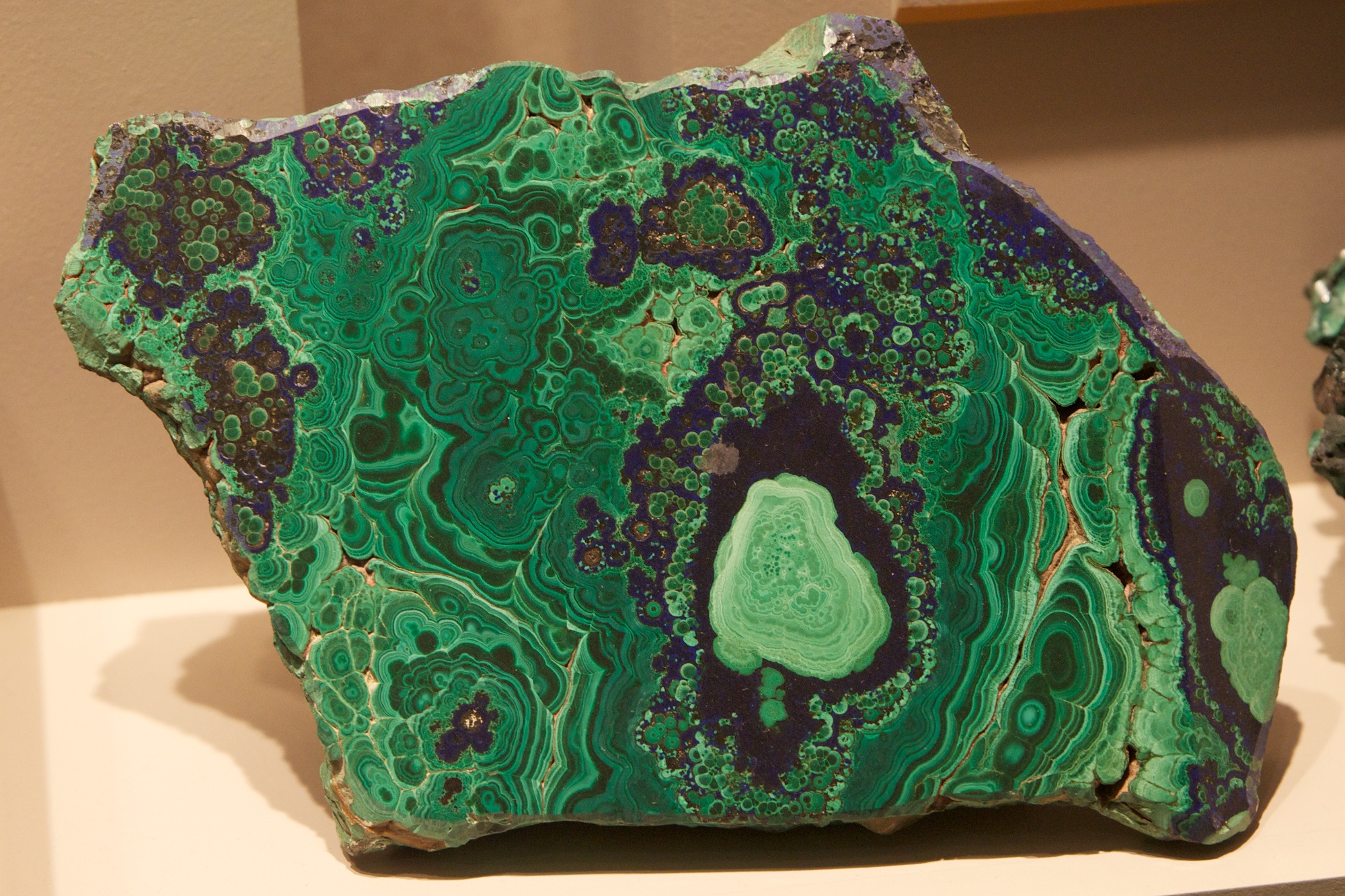
Malachite with azurite: both malachite and azurite are compounds of copper with oxygen, carbon, and hydrogen. The two differ only in the ratios. By geological standards, this rock formed somewhat quickly. We can tell this because the crystals are numerous and small. Single, large crystals form more slowly. This is why you should make ice cream at low temperatures, because when you freeze it quickly, many tiny crystals form, producing a better texture.

SONY DSC

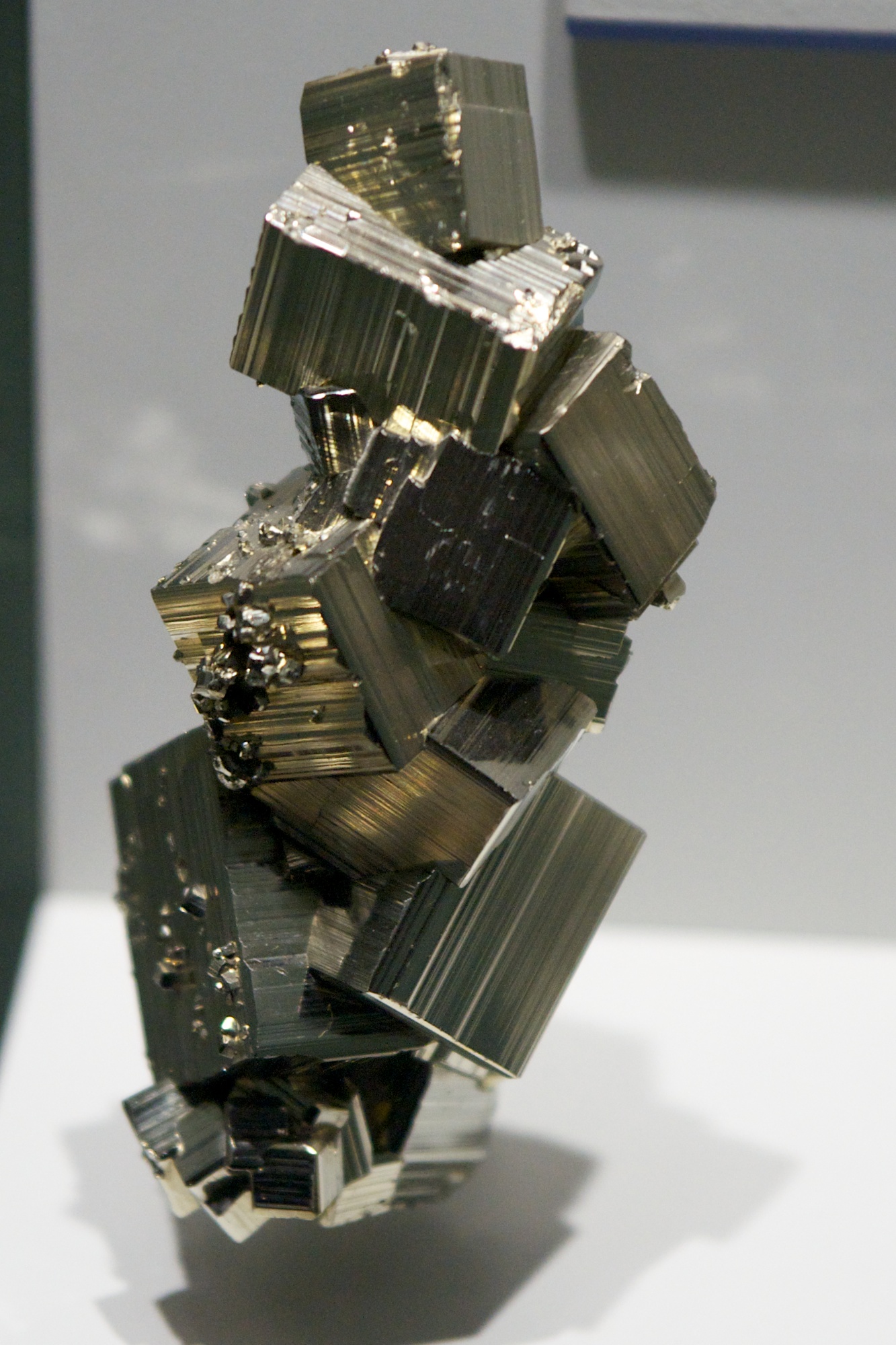
Pyrite: As you may see, pyrite, or fool’s gold, has a cubic crystalline structure. Pyrite is composed of iron and sulfur.

SONY DSC


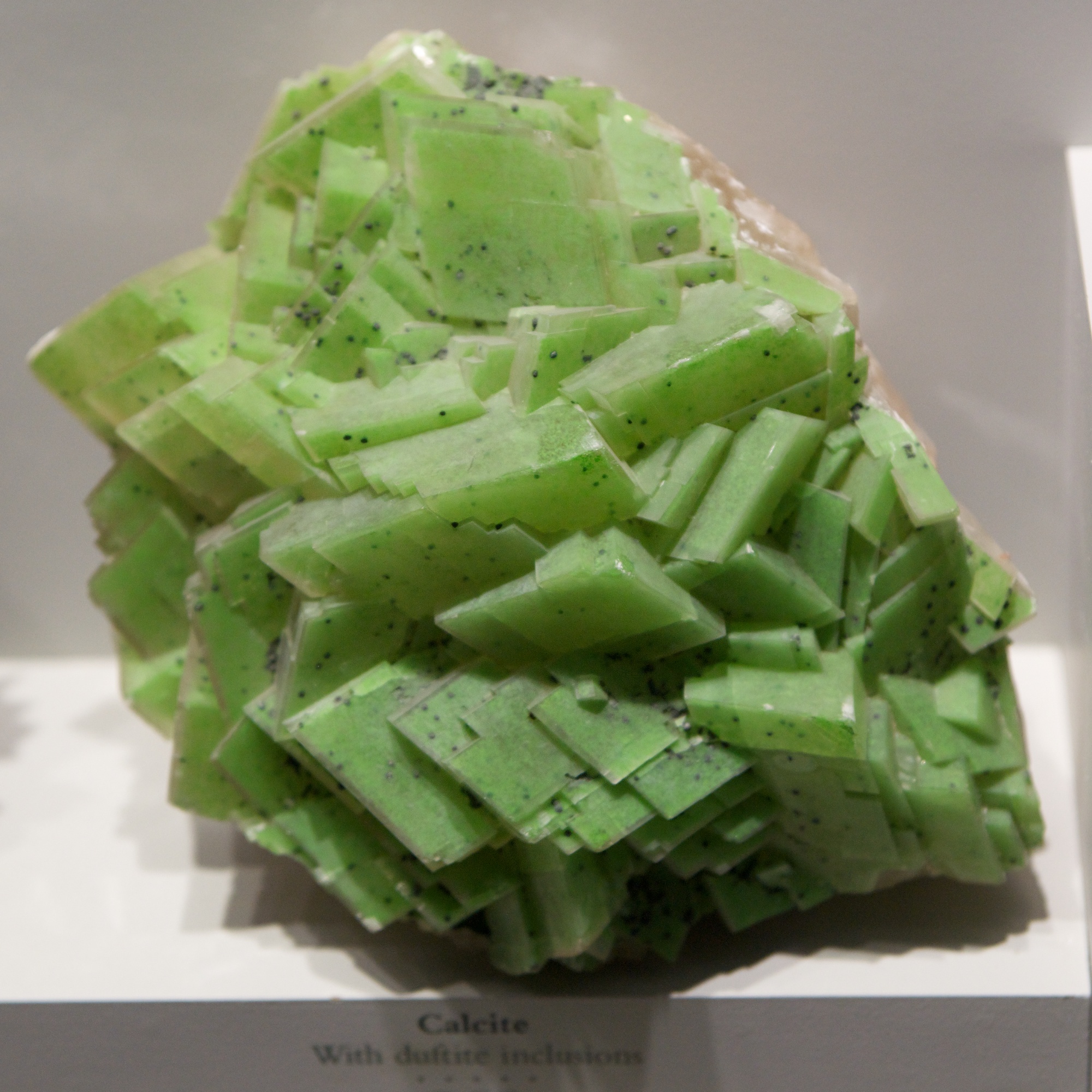
Calcite with duftite inclusions: Calcite is known for its optical properties such as birefringence. It was used as a material for gun sights in World War 2. Duftite is a compound of lead, copper, and arsenic. It is the duftite that gives the distinctive green color. I think of this as the kiwi mineral, as it even has the seeds.

The Science of Snowflakes

If you’ve ever seen a photo of a snowflake up close, you know how beautiful and intricate they can be. People say “no two snowflakes are alike”–this is true, because of the way snowflakes grow. Each snowflake grows according to the crystal structure of ice and the conditions it experiences as it falls to the ground.

From Wikipedia, click for link.

What is an ice crystal?

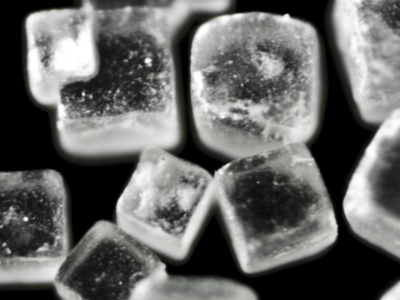
A snowflake is a single crystal of ice. Many substances are crystalline, but most of the ones we encounter are polycrystalline, or composed of many crystals. Some examples of crystalline materials are metals, bone, ceramics, and jewels. Different kinds of crystals grow in different ways– some are cubic and some are hexagonal. (You can see great crystals in the Smithsonian Natural History Museum in Washington, DC. Some pictures are in this link.) Table salt, for instance, is cubic.

Salt crystals, via Tony Wong on Flickr.

Ice has a hexagonal crystal structure, which is why snowflakes have hexagonal symmetry. A snowflake tends to grow along six vectors (or directions) separated by 60 degrees each. Some particle of dirt nucleates, or initiates, the beginning of a snowflake. The exact mechanism is not known. But once growth has been initiated, the snowflake grows. (If you have ever made rock candy, you create a supersaturated mixture of sugar in water. Then you add a sugar crystal, onto which more sugar crystal grows.)

Snowflakes are unique

Snowflakes are so varied because each snowflake experiences a slightly different environment. Tiny differences in temperature, pressure, and moisture change how each snowflake grows. In the snowflake above, you can even see flaws in tiny parts of the hexagonal symmetry. Even across a snowflake, tiny differences change how the crystal grows. Snowflakes as big as a dime have been documented, but theoretically, there is no size limit.

Learn more!

One of the first photographers of snowflakes was Wilson Bentley. He photographed over 5,000 flakes from his home in Vermont in the 1800 and 1900s. The children’s book Snowflake Bentley describes his life and work.

Ken Libbrecht, a professor of physics at Caltech, also maintains an awesome website about his research on snowflakes. In his lab, he studies how to grow snowflakes, to better understand the conditions under which they form. He has grown crystals up to an inch wide. His Field Guide to Snowflakes is a beautiful and informative resource on snowflakes, accessible to all audiences.