Tag Archives: history

Uriah P. Levy: American badass and savior of Monticello

Uriah P. Levy was the first Jewish commodore of the Navy. He abolished corporal punishment in the Navy. He was the subject of six court-martial trials, a navy record. He bought Monticello after Thomas Jefferson’s death; he and his nephew preserved it for us today. When I ran across his story, I couldn’t believe I’d never heard of this remarkable man.

Levy ran away from home at age ten to sail, but returned home at 12 for his bar mitzvah. He fought in the War of 1812, and was imprisoned by the British. He chose the navy over more profitable merchant work; he knew the discrimination he would face, but felt an obligation to serve, for his country and for his fellow Jews.

In 1816, an anti-Semitic crewmate named Potter challenged Levy to a duel with pistols. They walked twenty paces, then Potter fired and missed. Levy had tried to talk Potter out of the duel; he fired into the air. Potter would not be placated. Four more times, they reloaded, Potter missed and Levy fired into the air. On the sixth round, Levy killed Potter. He was eventually found not guilty on charges of dueling and exonerated in his court-martial hearing. He had five more court-martial hearings in his career, each for incidents fueled by anti-Semitism.

Levy bought a decrepit Monticello in 1836, ten years after Jefferson’s death. In that day, Jefferson’s defense of religious freedom wasn’t held in high esteem; in 1840 a visiting Episcopal clergyman called Monticello a “fitting monument” to Jefferson. Levy’s family had fled the Spanish Inquisition in Portugal. He repaired the house and purchased land that had been sold to satisfy Jefferson’s debts to rebuild the estate.

Levy’s first commission in the navy was the first ship in the navy without floggings for discipline. Levy played a role in the passage 1850 anti-flogging bill in Congress.

Upon his death in 1862, Levy willed Monticello to the American people. His will was broken, and the property was divided amongst relatives. Monticello fell into disrepair. Animals were stabled in the house.

In 1879, Levy’s nephew Jefferson Levy bought the house. He restored it, and sold it to a memorial foundation in 1923. The 1943, the navy commissioned the U.S.S Levy.

I had never heard of Uriah Levy before I found his name in an essay, even after living in Monticello’s shadow for six years and attending Jefferson’s university. He bravely served the country even when his country didn’t serve him. His is a remarkable and American story, and we should tell it more often.

Fun and inspiring: The Library of Congress online archives

My trip to the Library of Congress building later led me online to explore their equally amazing catalog of images. They have thousands of high-resolution images, from baseball cards to Japanese prints to Spanish civil war posters. And that’s just the prints and photographs section.

I preferred the collection of WPA posters. They combine beautiful design with period topics that can seem wacky today. Ride the El! Get tested for syphilis! Beat the Germans! Children’s piano competition! Over 900 governmental exhortations paint a vivid picture of 1930s life. I was amazed by the number of posters for illness: tuberculosis, syphilis (31 posters alone!), diphtheria, scarlet fever.

The posters are also great sources of design inspiration. Most have playful typography and engaging graphics. Many of them are available as high-resolution TIFFs, so you can print them out and have instant decor. My bathroom now has posters about syphilis and pneumonia. I’m sure my guests will feel safer.

And without further ado, some favorites:

As old as creation, Syphilis is now curable.

pneumonia strikes like a man eating shark led by its pilot fish the common cold.

The Art Institute of Chicago international exhibition of water colors

An orderly line is a safe line!

Stop and get your free fag bag– careless matches aid the Axis.

14th Illinois Cattle feeders meeting.

Writing prompt: add a cat to an existing universe

Time: 7 minutes. Click here to go to my list of prompts.

“Add a cat to an existing universe”

When the Founders left Earth, they brought a variety of animals, kept in suspended animation, for the founding of their eventual colony. Sheep, cows, horses, pigs, all the big animals that civilization used to get started, along with some smaller ones like chickens and dogs. The only animal out of suspension was Andine Kenda’s black cat Nyx. It prowled the hallways of the Neva, and it was clear that it owned that ship more than anyone.

The cat lived with Andine after Founding—in the city at first, and in Mt. Vit during the rains. After Andine was killed, she was taken back to the Neva, which then went to Naenia. Nyx refused to get off the ship on Naenia, and lived out her remaining 5 years as the terrifying spook of the ship. Stories recount engineers repairing parts of the ship encountering the black beast, and with the scratches to prove it.

Eventually all creatures slow, though. Her body was found, curled up as though sleeping, outside the room that was once Andine’s. In Vironeaveh, black cats are creatures of wonder and energy. On Naenia, they’re little demons that bring you bad luck.

(Just got back from vacation and with a cold, so this one was a struggle. But if I write now, I can always write, and that’s important!)

Food and science: Our international food

The food we eat today may have been grown on the farm next door or in Chile or in Ethiopia. But thousands of years ago, their ancestors grew wild somewhere. The plants we eat originate from around the world.

Before recently reading Jared Diamond’s Guns, Germs, and Steel, I never appreciated the difficulty of the domestication of plants. Only a handful of plants comprise the majority of our crop production and calorie consumption. Even in thousands of years, many plants have never been domesticated. A domestic plant is a precious thing; without domestic plants, civilization would probably not have arisen.

Scientists can determine the likely wild origins of crop foods by the location of genetically similar wild plants. Tomatoes, potatoes, corn, chocolate, and chile peppers all come from the Americas. Sugar cane comes from India and New Guinea. Rice and soybeans are from China. Onions are from present-day Iran. Cashews are from Brazil.

Pecans are from the Mississippi valley, but they were not grown commercially until the 1880s! Macadamia nuts were the sole domesticated food from Australia, and they were not grown commercially until the 1880s either.

Although these plants come from around the world, you wouldn’t know it from our cuisines and cultures today. Italian food and tomato sauce, the Irish Potato famine, cashews and pineapples and chiles in Thai fried-rice, Belgian chocolate… Although humans have trouble domesticating plants, we are good at adopting them. In antiquity, similar adoptions happened with wheat and rice and millet. For discussion of how various plants influenced history, I recommend the book Fifty Plants that Changed the Course of History by Bill Laws.

It piques my curiosity– 200 years ago, pecans and macadamia nuts were wild. 500 years ago, most of the world didn’t know chocolate or potatoes or tomatoes. With modern science, what will be a dietary staple in 100 years?

Science is Creative!

In the US, science is regarded as valuable, but dry and a bit stiff. As a student, it’s easy to get this impression, studying rigid facts first explored centuries ago. The math, chemistry, physics, and biology we learn in high school and college are about recreating long-known answers by well-established methods. But the process of making new science and math is inherently creative, and new ideas require letting the mind run wild a little. In this post, I’ll talk about how I develop my ideas.

I work with populations of oscillators. The idea of this research is that the complexity of the whole (the population) exceeds the complexity of each element (the oscillator). The human brain is a good example of such a system–each neuron is fairly simple and well-understood, but overall brain behavior arising from the interactions of many neurons is not understood. My research tends to work by observation–I notice something I find interesting and I explore that further. Other researchers work on what they suspect they will find, based upon other work. All research works within the context of its field. There are many interesting behaviors I have noted in my experiments, but I explore the ones I might explain. Really random observations are cool, but hard to frame in a way which is meaningful to the community.

The above may not sound particularly creative. But the key to experiments like I do is imagining what might happen when one explores slightly beyond what is known. It requires extrapolating from the areas we know, in the context of the rules we know, to the areas we don’t know. Some of the rules we know are pretty absolute, like thermodynamics, but others may be flexible. (As a note on this point, the stable chemical oscillations I study were once considered thermodynamically impossible. Someone had to bend the established understanding of thermodynamics to explain these oscillations. Einstein had to bend Newton’s Laws for relativity, and he arrived at that conclusion by logic rather than by observation.) In an experimental apparatus like mine, thousands of experiments are possible. It is up to the experimentalist to pick from the possibilities, in the context of what might work in his imagination, to demonstrate something hitherto unknown.

In some ways, the process is similar to writing. There are rules that must be obeyed, and the process of finding something new or interesting is very indirect. With science and writing, I develop some of my best ideas drinking a beer or taking a walk. Sitting at a desk focusing is required at times, but so too is active contemplation. The rules of science are broader and more rigid and take longer to learn, but there are similarities.

A lot of historical scientists were fascinating people, akin to historical artists. Van Gogh got his ear cut off in a fight. Astronomer Tycho Brahe lost his nose in a duel. Salvador Dali shellacked his hair. Electrical engineer Nikola Tesla fell in love with a pigeon. Mathematician Paul Erdos lived itinerantly for decades. In one visit to a colleague, he couldn’t figure out how to open a carton of juice, so he instead stabbed it open (among many, many other oddities). Physicist Richard Feynman used to work on his physics at strip clubs. Artists may share their eccentricities more in their works, but I would argue that scientists have every bit as much oddness.

I hope this post illustrates a little what it is like to be a research scientist, and how science at the cutting edge works. For more science posts, check out my fun science list.

Udvar-Házy Air & Space Museum

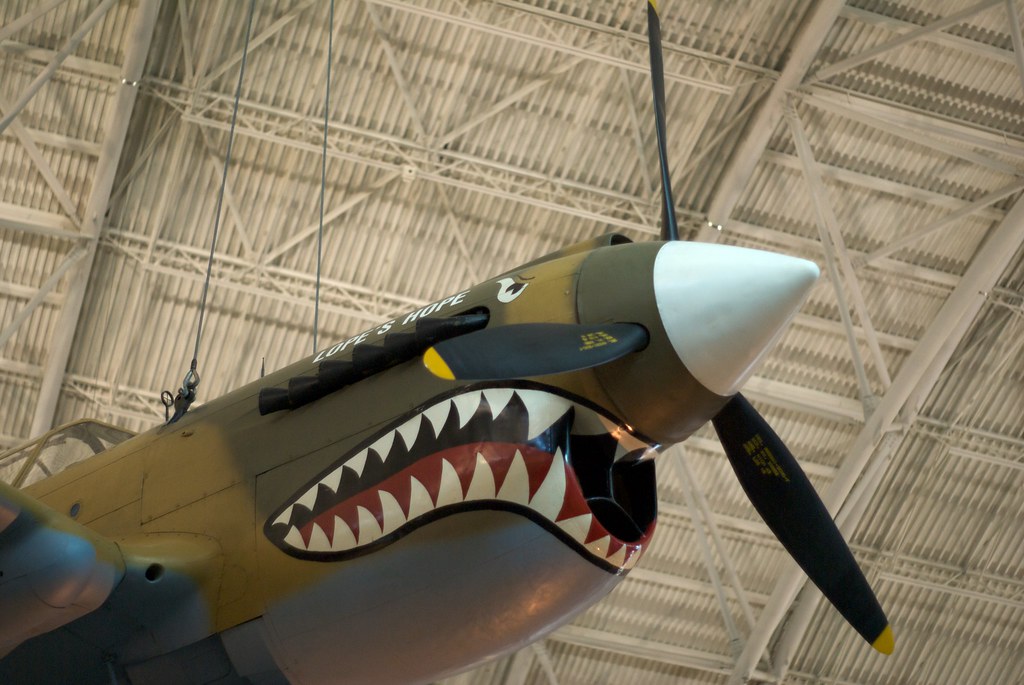
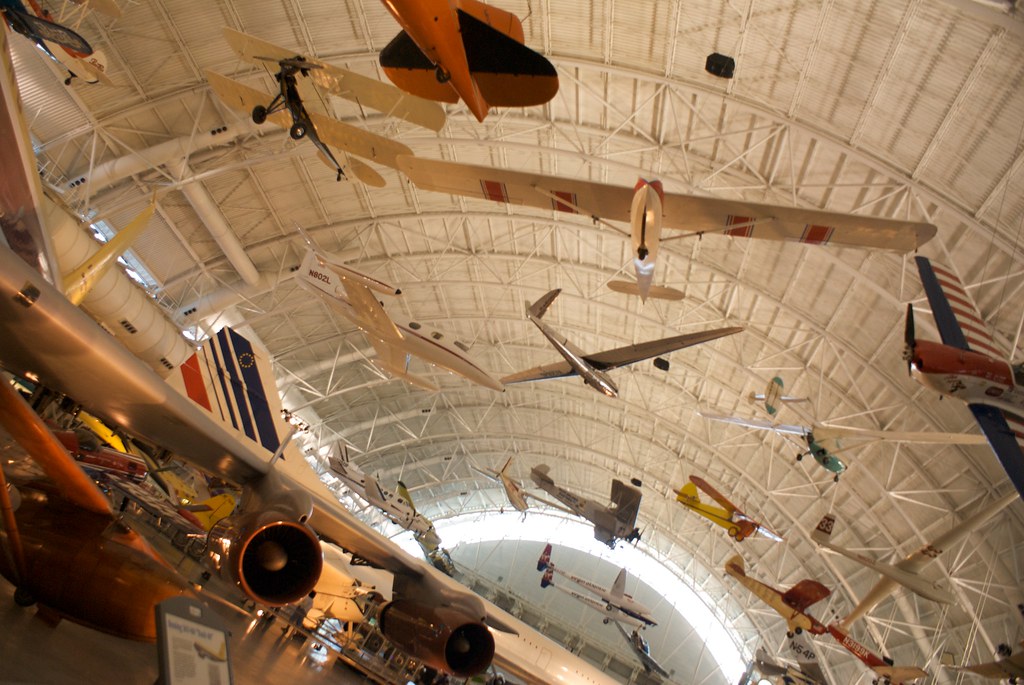
Did you know there are actually two Smithsonian Air and Space museum locations? There is one on the National Mall in Washington, DC, and a second in Virginia near Dulles Airport, called the Udvar-Házy Center. The Udvar-Házy location is an enormous hangar filled with historically significant aircrafts, aircraft parts, and spaceflight artifacts, including such highlights as the Enola Gay, an SR-71 Blackbird, and a space shuttle. If you are ever stuck at Dulles Airport and have some time to kill, there is a very cheap ($0.50 each way per person) shuttle between the airport and the museum.

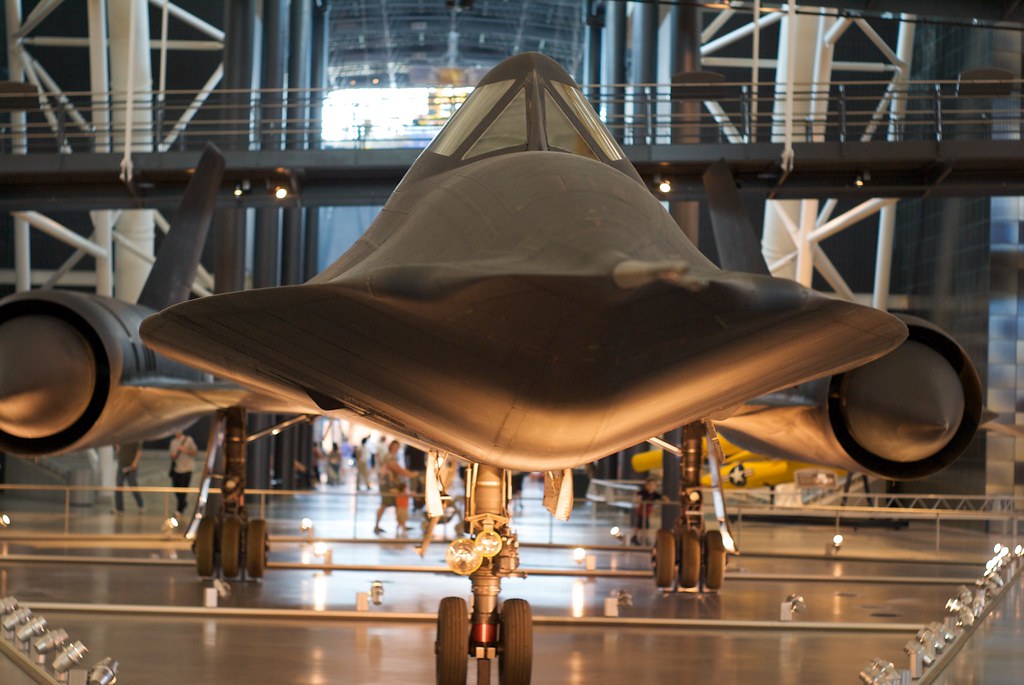
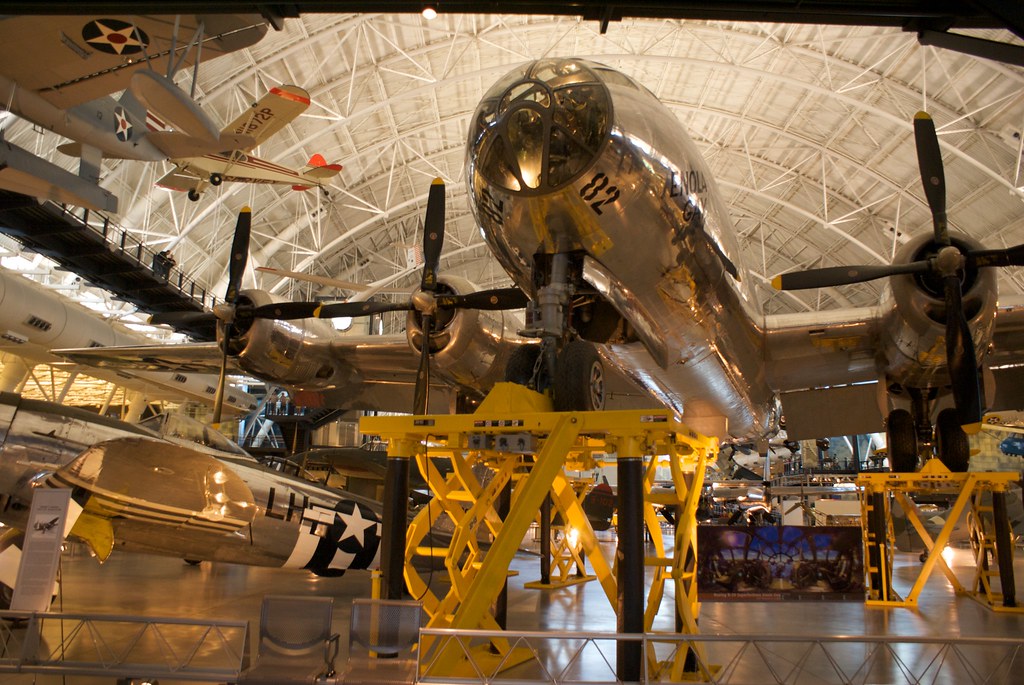
For those unfamiliar with American aircrafts (as I mostly am), the Enola Gay is the plane that dropped the atomic bomb on Hiroshima. The SR-71 blackbird is the fastest plane ever built, even though it was built in the 70s. It flies so fast that at rest, its joints aren’t perfectly sealed, and it can leak fuel. This is because the metal expands significantly due to heat at high speeds. The museum also hold various antique aircrafts, aircraft oddities, engines and engine cross sections. Another area holds retired military planes, and a third area holds NASA artifacts. I went there a couple of years ago. My creative commons folder of images is here, and I include a few pictures below.

The SR-71 blackbird:

The Enola Gay: