Tag Archives: science

Food and science: sous vide or water bath cooking

In sous vide cooking, food is cooked in a water-bath at low temperatures (130-150 F) for longer times. Food cooked sous vide can be radically different in texture and taste than food cooked by more traditional methods. Even better, sous vide cooking is really, really easy.

What is sous vide?

In sous vide cooking, food in plastic bags is placed in a fixed-temperature water bath. The water bath temperature is held most easily by a digital controller. Some people build their own systems on the cheap. I bought this one, which in my opinion is worth every bit of $200.

As I discussed last week, bacteria die above 125 F. Consequently, food can be cooked at any temperature above 125 F (the closer to 125 F, the longer required for sanitation). This means a steak can be cooked to 130 F and be rare throughout, but also safe. For a 1 inch thick steak, this takes about an hour.

Why is it different?

Like a crock pot, sous vide cooking can be used to make tough cuts of meat extremely tender. Unlike a crock pot, the user has precise control over the set temperature, and the food is isolated from the water in which it cooks. This means that sous vide food isn’t soggy like slow cooker food so often is.

When we cook meat, the textural and color changes we observe are due to changes in the protein of the meat. Different proteins break down at different temperatures. The controller I use (linked above) allows control down to 0.1 C or 0.5 F. With such fine control, the cook can choose the exact temperature at which they wish to cook, and thus the effect they’d like to have on the protein. Poached eggs best demonstrate the results of this control. The proteins in the yolk coagulate at lower temperatures than the proteins in the white. By changing the cooking temperature only slightly, the cook can dramatically change the textures in the poached egg. This is called the perfect egg–at the link you can see eggs cooked to a variety of temperatures.

The set-up

For my set-up, the only major cost was the controller. I clamp it to the edge of a 8 qt pot (bigger would be better, but it’s what I had). Many people vacuum-seal their food before cooking, but the sealing system is an additional cost. I put my food in ziplock bags (glad bags are reported to be BPA-free). Then I add a little oil, squeeze the air out, and seal. To start cooking, I wait for the water in the pot to heat up and I clip the bag to the edge of the pot with a clothes pin.

Recipes and further reading

  • Citizen sous vide: an excellent general guide, with links to recipes and product reviews. Recipes are sorted by meat and cut.
  • Douglas Baldwin’s A Practical Guide to Sous Vide: a more technical discussion of sous vide with straightforward and instructive videos. This guide really explains the motivations of cooking sous vide.
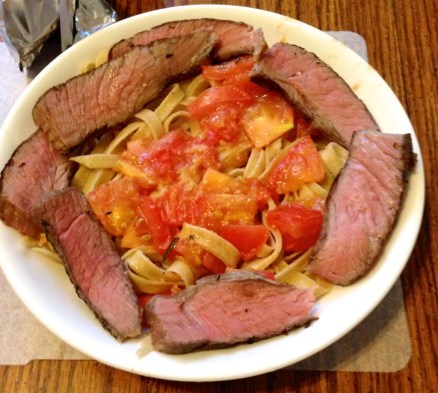
  • Recipe for tri-tip steak: this recipe suggests cooking a tri-tip at 130 F for 6 hours, results shown below. You can see the meat is still pink in the middle. Cooking for six hours allowed it to tenderize, and all I had to do was cut up some meat and stick it in a bag. Very easy and delicious.
  • Tri-tip steak cooked sous vide.
    Tri-tip steak cooked sous vide.
Food and science: when is food safe?

The milk we get at the store is pasteurized, and we all know that chicken must reach 165 F and pork must reach 145 F. What is the source of these numbers, and what is their purpose?

Raw foods like meat and dairy contain a certain number of pathogens that can make us sick. These pathogens die when heated above about 125 F. So why are cooking temperatures much higher than 125 F? The recommended cooking temperatures are the temperatures your food must reach in order for a large enough portion of the bacteria to die nearly instantaneously. At 140 F, the salmonella in ground beef is reduced by a factor of ten every 5.48 minutes. Salmonella must be reduced by a factor of ten million to one, so you would have to hold this temperature for a while. At 150 F, the salmonella is reduced by a factor of ten every 0.55 minutes, so this is quite a bit faster. At 160 F, the bacteria reduces fast enough that by the time you’ve measured it, enough time has passed. The process of “sous vide” cooking uses lower temperatures applied steadily for long times to cook food. I will discuss this excellent cooking method in a future post.

The process of making food safe by reducing the bacteria is called pasteurization, which you may be more familiar with from the dairy aisle than meat, but the concept is the same. Also in dairy, the time for pasteurization depends upon the temperature. Pasteurized milk is heated to 162 F for at least 15 seconds while ultra-pasteurized milk is heated to 280 F for 1-2 seconds. Eggs are not usually pasteurized, but they can be when heated to 130 F for about an hour.

Douglas Baldwin’s section on food safety in his online guide to sous vide is the source of much of the information I present here. It is full of scientific citations, but is very readable, and I highly recommend it as further reading. Happy Valentine’s Day!

Fun science: how does figure skating work?

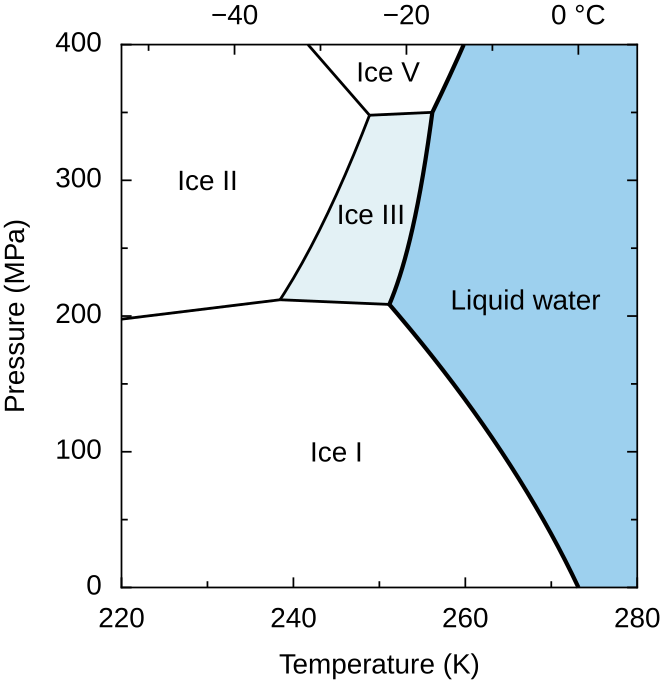
How does figure skating work? In short, we don’t fully know. You may have learned in science class that the pressure of the blade causes the ice to melt. Water does have the unusual property that solid ice is less dense than liquid water, and ice will melt under sufficient pressure. The thing is, the weight of a human body on an ice skate isn’t enough pressure to induce that melting.

Phase diagram for water. At normal atmospheric pressure, water freezes (to ice I, or normal ice) at 32 F or 273 K. At higher pressures, the freezing point is suppressed, as shown by the solid black line between the blue and white regions at the bottom. (Figure credit, Wikimedia)

So, if not the weight of the skater, what allows the blade to slide along? Well, there is a layer of liquid at the interface of the blade which allows the skater to glide. Denizens of very cold climates know that at sufficiently cold temperatures, skates do start sticking and catching on the ice (source: my mom’s many winters in Wisconsin, and science). Our best guess right now is that the surface properties of ice differ from the properties of the bulk. Perhaps at the surface of ice, the pressure *is* sufficient to cause melting (at temperatures near enough to freezing).

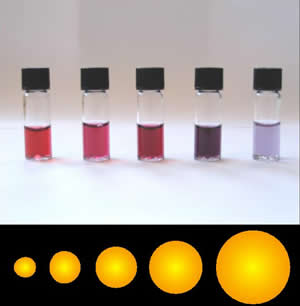
The difference between bulk properties (the properties of a big chunk of something) and surface and scale-related properties is increasingly studied. Nano-scale gold exhibits a wide variety of properties depending upon particle size, as you can see in the image below. Such colloidal gold is used in a variety of medical applications such as tumor detection and drug delivery.

Solution colors change as the gold particle sizes change. (image source Wikimedia).

When things like water and figure skating are still mysterious, who says science doesn’t leave room for wonder? Given the relatively few forces interacting in such systems, I find the richness of variation we observe entrancing. This Olympics, I’ll watch the athletes skate and consider the angstrom-scale world on which our lives glide.

Why I cook: food and science series

I cook a lot. I cook because it’s cheaper, but mostly I cook because I am absurdly lactose-intolerant, with a generally fussy tummy. As a kid, cooking seemed like something girly and irrelevant; food simply appeared. Now I see that eating is something we do every day and it can be either drudgery or exquisite.

This post is the first of a series I will post each Friday. Other posts will talk about specifics: science, recipes, and methods. Today I will talk more about how cooking became something I spend time on, and why cooking matters.

In college, I picked up some kind of food poisoning, probably on dorm food. I started to get sick a lot. I lost weight. I drank bulk-up drinks like body builders do. I became sensitive to milk products; I switched to lactose-free milk, and started drinking whole milk. I couldn’t move after meals, or else I’d get sick. If I ate even a bite too much, I got sick. If I got too hungry, I got sick. My lunches were often half a pizza slice. I bottomed out with a BMI below 18. Doctors seemed disinterested my inability to keep food, but they couldn’t explain the weight loss.

Finally, I started taking probiotics, which seemed to help. Now, seven years after my minimum weight, I’m at my high school weight, with gain more of a concern than loss. I cook most meals for myself, where I have control over my intake. Eating out with others isn’t easy, because I must be picky and inflexible about where and when I eat. I can’t wing it. If I deviate from the rules too much, I will get sick, which directly affects me for up to a day, and destabilizes me for the future. It’s manageable; some people with IBS get sick a dozen times a day, and digestive illnesses like Crohn’s disease can be life threatening.

The gut is understood very poorly, despite its importance. The enteric nervous system, or gut brain, is the site of 90% of serotonin and 50% of dopamine. With my ups and downs, I know well the relationship between gut health and mood. The digestive system is second in neurons only to the brain, and contains more neurons than the spinal cord. It is the engine of our body, and it functions in tandem with more bacteria than there are stars in the galaxy. Yet Americans spend the least time cooking of any country on Earth.

Loads of scientific evidence and my own personal evidence shows that a happy tummy goes a long ways towards a happy person, even in cases less extreme than mine. Good food can be a blissful experience, and in these posts I’ll talk about some methods toward good food. I don’t believe in diets or supplements or shortcuts, just making food that works. Good food can be made in a small kitchen on a limited budget with limited time. The primary ingredient is our own interest and curiosity, which I intend to share here.

Book Review: Cyteen (C. J. Cherryh 1988)

There are no spoilers in this review beyond what you’d find in the first few chapters or the cover blurb.

Rating: 4/5

Cyteen was the winner of the 1989 Hugo Award. It is about neither cyborgs nor teenagers nor cyborg teenagers, despite the name; Cyteen in the name of a planet. Cyteen takes place in the same universe as Downbelow Station (which I reviewed here) in a different culture and time. Like Downbelow Station, this is a book that requires patience up front, but offers great rewards. Cyteen is 750 pages of intricate scheming and counter-scheming, supported by interesting and conflicted characters.

Cyteen is the capital planet of the Union, one of a few major political entities in a future where humans have drifted amongst numerous stars with faster-than-light travel. The economy of Union is largely supported by the production of a cloned working force called “azis”, who are psychologically trained to serve in various capacities. All azis are produced in a research lab/city called Roseune. The book opens with power struggles between the forces of Roseune, the military, and another faction. A murder follows this initial conflict, which weakens the status of Roseune and fundamentally alters the lives of the characters. The continuing power struggles are described through the individuals trying to survive them at Roseune.

My biggest complaint: the book takes too long to develop. The first 20 pages are textbook-style background. Even after that, my progress was slow. It took a while to figure out a lot of the politics, and I didn’t understand what azi were for at least a hundred pages. Additionally, it read slowly, constantly packed with intricacy and detail on each large page of text. I very much enjoyed this book, but it is not light reading. Read this one when you have a solid block of time to set aside.

I would recommend Downbelow Station over Cyteen, although I prefer the characters in Cyteen. Despite a shared universe, the styles of the two books differ substantially. Downbelow Station is a smart space opera, threaded with politics. Cyteen is a personal drama, saturated with politics. If you enjoy hard science fiction and you are patient, you will probably enjoy both of them.

Fun science: more crystals!

Months ago, I posted about the collection of crystals and minerals at the Smithsonian Natural History Museum. Well, I went again, this time armed with a nicer (and heavier!) camera, and below are a few of the finds.SONY DSC

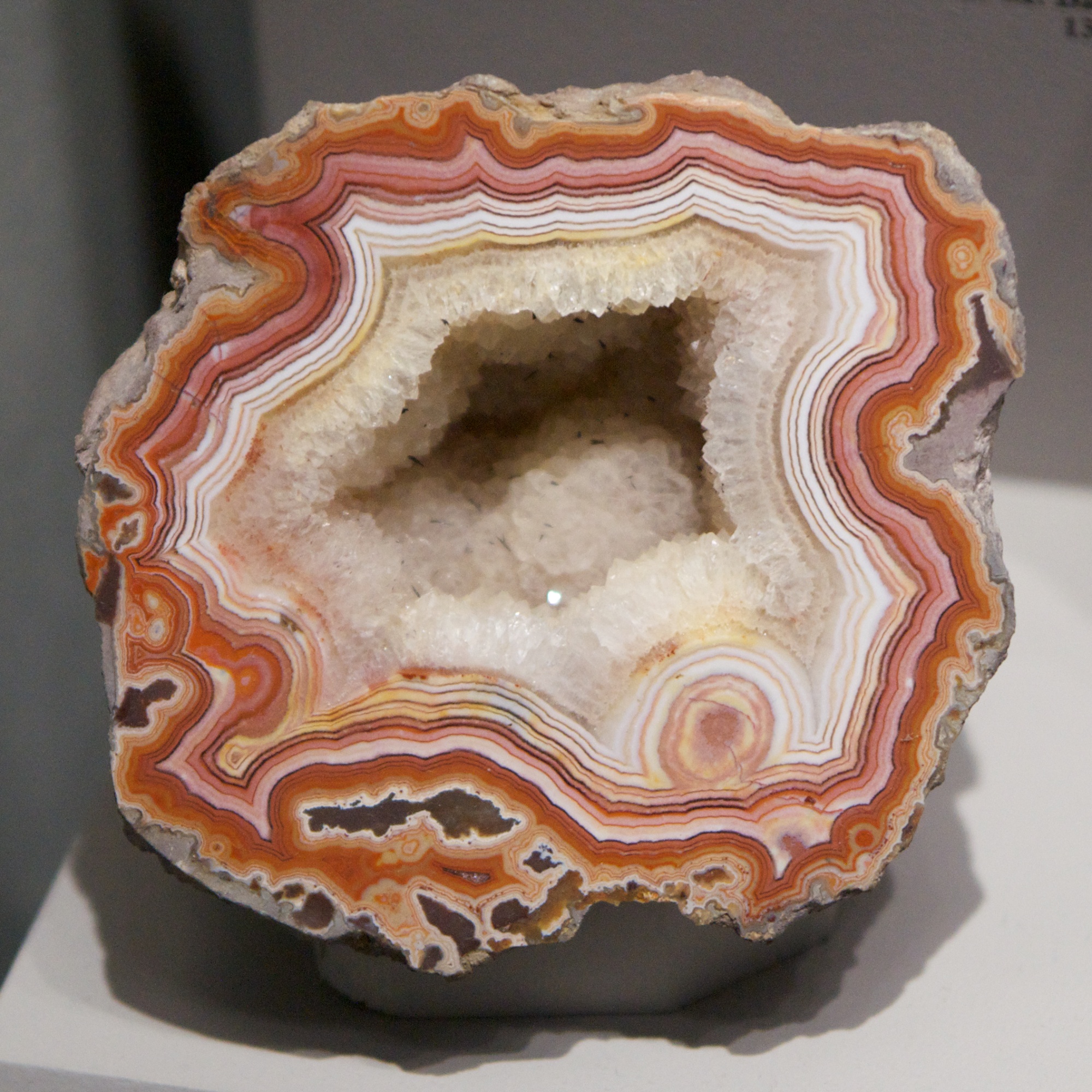
Quartz: quartz is a very common type of type of mineral (the second most common after feldspar), made up of silicon and oxygen. This variation is called agate. I used to buy agate slices as a kid, but the Smithsonian’s are slightly fancier.

SONY DSC

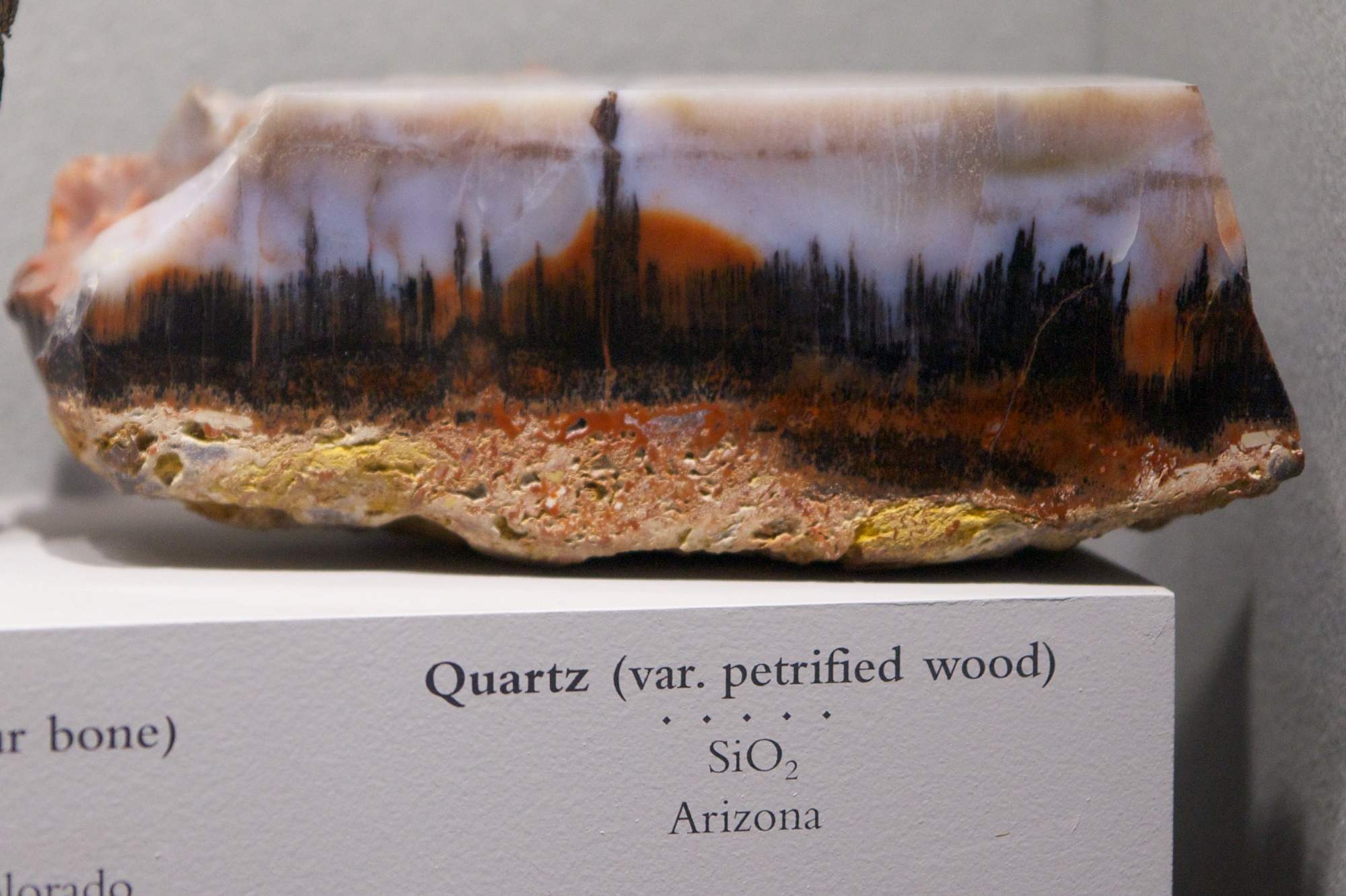
Another example of quartz. This one arose in a piece of petrified wood. I like this one because it looks like a painting of a setting sun behind a row of pine trees–almost Japanese.

SONY DSC

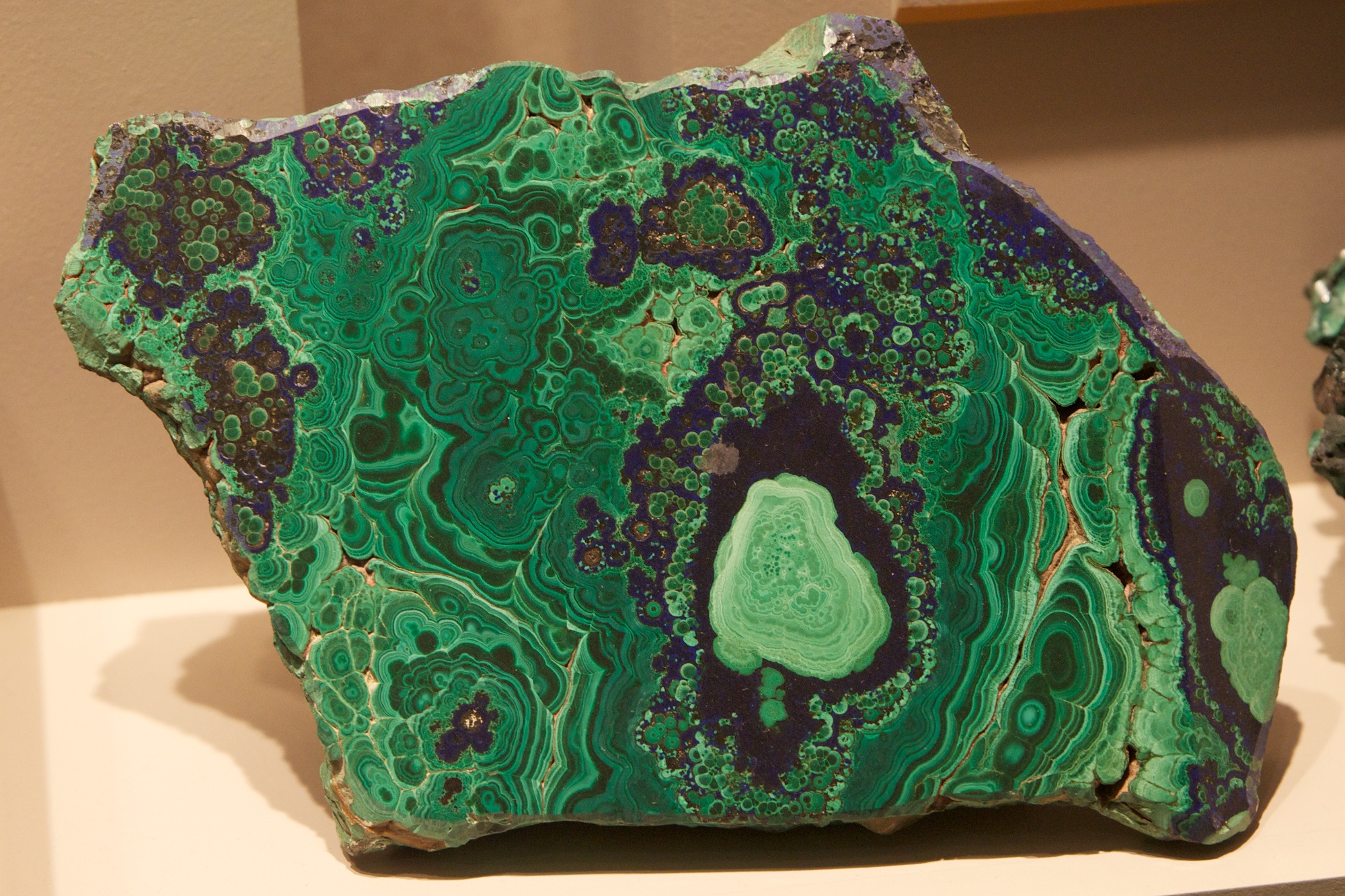
Malachite with azurite: both malachite and azurite are compounds of copper with oxygen, carbon, and hydrogen. The two differ only in the ratios. By geological standards, this rock formed somewhat quickly. We can tell this because the crystals are numerous and small. Single, large crystals form more slowly. This is why you should make ice cream at low temperatures, because when you freeze it quickly, many tiny crystals form, producing a better texture.

SONY DSC

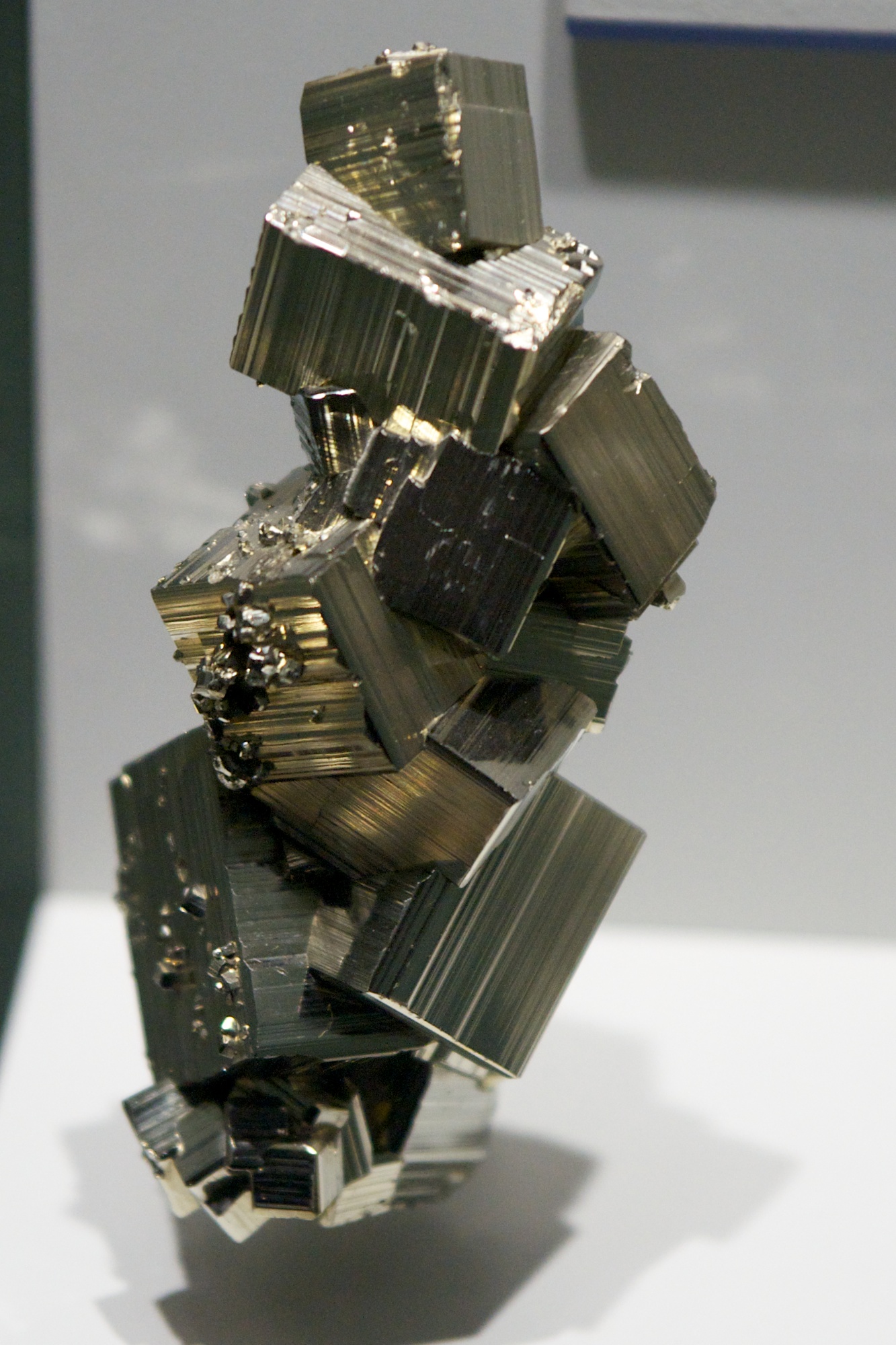
Pyrite: As you may see, pyrite, or fool’s gold, has a cubic crystalline structure. Pyrite is composed of iron and sulfur.

SONY DSC


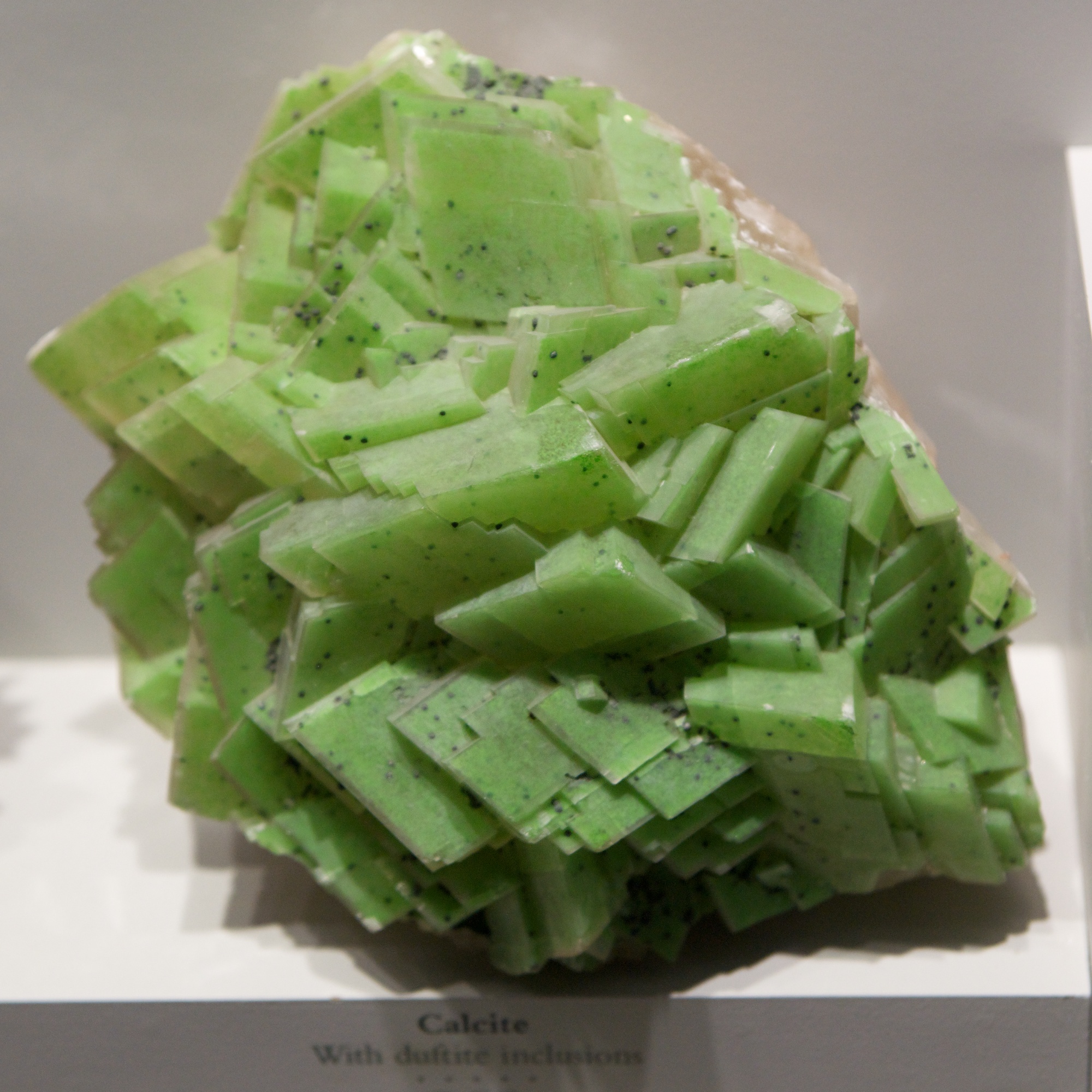
Calcite with duftite inclusions: Calcite is known for its optical properties such as birefringence. It was used as a material for gun sights in World War 2. Duftite is a compound of lead, copper, and arsenic. It is the duftite that gives the distinctive green color. I think of this as the kiwi mineral, as it even has the seeds.

Writing Prompt: Intrigue and Alchemy

Time: 10 minutes. Click here to go to my list of prompts.

This prompt led to my short story “The Alchemist’s Contract“, which appeared in Swords and Sorcery Magazine in November 2013.

“Intrigue and Alchemy”

“Beware the alchemist,” the man said from the shadows of the tavern. I wasn’t sure if he was truly real at first- I could see only the glow of his pipe, the shine of his glassy false eye, and his oversized black boots emerging, crossed, from the shadows. The soles were crumbling and peeling, looking more eaten at by some creature than by wear and years.

The room grew quiet as our party turned toward the man.

“Pay no mind to him,” someone behind me said.

“We have business with the alchemist,” I said. “He is a man of business, and we have the coin to entice him.”

“Don’t mind me, then,” the man in the corner said. He leaned forward. I expected gruffness, a man who’d lived a harsh life. His skin was smooth and pale. His one eye reflected distress and concern.

“Boy, you’re not more than 25,” my companion said. “Making stories about the alchemist to rile traveling strangers.”

“You’re mistaken,” he said gently, “I’ll be 80 next month.”

“Is this at all true?” my companion asked the barkeep.

The keep looked away and began to polish glasses.

“The alchemist,” the man in the corner said,” took my age from me, as sure as the Long War took my eye.”

“I’d like such a theft,” I said, three beers in.

“Well then, take yourself to the alchemist.” He stood and walked out the entryway, with the gait and pace of my grandfather.

The Science of Snowflakes

If you’ve ever seen a photo of a snowflake up close, you know how beautiful and intricate they can be. People say “no two snowflakes are alike”–this is true, because of the way snowflakes grow. Each snowflake grows according to the crystal structure of ice and the conditions it experiences as it falls to the ground.

From Wikipedia, click for link.

What is an ice crystal?

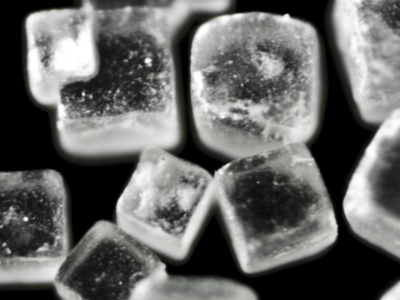
A snowflake is a single crystal of ice. Many substances are crystalline, but most of the ones we encounter are polycrystalline, or composed of many crystals. Some examples of crystalline materials are metals, bone, ceramics, and jewels. Different kinds of crystals grow in different ways– some are cubic and some are hexagonal. (You can see great crystals in the Smithsonian Natural History Museum in Washington, DC. Some pictures are in this link.) Table salt, for instance, is cubic.

Salt crystals, via Tony Wong on Flickr.

Ice has a hexagonal crystal structure, which is why snowflakes have hexagonal symmetry. A snowflake tends to grow along six vectors (or directions) separated by 60 degrees each. Some particle of dirt nucleates, or initiates, the beginning of a snowflake. The exact mechanism is not known. But once growth has been initiated, the snowflake grows. (If you have ever made rock candy, you create a supersaturated mixture of sugar in water. Then you add a sugar crystal, onto which more sugar crystal grows.)

Snowflakes are unique

Snowflakes are so varied because each snowflake experiences a slightly different environment. Tiny differences in temperature, pressure, and moisture change how each snowflake grows. In the snowflake above, you can even see flaws in tiny parts of the hexagonal symmetry. Even across a snowflake, tiny differences change how the crystal grows. Snowflakes as big as a dime have been documented, but theoretically, there is no size limit.

Learn more!

One of the first photographers of snowflakes was Wilson Bentley. He photographed over 5,000 flakes from his home in Vermont in the 1800 and 1900s. The children’s book Snowflake Bentley describes his life and work.

Ken Libbrecht, a professor of physics at Caltech, also maintains an awesome website about his research on snowflakes. In his lab, he studies how to grow snowflakes, to better understand the conditions under which they form. He has grown crystals up to an inch wide. His Field Guide to Snowflakes is a beautiful and informative resource on snowflakes, accessible to all audiences.

Writing Prompt: Cleaning the Lab

Time: 7 minutes. Click here to go to my list of prompts.

“Cleaning the lab”

Ash scowled at the mess sitting in front of her. What a mess decades of research could produce. Now, as the last student, it was her job to clean all of it, whether she knew what it was or not. What a graduation present!

She started with the stack of archaic computers. No one even knew the passwords to operate them anymore, not that anyone should care to. Top of the line, decades ago. If you need to make a killer cassette recording, this is your machine! She loaded them onto a cart, bringing them batch by batch to the electronic reclamation center. Their problem now. Three cartloads later, and at least that batch of junk was gone. The dust under the pile was incredible. While it wasn’t her job to clean the dirt of the lab, something was too disgusting about this dust not to try to improve. She didn’t have any cleaning implements. She wetted a rag and wiped the worst of it away. Three lines of the dirt remained, sinking into the painted cinderblock walls. They almost looked like a door…

She looked closer, and the cracks were the dirt had stuck seemed to penetrate into the concrete. She thought of the floor plan for the building—was there anything on the other side of this wall? There was an office next door, but it seemed like there was a dead space in between. She would have assumed it was for ventilation, if she’d ever thought of it before, but now she was looking at a tiny, bizarre door, about 2 feet high and 2 feet across. She got a crow bar from across the room and wedged it into the crack. She pulled, and the door yielded. Inside were thousands of tiny sprites, chained to tiny desks, in a room no more than 4 feet by 4 feet.

“What on earth is this?” She exclaimed, more to herself than them.

“We make the science,” one of them said, forlornly, before returning its hands to its intricate task at hand.

Fun Science: Vacuum and Pressure

Pressure is caused by collisions between particles. Scientists use the term “vacuum” when there are few particles, and thus few collisions. Air in our atmosphere is dense with particles; atmospheric pressure is very high compared to lab vacuum or the vacuum of space. Scientists use vacuum in many ways. Vacuums were used in lightbulbs and vacuum tubes (such as the old CRT or cathode ray tubes of old TVs and computers). Vacuums are used for depositing materials in clean environments, such as on silicon wafers for microcircuitry. Vacuums are used for separating liquids that have different evaporation points. In scientific labs, we can produce pressures billions of times lower than atmospheric pressure, but the pressure in space is still lower.

Atmospheric pressure: Every cubic centimeter (also called a milliliter) of air contains 2.5 x 10¹⁹  air molecules. That’s 25,000,000 trillion molecules, where the US debt is roughly $12 trillion, and a terabyte (TB) hard-drive holds a trillion bytes of information. That is a lot of particles causing a lot of collisions. The average particle travels only 66 nanometers before colliding with another particle. That’s only about 200 times the size of a nitrogen molecule.

On top of Mount Everest: Pressure is roughly 1/3 of the pressure at sea level, and there are 8 x 10¹⁸ molecules of air per cubic centimeter. The average particle travels 280 nm before colliding with another particle.

Incandescent light bulb: The pressure inside a lightbulb is 1 to 10 Pascals (pressure at sea level is 100,000 Pascals). There are still about 1014 molecules/cm3, or 100 trillion molecules. The average particle travels a mm to a cm before a collision. This pressure is too low for plants or animals to survive.

Ultra high lab vacuum: The most sophisticated lab vacuum equipment can produce pressures of 10-7 to 10-9 Pascals, yielding about 10,000,000 to 100,000 molecules/cm3, respectively. Particles travel an average distance of 100 to 10,000 km before colliding with another particle. Such extreme vacuums require highly specialized equipment, including specialized pumps and chambers. Only certain materials can be used; paint, many plastics and certain metals can release gases at very low pressures, making them unsuitable.

Space vacuum: The vacuum of space depends on what part of space you mean. The pressure on the moon is 10-9 Pa, or roughly our highest lab vacuum, with 400,000 particles/cm3. The pressure in interplanetary space (within the solar system) is lower yet, with only about 11 particles/cm3. It is estimated that there is only about 1 particle per meter cubed in the space between galaxies. Still, some microorganisms have survived exposures of days to space vacuum by forming a protective glass around themselves.

Going the other way, there are pressures much higher than the pressure of our atmosphere.

At the bottom of the Mariana trench: Pressure is about 1.1 x 10⁸ Pa, or about 1100 atmospheres. A variety of life has been observed in the Mariana trench.

At the center of the sun: Pressure is about 2.5 x 10¹⁶ Pa, or 2.5 x 10¹¹ atmospheres, or about 100,000 times the pressure at the core of the earth. This pressure is sufficient to fuel the fusion process of the sun, where hydrogen is combined to form helium.

At the center of a neutron star: Pressure is about 1034 Pa, or 1018 times the pressure at the center of the sun. Here, pressure is so high that normal atoms with electrons around a core of protons and neutrons cannot exists. Nuclei cannot exist in the core of a neutron star.

Read about other science topics on my fun science page.