Tag Archives: scifi

Book Review: The Invention of Everything Else (Samantha Hunt 2008)

There are no spoilers in this review beyond what you’d find in the first few chapters or the cover blurb.

Rating: 5/5

I absolutely adored “The Invention of Everything Else”. I’ve always meant to read more histories and biographies than I do, but sometimes they can be dry. This book, in many ways, is a fictional biography of Tesla, a famously eccentric inventor who first pioneered AC electricity and radio. To learn more about Tesla, check out this awesome Oatmeal cartoon, which has a lot more detail than I’ll include here. The book also has rich and lovely descriptions about historic New York City. And most of all, this book is a romance of eccentric people, whom I feel get far less respect than they deserve. The characters are pigeon-enthusiasts and hoarders and dreamers and inventors.

The book opens with Tesla as a very old man, broke and largely forgotten. He was a brilliant inventor, but not a businessman like Edison. He lives in a dreamlike state, remembering past glories and failures, and seeking his beloved white pigeon (see the Oatmeal cartoon). The other main character of the story is Louisa, a young vibrant woman who works at Tesla’s hotel. She likes to listen to radio dramas and to study people, so she is naturally fascinated by Tesla. Over the book, we learn a lot about Tesla and Louisa as they orbit one another.

The language of this book is wonderful. The descriptive passages evoked touchable images in my head although the descriptions were fairly brief. I could imagine being in bygone New York, and the distractions and wonders of the characters in that setting. The dirtiness of it, and the perpetual motion of it. Here is a quote from the first chapter that captures some of the loveliness of the language:

“Drawer #42. It sticks and creaks with the weather. This is the drawer where I once thought I’d keep all my best ideas. It contains only some cracked peanut shells. It is too dangerous to write my best ideas down. ‘Whoops. Wrong drawer. Whoops.’ I repeat the word. It’s one of my favorites. If it were possible I’d store ‘Whoops’ in the safe by my bed, along with ‘OK’ and ‘Sure thing’ and the documents that prove that I am officially an American citizen.”

If you are a lover of hard science fiction, this one might not be for you. The genre of this book is subtle, with the fantasy element of dreaming maybe most prominent. It seemed like every character in this book took a jump off of something, imagining they could fly. But if you love characters and setting and eccentricity, then you should like it. I loved it, and I really recommend it.
Book Review: The Witling (Vernor Vinge 1976)

There are no spoilers in this review beyond what you’d find in the first few chapters or the cover blurb.

Rating: 3/5

As far as I can tell, “The Witling” is Vernor Vinge’s second novel, and to some extent, it shows. I enjoyed reading it, but it doesn’t have the depths of Vinge’s later works like “A Fire Upon the Deep” or less-known but also good “The Peace War”. The book is only about 175 pages long; I’m not the fastest reader and I finished in two pretty short sessions, also unlike Vinge’s other novels.

The story opens with two humans who have become marooned on an alien world with human-like inhabitants. Only after being captured do the humans realize that the natives have what we would call supernatural abilities: transporting themselves or objects by will of the mind. The magnitude of this ability varies from person to person; those with the least ability are called witlings. The two humans, with no ability, fall into this category. The prince of the realm also happens to be a witling, which is a great source of shame for him. He is intrigued by the humans, especially the woman. The humans must get off the surface, as all the alien foods naturally contain heavy metals, and continued exposure will be fatal.

Although he provides no supporting science for the abilities of the aliens, Vinge does what I like best in sci-fi–he takes a simple premise and runs far with it. With these abilities, how would you imprison someone? How would you travel the world? Would you even need doors? How would you conduct warfare? These issues come up again and again through the book, and each time they are a delight.

Another interesting point touched upon is body image. The book starts with the human male describing the woman, Yoninne, as ugly and unpleasant, too stocky and temperamental. The aliens, who it’s hinted have a slightly stronger gravity, are stockier, and to them, Yoninne is close enough in build, but different enough to be exotic and tantalizing. I haven’t read much sci-fi of this era that deals with such issues of perception; unfortunately, this thread is not continued throughout the book.

The primary reason I rate “The Witling” as a 3/5 and not higher is because I found the ending unsatisfying. I won’t go into specifics in this review. The action was quite good and fun, but it conceptually bothered me.

With that caveat, I would recommend this book, especially to those who have read a lot of other works by Vernor Vinge. It’s interesting to see the form of his early, less perfect work, plus it’s a super quick read.

Book review: Beggars in Spain (Nancy Kress 1993)

There are no spoilers in this review beyond what you’d find in the first few chapters or the cover blurb.

Rating: 4/5

“Beggars in Spain” is a science fiction novel written in 1993; it was nominated for the top two awards in the field, the Hugo and the Nebula, though it didn’t win either. (“Red Mars” by Kim Stanley Robinson won both; it is one of the most detailed hard sf books I’ve read.) “Beggars in Spain” is one of those sf books that can be summarized by a what-if– what-if some people didn’t have to sleep at all? How would society react? What kinds of advantages would they have? How would it affect the personality of such a person?

The novel opens with a wealthy man wishing to procure advantageous genetic alterations for his to-be-conceived child in 2008. Though it is still rare, he wants his child to be sleepless. The children who have the trait have proven to be much smarter and always cheerful. Another child is conceived accidentally who is not sleepless (as a small nitpick, the science in this bit seemed fishy, but I am not familiar with what was known in 1993). Leisha is the sleepless daughter, Alice is the sleeper daughter.

Leisha is of course beautiful and brilliant. Much of the novel rotates around how she relates to sleeper people. The characters in the book didn’t always work for me; Leisha is always cheerful as a sleeper, but this is hard to relate to, and hard to imagine how it would even work. Also there is an injection of almost libertarian politics that I wasn’t sure what I thought of. The politics aren’t preachy and are presented as Leisha’s world-view rather than the author’s. I liked the first half of the novel immensely. I didn’t dislike the second half, but I found it less exciting and engaging. One consistently strong point of this book was the writing: I sometimes have to labor through harder science fiction books, which must belabor the description of complicated mechanical things. This book just flew for me, while still attacking the central question of science fiction: what would happen to people if? So if you are a fan of hard sf and only hard sf, it probably isn’t for you.

“Beggars in Spain” was also one of the most female-dominated sf books I’ve read. Most of the principal characters are female. The book is feminist without caring about it or focusing on it; these characters could just as easily be male but they simply aren’t. It’s feminist not in the sense of women’s rights, but simply having women as protagonists and examining their relationships. I’ve read umpteen scifi books with barely a woman on the pages, so this was a welcome change of pace. Nancy Kress is also one of the few premier female names in science fiction, so it also seemed appropriate.

Overall, I found “Beggars in Spain” a very worthy read. It raised a lot of thoughtful questions that even a week after finishing the book, I find myself thinking about. It never came together in a “wow” moment, as a few sf books do for me, but it was pleasant and easy to read, which is not always the rule in sf. This was the first work I’ve read by Nancy Kress, and based on this book, I want to read more from her.

Submit Something Somewhere

This weekend, my scifi writing group held a group event called “Submit something somewhere”. The premise of this event was for everyone in attendance to submit at least one piece to at least one publishing venue. We all know that the easiest way not to get published is to not submit for publication. I know I don’t try as often as I should, and almost every writer I’ve met doesn’t either. So we got together and did some research together about venues and submitted together. It was a good activity; since we pooled our findings, I think it could be good for any group of writers.

Mostly we looked at the SFWA (scifi writers of america) professional markets (aim high =) ). This is a great website for sff market info, if you ignore the 90s-ness of it. However I also found a list of all-genre short fiction markets by length that I thought was pretty awesome.

I submitted two pieces. Hopefully they will go better than my last submissions, but I know they won’t do worse. Each time I try I get better, and I’ll eventually get there.

So go submit something somewhere! It’s better to try and fail than not to try at all!

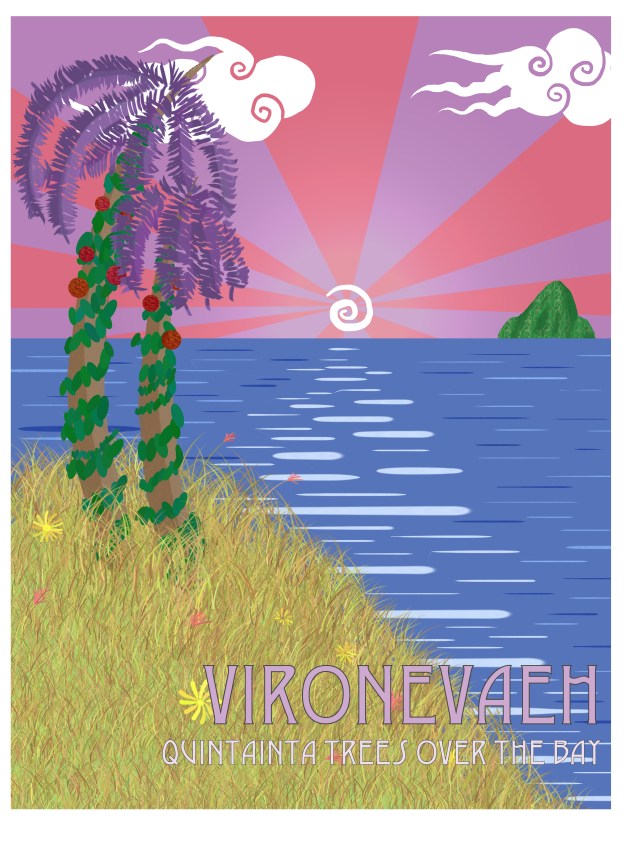
Happy 16th Anniversary, Vironevaeh!

Sixteen years ago I first started writing about Vironevaeh, the extraterrestrial city that is the namesake for this website. In middle school I was that kid– I told everyone who would listen that I was an alien. I was so bizarre kids didn’t know how to bully me, not that they didn’t try. I happily kept inventing my world.

In high school I started to read the classics of sci-fi (my top 20 scifi books). Before that, I think Vironevaeh was an alter-ego–I had a different identity there, and knew different people. Advanced having of imaginary friends. The classics gave me a different perspective, the perspective of world-building. I’ve been slowly plugging away ever since. There’s a spreadsheet with a thousand years of history, some more densely detailed than others. There’s a list of the 1027 first Vironevaeh. There’s a ton of pointless info, as there is so much pointless info in life. But all of it was a labor of love, through all the years of perplexed looks.

For your delight, some of the works from over the years. It is good to pause at times and review the path. I’ve posted a lot more recent works on this blog; here are some oldies. Drawing for Vironevaeh forced me to push myself. (Many other illustrations are also available in Vironevaeh: Science Fiction Fairy Tales, which is free on the iPad.) Some things are worth the long-haul.

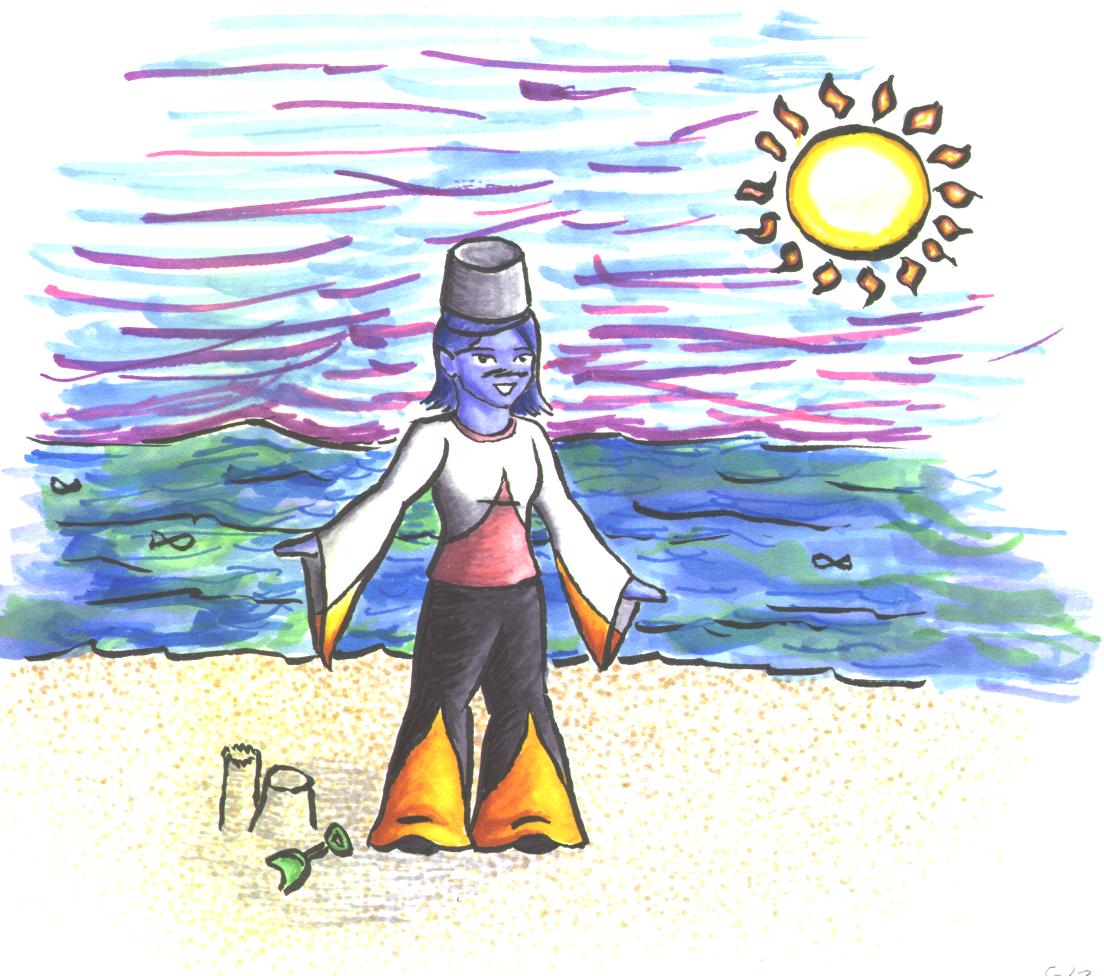
Jainus Aillette Torwin Trarce at beach_marker

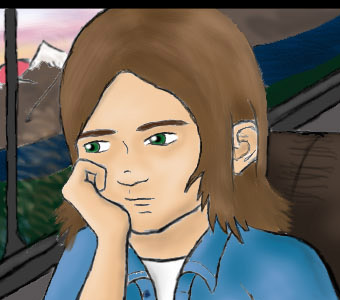
My alter-ego, Jainus. From 2004.

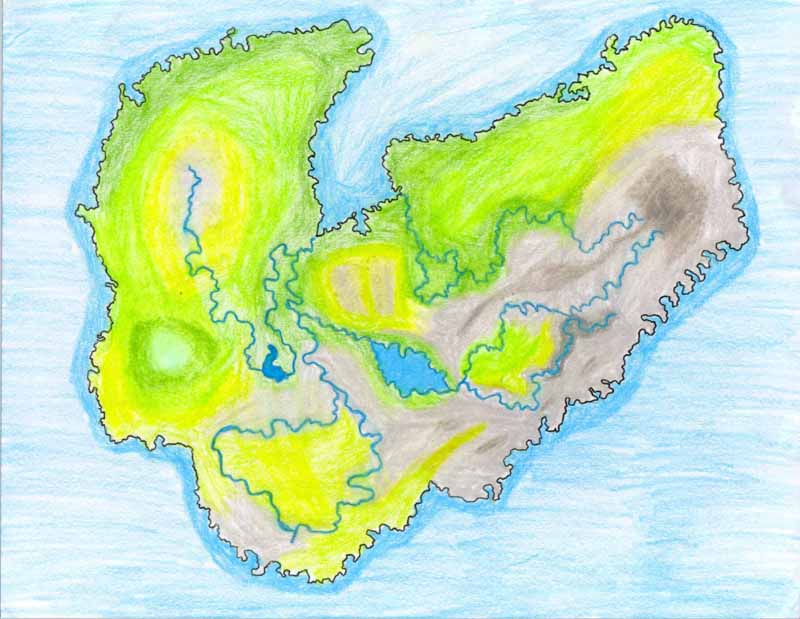
Vironevaeh relief map 800pix

Map of the island of Vironevaeh, from 2004 or before.

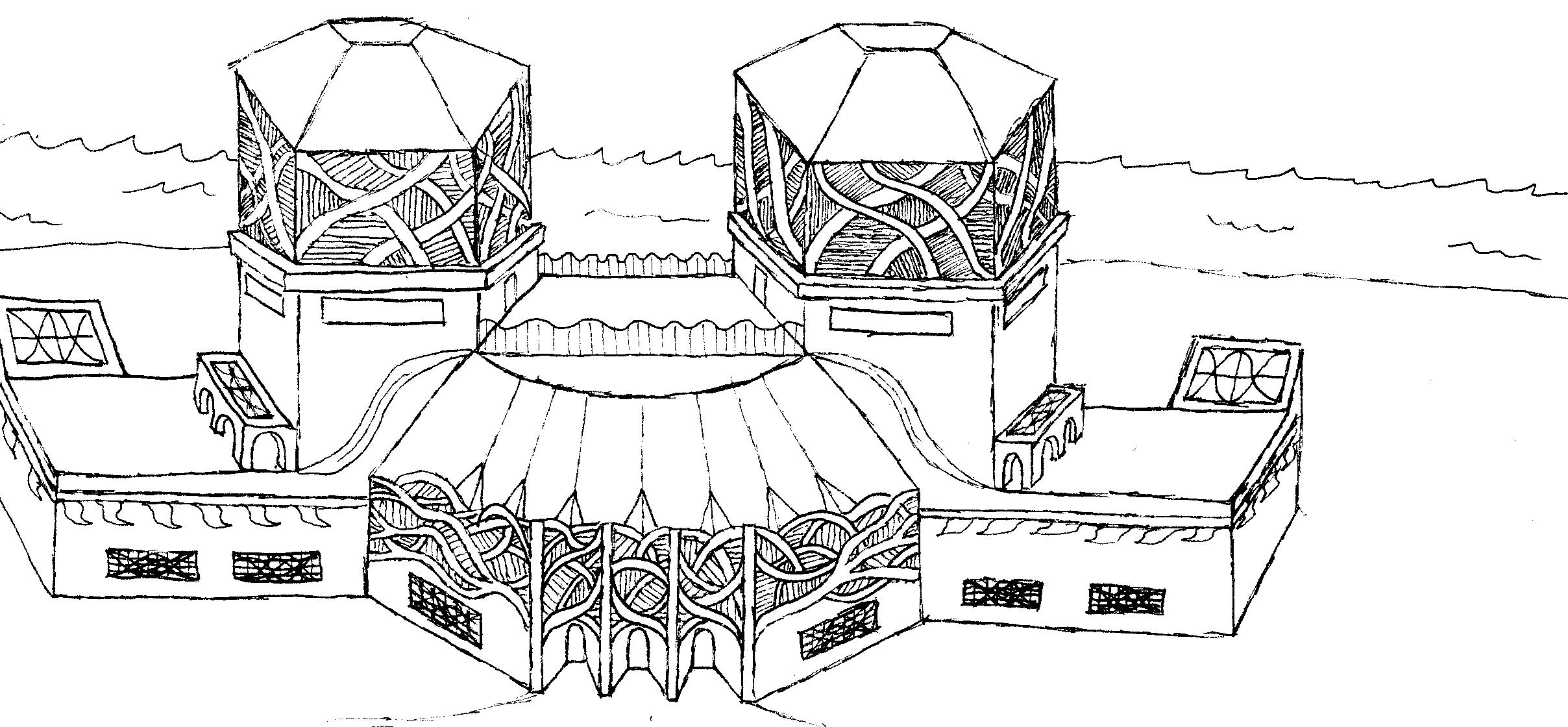
building Palace_at_Vironevaeh_Proper

Palace, 2003.

clothing1 v2

Clothing from one historical period, 2007.

ChibiTempest

One of Jainus’ sisters, 2001.

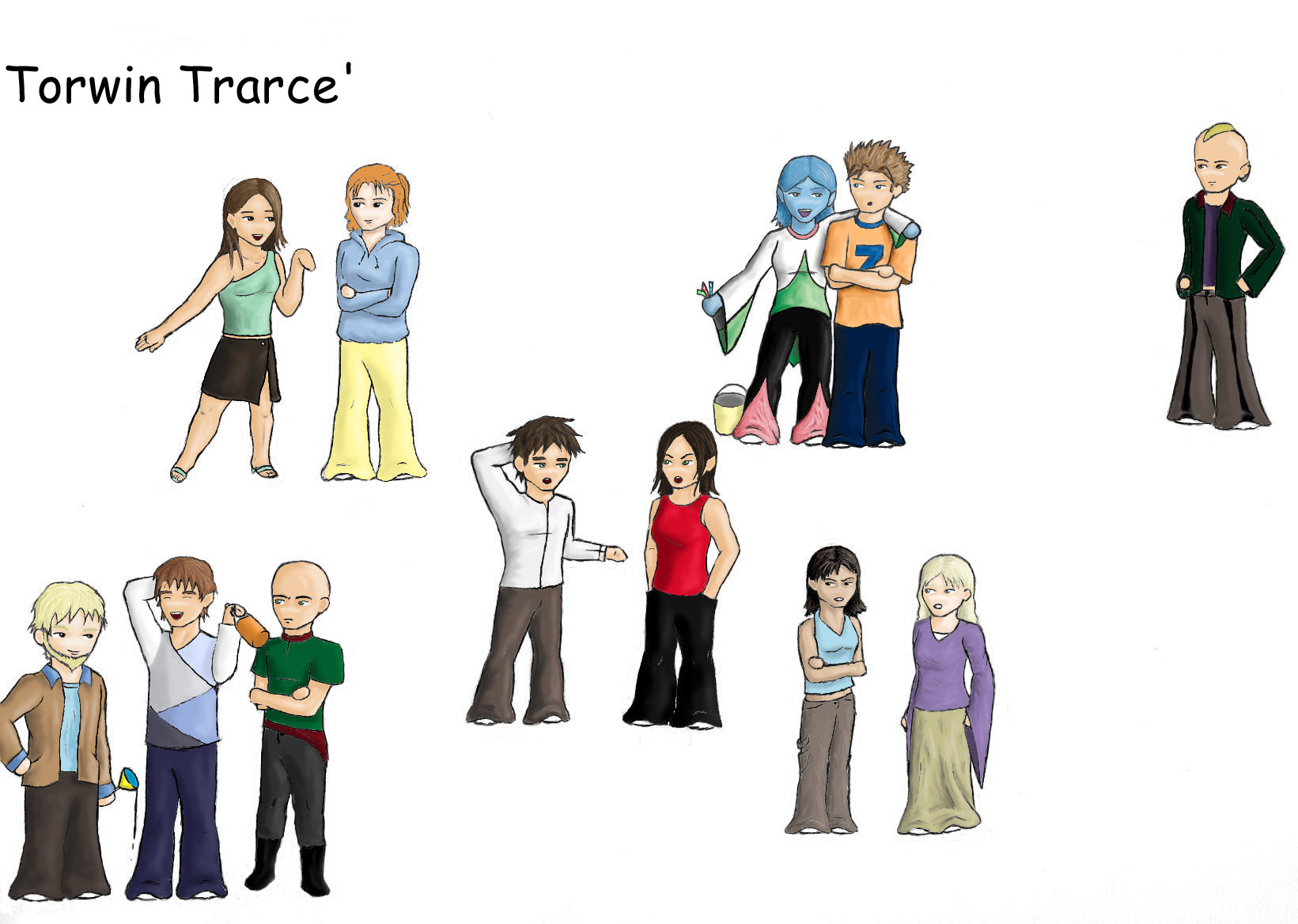
Torwin Trarce chibi pencil tablet

Jainus and her 11 siblings, 2004.

Kolo Kolo Whit in Color

Kolo, a notorious political traitor, 2004.

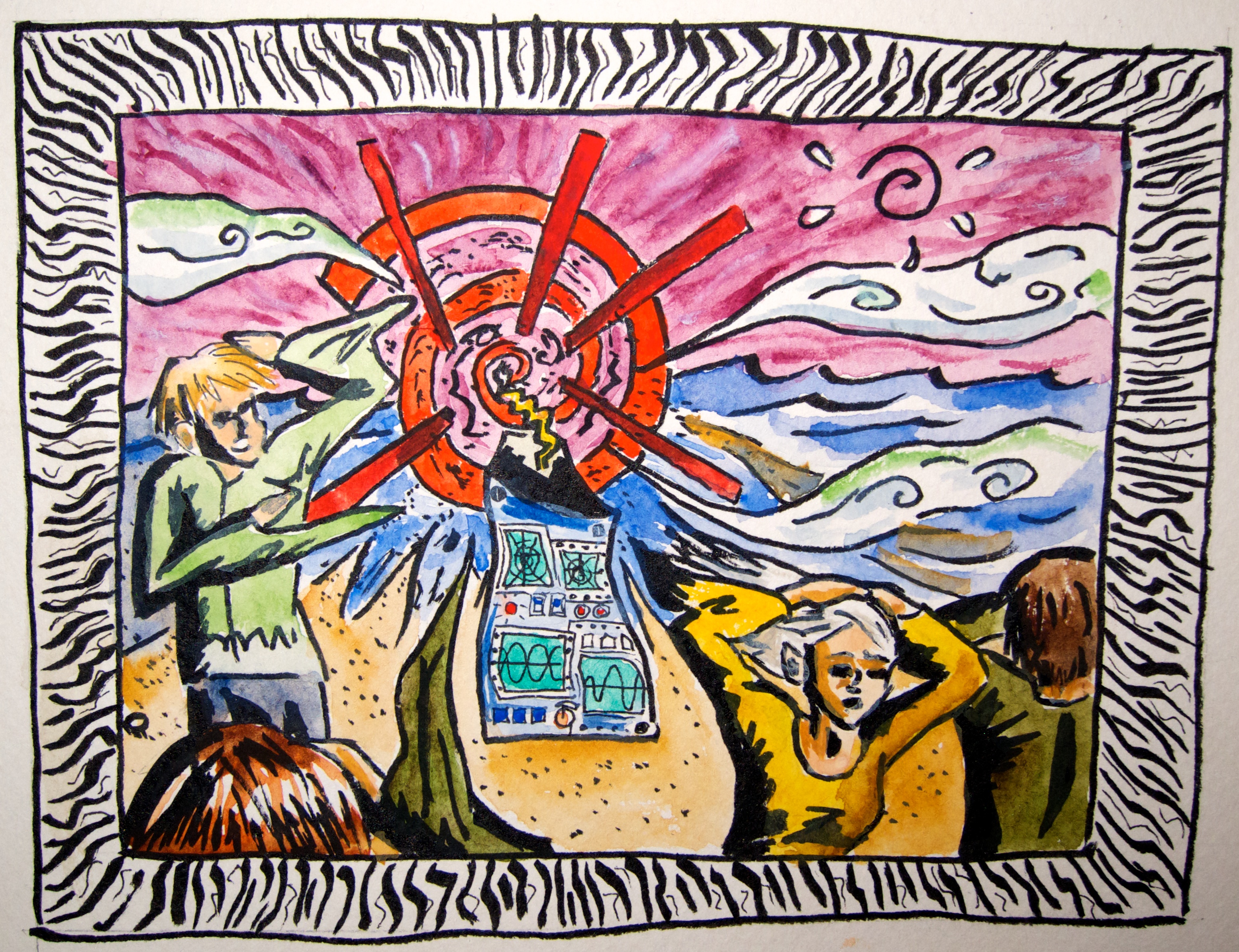
wormhole invention

Wormholes!, 2011.

Jait Anda Torwin_psd

One of the first Vironevaehns, 2004.


A quick Friday post

Today’s post will be brief. As I mentioned Wednesday, I have dived head-first into a novel-writing effort. Since then I have written 3500 words, which is a pretty rip-roaring pace for me. I work in such fits and starts I have to take the inspiration as it comes. We all work differently; above all else we have to find what works for us.

This weekend I’m taking a science fiction class by Edward Lerner. 7 hours, Saturday and Sunday. I’m looking forward to seeing what he has to say. He worked in the tech industry for many years before becoming a full-time science fiction author.

Next Monday it will be 16 years since I started writing about Vironevaeh. I’ll have to think about something fun to post for that. Happy Friday!

A novel attempt

I finally decided that I will try to write and finish a novel. Of course, I’ve been entertaining such ideas for years, as I suppose a lot of people have. So why do I feel like I can do it now, when I’ve only failed before? You gotta keep trying, but there’s that old Einstein definition for insanity: doing the same thing over and over again and expecting different results. So I am trying again, but I’m doing things differently, and hopefully this will lead to more success.

1. I first wrote the plot arc as a short story. It was originally meant to be a short story but there were so many things I wanted to touch on that I didn’t have time for, even at 7000 words in length. I know how I want the characters to develop, how they feel about each other, and what their motivations are. I know all kinds of societal details that play into the characters actions and motivations.

2. I’m in a writing group now. I know a bunch of people who might have suggestions on how to do better, or what to do if I hit a wall.

3. I’m approaching the writing differently. In the past I said, whelp, 100,000 words, here I go. Around 25k, I got bored, felt like my work was unfocused, and quit. This time I’m thinking of it as a series of short story ish chapters. I have a bunch of little stories to tell in 2-5k words or so. Per point 1, I already have a rough outline of the overall story. As I go, I’m outlining a few chapters forward with further details– what scenes happen in each chapter and where do they happen. So I have a macroscopic outline of everything and a microscopic outline subject to the flow of events. We’ll see how it goes. I’m planning on writing one chapter a week, with weeks off allowed for alternate projects.

I’ll continue to post my progress. It will be interesting to see what works for me and what doesn’t work for me. Any suggestions are welcome too! But basically, it’s time to just write. Chapter 1, here we go…

Sources of Sci-Fi Inspiration: City Culture of Prague

Setting is a critical element to most stories. It frames the actions of the characters and provides a rich and interesting backdrop. Often the environment motivates the character. As most portraits of people would be less interesting on a white backdrop, most stories of people would less interesting without the setting. New Orleans gives Ignatius a good playground in “A Confederacy of Dunces;” “White Fang” would be reduced hugely without the north, and “One Flew Over the Cuckoo’s Nest” would be slightly different without the asylum.

As a writer of science fiction, setting is both a problem and one of my favorite things. How do you draw in the culture and idiosyncrasies of a place that doesn’t exist? They have to be imagined, and imagined plausibly, by the writer. All of my favorite science fiction books have strong settings: In “The Left Hand of Darkness“, we learn about the sexual culture of a differently gendered humanoid species. Through their myths and traditions, we get to learn how they eat, how they like their weather, what is taboo, and what is an insult. In “A Canticle for Leibowitz“, we start at a Catholic abbey in post-apocalyptic New Mexico several centuries in the future. In “The Moon is a Harsh Mistress“, the setting is a lunar colony that feels bullied by earth. We learn about their principles, their marriages, and their aspirations. They can be a little closer to home, too. In “Holy Fire“, the protagonist travels from future San Francisco to future Munich to future Prague. Some sci-fi stays closer yet to home, but I find that I love crazy settings; thus I prefer Vernor Vinge’s “A Fire Upon the Deep” to his “Rainbow’s End“. (For others see my top 20 scifi books post.)

When I write my stories, I don’t want the settings to feel like the Midwestern United States plopped onto Mars or Alpha Centauri. I want them to feel like products of their interstellar, future environments. So I try to understand how settings influence culture currently and historically. I spent a summer in Prague, and in that brief time I tried to learn what I could about the culture. I tried to go where the Czechs go, eat what they ate, and read what they read. My host in town was a retired Czech professor who liked to talk (derisively) about the communist days. I worked half days at a chemistry lab out in suburban Prague. One of my coworkers smoked at her desk only feet from various chemicals and dressed like a 60-year-old teenager. I took frequent walks to Vyšehrad, an ancient fortress in Prague (pictured below).

I most appreciated the Czech sense of humor. As a country often conquered, the country developed a strange sense of absurdism. Under the Petrin Tower in Prague, there is a museum to Jara Cimrman, the best Czech man, who never existed. I can hardly say I understand everything there is to know about Prague and Czech culture, but a few months there certainly showed me a type of people I hadn’t seen before. Hopefully this will aid me in constructing a people we haven’t met before.

Some worthy Czech reading:

Side note: No post this past Friday; I broke my toe and then I had a lot of traveling to do this weekend. Happily, the toe is already much improved, and today it’s 80 F (25 C) out.

Vironevaeh: Hiroshige Influence

A few weeks ago, I wrote about the paintings of Japanese artist Hiroshige. So I got inspired and tried my hand at something along those lines, something like a science fiction Hiroshige. The drawings are set in the world of Vironevaeh: Science Fiction Fairy Tales (which, btw, is free on iPad =) ).

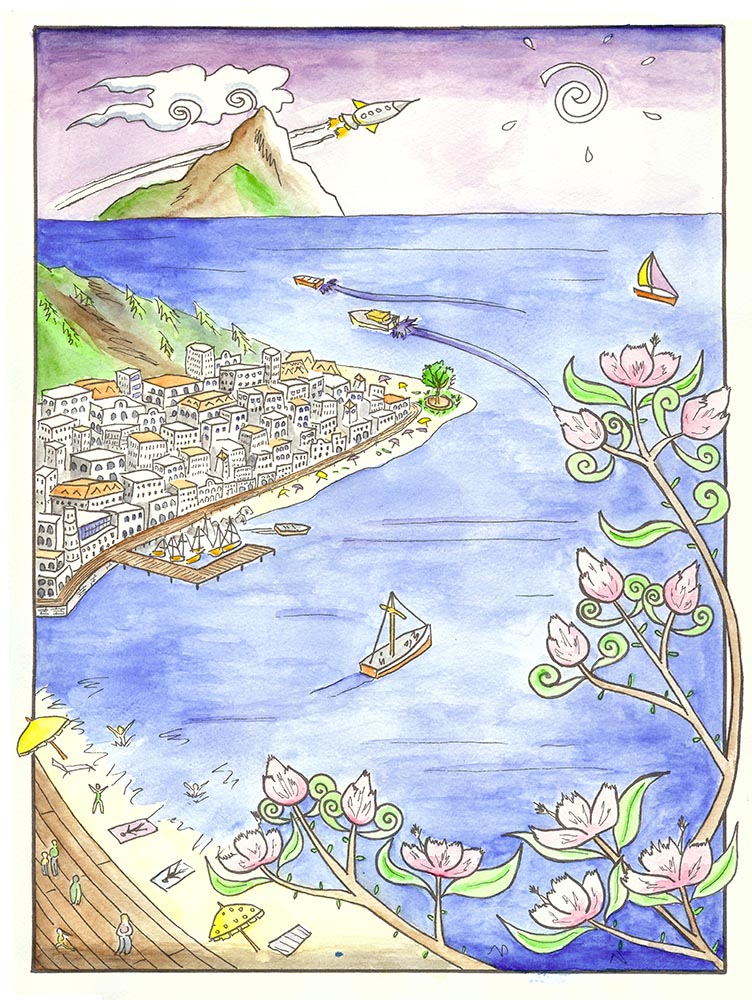
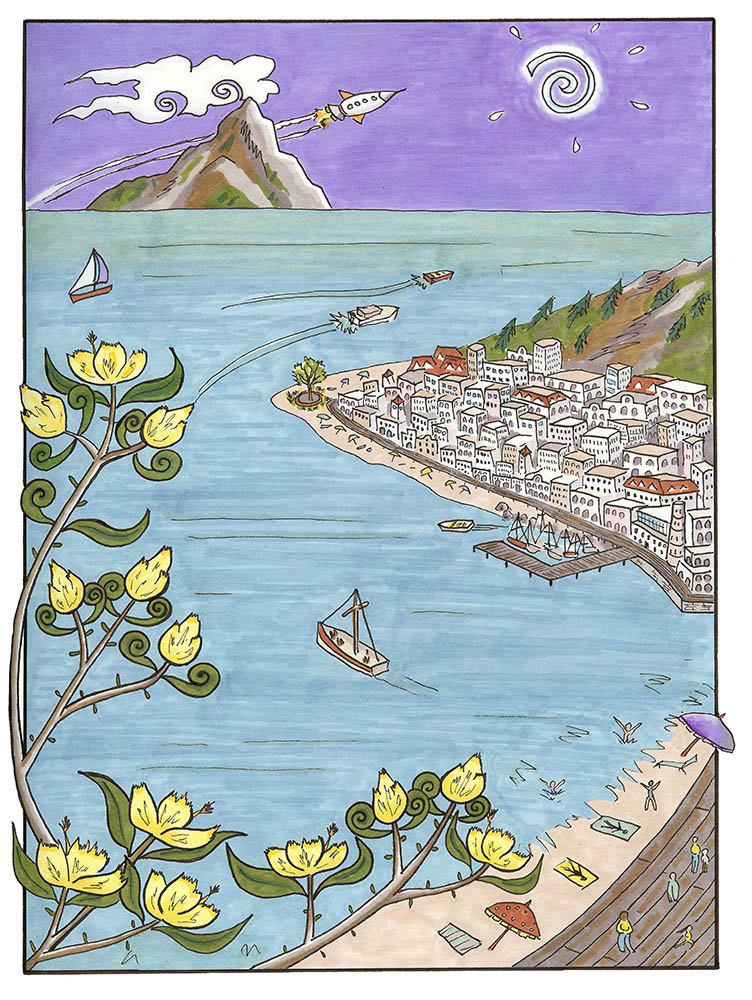
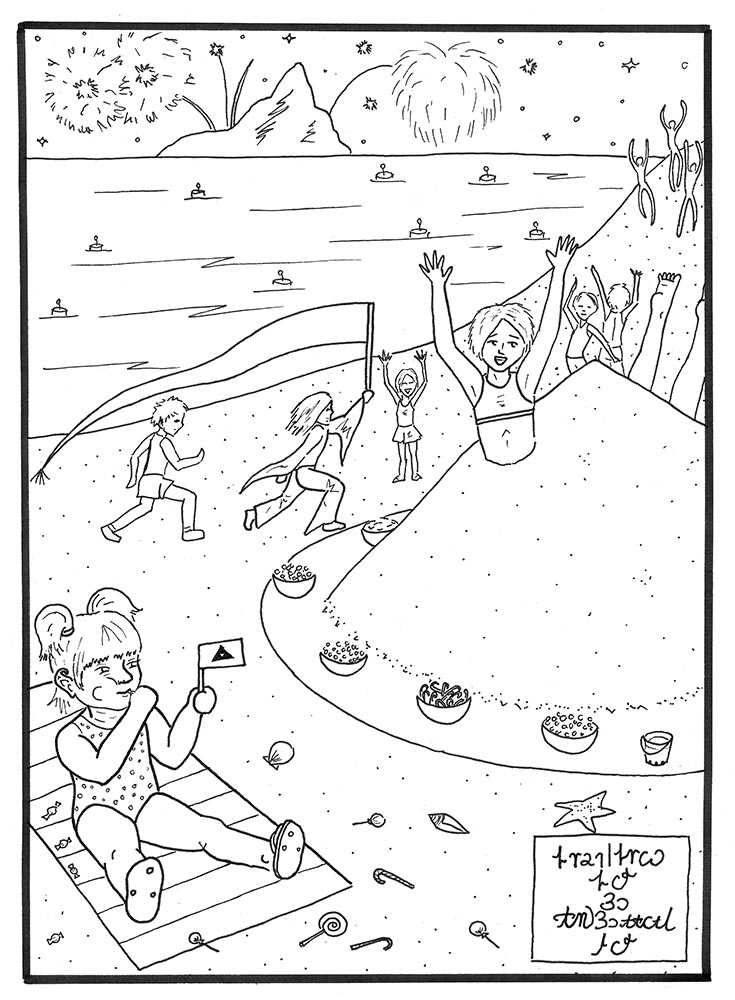
The first, done in watercolor, shows the city of Vironevaeh on the North Bay with Mt. Viro-Vit in the background. The second is a tweaked version done in markers. The third is the linework for another, depicting a Vironevaehn holiday called Digurtian Day. The Digurtian Day celebration is labeled in Vironevaehn. Many of the Hiroshige paintings are labeled in Japanese, so it felt fun to channel that spirit.

Happy Friday! I’m off to the Virginia Festival of the Book!

viro-city-watercolor-smaller

viro-city-marker-smaller viro-digurtian day-medium

Book Review: Downbelow Station (C.J. Cherryh 1981)

Note: I avoid spoilers in this review. Any plot details I mention occur early in the book.

Rating: 4.5/5 stars

I’ve had Downbelow Station on my shelf for a while. It’s 526 pages, so a little on the long side. I’d seen the book on a few “best of” lists, but no one I know has ever mentioned it. It was the 1982 Hugo award winner. So finally I bucked up and read it, and it was excellent.

Although I see “Downbelow Station” described as a hard science fiction book, the technological aspects of the book do not occupy the foreground. The interactions and desires of the characters do that; in some ways it’s a  high-class space opera. I found the style of the book most similar to Vernor Vinge in books like “A Fire Upon the Deep” with a little more militarism. I wonder how much the post Vietnam era affected the portrayal of militarism; the warring elements do not come off positively in this book. Cherryh does a good job developing culture; we can see the cultural differences between Union, Company, Pell, and the Downers. If you like sweeping science fiction, this is a highly worthy read.

Most of the action takes place on Pell Station, a space station orbiting a habitable planet with natives called “Downers” in the year 2352. Humans have expanded into space, one station after the next. At some point in history, humans developed faster than light “jump” technology, so they can spread further yet, into the “Beyond”. The humans in the Beyond have become disassociated with Earth; likewise Earth is somewhat detached from the stations. Pell finds itself between the forces of the Beyond and the renegade forces of Earth. The first 20 pages or so lay down this background; it’s a lot of exposition and it’s confusing and not totally engaging. The beginning is the weak point of this book. Once the ground work is laid, the story takes off.

We arrive at Pell when the Company ships of Earth force the station to take on a bunch of refugees from another station which has been destroyed in the conflict between the Company and the Union of the Beyond. These unregistered people are housed in quarantine, or Q, which is lawless and places a great deal of strain on the station’s resources. Over the course of the book, we watch people from Q, from Pell station, from Union, and from the Company as they vie for the strategically valuable Pell. The people of Pell station I found especially interesting, and their interactions with the Downers.

There are several other books in Cherryh’s Union-Company universe that I look forward to reading. Check out my Top 20 science fiction novels for more science fiction recommendation.