Category Archives: Science

Fun Science: Vacuum and Pressure

Pressure is caused by collisions between particles. Scientists use the term “vacuum” when there are few particles, and thus few collisions. Air in our atmosphere is dense with particles; atmospheric pressure is very high compared to lab vacuum or the vacuum of space. Scientists use vacuum in many ways. Vacuums were used in lightbulbs and vacuum tubes (such as the old CRT or cathode ray tubes of old TVs and computers). Vacuums are used for depositing materials in clean environments, such as on silicon wafers for microcircuitry. Vacuums are used for separating liquids that have different evaporation points. In scientific labs, we can produce pressures billions of times lower than atmospheric pressure, but the pressure in space is still lower.

Atmospheric pressure: Every cubic centimeter (also called a milliliter) of air contains 2.5 x 10¹⁹  air molecules. That’s 25,000,000 trillion molecules, where the US debt is roughly $12 trillion, and a terabyte (TB) hard-drive holds a trillion bytes of information. That is a lot of particles causing a lot of collisions. The average particle travels only 66 nanometers before colliding with another particle. That’s only about 200 times the size of a nitrogen molecule.

On top of Mount Everest: Pressure is roughly 1/3 of the pressure at sea level, and there are 8 x 10¹⁸ molecules of air per cubic centimeter. The average particle travels 280 nm before colliding with another particle.

Incandescent light bulb: The pressure inside a lightbulb is 1 to 10 Pascals (pressure at sea level is 100,000 Pascals). There are still about 1014 molecules/cm3, or 100 trillion molecules. The average particle travels a mm to a cm before a collision. This pressure is too low for plants or animals to survive.

Ultra high lab vacuum: The most sophisticated lab vacuum equipment can produce pressures of 10-7 to 10-9 Pascals, yielding about 10,000,000 to 100,000 molecules/cm3, respectively. Particles travel an average distance of 100 to 10,000 km before colliding with another particle. Such extreme vacuums require highly specialized equipment, including specialized pumps and chambers. Only certain materials can be used; paint, many plastics and certain metals can release gases at very low pressures, making them unsuitable.

Space vacuum: The vacuum of space depends on what part of space you mean. The pressure on the moon is 10-9 Pa, or roughly our highest lab vacuum, with 400,000 particles/cm3. The pressure in interplanetary space (within the solar system) is lower yet, with only about 11 particles/cm3. It is estimated that there is only about 1 particle per meter cubed in the space between galaxies. Still, some microorganisms have survived exposures of days to space vacuum by forming a protective glass around themselves.

Going the other way, there are pressures much higher than the pressure of our atmosphere.

At the bottom of the Mariana trench: Pressure is about 1.1 x 10⁸ Pa, or about 1100 atmospheres. A variety of life has been observed in the Mariana trench.

At the center of the sun: Pressure is about 2.5 x 10¹⁶ Pa, or 2.5 x 10¹¹ atmospheres, or about 100,000 times the pressure at the core of the earth. This pressure is sufficient to fuel the fusion process of the sun, where hydrogen is combined to form helium.

At the center of a neutron star: Pressure is about 1034 Pa, or 1018 times the pressure at the center of the sun. Here, pressure is so high that normal atoms with electrons around a core of protons and neutrons cannot exists. Nuclei cannot exist in the core of a neutron star.

Read about other science topics on my fun science page.

Science and Cooking

I love to cook. As one might gather from this blog, I like to keep my hands busy, and cooking saves money and provides deliciousness. (Many other hobbies have more of a knack for consuming money.) I also happen to be very lactose-intolerant, so cooking for myself also greatly benefits my digestive health.

When I was younger, I was absolutely apathetic to cooking, as I suspect many kids are, feeling that it’s house-wifely and unimportant. Then I got out on my own, and, astonishingly, good food was expensive and I had little currency.  I wanted to improve my cooking, but I really didn’t know the rules. But I knew the next best thing: science. Many recently published books explore the relationship between science and cooking. For those of us that can’t remember the baking soda without knowing its chemical purpose, this is a great thing.

Some recommended books:

  • What Einstein Told his Cook by Robert Wolke. The content is good, especially for those less versed in chemistry. The author wrote a newspaper column about cooking, and this book is mostly the compilation of answers to various questions such as “What is the difference between cane sugar and beet sugar?” It contains several recipes illustrating various points of the book. A major emphasis of the book is clarifying common misunderstandings of food science. As someone who knows a lot of science, I sometimes find the answers too basic, but I definitely learned things reading this book.
  • Molecular Gastronomy: Exploring the Science of Flavor by Herve This. Of the three books I discuss, this is the one I have had the least time to scrutinize. However, I really like what I have read. Wolke’s book covers more conceptual topics, like the differences between various kinds of salts. This’s book covers more specific topics, like why we marinade roasts in red wine rather than white, or how different kinds of truffles are related. This one is probably most strictly for those interested in cooking, with fewer “gee whiz” moments and more “that would be useful” moments.
  • Cooking for Geeks: Real science, great hacks, and good food by Jeff Potter. This one is definitely the most fun of the three! This book is from the publisher O’Reilly, which does a lot of technical textbooks. This book shares its layout with those kinds of book, but its soul is lighter. Its layout is more varied, as textbooks are. Plus, this book has a fun section about hardware like evaporators and sous vide water baths. Sous vide is involves cooking foods in circulating water baths. It is similar to slow-cooking, but the food is kept in a plastic bag and thus not diluted. Foods can safely and extra-deliciously be cooked at much lower temperatures by this method. Low temperatures denature specific proteins, prevent drying, and, when held for a bit, kill bacteria. This book does a great job explaining why and how sous vide works. I just got a sous vide system myself, and this book has given me some confidence about something I knew very little about. Plus it’s very fun to read, and covers tons of other topics in geek-friendly ways.

Science is Creative!

In the US, science is regarded as valuable, but dry and a bit stiff. As a student, it’s easy to get this impression, studying rigid facts first explored centuries ago. The math, chemistry, physics, and biology we learn in high school and college are about recreating long-known answers by well-established methods. But the process of making new science and math is inherently creative, and new ideas require letting the mind run wild a little. In this post, I’ll talk about how I develop my ideas.

I work with populations of oscillators. The idea of this research is that the complexity of the whole (the population) exceeds the complexity of each element (the oscillator). The human brain is a good example of such a system–each neuron is fairly simple and well-understood, but overall brain behavior arising from the interactions of many neurons is not understood. My research tends to work by observation–I notice something I find interesting and I explore that further. Other researchers work on what they suspect they will find, based upon other work. All research works within the context of its field. There are many interesting behaviors I have noted in my experiments, but I explore the ones I might explain. Really random observations are cool, but hard to frame in a way which is meaningful to the community.

The above may not sound particularly creative. But the key to experiments like I do is imagining what might happen when one explores slightly beyond what is known. It requires extrapolating from the areas we know, in the context of the rules we know, to the areas we don’t know. Some of the rules we know are pretty absolute, like thermodynamics, but others may be flexible. (As a note on this point, the stable chemical oscillations I study were once considered thermodynamically impossible. Someone had to bend the established understanding of thermodynamics to explain these oscillations. Einstein had to bend Newton’s Laws for relativity, and he arrived at that conclusion by logic rather than by observation.) In an experimental apparatus like mine, thousands of experiments are possible. It is up to the experimentalist to pick from the possibilities, in the context of what might work in his imagination, to demonstrate something hitherto unknown.

In some ways, the process is similar to writing. There are rules that must be obeyed, and the process of finding something new or interesting is very indirect. With science and writing, I develop some of my best ideas drinking a beer or taking a walk. Sitting at a desk focusing is required at times, but so too is active contemplation. The rules of science are broader and more rigid and take longer to learn, but there are similarities.

A lot of historical scientists were fascinating people, akin to historical artists. Van Gogh got his ear cut off in a fight. Astronomer Tycho Brahe lost his nose in a duel. Salvador Dali shellacked his hair. Electrical engineer Nikola Tesla fell in love with a pigeon. Mathematician Paul Erdos lived itinerantly for decades. In one visit to a colleague, he couldn’t figure out how to open a carton of juice, so he instead stabbed it open (among many, many other oddities). Physicist Richard Feynman used to work on his physics at strip clubs. Artists may share their eccentricities more in their works, but I would argue that scientists have every bit as much oddness.

I hope this post illustrates a little what it is like to be a research scientist, and how science at the cutting edge works. For more science posts, check out my fun science list.

Fun Science: Gravitational waves

Gravitational waves were first predicted in 1916 by Einstein’s general theory of relativity; today we are trying to directly observe them. A gravitational wave is a tiny oscillation in the fabric of space-time that travels at the speed of light; all other findings from general relativity predict its existence. Many objects will create minuscule gravitational waves, and even the largest objects create ones we just barely hope to see (such as binary stars and black holes). From the LIGO wikipedia page “gravitational waves that originate tens of millions of light years from Earth are expected to distort the 4 kilometer mirror spacing by about 10−18 m, less than one-thousandth the charge diameter of a proton.”

What would we gain from this? Astronomers believe that gravitational waves could eventually become another mode of imaging by which to analyze the universe, like gamma ray, x-ray, and infrared imaging.

Example of gravitational wave distortions (from wikipedia)

The LIGO (Laser interferometer gravitational-wave observatory) ran from 2002 to 2010; it was unsuccessful in its hunt for gravitational waves. It is being recalibrated to restart in 2014. The two observatories in Louisiana and Richland, Washington record the same events and compare the time at which they arrive. Below is a schematic of this set-up. LISA, the laser interferometer space array, has been discussed for years as an orbiting detector with greater length scales (and therefore greater accuracy) than LIGO; a proof-of-concept is due for launch in 2014.

Laser interferometer set-up (wikipedia)

If you want to learn more, Einstein Online, which is run by the Max Planck Institute, is a great resource (the Max Planck Institute is involved in great cutting edge research, perhaps comparable to NASA). The above link is for info on gravitational waves, but there is also great info on other concepts related to relativity if you are interested.

Fun Science: Enzymes

An enzyme. Spirals and sheets and strands indicate different kinds of structures. (from Wikipedia)

Enzymes are the catalysts of the body, helping to facilitate chemical reactions that would be very slow or unfavorable in their absence. In a previous post, I discussed how platinum lowers the activation energy barrier for desirable chemical reactions in a car engine, among other places. Enzymes do the same thing, but they are much more selective. Platinum can act on millions of molecules. Enzymes are shaped so specifically that they act only on one molecule. Because of this, enzyme catalysis is often compared to a lock and key–only one chemical is so perfectly shaped as to fit into the active site of the enzyme.

Enzymes are mostly proteins, which are made of hundreds of amino acids with several layers of structure. Our DNA is coded so that enzymes can be assembled from the instructions. The “primary structure” is the sequence of amino acids strung together. The shape of local groups of amino acids gives the “secondary structure”; some combinations tend to coil, others tend to be flat (see the picture at the top of this post). This is due to interactions between the amino acid groups; for example, ionic groups might attract or repel each other. The “tertiary structure” is the structure of the overall molecule, also called the “folding”. We can reproduce the primary and secondary structures in the lab; the folding is harder, because for most sequences of amino acids, there are several possible structures. In the body, the protein is assembled in such a way that it conforms properly. We are mostly still unable to synthesize proteins and enzymes. We usually use bacteria and fungi to make them, when possible.

Enzymes are essential to life. They aid in digestion. Many diseases are caused by the lack of a single enzyme. People with lactose intolerance lack lactase; the deadly Tay-Sachs disease is caused by the lack of hexosaminidase A. In Tay-Sachs, a waste product of cellular metabolism builds up in the brain. Without the enzyme to accelerate its break-down, the waste product builds up to intolerable levels. We can obtain hexosaminidase A, but we can’t therapeutically deliver it to where it is needed in the brain.

You probably already knew that the human body is a remarkable machine. But I hope this brief overview of enzymes gives an appreciation for this one small aspect. Happy digesting.

Fun Science: The Element Lithium

Lithium is the third element on the periodic table, after hydrogen and helium. It is the lightest metal, and you probably use it every day. The batteries in your phones and laptops and most rechargeable batteries you use are lithium ion batteries.

Lithium is used in batteries because it has the highest electrochemical potential of any element. It is so high that it will split water into hydrogen and oxygen (and violently!). This means there is a lot of energy available to exploit. This is also why laptop batteries can sometimes explode; the batteries are sealed very tightly, but if the seal is broken, air and water vapor will come in contact with the lithium and this is unsafe. 10-15 years ago, there weren’t as many lithium batteries in use, but now they are everywhere. Science has made great strides in improving the configurations of the batteries to give more energy, such as increasing the surface area of the lithium portion. Each time you cycle your battery, the lithium undergoes an electrochemical reaction on the draining and again on the charging of the battery. This is also why batteries become shorter lived over time; the high surface areas of new batteries aren’t thermodynamically favorable, and the lithium will become lower surface area with time. Less available surface area means less available energy.

Lithium ion (Li+) has another, very different use. It is used as a mood stabilizer. It is particularly useful at combatting mania. The linked wikipedia page contains its fascinating medical history. It was first used in the 1870’s as a mood stabilizer. Eventually LiCl was marketed as an alternative to table salt (NaCl), to avoid high blood pressure, and its mood properties were forgotten. Early versions of 7 Up contained lithium. Excessive lithium use was found to be deadly, and it was banned as an additive in the 1940s. Then in Australia, it was again discovered to have mood-stabilizing properties. Its therapeutic dose is quite close to its toxic dose, which is maybe why it took a while to gain approval in the US. Studies suggest that water supplies containing lithium may promote longevity and reduce the occurrence of suicide.

Lithium salts also have another really nifty use: cleansing the air in spaceships and submarines.  Not only does human breathing consume oxygen; it also produces carbon dioxide, which is toxic when present in high amounts. Several lithium salts can remove carbon dioxide from the air. One even adds oxygen to the air when it removes carbon dioxide.

Elemental lithium is highly reactive, and is a member of the alkali metal group (all of whom react very impressively with water). Below is a video of lithium reacting with water. It bursts into bright red flame:

Another video shows more lithium action:

The people who made the second video have a great youtube channel with videos about all the elements done in a university laboratory environment. Most of them have good footage of reactions as well. I just spent an hour watching their videos, they are very entertaining for people with little knowledge, or a lot. If you have a little time to kill, the videos of sodium and potassium are also good, flammable fun.

Science in Progress

Today I proposed my PhD and passed, which means only one test remains in a few months. So hooray for me. I’ll soon finish the first draft of the novel, and I just got back from vacation. I’ll post some pics of that later this week and finish the 100 facts post at last. Unfortunately the blog has suffered, but the worst has passed.

It’s been hectic, but the maximum pressure has relaxed a bit. The professors said the quality of my writing was very good, so here’s to the blog for improving that for me. Here’s to more improvement yet!

Udvar-Házy Air & Space Museum

Did you know there are actually two Smithsonian Air and Space museum locations? There is one on the National Mall in Washington, DC, and a second in Virginia near Dulles Airport, called the Udvar-Házy Center. The Udvar-Házy location is an enormous hangar filled with historically significant aircrafts, aircraft parts, and spaceflight artifacts, including such highlights as the Enola Gay, an SR-71 Blackbird, and a space shuttle. If you are ever stuck at Dulles Airport and have some time to kill, there is a very cheap ($0.50 each way per person) shuttle between the airport and the museum.

For those unfamiliar with American aircrafts (as I mostly am), the Enola Gay is the plane that dropped the atomic bomb on Hiroshima. The SR-71 blackbird is the fastest plane ever built, even though it was built in the 70s. It flies so fast that at rest, its joints aren’t perfectly sealed, and it can leak fuel. This is because the metal expands significantly due to heat at high speeds. The museum also hold various antique aircrafts, aircraft oddities, engines and engine cross sections. Another area holds retired military planes, and a third area holds NASA artifacts. I went there a couple of years ago. My creative commons folder of images is here, and I include a few pictures below.

The SR-71 blackbird:

The Enola Gay:


Fun Science: Helium

Helium: filler of floating balloons, maker of high-pitched voices. But there are a lot of other interesting things about helium too!

First, helium makes our voices high because it is less dense than air, and thus the vocal chords vibrate more quickly. (Also fun: higher density gases, like sulfur hexafluoride, will correspondingly make the voice become very low. In this case, the practitioner must be upside-down, because right-side-up the gas will settle in the lungs, potentially causing asphyxiation.)

Helium is the second most common elements in the universe, but it’s pretty rare on earth. We get pretty much all of our helium during natural gas extraction, when it is trapped underground. Because it has such a low density, it basically escapes the atmosphere once it gets into the air. Helium is very common in the universe because it is formed by the fusion of hydrogen. Our sun and other stars are hydrogen to helium engines, pumping out tons os helium per second, though it doesn’t come to Earth. Most helium on earth comes from the radioactive decay of uranium, which emits helium.

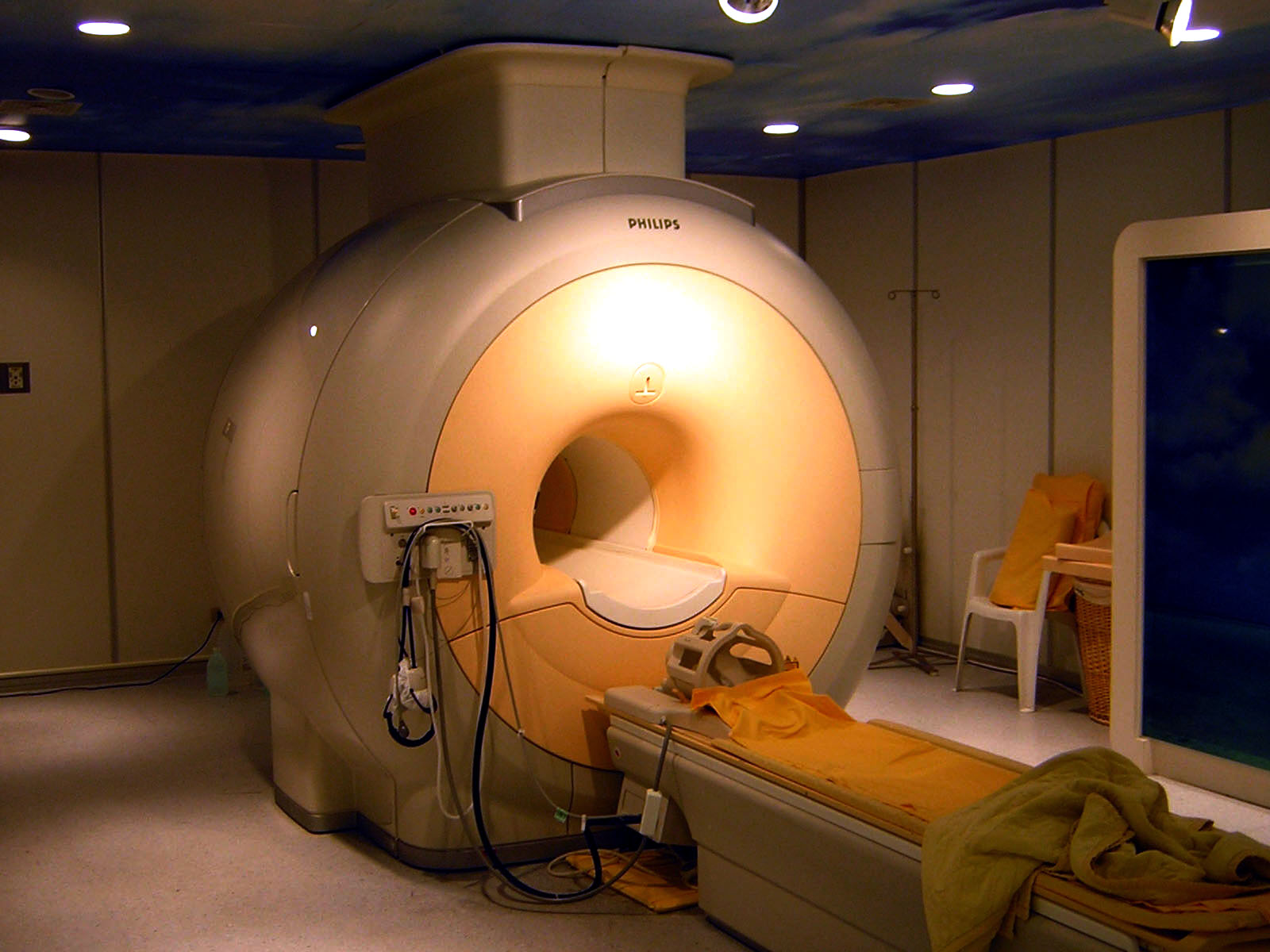
Helium is a noble gas. This means that it naturally has the number of electrons to be stable without interactions with other atoms. Helium has the lowest boiling and melting points of any element, at 4K and 1K respectively. This is due to its stability. Liquids and solids are formed when atoms energetically interact with one another; helium has very little tendency toward this. Because of its stability, helium is used as a cryogenic gas. Helium is an essential part of an MRI machine, shown below. The helium is required to supercool the magnets, which increases the magnetic field and thus the resolution.

MRI for medical imaging.

The US is the largest supplier of hydrogen in the world. This is partially because congress signed an act to bleed down our helium reserve by 2015. However, some scientists have pointed out that helium is hard to come by, and we should conserve our helium. One source estimates that helium balloons should cost $100 dollars each, based upon the scarcity of helium. Another says they should be illegal.

So the next time you look at a blimp or a balloon, marvel at the substance that fills it. It’s really star stuff, and rare to boot!

Happy 50th Anniversary, Chaos

This month, the American Physics Society magazine, Physics Today, published an article about the 50th anniversary of the Lorenz model. At the link, you can read the entire article. In it, experts describe the history of chaos, Lorenz’s discovery of it, and some of the state of the field today, but with a great deal less technical jargon.

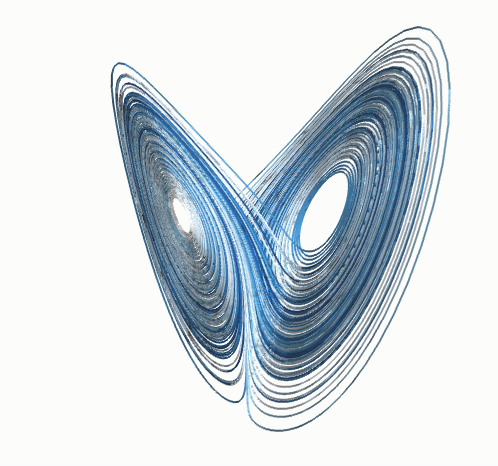
50 years ago, Edward Lorenz first captured the mathematical phenomena we now know as chaos, known popularly as the “butterfly effect“. Below is a picture from the Lorenz model exhibiting chaos. The idea of chaos boils down to highly structured behavior that cannot be predicted. No matter how precisely we measure, after some time we cannot know the state of the system. We can say that the system will stay in a certain region of weather; in the picture below, there are definitely places the trajectory does not visit. We observe this with weather models– the forecast is good for a couple of days, so-so for a couple of days after that, and completely inaccurate for any time farther in the future. Analogously, we can say that it will not be -100 C tomorrow. Appropriately, Lorenz’s discovery of chaos came about as he tried to develop a model for the weather. Chaos is all around us and can be observed in a number of systems.

the Lorenz system, which turned 50 this year

At this link, you can play with a fun Lorenz model java applet. The trick with the applet is choosing the right parameters. Try setting the “spread” to 0.1, the “variation” to 20, the “number of series” to 2, and the “refresh period” to 100. Then push the button “reset the parameters” and “restart”. This will start 2 trajectories in the Lorenz model that differ by only 0.1. You will quickly see the two paths diverge and become completely unrelated. If you reduce the “spread” to 0.01, the same thing will happen, though it will take longer. As long as the spread is more than 0, the two paths will eventually diverge.

This is why we cannot predict the state of a chaotic system, because our ability to measure the state of the system is inevitably flawed. If we could measure the state of the weather to 99.99999% accuracy, that 0.00001% inaccuracy would eventually lead to divergence. And you can imagine that getting 99.99999% accuracy is much harder and more expensive than 99.9% accuracy.

Did you know that Pluto’s orbit is chaotic? Or a double pendulum? Or the logistic model for population dynamics? So check out the Lorenz model, and happy chaos-ing.