Tag Archives: Illustration

A little on watercoloring

This week I am spending most of my time painting the line-art from The Galactic Adventures of Zish and Argo. One of the things I really like about watercolors is that they travel well. I’m on the road for the next couple of weeks, but it is just as easy to paint here as it is at home. A major reason for the portability is the type of materials I use. I bought a Windsor-Newton field box set several years ago, pictured below. At $50, you might experience a bit of sticker shock. I’ve only recently had to start replacing pans; it lasts and lasts.

I have used the liquid watercolors as well. I find I enjoy the quick set up of the solid colors. There is no need to dole out paint as you go, and you only use what you need. Plus it’s easier to travel with. The solid paints can still deliver good intensity and brightness. I roll all my brushes up in a bamboo case like this one, and then I’m ready to go anywhere and paint anything. If you have a pigment-ink printer, you can economize on your watercolor paper by selectively choosing what you print. I discuss that more in an old entry, here.

I read a watercolor book a few years ago that I found helpful as well: Watercolor Tricks and Techniques, by Johnson. If you are curious, it is worth a look.

So there are 13 paintings for the core of the Zish and Argo book. I have 7.5 paintings done, so I’m over halfway! The Robotoids say hello!!robot
Xmas from Zish and Argo

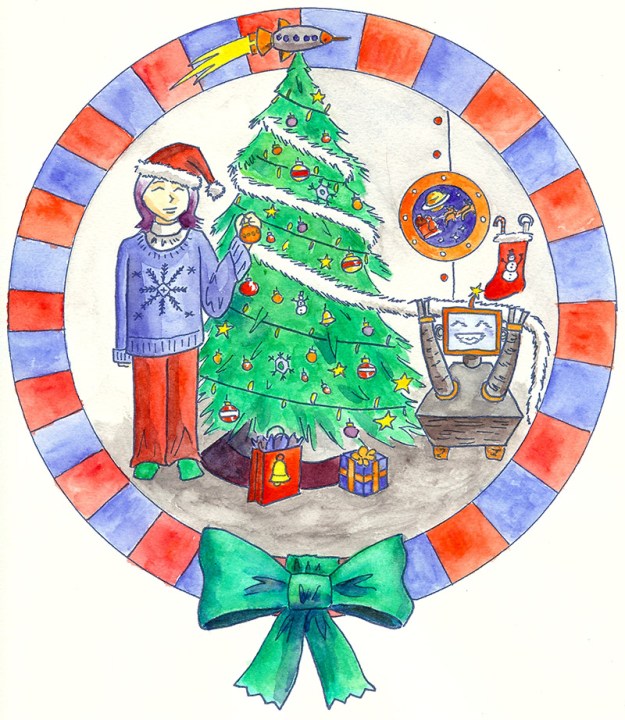
I began printing and painting the line work for The Galactic Adventures of Zish & Argo. Now that painting has begun, I hope to have the first book pulled together in a month or two. In the meantime, this project has been a source of great joy.

I have become fond of the characters, so I find myself doodling the pair engaging in a variety of activities. Happy holidays from Zish and Argo!

xmas-color-smaller

Style: Soviet Propaganda Posters

The 20-40s really seem like it was a golden age for illustration. Color photos were not as vibrant as they are today, yet mass printing existed. Thus, beautiful and stylized portraits of life were used in advertising and propaganda (Alphonse Mucha did lovely art nouveau illustrations for advertisers since the late 1800s, I wrote about him here). Many of us have seen the posters created for the Great Depression and WW2 by artists such as Thomas Hart Benton.

When I visited the Czech Republic, Budapest and East Berlin, I was struck by their propaganda posters from the same period. There was such a contrast between the lovely illustrations and the content that we would likely find oppressive. It can be a window into history to understand how people chose (or were forced into) their path. For good collections of Czech or CSSR Propaganda, check out the Communist Musuem in Prague and Checkpoint Charlie in Berlin. The featured image for this post is the poster for the Communist Museum; one of my souvenirs from Prague are some nesting dolls with this design.

To have more we must produce more (Wikipedia)

The Czech, Hungarian, and German posters seem hard to find, and I only know the languages a little (if anyone knows good sources, let me know!) I find the role of small countries in the early 20th century especially interesting since they are underrepresented. The countries of central Europe endured many of the worst hardships during the 20th century. There are many sources for Russian propaganda posters:


10 years since the revolution


Getting creative with a printer

Last year I got a medium format pigment printer (epson r2000). With research, you can get a decent deal on these kinds of printers. I purchased mine for $300 (with rebate) while it now lists for $550 (but remember, the ink is always a swindle). If you know how to use color profiles and tune your screen’s color, these printers can be a ton of fun. Printing photos was the main motivation for my purchase, but the other less expected uses have been equally exciting.

Watercolor painting and pigment printing

Pigment inks are waterproof after they dry. Long ago I learned the hard way that normal ink jets are not waterproof. This feature of pigment inks has helped my watercolor process immensely. Now I can do line art on low quality paper. Then I scan the line art in and I can digitally fix it. This can mean a number of things: I can remove a badly placed stroke, or I can rearranged items in space. For the Zish and Argo stories, I did preliminary line art, and moved things to satisfy the needs of the page layout.

Once the line art is optimized, then I can print to the expensive watercolor paper. I probably only use half of my preliminary line art, which is an awful waste of premium watercolor paper. But now I can be efficient. Printing line art is additionally attractive because it uses little ink. Additionally, I can print several copies, and have several chances to get my work just right. I did the featured image art using this procedure.

Printing on fun materials

The printer can also print to some fun surfaces. It can print to basically anything you feed through it, like poster board, wood, foam board, canvas, or other sufficiently heavy fabric. Obviously, it can also print to any sturdy paper as well (I print frequently to drawing and watercolor paper).

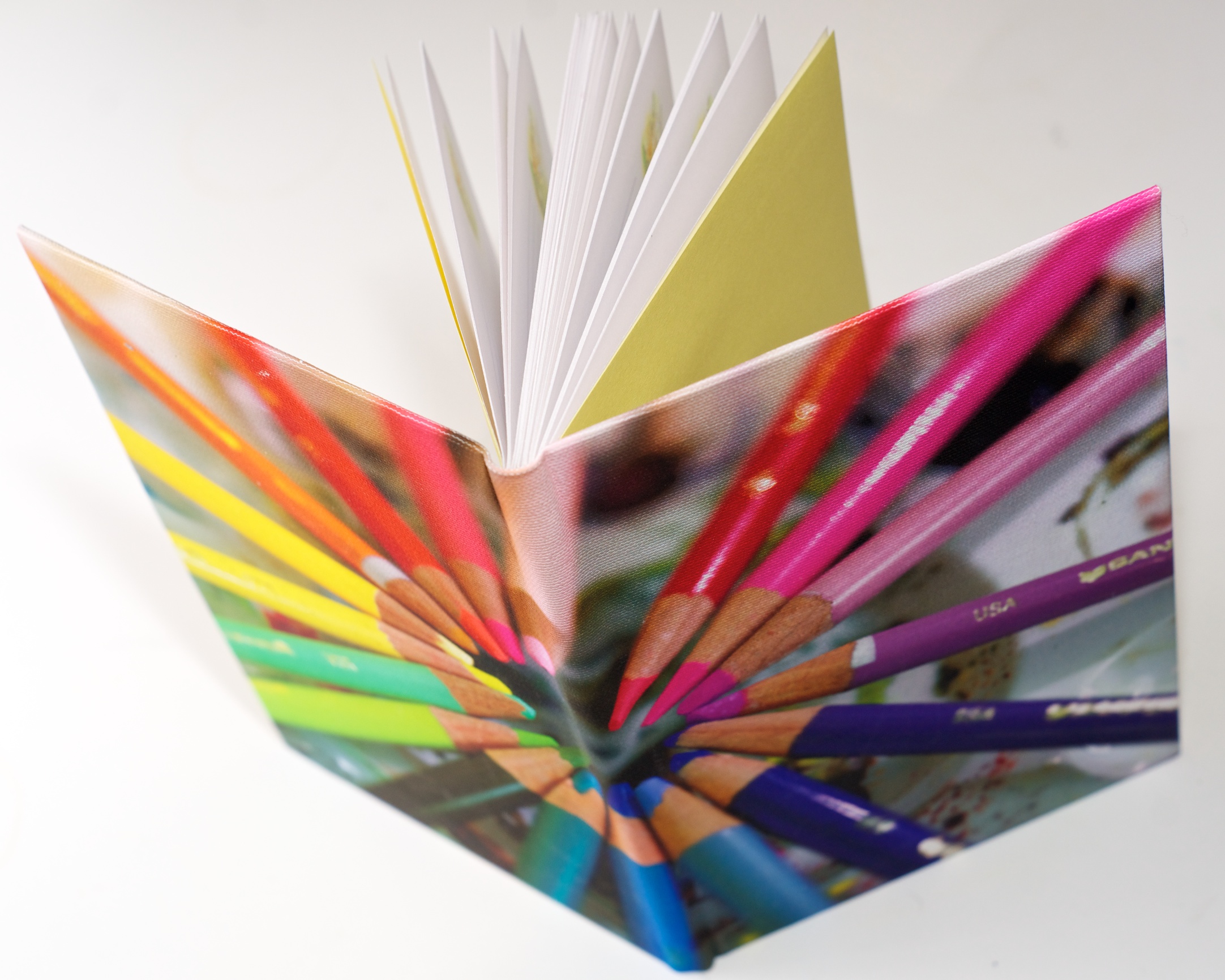
I recently did my first project printing to canvas. I then used this canvas to cover a book, shown below. This canvas is also designed to stretch over a frame like any canvas.

Any additional ideas on creative printing? There’s nothing better than using a tool on hand in a different way.

Beautiful Books

I love a well-made book. There is something awesome about a book with golden edges and an embossed cover. I like pages with heft and texture, and books with color illustration. However I am also a great fan of classic science fiction, and 1960s scifi seems rarely to intersect with fine binding techniques. I often go to the used book stores and find paperbacks with yellow cracked pages and broken spines. The cover art is often wonderful, but these books are dying and falling apart. Many of these books have not been reprinted recently, or are offered only for outrageous prices as ebooks.

Lovely books were always a source of inspiration as a kid. This Tasha Tudor fairy tale book was my favorite (and was a big source of inspiration for my own collection of fairy tales). I hope with the rise in ebooks, we will see a rise in beautiful books. When you need not spend space on books, perhaps that space will be spent on books that are also art objects. Lately, I feel like I’ve been seeing more attention towards the appearance of books. Right now it’s more limited to literary classics, but I hope it will grow towards science fiction, which seems like it could benefit from such visualizations. Here are a few pretty books I’ve noticed:

  • Hiroshige, by Taschen (pictured above). This book is gorgeous. Bone clasps hold together the cover, and the book is bound in the traditional Japanese stab-binding style. The paper feel like it is cotton, and it really suits the art it bears. Also at $40, it isn’t insane, and it’s even cheaper on amazon.
  • Barnes and Noble Leatherbound Classics Series. There are a ton of books in this series, from Hitchhiker’s Guide to Arabian Nights to Foundation and Grimm’s Fairy Tales. One complaint: it’s very hard to judge the contents from the web. I found in person that the older out of copyright works had many more illustrations inside. I especially like their Arabian Nights. Most of these are around $20, so they are affordable.
  • Basically anything by Folio Society. I am particularly intrigued by their Foundation Trilogy, which has some fun-looking illustrations. Folio Society is a bit pricier, so I haven’t gotten anything from them yet.

I would love to hear about any other finds as well. Good hunting! (And here’s some lovely bookcases as well.)

Style: Aboriginal Art

I like to use different art styles for my various different stories. Lately there is nothing better than trying to find attractive illustrations of various origins. A few months ago, I found a children’s book at a library sale, very much by accident–Enora and the Black Crane. Enora is a lovely story, and the illustrations are beautiful. Before happening upon this book, I had seen little aboriginal art.

I wanted to incorporate aboriginal designs into my in-progress short story collection. Luckily, I live near the only dedicated aboriginal art museum in the United States, The Kluge-Ruhe Aboriginal Art Collection in Virginia. This was a nice resource for additional inspiration. The illustrations for the collection are black and white woodblock style (as I mentioned in my previous entry). Aboriginal design uses a lot of color. I tried to capture some of the spirit while maintaining consistency with the woodblock theme. I ended up with the featured image for this entry. I ended up knowing a bit more about aboriginal design, and my final design was richer for it.

Maintaining my creative momentum

This blog is now a little over a month old, and soon the Etsy store will be a month old too. I’ve made 8 journals and 4 copies of the Fairy Tales in the last month, not to mention sourcing materials, testing color profiles, etc. Bookbinding, blogging, and website maintenance takes time, time that normally would go to my creative process. Last night this blog crossed 250 views total which of course many blogs get per day, but it felt like a big achievement. It promotes the feeling that these endeavors, so different than my normal choices, are worthy ones.

My most ambitious current writing project is a collection of short stories from different planets in a planetary alliance, the Quaiin League. Some of the stories are over 7,000 words, some are quite short. All of these stories will have at least one woodblock style black-and-white illustration, like the one featured for this entry. It will be many months before this collection is complete, probably over a year. As I share my projects with people, there are more and more tasks to keep track of. But it helps to remind myself here of my goals.

It may not be easy to begin as a writer, but I feel that momentum will continue to gather. As long as I keep pushing and caring, I will accomplish these things.

Current work: Zish and Argo

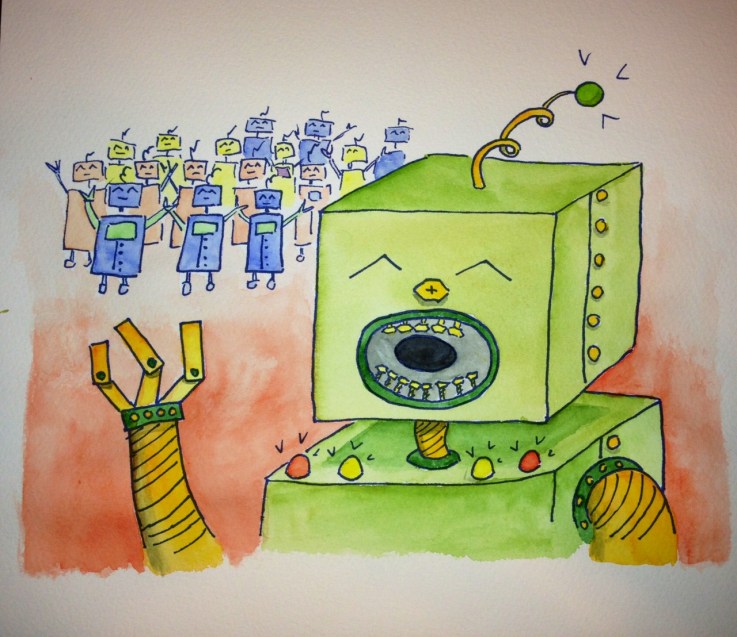
Earlier this week I finished the line work for my next project, “The Galactic Adventures of Zish and Argo“.  Zish and Argo is about a little girl named Zish who steals a spaceship named Argo. They travel deep into space and encounter many strange and wonderful situations. Along their adventures, scientific concepts relevant to the story are touched upon.

You can find ongoing updates about this project under the current projects tab, or through the link. I expect to complete painting early next year. The first Zish and Argo book introduces their situation and their first adventure. The illustrations will be water-color paintings, like the one below: