Tag Archives: science

Writing prompt: I’ve never seen one, but how hard could it be?”

Time: 7 minutes. Click here to go to my list of prompts.

“I’ve never seen one, but how hard could it be?” (This prompt inspired by the Erie Canal, built by four men who hadn’t even seen a canal when they set out to build one.)


“I’ve never seen one before, but how hard could it be?” Emmaye Cevluss said. “They built them practically in medieval times, it’s just a ditch full of water.”

*

Three months later and how she regretted those words. Without construction equipment, how did she remove the dirt? Without drafting software, how did she visualize the project? How would she calculate stress loads? On this new world, where would she find the materials for good concrete? For good steel?

How hard could it be? A canal connecting the bay to the western part of the peninsula with the quarries and mines. It might as well be a space elevator. Since they had arrived on this world, every day was a day spent learning to adjust to all the things it didn’t have.

Their ship, the Neva, was supposed to help with many of these things. Instead it sat broken, useless, to the west. All the energy it held was devoted to cold storage, to keep biological samples like seeds and useful fungi and bacteria until they could be properly used. And now the cold storage was having issues.

And it was starting to rain a lot. Especially a lot for a supposed desert region.

It was going to be a while before there was a canal.

Writing prompt: foraging

Time: 7 minutes. Click here to go to my list of prompts.

“Foraging” (This prompt inspired by the well-known Danish foraging restaurant, top-rated Noma.)


“Announcing the release of the Forage 1000! For the low price of $1000, you can virtually eliminate grocery costs!”

Sylvia showed Tanisha the ad. Tanisha couldn’t share Sylvia’s enthusiasm. For one thing, she didn’t have nearly the shares in the product. But for another thing, Tanisha always felt a little sad when scientific breakthroughs went toward such short-sighted uses. And there was that third thing…

“So what about when everyone has one?” Tanisha asked. She had helped write the software that finally allowed machines to approximate an animal sense of taste. “Then these foragers won’t find much of the cheap grasses and fungi and bugs you’re promoting it for.”

Sylvia shrugged. “I think that’s a pretty good problem to have. Then we up the price. Or make a new one that finds things the old one didn’t.”

Tanisha sighed. She had to say it, she knew it. But it was hard giving bad news to funders. “You can’t.”

Sylvia crossed her arms. “Spit it out.”

“We still have this little problem,” Tanisha said. “It’s not perfect about identifying poisons.”

Sylvia sat.

“The body is complex. Something can taste good but have trace amounts of toxin or parasites or bacteria. Or just be bad for you like antifreeze. We didn’t know until a few weeks ago when we started to use a larger sampling range. Two dead mice.”

“We can fix that, right?” Sylvia said hopefully. “You’re going to fix this.”

Tanisha nodded, and Sylvia left, already on the phone. She turned to the ad. “How am I going to fix this?”

Fun science: An easy fractal to make at home

DSC00224

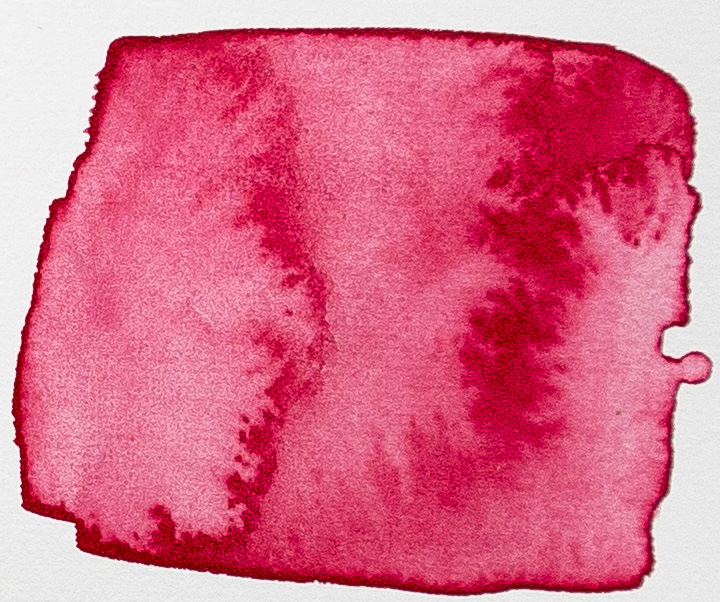
Viscous fingering is a fractal pattern that occurs when a less viscous (or thick) fluid spreads through a more viscous (or thick) fluid. Such systems are present in oil extraction, when we pump one fluid underground to push another one out. Fractals are common in nature even though they’re new to our mathematics, and they are beautiful.

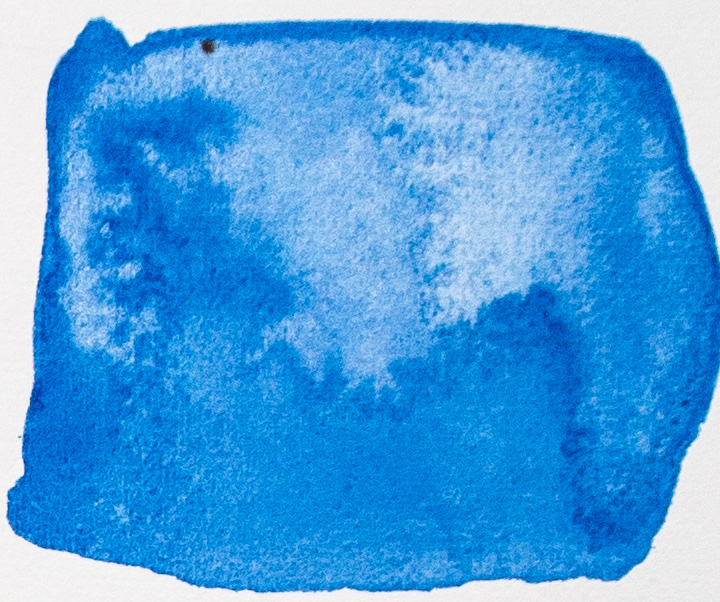
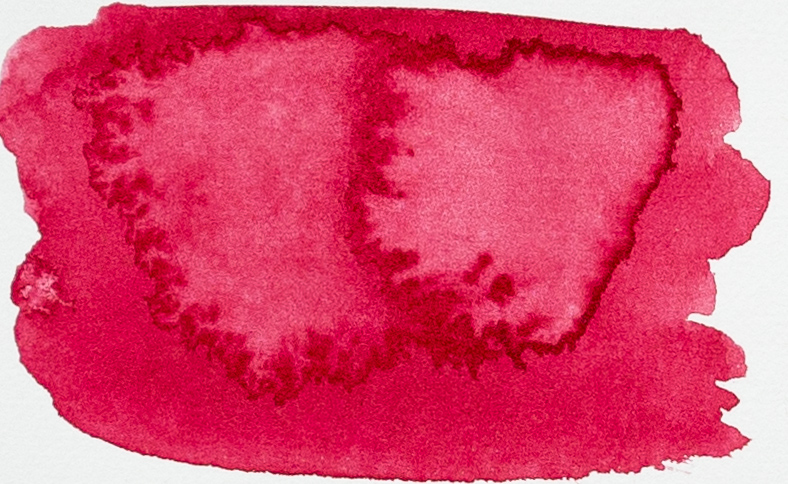
The pictures in this post were created with basic watercolor paints using one simple principle: water containing paint is more viscous than regular water. It’s easy to try at home!

For the top picture, I laid down red paint. Before the paint dried, I added salt, then let the square dry. Water from the still-damp paper rushed to the salt (because of entropy, systems tend towards uniform distributions of things if they can help it– in this case, the lowest energy state is to have a uniform distribution of salt). But because paint molecules are larger than water molecules, they don’t move as well. The water that accumulates around the salt has less paint than the water in the rest of the paper, and thus we have a less viscous fluid spreading into a more viscous one. Try it at home! If the paint is too wet or too dry when you add the salt, the results won’t be as dramatic, so play around a bit. Larger salt crystals can be especially fun.

For the three pictures below, I simply placed a drop of water into a damp square of paint. The patterns vary depending upon the size of my drop, the wetness of the paint, and the paint color (the chemistry of which influences the viscosity of the paint).

DSC00225-2 DSC00225-3 DSC00225


Below are a couple of examples from the University of Alberta of viscous fingering with pentane into oil and water into oil. This particular research aims to improve the flow rate of oil during extraction. And it looks pretty similar to some humble watercolors.

Left: pentane displacing mineral oil. Right: Water displacing mineral oil (University of Alberta).

Writing prompt: Lie detector

Time: 7 minutes. Click here to go to my list of prompts.

“Lie detector”

Blood flows in the face indicate certain emotions. Rage is one pattern, confusion another, fear (perhaps of getting caught in a lie) yet another. Some cameras could detect subtle changes in face color from the blood flow, but better yet were cameras that reached into the infrared, to see the heat of that blood flow.

Trish first loved the science of this technology, but after she was denied tenure for lacking funding, she found a new purpose to it. Business.

With google glasses so common as they were, it wasn’t much of a trick to fit hers out with the additional infrared range camera and write the code to show the blood flows overlaid upon their face. She became a human lie detector, able to fox out the lies and bluffs of all but the sociopathic (who incidentally had their own telltale patterns). Perhaps the preponderance of the sociopathic shouldn’t have come as a surprise, but it did.

Still, the funding came in now, and she started up a company. Not with her own special technology, of course. It was her ticket to a bright future. Some other good but less phenomenal idea.

That was, until the meeting with Ms. Teller, who seemed oddly apt at dissecting Trish’s own lies and sidesteps. Reading up on her, Trish discovered Teller’s background in pattern processing and optics. Suddenly, the marketplace had grown just a little more crowded.

To Trish, the solution was obvious—she had to destroy Teller or join with her.

Technology and art in the rail photography of O. Winston Link

If you are interested in rail photography, or if you’re like me and really never gave it a thought, the O Winston Link photography museum in Roanoke, Virginia is a fascinating visit. O (short for Ogle– I think I’d go by the initial too) Winston Link photographed steam locomotives in the 1950s, at the very end of their widespread use. The Norfolk and Western rail lines he snapped ran through Virginia, West Virginia, Kentucky, and other parts of the coal belt of Appalachia.

In his photographs, Link captures the end of a powerful technology, but he also captures life in 1950s Appalachian rail towns. People play in a pool twenty feet from a roaring locomotive. People read in their living room with a cat sleeping on their lap as a train passes the window. Folks chat on a porch as the N&W rolls past. In the image below, the train passes a drive-in movie.

Hotshot Eastbound, by O. Winston Link.

Link captured images with such technical precision that they would still be difficult shots today, barely possible without rare equipment until very recently. Link was a civil engineer, hired out of college as a photographer; during World War 2, he used his scientific and photographic backgrounds at the Airborne Instruments Laboratory.

Link’s railway shots rely heavily on both science and photographic techniques– in order to better control the lighting and thus the composition of his photos, he often shot at night. Because, he said, “I can’t move the sun — and it’s always in the wrong place — and I can’t even move the tracks, so I had to create my own environment through lighting.” This required the use of flash bulbs, one-use bulbs that burned metal to produce brief, intense illumination. According to the museum, one of his shots alone used illumination equivalent to 10,000- 100 watt light bulbs, although that light only lasted for a moment. Reading that, I wondered what the experience was like for the train conductor, driving through nearly black rural Virginia, when light so bright it might as well be lightning flashes. His first power source was too unreliable, and so he designed his own power source. Link invested $25,000 into the unpaid project, closer to $125,000 in today’s currency.

As someone who dabbles in photography, the difficulty of Link’s task and the quality of his work (60 years ago!) deeply impressed me. Bear with me as I explain some technical details of modern cameras to convey the awesomeness of Link’s work. Today, we might just be able to reproduce such shots without flashbulbs due to advances in digital photography. Flash bulbs (using combustion) are still brighter than any modern flash (using capacitors). A single flashbulb produced about 1 million lumens (the unit that measures the brightness of light) while a modern camera-mounted flash produces about 100,000. Many flashbulbs may be used at once, so the flashbulb is great for extreme illumination. Only one manufacturer of flash bulbs still exists. Their photo gallery is pretty neat.

Today, we have cameras that are more sensitive to low light, called high-ISO cameras. Camera speed, whether digital or film, is measured in a system called ISO-sensitivity. In this system, a film with double the ISO requires half the exposure time; a two-second exposure with 200 ISO film would take 1 second with 400 ISO film for the same level of exposure. In the 1950s, the fastest film was ISO 400-640. The Sony Alpha 7S, releasing in July, has up to ISO 409,600, 1024 times  faster than ISO 400. A shot requiring 30 seconds of exposure on ISO 400 would require roughly 1/30 of a second on ISO 409,600. This is really new technology; as of 2013, no ISOs above 10,000 existed.

So, in short, Link’s work is a beautiful hybrid of science and art, a testament to their combined power. Link’s scenes of rural 1950’s Appalachian life are beautiful, and remind us of the era of the man behind the lens. New advances behind the lens are happening today. What new wonders will they capture?

Food and science: Why are peppers hot?

Chili peppers, such as jalapeños and serranos and habañeros, are hot because they contain a chemical called capsaicin, which is an irritant to humans.

Why capsaicin?

If it is advantageous to plants to spread their seeds, why do the fruits (peppers) contain a chemical that repels animals? It turns out that birds are not sensitive to the effects of capsaicin. Thus, capsaicin repels animals whose chewing action may destroy the seed while not repelling birds. Additionally, capsaicin may function as a antifungal.

What does capsaicin do, chemically?

Capsaicin binds to receptors for heat and pain called vanilloid receptors. Capsaicin causes the receptor’s neuron to fire, which normally occurs at higher temperatures; thus, the brain interprets this neuron signal as sensing heat.

Capsaicin is just one kind of vanilloid compound; vanilla is another member of the vanilloid family, with a similar structure, but it does not act on vanilloid receptors. Now I wonder if peppers taste at all like vanilla to birds. A mystery for the ages.

Capsaicin in peppers

As you may have noticed, some peppers are hotter than others. This is because some contain more capsaicin and related chemicals than others. The relative hotness of peppers is measured by the Scoville scale. According to this scale, habañeros are a few times hotter than ají peppers which are a few times hotter than chipotle peppers. Bell peppers actually don’t contain capsaicin due to a recessive trait.

Contrary to what I learned growing up, the seeds don’t contain capsaicin. However, the pith that surrounds the seeds has the highest concentration. This may be why the hottest peppers look like wrinkly sphinx cats; they are just packed with pith (such as the Carolina Reaper pepper, bottom). You can reduce the hotness of a pepper for cooking by preferentially removing the white spines, which is the pith.

Habañero peppers have a Scoville rating of roughly 500,000. Pure capsaicin has a rating of 16 million. Some chemical called resiniferatoxin found in Moroccan cacti has a rating of 16 billion (1,000 times higher!). 40 grams of the stuff can kill a person.

So, there’s your overview of peppers for this Friday. Don’t consider this a challenge to go find that Moroccan cactus, but when your lips tingle after eating salsa, perhaps think of capsaicin.

Carolina reaper peppers, one of the hottest according to the Scoville Scale. Just look at the wrinkles! (Wikipedia)

Food and Science: Caramelization and the Maillard Reaction

When we cook food, we want it to be as flavorful as possible. Two types of chemical reactions contribute to browning; both of these reactions create hundreds or thousands of other molecules, which then add aroma and flavor. The higher temperature reaction you may be familiar with: caramelization is the breakdown and reaction of sugars. The Maillard reaction occurs at slightly lower temperatures (still usually above the boiling point of water); this reaction occurs between the amino acids of proteins and sugars.

Both of these reactions are so complex that scientists don’t know everything that occurs during them. We understand the basic nature of each reaction, but any plant or animal food contains literally thousands of different molecules that can all react together. Fortunately, we can still implement the process without a full understanding (and we have been for millennia), and a lot of very nice foods undergo either or both reactions.

The Maillard reaction and caramelization often occur at the same time, and produce similar results visually, so they can be tough to separate. If something contains both proteins and sugars, both reactions can occur with heat. Fortunately, they both taste good. They’re also easy to do at home. If you want to brown your food, get a skillet nice and hot. Make sure you’ve patted the food dry (this allows the surface to get hotter than the boiling point of water, thus allowing the reactions to occur), and sear away.

Science communication

Science communication is hard, but it’s something scientists should always be striving to improve.

Specifically, we often see the difficulty in communication between scientists and the general public. The concepts discussed are often complex and not fully settled. Scientists often use jargon or scientific methods of communication that don’t translate to the public well. The final result is that scientists and the public don’t understand one another as well as they might, which is a loss for all of us.

On Friday I went to a science communication workshop run by The American Association for the Advancement of Science (or AAAS) to learn about science communication. The AAAS tries to help scientists communicate in all ways–such as with policy makers, with other scientists, and with members of the public. They outlined three points of emphasis to improve communication. We then practiced talking about our research following these guidelines (perhaps I’ll post my spiel in some future post).

  • Communication structure: Scientific papers first provide the background material before stating the outcomes or results of a paper. Popular writing starts with the results and then provides the supporting arguments. In discourse with the public, scientists must follow the conventions the public uses.
  • Audience: A scientist must understand the communication’s audience. Jargon may work within the field, but even scientists from nearby disciplines probably won’t know it. The general public or children definitely won’t.
  • Message: A brief talk or article cannot communicate an entire field. It must communicate two or three salient points. It can be tempting to explain everything to an interested member of the public, but it simply isn’t possible.

In particular, I think the public might be surprised to learn of the difficulties different scientists have in communication. I recently earned my PhD in chemical engineering. When I was writing my final dissertation, I asked my father for help with editing. He has a PhD in chemical engineering as well, and works on advanced data management. It might seem strange, but he struggles to understand my work, and I struggle to understand his. With effort, I made the more general parts of my dissertation accessible to him, but the truly technical parts would have taken him much longer to understand. This graphic of what a PhD is partially illustrates the nature of this problem.

The difficulty two people with the same kind of PhD face in communication highlights the need for us to discuss science communication. As I initially said, science communication is hard. But many important problems today have a scientific aspect or could be examined in a scientific way. As scientists learn to articulate their concerns and findings better, that paves the way for better discourse with the public.

Food and science: understanding and cheating lactose intolerance

A person is lactose intolerant when they no longer makes sufficient quantities of the enzyme lactase. Because the enzyme no longer breaks the lactose sugar down, bacteria in the large intestine do instead. The bacteria release a lot of gas when they do this, which irritates the large intestine and causes the symptoms we observe. 

Below is a quick run down to understanding lactose content in foods, and what I’ve done to continue eating awesome dairy food despite my own very inconvenient sensitivity.

What contains lactose?

As a short answer, more than you would think. Obviously ice cream and milk do. Hard cheeses contain very little. I often read that yogurt is well-tolerated by lactose-intolerants due to the bacterial culture, but I do not tolerate yogurt. Sour cream made by traditional methods is low in lactose, but many manufacturers add milk solids.

It gets more complicated. Many foods contain milk powder or whey. Milk powder is 50% lactose by weight, and whey is 10%-70% lactose. Pastries, hot chocolate mixes, pudding mixes, and even Doritos can contain milk powder and whey. Most annoyingly, products do not list the quantity of lactose contained.

Fortunately, several websites tabulate the lactose content of various foods (at least dairy– if you find one for prepared foods, I would love to hear about it). Steve Carper’s Super Guide to Dairy gives a great explanation of the lactose content of a wide variety of dairy products. This link has a decent list.

Circumventing lactose intolerance

Thanks to modern science, we can synthesize the lactase enzyme. The enzyme can be taken as pills and eaten with food, or added to the food as a liquid. I used to take the pills, but as my symptoms progressed, that method became insufficient. The stomach is a mixing chamber, and mixing is imperfect, so enough lactose still got through to cause issues.

After going a year without ice cream or yogurt, I decided to investigate my options. Online, I found the lactase liquid drops, which can be added to any liquid. In 24 hours, these drops reduce the lactose content of a product roughly 70%. I usually add more than the recommended quantity and wait three days to be extra sure. (A side note: I read in the amazon comments that some batches of the enzyme didn’t work; you can test the enzyme’s effectiveness using diabetic glucose test strips. Lactose splits into glucose and galactose, but food doesn’t normally contain glucose; a test strip indicating its presence in a treated food means the enzyme worked. I bought my enzyme in August, and did the test because heat can de-activate enzymes; it was super easy.)

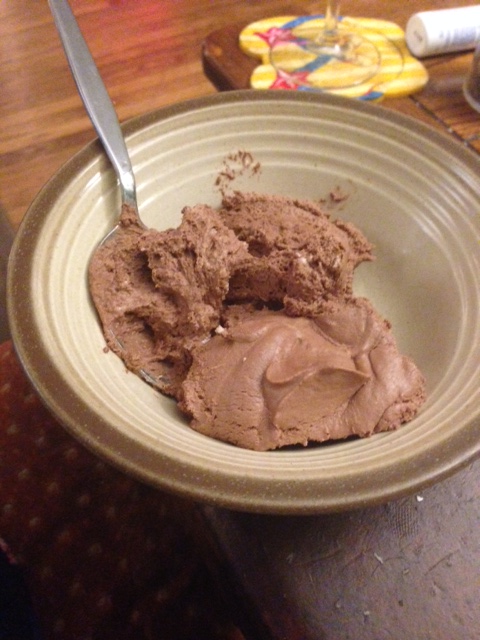
Then I made lactose-free yogurt. I made lactose-free fresh mozzarella cheese (although I wasn’t very good at it). I bought an ice cream maker and made ice cream in any flavor I wanted. I made chocolate mousse. For Thanksgiving, I made ice cream and pumpkin pie with sweetened condense milk and mashed potatoes with sour cream.

Basically, you can add the enzyme to the cream or starting dairy product, let it be for a couple of days, and then cook as you normally would. In milk, the treatment slightly changes the flavor of the milk (it becomes a little cloying, because glucose tastes different than lactose), but in prepared foods I can’t tell the difference. Below are a couple pics of some projects I enjoyed very much. Hopefully this brief run down helps a few of you, or a least gives a picture of our complicated food science lives.

photo1

Green tea ice cream, made with matcha green tea.

photo2

Chocolate mousse.


Fun science: the smell of lavender

This weekend, I visited a lavender farm, and thus smelled a lot of lavender. The sense of smell is really an amazing thing. Our vision processes light waves, our hearing processes sound waves– but smell processes many kinds of molecules at concentrations down to parts per billion. We tend to think of smell as a less important sense, but from a scientific standpoint, it’s amazing.

How does smell work?

The short answer is, we don’t fully know. We know receptors recognize different parts of molecules like ketones, alcohols and aldehydes. We don’t know how the brain assembles all the information from the various receptors. Some studies suggest that groups of neurons synchronize in different ways for different scents, while other studies suggest that the locations of receptors that fire create a spatial pattern for each smell. You can find further reading here, but fair warning, it’s tough material.

How sensitive is smell?

We can detect methyl mercaptan, the scent added to natural gas so that we can smell leaks (also the smell of asparagus pee!), down to parts per billion (ppb).

We can also tell the difference between very similar compounds. Linalool, the primary component of lavender oil, exists in two configurations called enantiomers. Both contain the same elements linked in the same way, but the two are mirror images. The left-handed linalool is the primary component of coriander seed and sweet orange flowers. The right-handed linalool is the primary component of lavender and sweet basil. (L)-linalool is sweeter and detectable to 7.4 ppb while (R)-linalool is woodier and detectable to 0.8 ppb.

Left:Left-handed linalool, the primary smell of coriander seed. Right: right-handed linalool, the primary smell of lavender oil. Image from Wikimedia commons.

Smell and Emotions

Studies suggest that the smell of lavender relieves anxiety and can promote sleep. Smell is strongly tied to emotions; the same parts of the brain that process smell store emotional memories.

I wonder if this connection is partially why we discount smell; smell is at its basic core tied to emotions rather than logic. It’s hard to put a smell into words, and science understands our others senses far better. I stood in the room full of lavender, remembering my last visit to a lavender farm with my family, and thought about how amazingly complex our response to little molecules can be.