Author Archives: Vironevaeh

Writing prompt: using an illustration as inspiration

Time: 7 minutes. Click here to go to my list of prompts.

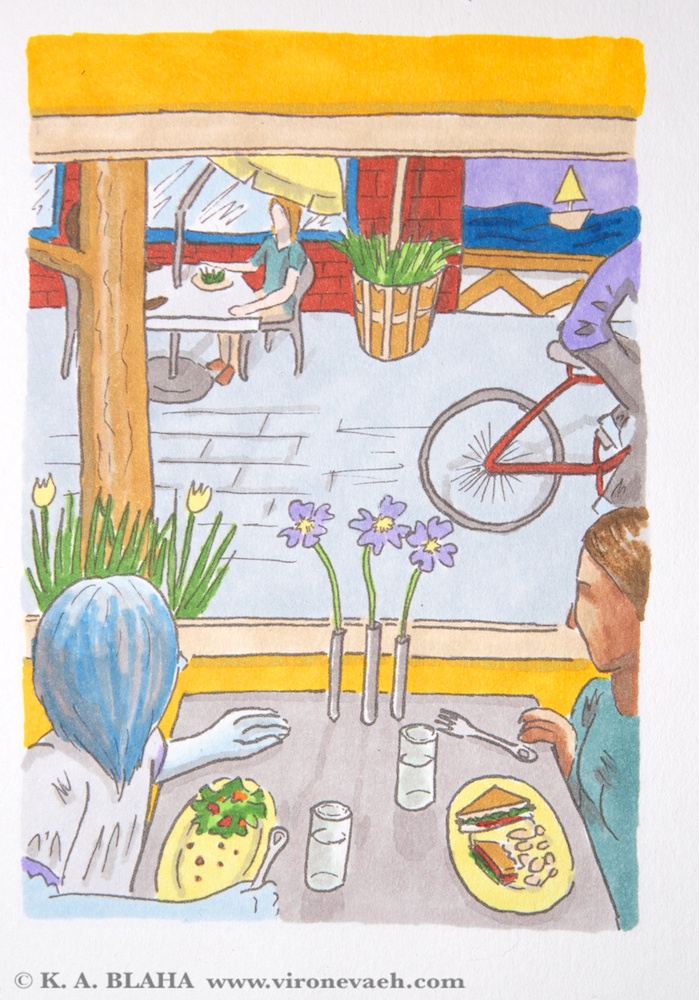
I wrote this prompt while looking at the image below, which I made for my worldbuilding exercises, discussed here.

SONY DSC

Enh and Della sat at the table, staring out the window rather than at each other. Enh hadn’t seen Della in fifteen years, not since that terrible night. And now they sat in a beautiful café, staring out at the sea rather than talking. Out of the blue, Della had contacted her two days before. She still hadn’t explained why, and Enh was growing uncomfortable. In the distance, a sailboat skating gracefully by. Enh wished she were there. Anywhere but here.

“It’s good to see you again, Enh,” Della mumbled again. Enh just nodded this time. Della’s voice, so distinctive, was unchanged, and she mumbled just like she had so many years ago. She paused for a long time. “Don’t you have anything to say to me?”

Enh sighed. “You contacted me. And you still haven’t told me why yet. I didn’t come here to reminisce. I came here because to asked me to, and I’d prefer you get to the point.”

Della’s eye’s narrowed. When she was young, she might have cried, but evidently she was past that. “You always make everything hard. Fine, I’ll just say it. I found out that Intira might be alive.”

Enh dropped her fork. Visions of that night came unbidden. The night they found the bike on the beach, but not Intira. Intira’s angry note, condemning all their undermining, how they had never really been friends. A man who’d seen her running into the ocean. Her clothes, found a month later on the coast.

(As it happens, the end of this prompt became inspired by another illustration, see below.)

SONY DSC

Cityscapes

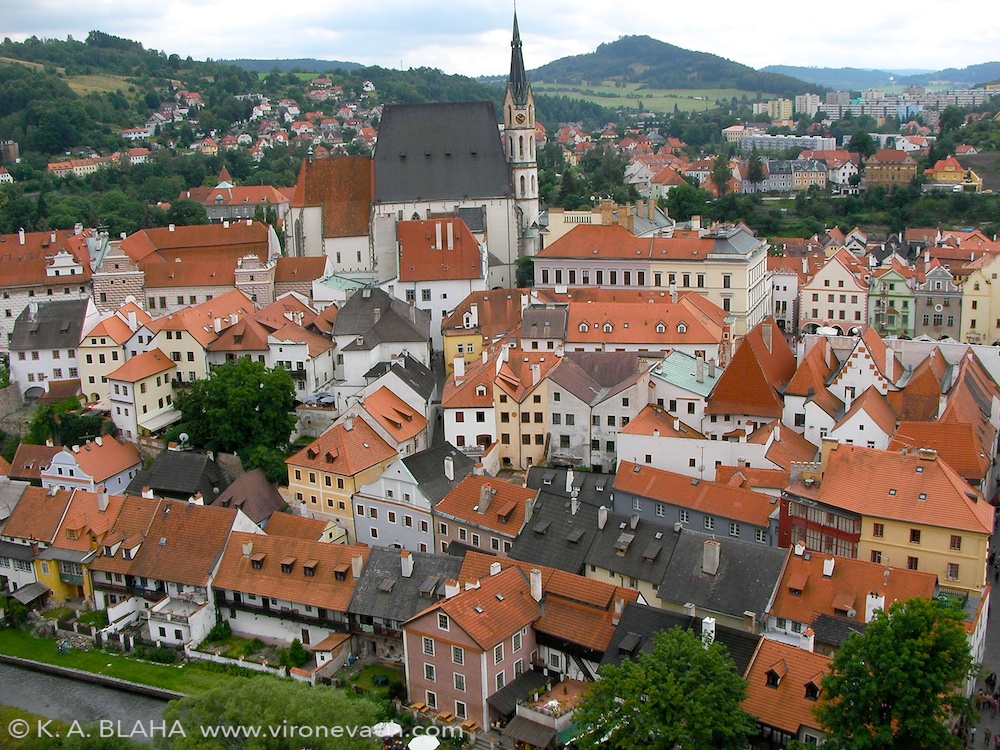
Whenever I travel, I bring my camera. It remembers the little details I can’t. Then I come home and the photos take me back to those places. They are also great resources for illustration and imagining. Last week I posted some word building illustrations. When I try to imagine and build what doesn’t exist, photos of what does provide invaluable insight. Between my photos and google searches, I work toward my vision for each piece of each illustration. Below are a few favorite cityscapes I pulled out of my files. Whether from street level or from above, each provides a window into the culture of each city.

Cabo san Lucas waterfront.

Cabo san Lucas waterfront.

New York City from the Rockefeller Building.

New York City from the Rockefeller Building.

On the street in Portland, OR.

On the street in Portland, OR.

Ghent, Belgium.

Ghent, Belgium.

Bergen, Norway.

Bergen, Norway.

Prague, CZ (a place called nazdrazi holesovice, if my notes are to be trusted).

Prague, CZ (a place called nazdrazi holesovice, if my notes are to be trusted).

Cesky Krumlov, CZ.

Cesky Krumlov, CZ.

Baltimore waterfront.


Food and science: understanding and cheating lactose intolerance

A person is lactose intolerant when they no longer makes sufficient quantities of the enzyme lactase. Because the enzyme no longer breaks the lactose sugar down, bacteria in the large intestine do instead. The bacteria release a lot of gas when they do this, which irritates the large intestine and causes the symptoms we observe. 

Below is a quick run down to understanding lactose content in foods, and what I’ve done to continue eating awesome dairy food despite my own very inconvenient sensitivity.

What contains lactose?

As a short answer, more than you would think. Obviously ice cream and milk do. Hard cheeses contain very little. I often read that yogurt is well-tolerated by lactose-intolerants due to the bacterial culture, but I do not tolerate yogurt. Sour cream made by traditional methods is low in lactose, but many manufacturers add milk solids.

It gets more complicated. Many foods contain milk powder or whey. Milk powder is 50% lactose by weight, and whey is 10%-70% lactose. Pastries, hot chocolate mixes, pudding mixes, and even Doritos can contain milk powder and whey. Most annoyingly, products do not list the quantity of lactose contained.

Fortunately, several websites tabulate the lactose content of various foods (at least dairy– if you find one for prepared foods, I would love to hear about it). Steve Carper’s Super Guide to Dairy gives a great explanation of the lactose content of a wide variety of dairy products. This link has a decent list.

Circumventing lactose intolerance

Thanks to modern science, we can synthesize the lactase enzyme. The enzyme can be taken as pills and eaten with food, or added to the food as a liquid. I used to take the pills, but as my symptoms progressed, that method became insufficient. The stomach is a mixing chamber, and mixing is imperfect, so enough lactose still got through to cause issues.

After going a year without ice cream or yogurt, I decided to investigate my options. Online, I found the lactase liquid drops, which can be added to any liquid. In 24 hours, these drops reduce the lactose content of a product roughly 70%. I usually add more than the recommended quantity and wait three days to be extra sure. (A side note: I read in the amazon comments that some batches of the enzyme didn’t work; you can test the enzyme’s effectiveness using diabetic glucose test strips. Lactose splits into glucose and galactose, but food doesn’t normally contain glucose; a test strip indicating its presence in a treated food means the enzyme worked. I bought my enzyme in August, and did the test because heat can de-activate enzymes; it was super easy.)

Then I made lactose-free yogurt. I made lactose-free fresh mozzarella cheese (although I wasn’t very good at it). I bought an ice cream maker and made ice cream in any flavor I wanted. I made chocolate mousse. For Thanksgiving, I made ice cream and pumpkin pie with sweetened condense milk and mashed potatoes with sour cream.

Basically, you can add the enzyme to the cream or starting dairy product, let it be for a couple of days, and then cook as you normally would. In milk, the treatment slightly changes the flavor of the milk (it becomes a little cloying, because glucose tastes different than lactose), but in prepared foods I can’t tell the difference. Below are a couple pics of some projects I enjoyed very much. Hopefully this brief run down helps a few of you, or a least gives a picture of our complicated food science lives.
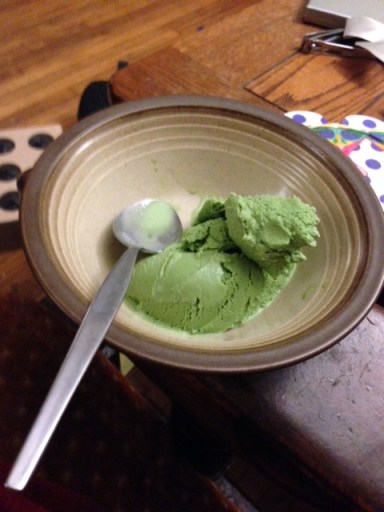
photo1

Green tea ice cream, made with matcha green tea.

photo2

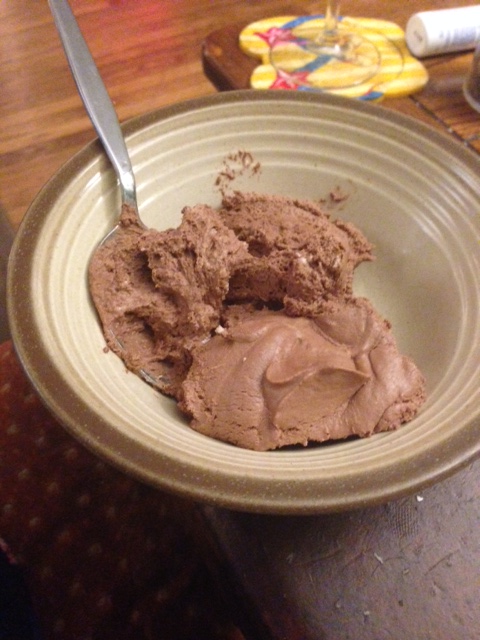
Chocolate mousse.


Writing prompt: The Little Viking

Time: 7 minutes. Click here to go to my list of prompts.

“The Little Viking”  (this prompt inspired by a little Viking figurine in my office, as pictured.)

It wasn’t easy for Olie to be the littlest Viking in his boat. Big Thorvald stood two heads taller than him, and most of the others stood at least one head taller. Olie even had a special sword made to be lighter and shorter for him. The others were mostly polite to his face, respecting his moniker of “mad herring”, but they laughed when they thought he couldn’t hear. He heard.

There were advantages to his stature. He knew that, he just wished he could convince the others of it. Once in battle, his enemy, a great hulking man with braided red hair, took a mighty swipe with his sword. Fortunately, Olie was so low the blow only took one horn from his helmet. And then he stabbed the red-haired man and danced on his corpse. But did his boat-mates remember that? No, they laughed at his one-horned helmet.

Then one voyage, Olie spotted a tiny Viking on another boat. Here was a man who could understand him, perhaps teach him battle techniques. At the very least, here was a man who he could drink a lot of mead with. When the boats landed in the trading town, Olie immediately rushed to the other ship, neglecting his duties, but not caring.

The other tiny Viking turned around—it was a lady. Olie’s village used to have women on the boats, but when there were enough men, they opted not to. Here, finally, was a Viking he stood over. He smiled broadly at her.

“Don’t get any ideas,” the woman said, smiling back. “I might be as little as you, but you know as well as I do how hard we fight to make up the difference.”

Her eyes glinted, and Olie saw that she probably would punch him as easily and effectively as any of his boatmates. “This is true. Let’s drink now and save the fighting for later.”

Science Fiction Worldbuilding

One thing I love about science fiction is worldbuilding. When you go to a new place, you take in the architecture, the language, the food, the weather, how someone enters a house, how someone insults another person… These things exist in any culture, but they vary, sometimes radically. In science fiction, the creator tries to imagine these things in a logical and consistent manner for a time that hasn’t happened yet, for planets unknown, with the very constants of life such as gravity and oxygen subject to change. And yet the end product, when successful, is similar to travel–we visit a place that is deeply familiar in the fundamental ways and yet different in ways that provoke thought.

(Some people think that there is too much worldbuilding–I don’t agree. I think the author can tell too much of their own personal worldbuilding process and not consider the reader enough. However, I speak from a place of no authority, so take my opinion for what it is worth.)

In the last few weeks, I’ve been working on illustrations of street life in my city inspired by Hiroshige’s 100 views of Edo. Even after 17 years working on this world, I see many new things this way.

SONY DSC

On the hill in the background is the outline of an old storm tower, shaped a bit like a lighthouse. The old fortifications stood high on the hills with thick walls to withstand the storms.SONY DSC

The view west from a storm tower, to give early warning of storms. In the early days of the city, storms caused flash flooding and devastation.SONY DSCGleaming cities often have unsavory hidden parts, sometimes literally lurking around the corner.

So far I’ve done about 20 illustrations. I’d like to do at least 100. In each one I feel more comfortable with previous details. I’ve looked up references of European and Moroccan and Japanese architecture (mostly the European showing in these three samples). Now I’ve started incorporating old sketches over a decade old. The city feels all the more real to me (it’s great inspiration for story ideas and details), and the work is great fun.


Writing prompt: The Melt

Time: 7 minutes. Click here to go to my list of prompts.

“The Melt”

Elijah strapped the packages and foodstuffs to the sleigh. When they were secured, he went and fed the dogs. It would be a long day for them tomorrow. It was the hard time of year. It was time for the Melt. Each year their small community packed onto sleds to escape the floods of the spring melt. One who left too early faced oppressive cold and winds in the high country. One who left too late faced mud and run off and risked the sudden floods. This winter’s weather had been tumultuous, and Elijah felt uneasily that they might both be too early and too late. This year, perhaps nothing would be right.

#

In the morning, Elijah and his neighbors left their communal home. It would not be there when they returned. Ahead of them stood miles of whiteness, the great fertile flood plain. The world was silent but for the creaking of the ice under the sun. All day long, the dogs pulled the sleds. Elijah and the stronger men and women skied alongside the sleighs. The children and the elderly rode the sleighs.

Late in the afternoon, the party came to a river.

“This ice is no good,” Elijah’s sister Elta said. “Look, cracks run deep into it, and the color is not right.”

“I said we left too late,” someone said.

“We’ll have to go around,” Elijah said, trying to force an air confidence he did not feel. “This has happened before.” It had happened before, but never without death and suffering. The fickle sun shone down, weakening the river further.

March Reading Review

Below is a list of my favorite science fiction short fiction in the last month (you can find my review for last month here). I like to read them and give myself a little time to think about them. If you still remember and like a story weeks later, it was a good story.

Happy reading on this snowy Monday!

Writing prompt: giant sheep

Time: 7 minutes. Click here to go to my list of prompts.

“Giant sheep” (This prompt is loosely inspired by Norstrilia by Cordwainer Smith, which involves ranching gigantic sheep that produce an immortality serum. If you are looking for weird sci-fi, give in it a try)

John’s sheep Dolly stood with effort. She had eaten everything on this patch of the ranch, and regrettably had to drag herself to another patch. This part always worried John. Although Dolly’s bones were engineered to include carbon nanofibers, her tremendous weight still caused fractures sometimes. A few generations ago, the sheep were only 50 feet tall. Now they were 100 feet tall, and maybe that was just too tall.

Dolly sensed the danger, too, and she walked gently, testing each patch of ground before placing her weight more firmly. John stayed well back from her path. She had lost her balance before. Other ranchers had died in this way.

Dolly set another foot down. John heard a cracking sound. “Oh no, oh no, oh no!” He shouted. He ran from Dolly. She gurgled in surprise as a sinkhole opened under her hoof. She tumbled to the ground. Her eyes were wide and she bleated deafeningly. The fall must have injured her.

John sighed. Ohio simply wasn’t Norstrilia, and this stupid form of husbandry should have stayed on that god forsaken rock. He ought to switch to giant chickens.

Fun science: the smell of lavender

This weekend, I visited a lavender farm, and thus smelled a lot of lavender. The sense of smell is really an amazing thing. Our vision processes light waves, our hearing processes sound waves– but smell processes many kinds of molecules at concentrations down to parts per billion. We tend to think of smell as a less important sense, but from a scientific standpoint, it’s amazing.

How does smell work?

The short answer is, we don’t fully know. We know receptors recognize different parts of molecules like ketones, alcohols and aldehydes. We don’t know how the brain assembles all the information from the various receptors. Some studies suggest that groups of neurons synchronize in different ways for different scents, while other studies suggest that the locations of receptors that fire create a spatial pattern for each smell. You can find further reading here, but fair warning, it’s tough material.

How sensitive is smell?

We can detect methyl mercaptan, the scent added to natural gas so that we can smell leaks (also the smell of asparagus pee!), down to parts per billion (ppb).

We can also tell the difference between very similar compounds. Linalool, the primary component of lavender oil, exists in two configurations called enantiomers. Both contain the same elements linked in the same way, but the two are mirror images. The left-handed linalool is the primary component of coriander seed and sweet orange flowers. The right-handed linalool is the primary component of lavender and sweet basil. (L)-linalool is sweeter and detectable to 7.4 ppb while (R)-linalool is woodier and detectable to 0.8 ppb.

Left:Left-handed linalool, the primary smell of coriander seed. Right: right-handed linalool, the primary smell of lavender oil. Image from Wikimedia commons.

Smell and Emotions

Studies suggest that the smell of lavender relieves anxiety and can promote sleep. Smell is strongly tied to emotions; the same parts of the brain that process smell store emotional memories.

I wonder if this connection is partially why we discount smell; smell is at its basic core tied to emotions rather than logic. It’s hard to put a smell into words, and science understands our others senses far better. I stood in the room full of lavender, remembering my last visit to a lavender farm with my family, and thought about how amazingly complex our response to little molecules can be.

Food and science: sous vide or water bath cooking

In sous vide cooking, food is cooked in a water-bath at low temperatures (130-150 F) for longer times. Food cooked sous vide can be radically different in texture and taste than food cooked by more traditional methods. Even better, sous vide cooking is really, really easy.

What is sous vide?

In sous vide cooking, food in plastic bags is placed in a fixed-temperature water bath. The water bath temperature is held most easily by a digital controller. Some people build their own systems on the cheap. I bought this one, which in my opinion is worth every bit of $200.

As I discussed last week, bacteria die above 125 F. Consequently, food can be cooked at any temperature above 125 F (the closer to 125 F, the longer required for sanitation). This means a steak can be cooked to 130 F and be rare throughout, but also safe. For a 1 inch thick steak, this takes about an hour.

Why is it different?

Like a crock pot, sous vide cooking can be used to make tough cuts of meat extremely tender. Unlike a crock pot, the user has precise control over the set temperature, and the food is isolated from the water in which it cooks. This means that sous vide food isn’t soggy like slow cooker food so often is.

When we cook meat, the textural and color changes we observe are due to changes in the protein of the meat. Different proteins break down at different temperatures. The controller I use (linked above) allows control down to 0.1 C or 0.5 F. With such fine control, the cook can choose the exact temperature at which they wish to cook, and thus the effect they’d like to have on the protein. Poached eggs best demonstrate the results of this control. The proteins in the yolk coagulate at lower temperatures than the proteins in the white. By changing the cooking temperature only slightly, the cook can dramatically change the textures in the poached egg. This is called the perfect egg–at the link you can see eggs cooked to a variety of temperatures.

The set-up

For my set-up, the only major cost was the controller. I clamp it to the edge of a 8 qt pot (bigger would be better, but it’s what I had). Many people vacuum-seal their food before cooking, but the sealing system is an additional cost. I put my food in ziplock bags (glad bags are reported to be BPA-free). Then I add a little oil, squeeze the air out, and seal. To start cooking, I wait for the water in the pot to heat up and I clip the bag to the edge of the pot with a clothes pin.

Recipes and further reading

  • Citizen sous vide: an excellent general guide, with links to recipes and product reviews. Recipes are sorted by meat and cut.
  • Douglas Baldwin’s A Practical Guide to Sous Vide: a more technical discussion of sous vide with straightforward and instructive videos. This guide really explains the motivations of cooking sous vide.
  • Recipe for tri-tip steak: this recipe suggests cooking a tri-tip at 130 F for 6 hours, results shown below. You can see the meat is still pink in the middle. Cooking for six hours allowed it to tenderize, and all I had to do was cut up some meat and stick it in a bag. Very easy and delicious.
  • Tri-tip steak cooked sous vide.

    Tri-tip steak cooked sous vide.