Supermoon

If you haven’t heard already, today is a “supermoon.” Today, the moon is closer to the Earth than it has been since 1948. Visually, that means it will be bigger and brighter than usual. Intellectually, it’s gratifying to watch the cosmic ballet go on. Our solar system is like a Swiss clock, all the parts proceeding and, for the most part, fitting together perfectly. Winter (northern hemisphere) supermoons are slightly bigger because the Earth is closer to the sun; the sun’s gravitational power pulls the moon slightly, such that the supermoon is bigger. Astrobob explains it better here.

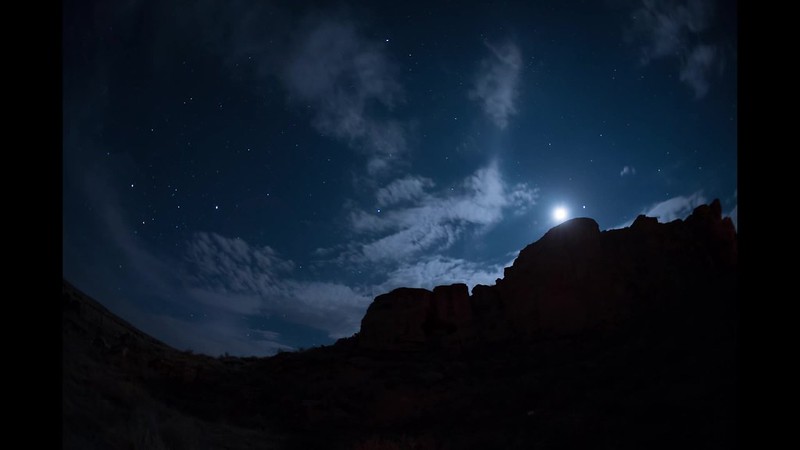
For more pontifications on the moon, check out What If the Moon Didn’t Exist, which I reviewed here. Below are some of my favorite photos of the moon, and a moonrise video over Chaco Canyon, New Mexico.

This slideshow requires JavaScript.

Chaco Canyon moon, stars, and clouds

Book review: Prague Winter (Madeleine Albright 2012)

Rating: 5/5

Madeleine Albright’s Prague Winter: A Personal Story of Remembrance and War, 1937-1948 is about the history of Czechoslovakia, but most especially the turbulent times around and during WW2. Madeleine Albright, born Marie Körbelova in Czechoslovakia, was the first female US secretary of state. I remember as a kid wondering why Missouri’s secretary was such a big deal, and in misunderstanding the meaning of “state,” I became a bit fascinated with her.

WHY THIS BOOK?

Only when this book came out did I learn that Madeleine Albright was Czech, as I am on my father’s side. I spent a summer in Prague listening the stories about the communist period from my host, a professor who was not viewed favorably by the communists. I learned a lot about the Prague Spring in 1968. This book was an opportunity to learn more about another piece of Czechoslovak history.

Also, a substantial portion of the book is devoted to the Czech Jewish experience. Albright lost 3/4 grandparents to the Holocaust, and dozens of other relatives. Albright only learned of her Jewish heritage in her 60s. Genetic tests revealed that my family has Jewish ancestry. Both my Czech roots and my Jewish ancestry are far more removed than Albright’s, but still, learning about her experiences and heritage felt like honoring my own heritage.

THE GOOD

Albright skillfully weaves personal experiences with history. This history occurs at three scales—the global/European context, the Czech perspective, and her father’s experiences in the Czech government and the Czech government in exile. We skim Czech history from ancient times until the end of World War 1, when Czechoslovakia became an independent nation. After WW1, Czechoslovakia flourished for 20 years under the first president, TG Masaryk. The cowardice of England and France led to the 1938 Munich Agreement, which ceded Czech land to Nazi Germany to temporarily appease Hitler. Her father, Josef Korbel, served the exiled Czech government; he was the secretary to Jan Masaryk, son of TG Masaryk. She describes the strengths and the weaknesses of the various leaders, and what she thinks she would have done in their place.

Albright interlaces her family history with the prison camp of Terezín where many of her relatives died. A strong community tried to survive within Terezín’s deadly walls, with education and theater and art. She discovered her Jewish ancestry in 1997, and only then learned of the fate of the bulk of her family. I visited Terezín in 2008. It was the prison camp the Nazis used to deceive the Red Cross. It contained no gas chambers, but was deadly enough with disease, lack of food, and deportation to death camps.

Most valuably, from my perspective, she gives the Czech perspective on the various triumphs and catastrophes in the first half of the 20th century. She illuminates a people between a rock and a hard place, with a dream of centuries crushed after only 20 years. She describes the brave and costly assassination of Reinhard Heydrich, achieved by Czech parachuters trained in England.

And finally, despite 400 pages of length, this is a quick read. It’s very well written, and the details that could get overwhelming, such as the details about various Czechs with difficult names, are broken up with personal stories and reactions. It’s a lovely blend of family and national history, which, given Albright’s father’s prominence, is very appropriate.

THE BAD

  • All Czech names are presented without instruction for pronunciation. Having lived there briefly, I was used to it, but this book might benefit from a pronunciation guide.
  • Albright is extremely willing to volunteer the brave things that she would have done. She qualifies this with some uncertainty. While I appreciate this in a way, as she’s one of the few people who could even possibly make an educated statement about such things (she has a doctorate in political science studying the role of journalism in the Prague Spring of 1968), it does happen numerous times. She always picks the most dangerous, egalitarian and brave option. It felt like 20/20 hindsight.

Book review: The Bank War- Andrew Jackson, Nicholas Biddle, and the Fight for American Finance (Paul Kahan 2016)

Rating: 5/5

Paul Kahan’s The Bank War is about President Andrew Jackson’s (1829-1837) battle to destroy the Second Bank of the United States. The First Bank of the US was founded in 1791  under Alexander Hamilton’s guidance and dissolved in 1811. The second was chartered in 1816. The banks were founded to try to stabilize currency and establish a good fiscal reputation for the fledgling US with other countries. The banks’ opponents, including Jackson, thought they were an overreach of federal power.

WHY THIS BOOK?

I have no particular interest in banking or finance. I chose to read The Bank War out of curiosity about the era and the fact that Bank War was recently published. After the recent discussions about whether Jackson should be removed from the $20, I knew a little about Jackson’s animosity to the bank—just enough to be curious. (Personally, a century of depiction on currency seems like plenty. We have such a rich history, but always the same five-or-so dudes on our money.)

THE GOOD

The Bank War details the battle between President Andrew Jackson and the president of the US Bank, Nicholas Biddle. It did what good non-fiction should do: it introduces the reader to the people and the era with enough background but not too much. Nonfiction, especially about topics like policy and finance, can be long and intimidating, and this book is neither. It’s academic but approachable.

The Bank War has some evaluations of Jackson’s and Biddle’s characters, but these evaluations arise from specific events and discussion of other historians evaluations. Jackson was and remains controversial. A lack of commentary on his tempestuousness would stand out. This is the man that drove the creation of the two political parties during his presidency as basically For Jackson and Against Jackson. I found him fascinating and repulsive.

This book distilled unfamiliar and complex topics into a compelling narrative. In 160 concise pages, I learned about the early monetary policy of the country (without too much jargon), about Jackson, about the development of a two party system, and more.  The early history of paper money was great and surprising. Having read about metallism policy such as in the election of 1896 with William Jennings Bryan, I had believed that our money was based on bullion until the 20th century.

THE BAD

Two small criticisms:

  • A few times, the brevity of the book is a little unsatisfying, for example where Kahan introduces the faction of the Democrats called the locofocos without any explanation as to the meaning of the name (a self-lighting cigar, wikipedia informs me). What a charming detail to omit!
  • The introduction details his motivation to write the book— the financial crisis of 2008 bringing attention to the role of the Federal Reserve. I hoped the epilogue would contain some synthesis of the two topics but it did not. Perhaps as a historian he left that to others but I would have been curious as to his views, seeing as it was his motivation.

The Art of the Park

I’ve posted many times before about my love for WPA-era travel posters and some of my own tribute work. I have a wall of stylized postcards that I have collected along my travels. Like the parks passport stamps I described a few months ago, the WPA postcards became an exciting item to collect. Every time I have a visitor in my home, we talk about the parks. Bureau of Land Management, National Park Service, county open spaces, state parks, they are all wonders of the west and worthy of a place on the wall. Not all of these places have postcards, which I am slowly working to remedy. But today’s post is about the great parks’ art that I have accrued and slathered upon my walls.

Below I include a few of my favorites from the wall. Some of the cards I like the depiction of the specific piece of scenery, others I like the color palette or the stylization. We all have stories about our visits to parks. These cards tell stories; the stories of these cards have augmented my stories. They let me dream for weeks and months after a trip about the animals, the scenery, the history, and the cultures of the parks I visited.

New Mexico has 14 National Monuments, extensive Bureau of Land Management sites,  wildlife reserves, open spaces, state parks, and more. In a future post, I’ll talk about my work to create posters for the New Mexican sites that lack them today.

This slideshow requires JavaScript.

Fractal Art

Here in Albuquerque, mathematical art adorns the schools. We are the Fractal Capital of the World. Fractals are a kind of math that considers the multi-scale aspects of nature. In school, we learn about rectangles, circles, and triangles, but which of these shapes best represents the coastline of Great Britain?

And even if learning fractal math isn’t your path, you probably appreciate what others have done with it.  This documentary describes how lava in Star Wars was simulated using fractal approaches. Many natural objects have fractal aspects, and CGI versions of these objects utilize this approach.

I do research in nonlinear dynamics, which is a cousin to chaos theory and fractal math. Fractal math first emerged as a visual wonder with Benoit Mandelbrot; as a scientist and artist, fractals inspire me in multiple ways. I hope my forays into fractals might inspire, too!

This slideshow requires JavaScript.

Pop-ups: Water Polo

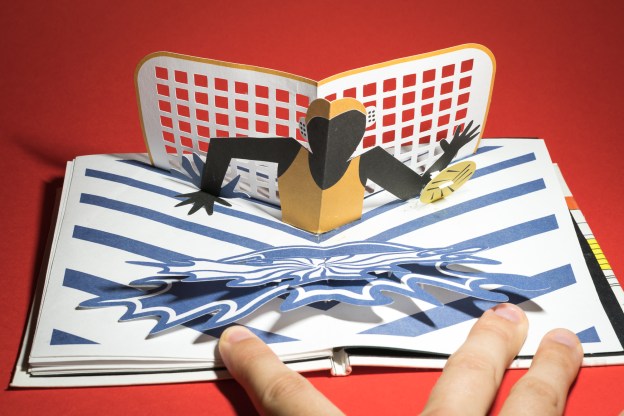
I recently resumed my fascination with pop-up art. It’s fun to abstract the world to a system of interacting planes. I’ve created cats at play, architecture, and hot air balloons. It was inevitable that my play would turn to water polo, and so it has. I wondered how I would depict a goalie blocking a ball or a player swimming down the pool. I cannibalized some poster designs from a few months ago and was off to the races.

Below is my water polo pop-up book! I’m already scheming on new ideas, but I’m very proud of my first foray.

This slideshow requires JavaScript.

Western Skies: Sunsets

After a year in New Mexico, some things grow familiar. Red or green chile goes with everything, in the morning there’s probably a hot air balloon somewhere, and at night I will hear people gunning their engines on Route 66. But the New Mexican sky still amazes me. Whether its the stars at night, the distant rain, or the views of mountains for miles, it’s so different than the skies I have lived under for the rest of my life. In Missouri and Virginia, the sky was overhead. In New Mexico, it wrap around you like a bowl, a massive semi-spherical window into the universe.

This slideshow requires JavaScript.

Mimbres Pottery

Although we think of the west as new, it’s only new to the United States. Many native cultures and the Spanish Empire traipsed across the Southwest for centuries and millennia before it was the American frontier, and their legacy remains. As an easterner, nowhere I’ve ever lived had that depth of surviving history. I still have a lot to learn.


The Mogollon (roughly pronounced MUH-guh-yun) Culture was one of three ancient cultures in the southwest, along with the Pueblo and the Hohokam. The Mimbres branch of the Mogollon lived in southwest New Mexico. The people of the Gila Cliff Dwellings only lived there for about a generation, likely driven there by desperation. Compared to Chaco Canyon and Mesa Verde, the Gila Cliff Dwellings are quite small. The culture disappeared from the region shortly thereafter. But their pottery remains influential today, over 500 years after the culture that produced it collapsed.

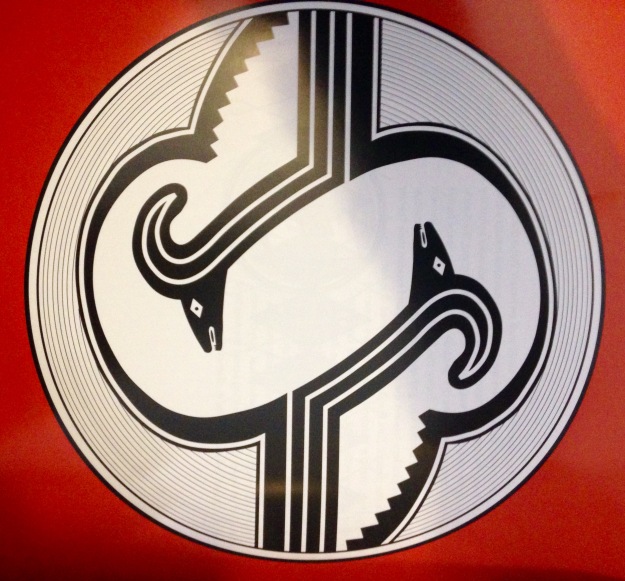
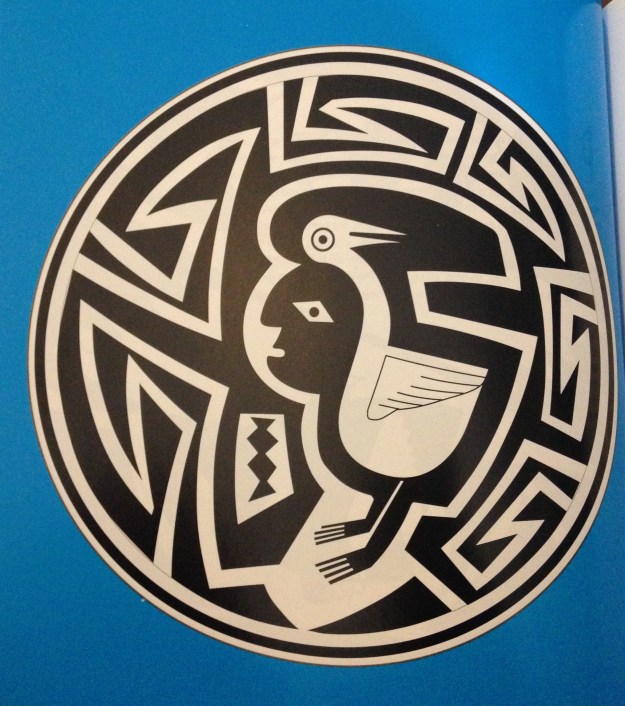
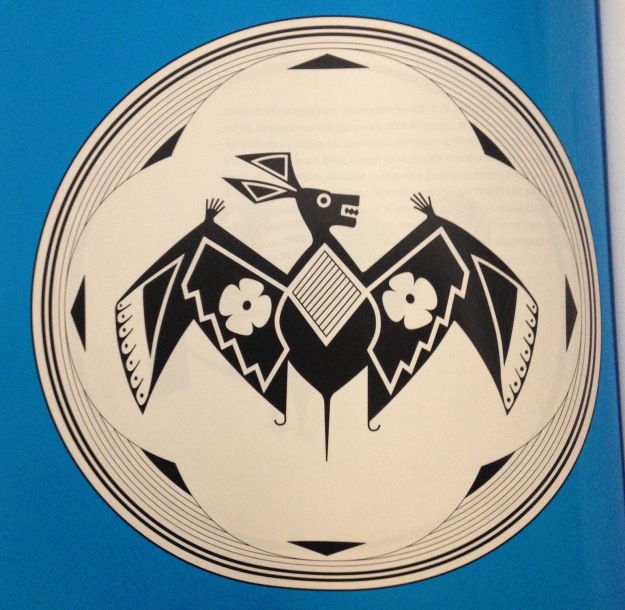
Mimbres pottery is astonishing. Many southwestern cultures have beautiful pottery with rich design and symbolism. Mimbres pottery is different. It depicts compelling geometric abstractions of animals and people, employing artistic devices not seen in European art until this century.

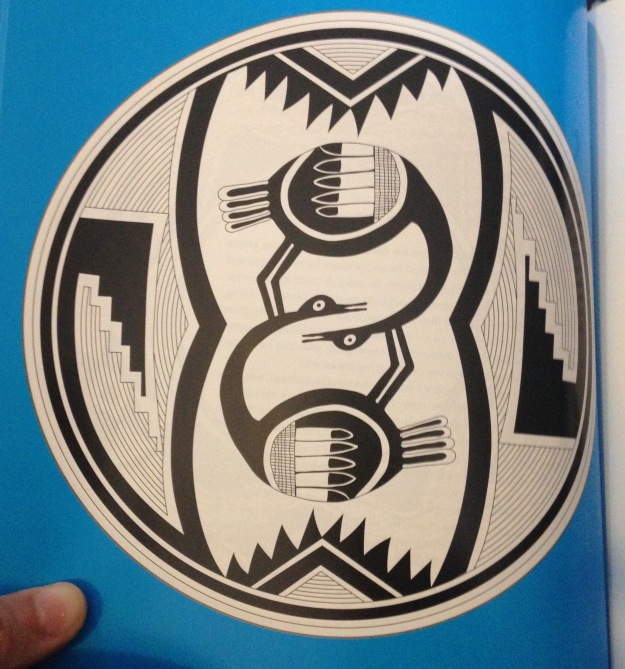
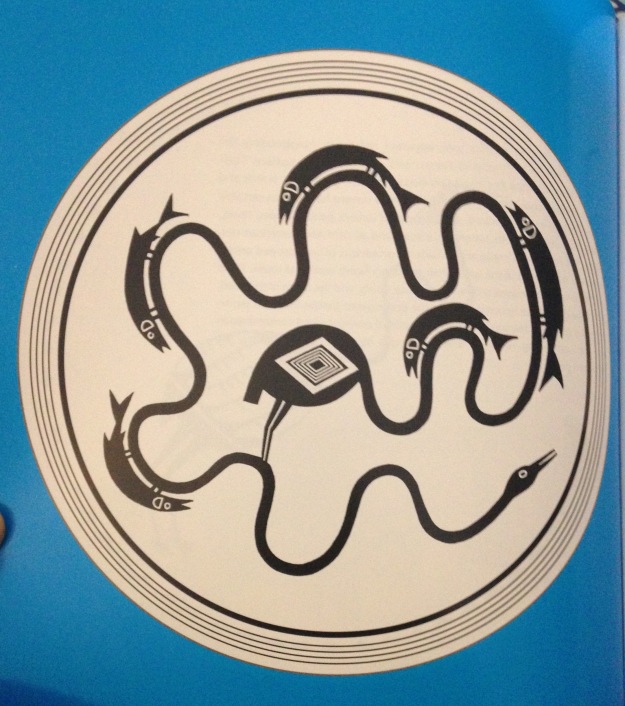
The Maxwell Museum of Anthropology in Albuquerque has a nice collection; I picked up a great book of designs in the gift shop, Mimbres Classic Mysteries by Tom Steinbach Jr. Most books about Mimbres pottery show photographs of the works. This book shows the designs themselves, which are brilliant. All images in this post are from that book.

fullsizerender-13

Sandhill crane design, almost like something from the art deco movement.

fullsizerender-14

Humorous design featuring a great blue heron, with the fishes hiding in the one place the heron’s neck cannot reach.

fullsizerender-15

Intertwined ram’s heads

fullsizerender-16

Man/crane design. The author suggests it looks like a Picasso. I am struck by the use of negative space.

fullsizerender-17

Bat design

Exploring New Mexican Names: Mount Taylor

Mount Taylor is a volcano 80 miles west of Albuquerque, the most prominent feature in the western panorama looking from the foothills of the Sandias. It was named in 1849 for then-President Zachary Taylor. The Navajo call it “Tsoodził” (don’t ask me to pronounce that), and the mountain is important in the beliefs of the Navajo and local pueblo peoples. The mountain is rich in uranium, and was a mine until 1990. In nearby Grants, you can visit a mock uranium mine. Mount Taylor is also the site of the grueling-sounding Mount Taylor Quadrathlon, featuring biking, running, cross-country skiing, and snowshoeing. 

Zachary Taylor was the second and last Whig to be elected to the presidency. Both he and William Henry Harrison were generals, and both died early in their presidential terms. Taylor was mostly apolitical; the presidency was his first elected office. He fought in the War of 1812, against the Black Hawk Indians in what is now Minnesota, and against the Seminoles in Florida. He became known as “old rough and ready.” His daughter married future president of the Confederacy Jefferson Davis, but she died three months into the marriage.

Taylor came to national prominence during the Mexican-American War. This war eventually brought the territory of New Mexico into the union, and is detailed in Amy Greenberg’s A Wicked War. Taylor won famous victories in the Battle of Monterrey and the Battle of Buena Vista. The war was initially popular, and Taylor became correspondingly popular after his victories. Taylor privately opposed the war from its beginning, calling an early troop movement “injudicious in policy and wicked in fact.”

Democratic president James K. Polk (1845-1849), who had almost single-handedly created the war, grew frustrated that Taylor, a whig, was getting credit for what Polk considered democratic achievements. Before the Battle of Buena Vista, Polk stripped Taylor of a portion of his troops, leaving Taylor and his troops more vulnerable to attack from the army of Mexican general Santa Anna. Santa Anna was a busy boy in early Mexican history; he was president 11 nonconsecutive times, and he was the leader of the Mexican forces at the Battle of the Alamo in the Texas revolution. As time passed, the war grew unpopular, and so did Polk. After the invasion of Mexico City, the war stagnated, with US forces harassed by guerrilla warfare. US troops committed atrocities, such as the Agua Nueva Massacre. Polk wanted to annex all of Mexico, and some wealthy individuals in Mexico preferred this to the constant coups that plagued early Mexico. But would this territory permit slavery? And how would dreaded dark skinned Catholics be allowed to become citizens? Eventually, the upper one-third of Mexico’s territory was ceded to the United States in the Treaty of Guadalupe Hidalgo (a treaty that Polk opposed, but grudgingly accepted).

Taylor never saw Mount Taylor nor set foot in New Mexico, as far as I can tell. But he made his mark on the modern state of New Mexico in a couple of ways. The Mexican-American War brought most of the territory of New Mexico into the United States. And during his brief presidency, Taylor opposed Texas’ claims to the eastern half of New Mexico. Thanks in part to President Taylor, I live in New Mexico and not Texas.

Taylor assumed the presidency in March of 1849. Perhaps Polk resented this, but not for long; he had the shortest retirement of any president, dying just three months after leaving office. In the 1800s, presidents took office on March 4th after the election. Because March 4th, 1849 fell on a Sunday, Taylor refused to be sworn in. This led to “President for a Day” David Rice Atchison, who is slightly famous in my home state of Missouri. Taylor lacked specific policies and history considers him to be in the worst 25% of presidents. On July 4th, 1850, President Taylor ate some fruit and milk at a Fourth of July celebration. He became ill and died on July 9th, leaving Vice President Millard Fillmore, who is rated even worse than Taylor, historically. Polk, incidentally, is rated 10th best president, a ranking I suspect the author of A Wicked War disagrees with.

Perhaps someday I will learn how to pronounce Tsoodził, what it means, and the names and meanings of Mount Taylor in the Puebloan languages. Until then, I suppose Old Rough and Ready will have to do. He seems like the sort of person one makes do with.
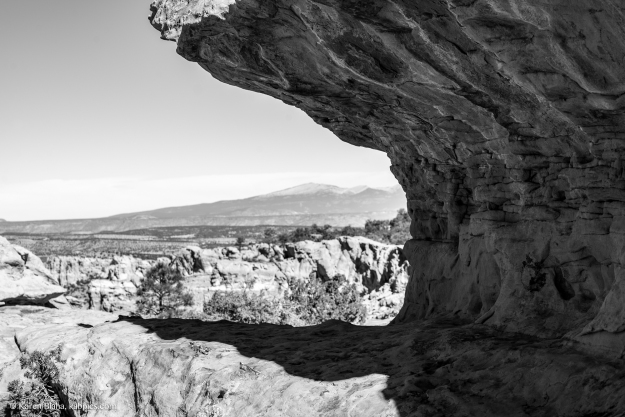

151114-el-malpais-04235-2


Bacigalupi’s “Water Knife” revisited: Considering “Cadillac Desert” and “Collapse”

A few months ago I read and reviewed Paolo Bacigalupi’s The Water Knife. It’s a semi-apocalyptic view of water shortages in the not-too-distant future American west. Although I enjoyed the book, I couldn’t buy into the central crisis of the book—a water crisis severe enough to send states practically to war with one another. Then again, I’ve lived most of my life in Missouri, New York, and Virginia; I knew nothing about water scarcity. After The Water Knife piqued my interest, I read two nonfiction books about societal collapse and the history of water rights: Marc Reisner’s Cadillac Desert and Jared Diamond’s Collapse.

The Water Knife is clearly a call to action. It begs the reader to read Cadillac Desert (which I reviewed here). The 1986 Cadillac Desert (with a 1993 addendum) details water-related shenanigans too absurd for science fiction. It details the construction of the LA aqueduct using mules; it reveals the snail darter controversy as a boondoggle of an evil bureaucracy; it details the pissing contest between the Bureau of Reclamation and the Army Corps of Engineers. Did you know that our largest desalination plant is far from any coast? The Yuma Desalination Plant on the Colorado River ensures that the water we send on to Mexico satisfies international treaty. Thousands of miles of irrigation makes the water almost toxically saline by the time it reaches the border. It’s hard to pick the most breathtaking farce detailed in Cadillac Desert—is it the river sent over a 2,000 foot mountain to reach southern California? Is it the Teton Dam, which collapsed immediately and eliminated several towns because the engineers chose not to worry about the caves in the rock next to the dam?

I read The Water Knife wondering all the while how plausible its central conflict was. The Water Knife provides none of the lurid water history that Cadillac Desert did, just a strong message to go read that book. Usually I resist exposition in fiction, but The Water Knife ended up feeling ungrounded to me without more education. Its insistent references to Cadillac Desert were an appeal to an authority I lacked any knowledge of. Most of the United States population lives in wet parts of the country without knowledge of water rationing. After reading Cadillac Desert, the lack of detail felt even more disappointing. Many of the tales of that book, especially of the CAP (Central Arizona Project), would have provided easy fodder. Books about Mars colonies explain how colonists find oxygen with some scientific exposition; The Water Knife should have included a little exposition to orient us naive easterners.

Cadillac Desert expounds upon the ecological damage, financial waste, and altogether pointlessness of many western water projects, but it doesn’t speak much of pending disaster. It showed me how absurd and illogical the western water structure is, a point that The Water Knife relies upon. The book I read next contained a vivid reminder of the fragility of the American west. That fragility has ruined lives and cities before.

Jared Diamond’s Collapse details why a variety of civilizations collapsed, including the Anasazi of Chaco Canyon in northwest New Mexico. Diamond explains how deforestation in the fragile desert ecosystem combined with a drought eventually led to widespread collapse of the civilization. I visited Chaco Canyon three months ago. It’s a strange place—a dozen massive ruins in a remote desert canyon. One can’t help but wonder how or why anyone lived there. Again and again, Diamond details how civilizations over exploit their natural resources, face adversity, and often collapse in the face of that adversity.

I don’t know if I believe that the southwest will collapse into a post-apocalyptic hellhole in the nearish future. As a new transplant to the west, The Water Knife strikes a frightening tone. But like the book about colonists on Mars, it need not be literally possible or true, it tells a fun story and kindles the imagination about the future of the American west. I enjoyed The Water Knife. But I was better able to feel its message after  supplemental nonfiction reading. I think The Water Knife would have affected me more if it supplied more of that information within the book. And to any other reader of The Water Knife patient enough to add another 1000 pages of reading to their list, Cadillac Desert and Collapse are excellent supplementals to The Water Knife.