Writing prompt: A pint and prompt!

Back in Virginia, our writing group had what we called a Pint and Prompt. A group of friends hit the bar, have a pint, and write for a few minutes on a writing prompt. Then you read your responses to one another. It’s really great to see the variety of responses, and it’s a good time with friends. Recently, they got together and did a Pint and Prompt, and my friend  Keith at Strange Things Done posted his response. And once I had a pint, I joined in the fun.


Time: 7 minutes. Click here to go to my list of prompts.

“She appraised me, canted her head and shrugged apparently disappointed.”


There was something synthetic about the motion, but maybe I was just looking for it, looking for a reason to discount her reaction.

“I know what you’re thinking,” she said. She straightened. She was waiting for a response.

“Oh?” I said, trying to sound coy, but feeling more self-concious than I liked.

“I see it all the time. My kind makes you nervous. Without the veneer of plastic pores and synthetic hair, you can’t dehumanize me.”

“You aren’t human,” I said.

“Which is why you wanted me. I can do things women can’t do.”

I coughed and looked away.

“You want to feel better than your partners. I can give you that feeling.”

“Well, why don’t you? Why haven’t you?”

“Maybe in addition to my hair and my cuticles and my lips, my feelings are less synthetic than the last model too. Maybe it’s shit doing business all day with people that want to take you down a peg.”

I felt bad. It is what I had wanted. “Maybe this isn’t the line of work for you.”

“I got debt. I was made with it. And this pays the bills.” She looked away and undulated her shoulders. She stretched. When she turned to look back at me, her eyes held a different look. It was like a different woman. I could see the hunger in her, calling to me.
Vironevaeh: 19 years of love

Like so many of us sci-fi-ers, I grew up on science fiction television. I remember watching Star Trek Next Generation in a high chair, and later I watched Babylon 5 and Voyager. I feared the space under the bed because my brother told me it contained a black hole. I drew aliens, made up planets, and wrote in codes. Once a friend cut the bridge of my nose with a hardcover book during horseplay, and I was delighted to declare myself Bajoran.

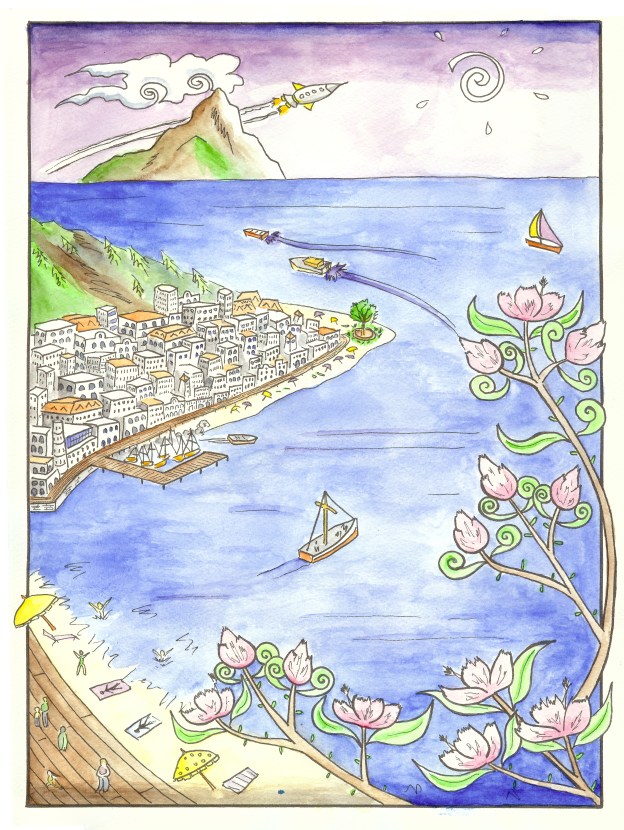
In 5th grade, we had the city project; we had to invent a city, describe its economy, design a model of it, and write a small essay. It was my catalyst. I created a city called Vironevaeh, set on a distant planet, colonized by humans from Earth in the distant future. My languages, my maps, my characters, my aliens now had a focal point.

That was 19 years ago. Once a year, I like to look back and celebrate all the fun I’ve had since. Dreaming about world building made me look at our own world in odd ways.

For now, Vironevaeh is just my little place. Maybe someday it will be something different, but more than anything, I love the journey.

Trips down memory lane

Below are a pair of landscapes, one from years ago and one from last year. My longing to depict Vironevaeh forced me to draw for a purpose. The pencil drawings was one of my first landscapes ever. The poster was an homage, and and another experiment in new territory: art nouveau and posters.

This slideshow requires JavaScript.

Maps

Maps are a simple staple of scifi and fantasy, but drawing maps made me ask a lot of questions. What kinds of geology could happen on a planet that could still sustain humanoid life? Or non-humanoid? Where should lakes, mountains, deserts, and oceans be in a realistic environment? What kinds of names would places have? What names would be linguistically compatible? What kind of linguistic range could I expect on a planet–how much would it vary in a place with a global culture versus one with regional cultures? What kind of stories would I tell about the people on such planets based on the map, and for the people whose stories I had already imagined, what kinds of maps would that require? Maps seem dry and factual on the surface, but I found myself asking a million such second-level questions. I love maps.

This slideshow requires JavaScript.

Storytelling

Vironevaeh filled me with stories, but I struggled to express them as I felt them. I have written my stories so many ways. Nowhere is that more rapidly evident than in my portraits. Below are four portraits of a character over six or so years. I had to learn to get the details right and be honest with myself where it wasn’t right. As ever, it’s a work in progress.

Places for the people

Maps and people weren’t the end, I wanted to know how the streets looked. That’s really hard! There’s architecture and materials, and then there’s imagining the landscape and how such things would fit in. I studied pictures of streets from around the world. I find this aspect the most challenging, but maybe also the most rewarding.

This slideshow requires JavaScript.

Stories of a new world

As I told stories about a new world, I wondered about their stories. And when I told them, I found that they fit everywhere. How many references to the garden of Gethsemane exist in western literature? A new place would have new Gethsemanes. Below are two images from mythology about a mouse, and new people finding that mouse in new constellations.

It’s never the end. Next year I’ll have new thoughts to share. Every year I am a new person, and Vironevaeh is a new place.

The impermanence of color: the treachery of entropy

Color seems like an easy, marvelous thing when you get that 64 color box of Crayolas as a kid. 64 sticks of pure color. But, of course, color is complicated. It can be impermanent, difficult to obtain, and toxic. To understand the life and chemistry of colors is to peek under the hood. It’s not what catches your eye, but it’s the heart of the drama.

Many paintings are known to be fading; it’s the newer paintings that draw the most concern. To some extent, the older paintings had probably already faded, but the older paintings also used old tried-and-true methods. The works of Jan van Eyck (1390-1441) are considered to be about as colorful today as when they were painted. Van Gogh’s daisies are fading. Renoir’s red has been digitally re-envisioned to show its pre-faded look.

The 1800s were a boom time of chemistry and industrialization, and the art world participated in this expansion too. 12 elements, including sodium and potassium, were discovered between 1800 and 1810. As Chemistry exploded, and new colors exploded. Mauve, the first synthetic dye, was produced in 1856 from coal tar. Renaissance painters (or their apprentices) prepared their own dyes and pigments (think of those scenes from “The Girl with the Pearl Earring” where Scarlett Johansson is grinding various things); 19th century painters bought paint from chemists. Like the disintegrating trade paperbacks of the early 1900s, when industrialization took over an old process, it was faster and cheaper, but took a while to match other characteristics. Books from the early 1800s are often far more intact than the wood-pulp books that followed them.

Artists like Van Gogh knew the strengths and limitations of their new tools. Van Gogh wrote to his brother, noting that the Impressionist paints “fade like flowers,” so he used the brightest colors he could, doing what he could to counteract impermanence. Even now, not all paints are equally durable; here’s a table for watercolors including such measures.

Today, scientists are studying the precise chemistry that causes fading using X-rays. So far, nothing can be done to stop or reverse the fading; they can only be kept away from light. At least we have the tools to imagine their former glory.

Further reading: Victoria Finlay’s Color is a great read on the chemistry of color without diving too deep technically. I reviewed it on this blog a couple of years ago. This article about the history of oil colors is also really fascinating. And finally, if you’re a chemistry buff, the scientific article about Van Gogh’s fading yellow is open source, and available to the public here.


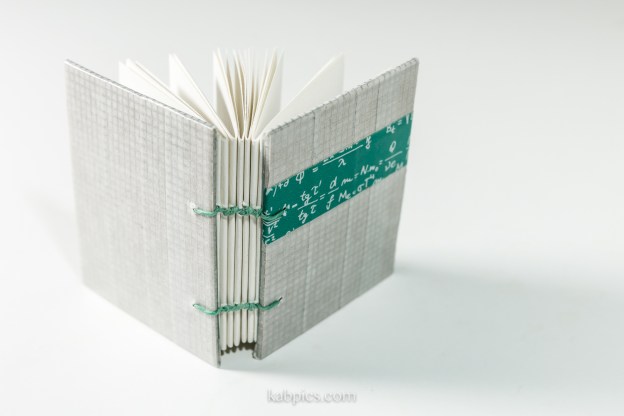
Bookbinding once more!

There’s nothing like a cross-country move to raise one’s creative spirits. New words, new faces, and new ideas. But a big move also challenges order. Everything goes into boxes, and even when you bring it back out, it goes into a different room and belongs in a new place. Then everything in every other room is similarly displaced. And there are new restaurants and new people and new sights, and pretty soon, you’re hopelessly in disarray.

So last week, I finally fought back against entropy. For me, a good workspace has my favorite tools in arm’s reach, but never in the way. I set forth to accomplish that goal.

The ultimate test of a working space is simple—does it inspire work? Over the weekend, I tested my space. It does inspire. I made my first three books in New Mexico. They are relatively humble, but they are setting the tone for the work ahead.

I am inspired. =)

FullSizeRender 3.jpg

This slideshow requires JavaScript.

HDR: Nik Software is now free!

Last week I posted about using software to merge HDR or High Dynamic Range images. Well, just a few days ago, that software went from $150 to free. So that means an awesome refund for me, and even more incentive to try Nik Software for everybody else. Nik Software includes an HDR merger and a variety of effects ranging from black and white to faux vintage. I’ve had the package for three weeks, and I’m still finding new and exciting aspects.

I spent the weekend in northern New Mexico and Taos. I’m behind on everything, but I still couldn’t wait to assemble a few images. Without comment, here they are below. Happy photo editing!

High Dynamic Range photography: beyond Photoshop

Have you ever taken a picture where the brightest areas were lost to white and the darkest areas were lost to black? It’s an old photographic challenge with fun new solutions.

For over a century, photographers have used clever techniques to incorporate large brightness ranges in images.  Ansel Adams used dodging and burning to compress the dynamic range of film to the smaller range possible on paper. For challenging scientific shots, scientists produced film with three layers, each capturing a different film speed. Today, given multiple exposures of a scene, computers can auto-merge the best parts of each image in a process called tone mapping. The resulting shot has become known as an HDR or High Dynamic Range image. In just the last decade, the process has become much simpler and more useful.

Photoshop is the most famous of the merging softwares, but it isn’t the best. For years, I wrestled with Photoshop’s clunky and artificial looking HDR outputs. If you think of HDR as a pejorative, Photoshop may be why. Fortunately, there are other pieces of software out there that do a better job. I recently purchased the Nik Software package, which includes HDR Efex 2. I have several hundred old captures that I gave up on in Photoshop that are new and exciting and beautiful again. If you’ve ever tried making HDR images and felt disappointed, you should check out the market again. The results from HDR Efex and Photomatix are glorious. Happy tone mapping!

A note to Mac users: as of March 2016, the HDR Efex plug-in for Lightroom does not always work. I had to email the company and get them to send me a module file. Their email was detailed enough to suggest that this bug is common. With the module file, it was an easy fix, so contact the company if you too encounter this challenge.


HDR Efex (left) and Photoshop (right)

In the case of the cave image, I vastly prefer the HDR Efex image. The Photoshop controls aren’t intuitive, and even their built in presets mostly look awful. Some of the Nik presets are too extreme for my usual preference, but many of them look great immediately. In the case of the waterfall image, I prefer the HDR Efex image, but I don’t dislike the Photoshop image. The light is more exciting in the HDR Efex image, and I did it quickly and easily.


I’ve had HDR Efex for about three weeks. The first two weeks are free with a fully functional trial copy. Below are some of the images I’ve assembled. I’m pretty happy with it so far, especially after years of feeling uninspired by Photoshop’s HDR function. Happy photographing!

This slideshow requires JavaScript.


Writing prompt: Submarine day

Time: 7 minutes. Click here to go to my list of prompts.

“Submarine day” (Inspired by this list of silly holidays.  Because St. Pat’s would be too obvious!)


The sub was beginning to stink. It reeked of sweat and mildew. Jansen had been short-circuiting the timer on the air-lock. It was his fault, I knew it. We wouldn’t get fresh air for another month, and the filtration system was already going at max.

Something long and tentacled swam past my window. I knew why Jansen rushed the air-lock—there was something wrong about this planet. The little submarine felt like an oasis in a wet desert, a safe space in a world of monsters. The survey had revealed some large native lifeforms, but our sub, which apparently resembled a good meal, brought them out in numbers we couldn’t anticipate.

But the company said it was alright, and we had signed contracts, so we would stay until the next crew arrived.

Construction was behind schedule. The initial design specs were insufficient in light of the lifeforms in the ocean. If one of the large ones rammed the base, the original design wouldn’t take that.

Another creature, head like a folded umbrella, long like an eel, swam by. Several of its eyes blinked. I wondered if it could see me.

More Awesome NASA Space Travel Posters

Thinking about a trip to Mars or Ceres? Book today! Don’t forget to ask about your Pi Day discount.

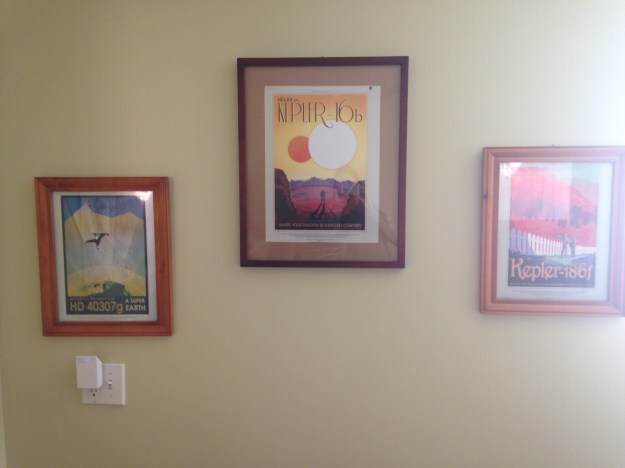
NASA is in the travel agent business again! JPL released travel posters for Mars, Venus, Jupiter, and several moons. They explore some different styles from the first set, and are cool as hell. Below are some of the preview sizes. They are available to download free at high res, suitable for printing up to 20″ x 30″.

And if you’re a vintage poster enthusiast like me, also check out the Library of Congress site. Tons of WPA posters are available free at high res, among other historical documents. (Beware, though, their site requires patience. It’s not organized for quick browsing, but there are some real gems in their collection. I linked to some of my favorites in this old post. I decorated my bathroom with them. Yes, I have a poster about syphilis in my bathroom.)  And finally, the National Parks posters are amazing vintage posters, though they aren’t free. I just made a few of my own last week.

This slideshow requires JavaScript.

IMG_2499.JPG

Proof! I did indeed print and hang the travel posters. Also in this room: a tea towel with a graphic of the Very Large Array (VLA). Nerd factor infinity!

Writing prompt: Middle name pride day

Time: 7 minutes. Click here to go to my list of prompts.

“Middle name pride day” (Inspired by this list of silly holidays. This one is a little dumb, but that’s what is freeing about writing prompts. Sometimes they can be dumb, but they didn’t take very long.)


“Hey Jane, what’s your middle name?” Anka asked, her voice swaying with song. She hung upside down from the hover monkey bars, her pigtails dangling by her ears.

“I told you, I don’t have one.” Jane walked toward the hyper see saw.

“Is that so? I saw you name on the attendance list. ‘Jane X. Stuart.’ You liar.”

“Well why should I tell you anyway! We’re not friends!”

Anka rolled down from the bars and pursued. “Oh Jane, are you keeping a secret? Your middle name’s not anything embarassing, is it?”

Jane went cold. Anka smelled blood. This wouldn’t end well. “No. Go away. Stop following me.”

“What could it be…” she mused. “Xylophone? No…. Xavier? No… oh no… it couldn’t be…”

Jane didn’t turn, she just kept walking.

“Could it be Xagolonix?!” Anka cried.

That was it, Jane couldn’t take it anymore. She turned and pushed Anka. “ I said, go away!”

“You’re named after a monster! Do you know how many people Xagolonix killed?”

“I was born before that. Before that, it was a perfectly normal Martian name.”

“Jane Xagolonix Stuart!” Anka sang. “Jane Xagolonix Stuart!”

“Anka!” Mr. Svetloff barked. “Are you picking on Jane?”

“No, Mr. Svetloff,” Anka simpered. “Jane was keeping secrets.”

“Miss Anka Hitler, I don’t suppose you see anything odd about your name, do you?” Mr. Svetloff intoned.

“No, it’s a perfectly normal Earth name,” Anka said.

“About that,” Mr. Svetloff began.

New Mexican travel post cards

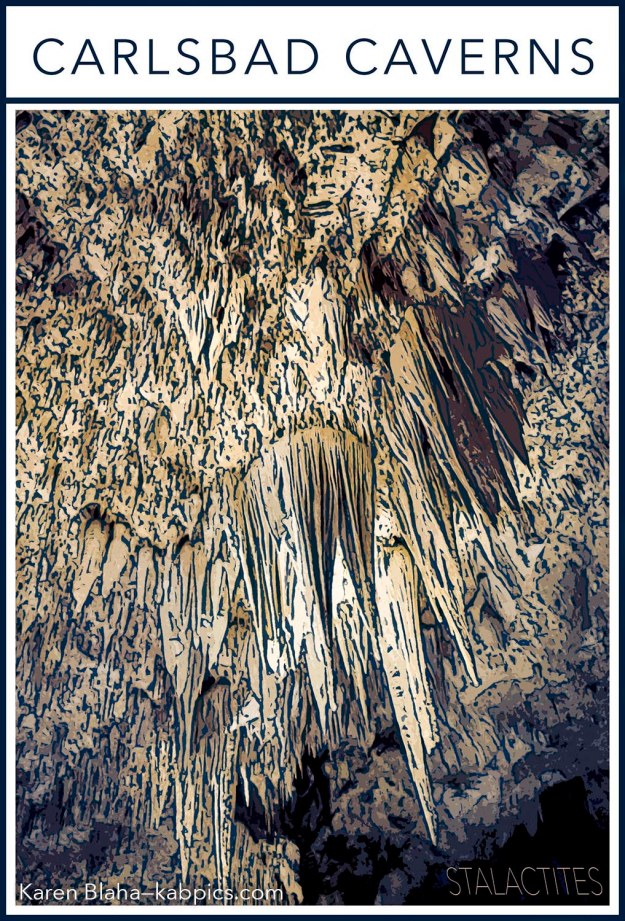
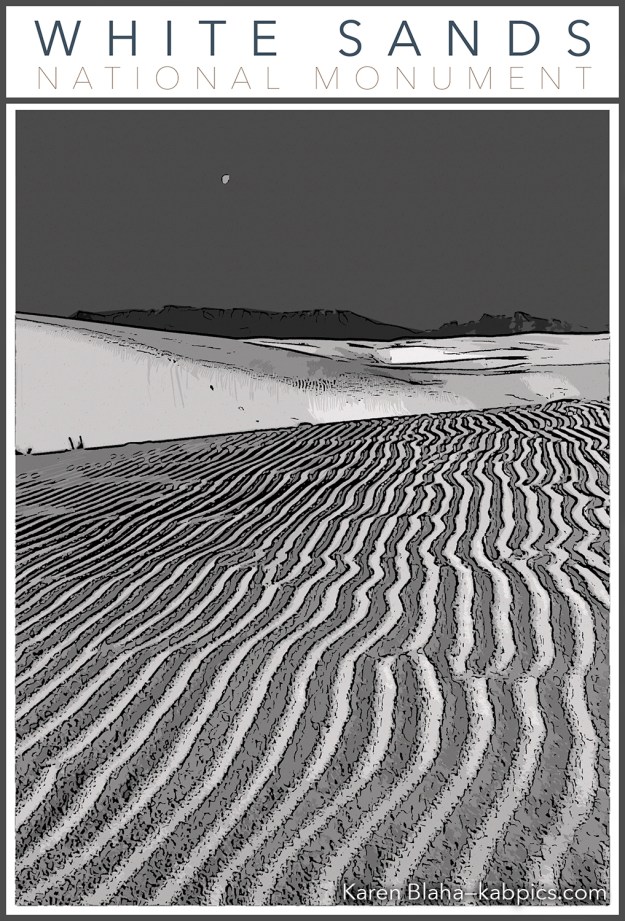
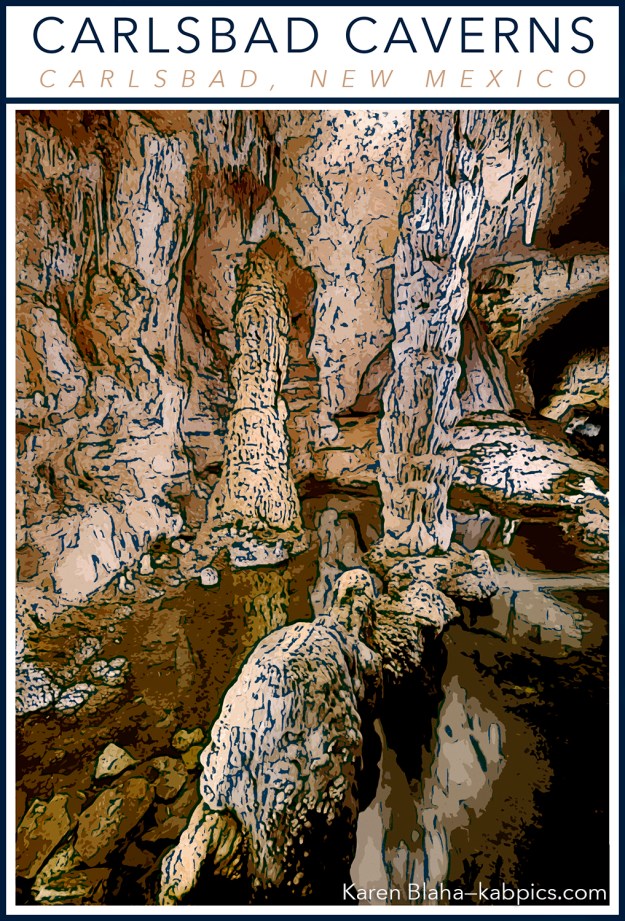
I love the old-fashioned posterized postcards that many of the national parks have. Whenever I visit a park, I go hunt for postcards. I have a wall of 4×6 frames of postcards. Whether they are the old WPA posters from the 30s or the modern versions, I adore them.

Sometimes, I would go to a park, and they wouldn’t have any. So naturally, I had to make my own. Now I do it everywhere I go. Below are from my grand trip last weekend through southeast New Mexico. Carlsbad Caverns National Park, Salinas Pueblo Missions National Monument, and White Sands National Monument. I also visited Three Rivers Petroglyph Site, a BLM property, and River of Fires BLM site, but no postcards there as of yet.

Happy travels!

Canyonlands National Park Island in the Sky district. Near Moab, Utah.Canyonlands National Park Island in the Sky district. Near Moab, Utah.Canyonlands National Park Island in the Sky district. Near Moab, Utah.Canyonlands National Park Island in the Sky district. Near Moab, Utah.Canyonlands National Park Island in the Sky district. Near Moab, Utah.Canyonlands National Park Island in the Sky district. Near Moab, Utah.