Author Archives: Vironevaeh

Heading west

Today is my official last post from the east. I’m going to be very disorganized for a couple of weeks (I’ve already been a bit), but I’ll keep posting. It’s hard to leave a place you love, but I have high hopes for my new digs. I mean, just look at it!

abq-1849

Working some HDR magic on an already-gorgeous vista. All it took to get here was a terrifying tram ride!

abq-1843 abq-0081

abq-0547

Cuttlefish! Low light photography with the A7s still knocks my socks off.

abq-0273

Like, seriously, try snapping jellyfish on a camera with a max ISO of 3200. You can’t do it! Definitely enjoyed my ISO with the jellyfish tank.

abq-0438


What is an engineering PhD?

Sorry I have fallen way off of schedule. Since my last posting, my husband defended and graduated with his PhD, and we visited out new city and bought our first house. So it’s been extremely exciting and hectic.

But I promised to write about what a PhD is, and so I shall. During  our seven years of graduate study, I’ve encountered a lot of confusion about what a PhD in science and engineering is. Getting a PhD is really really different from other forms of graduate education, such as law, business, and medical school. A PhD in fields like English can vary some from the science experience I describe here, but pursuing a PhD in English is more similar to pursuing a PhD in Physics than it is to law school.

Why you never ask a PhD student when they will graduate

Law school takes 3 years. Med school takes 4 years. A PhD takes ???? years. In science and engineering, it takes about 4-7 years, depending upon whether you go in with a masters, how hard you work, who your advisor is, and luck. Very little of the timing is directly within your control.

When you start with your bachelor’s degree, the first year focuses mostly on classes, the second year is a balance between classes and research, and most of the time after the second year is totally devoted to research. (A student starting with a master’s degree gets to skip most of the classwork.) In science and engineering, you might TA (teaching assist) for a semester or two. In other fields like Spanish and English, you might teach every semester. For them, this is often a good thing since teaching comprises a lot of their post-graduate opportunities. Teaching also pays the bills.

There are three big hurdles in grad school: qualifying exams, proposing your dissertation, and finishing your dissertation. Qualifying exams vary by school and department. If you fail your qualifiers, you won’t get your PhD. Many people who fail their qualifiers leave with a masters. Some departments have terribly difficult qualifiers, others don’t.

Your dissertation tells the story of your research. It describes experimental and mathematical techniques, the state of the field, shows results, and talks about future research possibilities. A dissertation is typically 100-300 pages, depending upon your field. You and your advisor work together to develop a central narrative to your dissertation. A PhD student must propose this avenue of exploration to their proposal committee, a panel of five professors, in a formal presentation. The professors give their feedback and criticisms on the proposed work. They may reject the proposal.

A PhD student graduates when they successfully defend their dissertation. But typically it’s writing the dissertation that is the hardest part after a successful proposal. It takes a long time to write 200 pages, and your advisor will expect a lot of things out of the document. You may also be expected to publish peer-reviewed papers. You can incorporate these papers into your dissertation, but the papers alone don’t count toward the dissertation directly. Papers are even harder to write than dissertation chapters. Papers may involve collaborations with researchers on other continents with other native languages and time zones.

All of the above is why a PhD student’s graduation date is hazy. So don’t ask a PhD student when they will graduate—they are wondering the same thing!

PhD students get paid

Unlike other types of grad school, you get paid to study towards a PhD. The teaching and research you do pay your tuition and salary. Your salary is never a lot, but unlike other post-graduate educations, you earn rather than pay. Depending upon the school and your area of study, a grad student earns between $15k-30k a year. You sometimes get benefits like health insurance as well (this might be universal now).

Your advisor: the master of your grad school experience

Every graduate student has an advisor. An advisor is the professor that funds you and your research project. Your advisor is the most important person in your grad school experience. Your advisor pays your salary and tuition, determines the area of your research topic, and influences your connections within your field.

An advisor can make your life miserable. If they run out of funding, you might have to teach more. They can slow your graduation. They are more than just a boss; they control your access to your doctoral degree. If you are five years into your PhD, you can’t do much if your advisor jerks you around short of quitting sans degree. And you may have noticed that professors are sometimes difficult people. Most grad students can name the difficult professors in their department.

Research

This simple cartoon explains the significance of your research in grad school. Your research is why you get paid to go to grad school. Your research could address industrial issues or basic science. Your advisor gets money based upon the kind of research he promises to do. In grad school, you produce research output, but more importantly, you learn how to do research. You learn how to solve problems and learn to identify interesting questions.

I would argue that you also learn patience. As an undergraduate student, few tasks take more than a week. The longest tasks take is a semester. You can get help from other students or professors in many cases. If you phone it in, perhaps you’ll get a lower grade, but the task goes away. Your research in grad school is a multi-year problem solving exercise. No one in the world may know the answer to your problem. Few people in the world may even understand the significance of your problem. You can try to go in a different direction, but at some point, you will bang your head against a problem for months. You learn an appreciation for what advancing human knowledge entails. And you advance human knowledge. This may damage your ability to speak English with everyone else.

Why get a PhD?

Because you are curious. Because the type of work described above appeals to you. Don’t start a PhD because you don’t know what to do next, or because you want to make more money. A PhD in science and engineering will get you a decent paying job, but you will deal with a ton of frustration and low-income years. Law school or business school are way faster, and engineers with these skills are valuable.

I started my PhD because it seemed like an interesting thing to do next. Like a lot of students, I found the middle of the process very discouraging. School seemed like it would never end, and I didn’t know what I would do after school. But I still liked my research. I still woke up thinking of ideas of things I could do. I felt more capable as a person with the skills I was developing in grad school. Grad school will feel aimless at some point for most; it’s your innate passion that helps bridge the gap and get you to the end.

The fun stuff

Grad school can also be a lot of fun. Other members of your research group help you learn and help you cope with setbacks. Your fellow prisoners well understand your challenges. Many schools have vibrant grad student communities apart from the undergraduate communities, in which you will meet grad students studying crazy and amazing things. Almost any eccentric nerding that you enjoy will be enjoyed by some other grad student. You’re all old enough to drink at bars, and most college towns will have some fun ones. Grad students get into their beer and drinks and most long-standing grad students can tell you a lot about them. Many grad students learn to be great cooks. The resources available for the undergraduates, such as gyms, sporting events, and social clubs, are still available to you as a grad student. While you’re pulling your hair our trying to get your degree, you will be in the middle of a community with some fun distractions when you need them and some really fun peers.

Hopefully that’s a useful summary of the PhD school experience, and not rendered too incoherent by my own state of disorganization. I’m happy to provide further info to those with questions as well!

Writing Prompt: National Tourism Day

Time: 10 minutes. Click here to go to my list of prompts.

“National Tourism Day” (Inspired by this list of silly holidays.)


We met Kosmos at the Spaceport in Richmond. With him (I suppose I really should say it based upon the literature, but it feels rude) travelled a xenobiologist and a diplomat. We were there for local color. I guess we were there to be hillbillies for Kosmos, but everything seemed so different for him I can’t believe he noticed.

When Kosmos came down the jetway, the laughter from his mechanical translator filled the room. The port had been largely emptied, a huge inconvenience, but worth it to host one of the first extraterrestrials. If everyone wasn’t already staring at him, they were now.

“The waves here stand!” he declared to the diplomat, who seemed unfazed. Thomas and I exchanged a glance. I’d once hosted a Tibetan exchange student, and I remembered the culture shocks of her visit. We smiled nervously.

The luxury limo conveyed us west to the mountains. Kosmos had demanded to see mountains.

I had seen Kosmos’ kind on the news often enough, but it was different to experience him in person. The pressure suit hummed softly. Pumps and valves whistled softly at several rhythms. Sometimes, I could see the fluid move through the transparent plates near the top of the suit, where I guessed his face or at least many of his sensory organs must be.

“They tell me you are called Jessica,” Kosmos said, turning his whole body to me in the limo. “And that you are native to this region.”

“Yes,” I replied, feeling a bit out-of-body. “My family has lived in these hills for over ten generations. I’m very proud of it.”

“Hills,” Kosmos breathed in pleasure. “I want to see them all. And caves and cliffs and whatever else you’ve got. This geology of yours fascinates me.”

“I could, uh, show you the fault line down on route 151.”

“Exquisite,” Kosmos said. He turned back to the window.

“His people are aquatic,” the xenobiologist leaned my way. “They live at a depth of 500-1000 meters. He’s very interested in how we live at the boundary of two phases.”

“Of course,” I said. I still wondered what purpose Thomas and I could possibly serve in showing Kosmos around.

Vironevaeh

May 4, 2015

Vironevaeh's avatar

Today my husband defends his PhD dissertation. Tomorrow I’ll explain what that means, since I get a lot of questions, but today I’ll be busy!

World Pinhole Photography Day

Did you know that a pinhole can focus and project light? A pinhole in an opaque material is the world’s simplest camera! Yesterday was World Pinhole Photography Day.

History

The discovery of pinhole optics massively predates photography (the act of chemically recording a projected image). During the Renaissance, painters traced scenes projected onto a canvas by a pinhole on the opposite wall. The use of a pinhole to project images goes back to 5th century BC China.

A camera obscura uses a pinhole to project an image. Renaissance painters could then trace these images. (image source: Wikipedia)

Why Pinholes?

In an age of digital cameras and high-end optics, the pinhole endures, charming and simple.  In honor of World Pinhole Photography Day, I went on a pinhole outing.

You might ask, what is the point of pinhole photography in this day and age? There are aesthetic and practical reasons. I like knowing exactly how my lens works, for once. Even a prime lens can have upwards of a dozen pieces of glass in it. I have a good science background, and I can’t even touch that level of optics. A hole in black plastic. I get that. Pinholes have interesting properties. True, they don’t focus nearly as sharply as lenses. But because pinholes have such small apertures, they have nearly infinite focal depth.

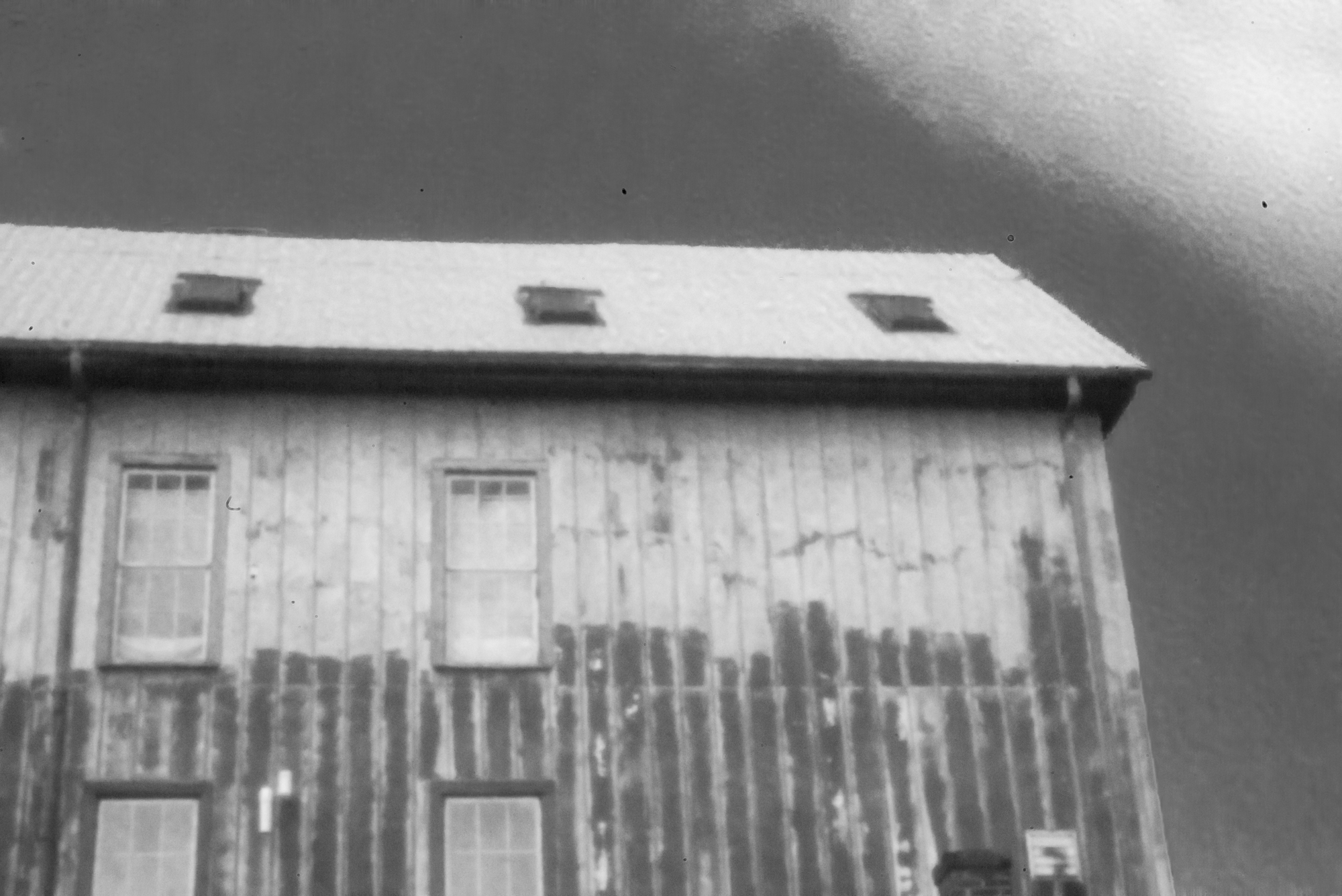
Brief photography lesson: larger openings (apertures) allow more light and create shallow ranges of focus. This can be desirable in a portrait. Small openings permit less light and increase range of focus. This might be preferable for a landscape. Sufficiently small openings cause softening due to diffraction (physics of light stuff). If you shoot on an SLR, you may have noticed diffraction-caused softening on shots at f/22. The pinhole I use is f/177. This diffraction is what gives pinhole photos their texture.

The upshot: pinhole photos flatten a scene. Something a yard away will look similar to something 100 yards away. This allows a photographer to create interactions between different depths that wouldn’t be possible with a conventional lens. And finally, pinholes can create a really fun old-timey effect.

My setup

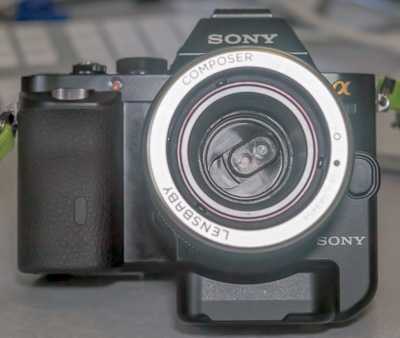
My setup is a bit like sticking a horse-drawn carriage on a rocket ship. I use a Lensbaby composer with the pinhole optics kit. My camera is a Sony Alpha 7s. Pinhole photography, due to the tiny amount of light transmitted, has slow exposure time. Exposures are often measured in multiple seconds. The Sony Alpha 7s is one of the fastest consumer cameras in the industry, with a maximum ISO of 409600. Thus, I was able to take decent handheld pinhole images even in low light by using high ISO.

Lenbaby pinhole on Sony Alpha 7s.

Lensbaby pinhole on Sony Alpha 7s.

The Images!

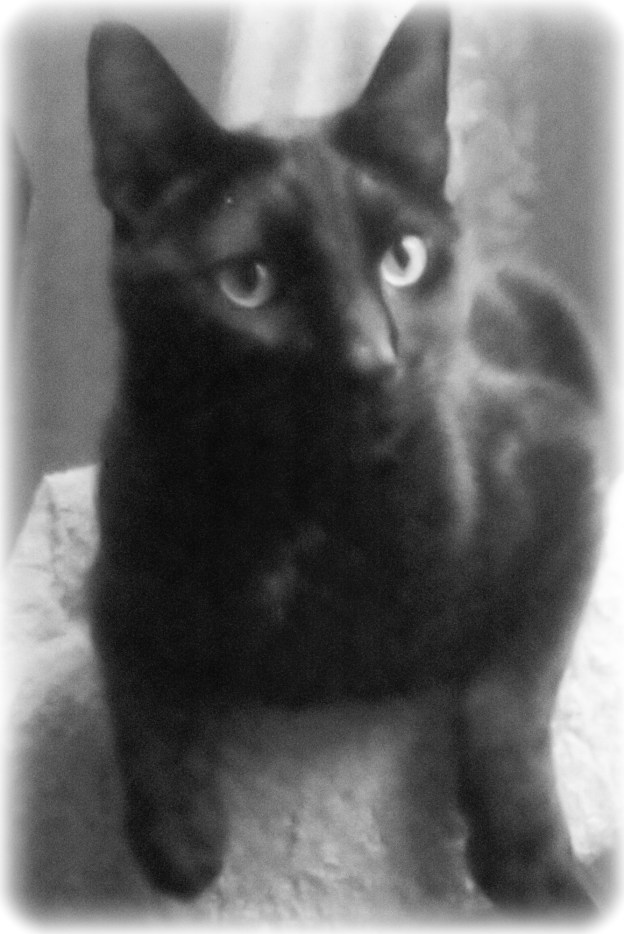
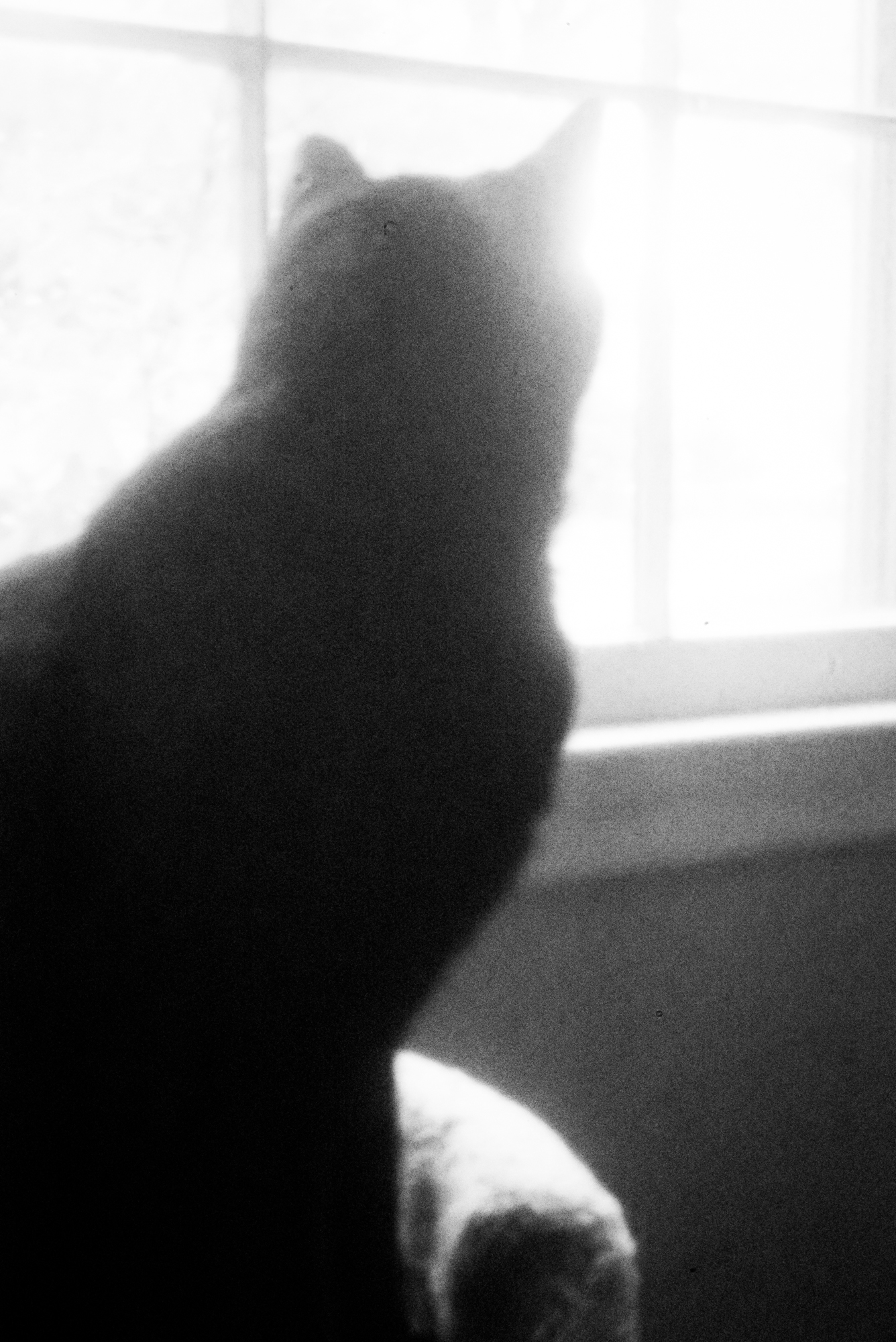
ISO 409,600, 1/6 second exposure. No tripod. Indoor shot on a rainy day.

ISO 409,600, 1/6 second exposure. No tripod. Indoor shot on a rainy day.

ISO 20,000; 1/60 sec.

ISO 20,000; 1/60 sec.

ISO 80,000; 1/60 sec.

ISO 80,000; 1/60 sec.

ISO 12,800; 1/60 sec.

ISO 12,800; 1/60 sec.

ISO 16,000, 1/60 second exposure.

ISO 16,000, 1/60 second exposure.

ISO 160,000, 1/10 second exposure. Indoor shot on a rainy day.

ISO 160,000, 1/10 second exposure. Indoor shot on a rainy day. I love how it looks like a 40s cheesecake shot.

Writing prompt: World Laboratory Day

Time: 10 minutes. Click here to go to my list of prompts.

“World Laboratory” (Inspired by this list of silly holidays.)


The capsule docked at the World Laboratory station. Dr. Trinner pushed gingerly from weightlessness into the gentle rotational gravity. The door slipped closed.

“Your laboratory is a ways from the dock. It’s all allotted by need, the labs with heavier shipping duties are near here, the vacuum labs are surface labs, the gravity labs rotate faster, the zero g labs are on the axis.”

“It’s all right, I wouldn’t mind stretching out,” Trinner assured the nervous guide. Her reputation obviously preceded her. But it had been years since the Erlenmeyer Incident…

Strictly speaking, her research didn’t benefit at all from work in space. But as a child, she had dreamt of being an astronaut. Doing science on a space station was damned near the next best thing. The station had jumped at the opportunity to have a Nobel winner onboard.

The light gravity was disorienting, harder on her stomach than zero g somehow.“How many are onboard now?” She braced against the walls of the corridor.

“30%, about,” the guide responded. “Some of the laboratories require special work and will take longer to complete. It will be pretty peaceful for a while here!”

“Other than the construction,” Trinner said.

“Yes, other than that.”

#

Trinner was alone in the lab. Some colleagues would follow in a couple of days. Her quarters were in the cluster near that lab section. It felt like science camp, living and breathing science, away from the cares of the world.

The construction echoed through the bulkheads from time to time. But there were other noises that Trinner couldn’t explain—voices. Voices came from the walls, in languages she didn’t know. She wondered if it were recordings of radio or television, but she couldn’t find a source.

Water Polo Designs & T-shirts

Is there any greater joy in art than seeing a project through and sharing it with others? I designed some water polo t-shirts, and finally they have arrived. They look phenomenal!

Plus, it’s a great joy to design for water polo. It’s a small sport. Maybe you’ll see a neat poster for the Olympics, but that’s about it. The women’s game is especially short on designs. This year, I took my design inspiration from art deco sports posters and the National Parks vintage poster series.

Art Deco poster style

I wanted to convey the sense of motion I like in the art deco posters. The curve of the water surface suggests energetic water. It could also suggest the curve of the ocean.

Vector artwork for t-shirt

Vector artwork for t-shirt

tshirts-04810

Final t-shirt result

design1

Source pencil drawing

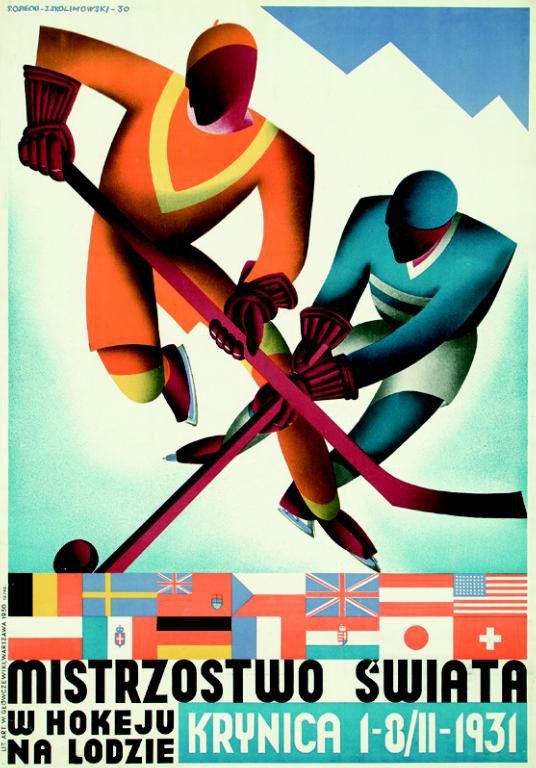
Below: An art deco poster I particularly found inspiring. Early versions of my design incorporated gradients to suggest form, as in this poster. In the interests of simplifying printing, I chose to go with two colors.

Mistrzostwo Swiata: Krynica by Stefan Osiecki and Jerzy Skolimowski, 1930.  For the 1931 Ice Hockey World Championships in  Krynica, Poland.

Mistrzostwo Swiata: Krynica by Stefan Osiecki and Jerzy Skolimowski, 1930. For the 1931 Ice Hockey World Championships in Krynica, Poland.

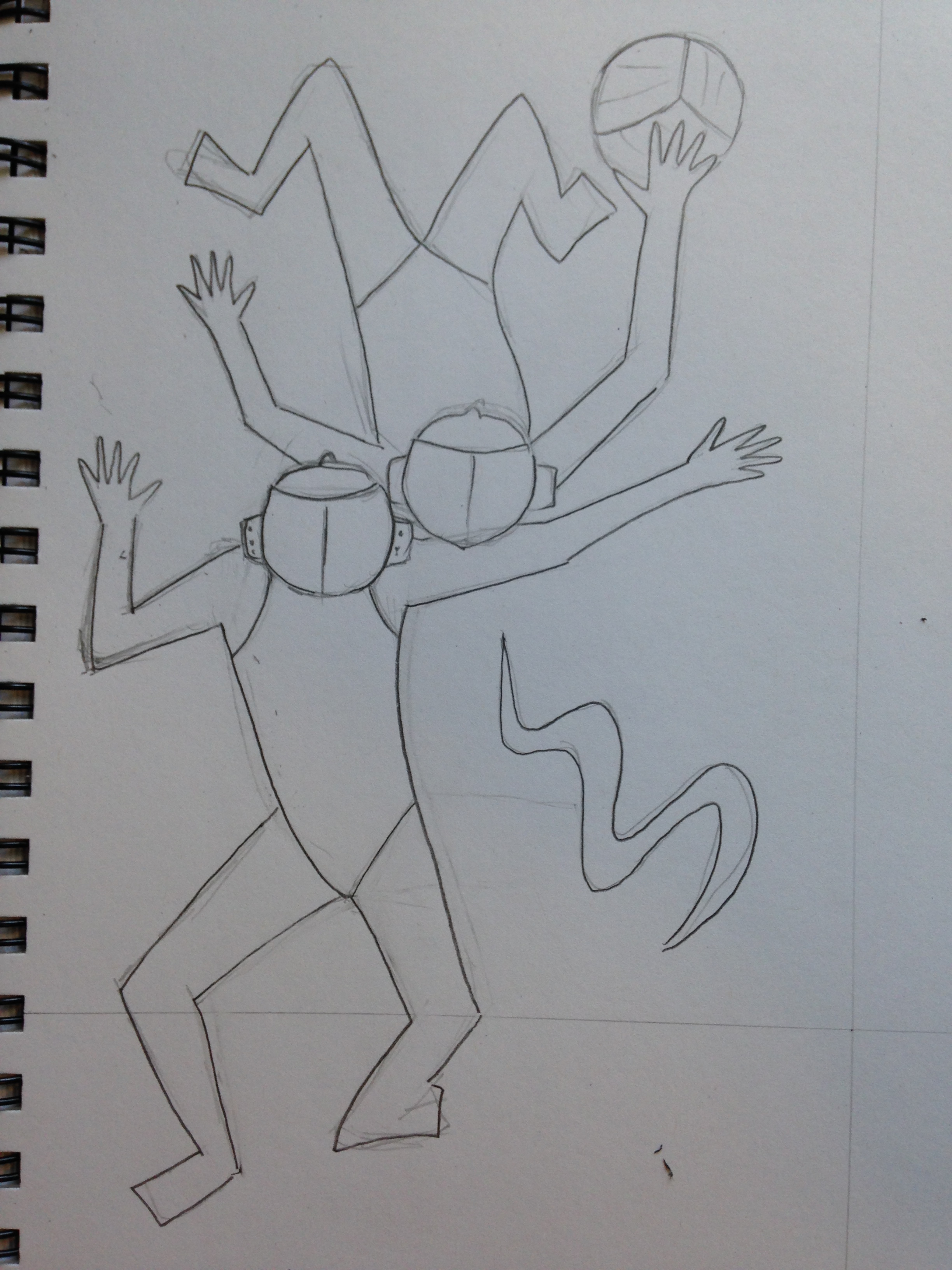
Below: an alternate idea. Like basketball, a lot of action in water polo happens at the center position. Unlike basketball, the offender and defender stay relatively fixed, facing away from the goal. The offensive center wants to turn forwards or backwards to take the shot. The defender waits to react. I hoped that the slightly disjointed postures suggested depth or motion.design2 text-01

Design made into a poster. Perusing Wikipedia, I discovered that water polo has a surprising variety of names for a sport invented only about a century ago.design2-poster-01

Original pencil sketch. Eventually dropped the water ripple and turned it more geometric.design2

National Parks poster style

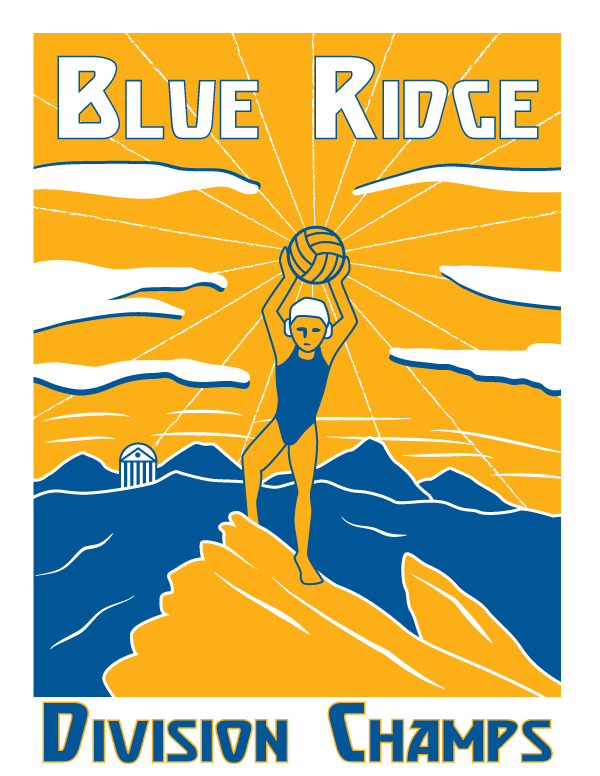
All the teams in our water polo conference, the Atlantic Conference, are in North Carolina and Virginia. Three out of the five are close to the Blue Ridge Parkway, and none are coastal. This gave me the idea that the conference could be thought of as the Blue Ridge Conference.

The championships this year were held in Charlottesville. Humpback Rocks are a popular hiking destination along the Blue Ridge near Charlottesville. People often hike Humpback rocks at sunrise to get the view of the Rockfish Valley. This fell quite naturally into a vintage style poster look.

This design was a super rush job. I drew the sketch at 10PM before the deadline the next day. The next morning I vectorized it. The shirts arrived a week later. I probably now would choose to make the figure white, for better clarity at a distance, but I still like the design.

Blue-ridge-tee

They didn’t go for my conference renaming. =Ptshirts-1774

Original sketch.IMG_0769

One of the national parks posters that inspired this design.

Writing prompt: National Stress Awareness Day

Time: 10 minutes. Click here to go to my list of prompts.

“National Stress Awareness Day” (Inspired by this list of silly holidays.)


Lisa pressed the start button on the tester. The arm slowly pulled harder and harder on the cylindrical sample, and recorded the resistance of the rod. Lisa watched while holding her breath. This was what she had been working toward for the last six years. This either spelled the ticket out of school to a prominent job and good paycheck or back to god-knows-how-much-more grad school with an advisor that would view her as more of a liability than an asset. It had taken three years full of setbacks to build the casting machine. And three more of broken parts and materials choices and whatnot. If she’d known that she would wait six years for a meaningful result, she would never have gone to grad school.

But she had. And she waited. The machine plotted the relationship. The slow grinding sound filled the room. Scritch, scritch, scritch, and another data point.

Crack! A fracture shot through the sample, spider-webbing as it went. It reached from the top to the bottom of the rod. The machine beeped “I’m done!” and stopped pulling on the rod. The chart of the stress-strain filled the air. Lisa’s eyes shot to the stress axis. How far had it gotten?

“Only that far?” Lisa shouted. “That far?” She stood and threw her chair against the ground.

Six years. Six years down the drain. What would she do now? Find a new project? Give up? Her mind buzzed and reeled. The hallway seemed to lurch as she lumbered down it.

“Lisa!” the undergrad accosted her at a time she was least prepared to coddle him. “Lisa, about your test!”

She snarled and moved past him. She needed to be outside. It pulled at her.

“Lisa, you didn’t just do the stress test, did you?” the undergrad pursued.

She looked over her shoulder and kept moving. He seemed to understand.

“Um, which… which sample did you use?”

She stopped.

“It wasn’t in the blue case, was it?”

“It was.” She should be relieved at this line of questioning. She wasn’t. The tension built in her.

“I might have switched the samples. I dropped several of them and had trouble sorting them back out. It might not be the final sample.”

#

Their advisor found the undergrad later, with “stress test” written on his face. He had been bludgeoned with a fractured cylindrical rod.

The professor found Lisa with the stress machine, cradling her printout and another fractured cylindrical rod. She smiled serenely and extended the plot to the advisor.

“This is excellent data,” the advisor said. He nodded, turned around, and left the room in a good mood.

The Cherry Blossom Festival in Washington DC

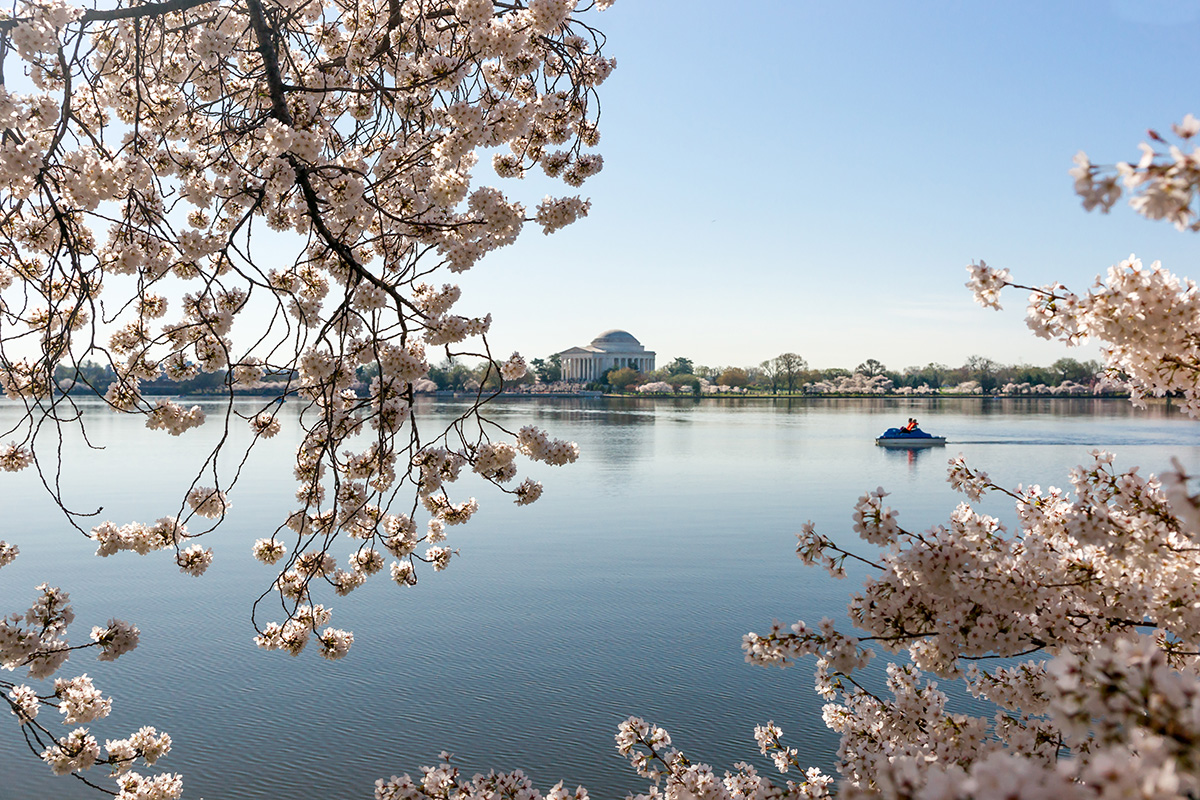
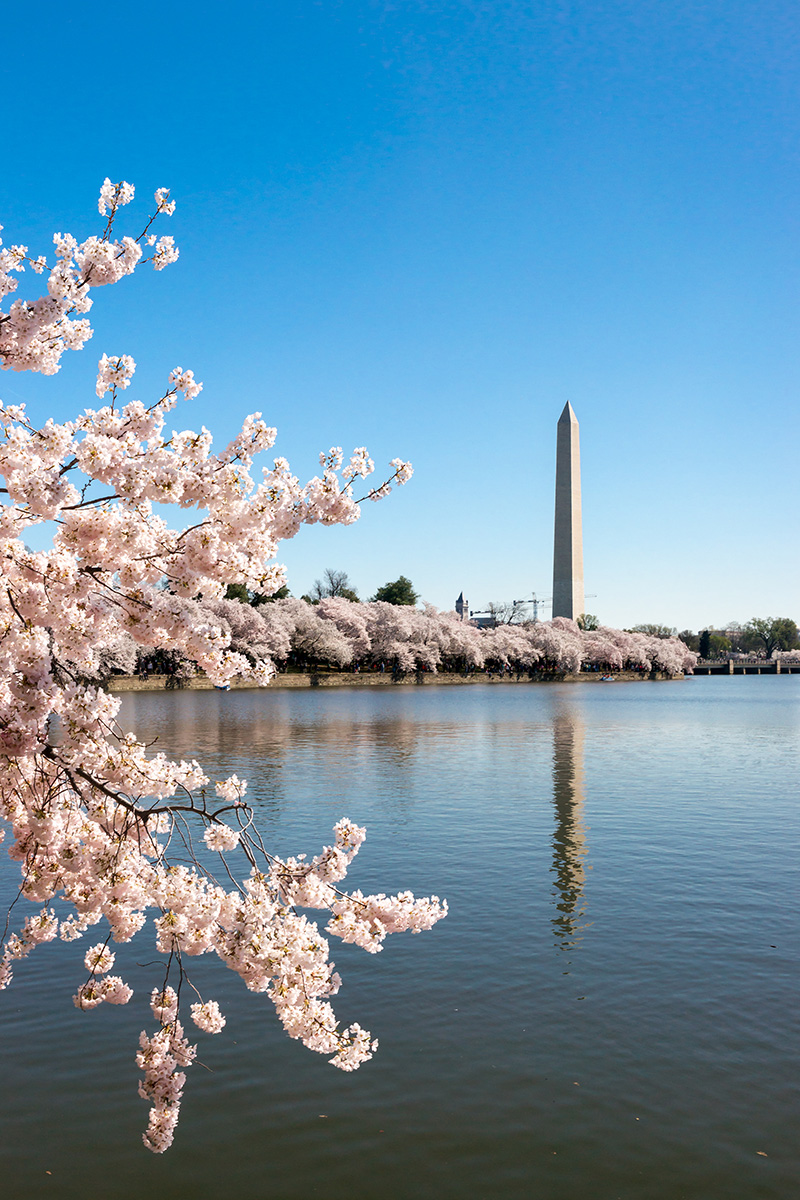
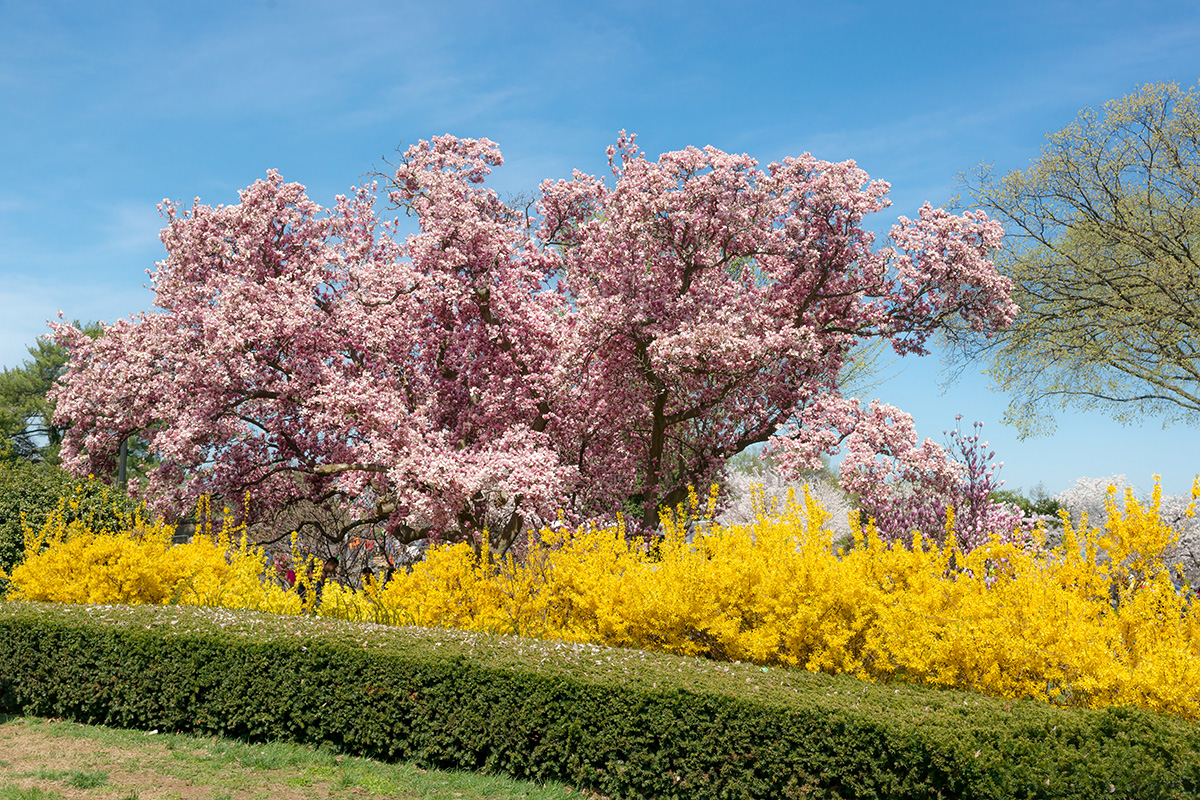
Though I’ve lived in Virginia for seven years and I love to photograph flowers, I had never been to Washington DC’s Cherry Blossom Festival. I fixed that on Sunday. Since then, I’ve been working to transfer, organize and edit my 860 photos. Then my primary computer crashed in a fiery blaze, and will require repairs. But I could pull off some of the work and my favorites are below. The tidal basin in DC is lined with 2000 cherry trees, and they were all at their absolute peak Sunday. It was one of the most beautiful days I’ve ever enjoyed. It was packed with people, which I usually hate but Sunday they didn’t matter.

Check out full size images as well as several enormous panoramas here.

Cherry Blossom Festival in Washington DC. Taken on April 12, 2015.

Jefferson Memorial & Cherry Blossoms. Combination of two images with focus stacking.

Cherry Blossom Festival in Washington DC. Taken on April 12, 2015.

The Washington Monument & Cherry Blossoms.

Cherry Blossom Festival in Washington DC. Taken on April 12, 2015.

Jefferson Memorial & Cherry Blossoms

Cherry Blossom Festival in Washington DC. Taken on April 12, 2015.

Flowers at the George Mason Memorial

Cherry Blossom Festival in Washington DC. Taken on April 12, 2015.

The Washington Monument & Cherry Blossoms

Cherry Blossom Festival in Washington DC. Taken on April 12, 2015.

Choosing to write- obstacles and overcoming them

Every day, I work on my writing confidence. One wants to be open to criticism and suggestion but not left raw by it. Like a lot of aspiring writers, I lack a support network, such as I have in the sciences. I don’t have many readers, I lack feedback, I lack editors. These aren’t complaints but a recognition of the challenges I overcome every day I choose to write.

I maintain two continuous goals — to finish projects and to hone my writing skills through reading and exercises. I have four e-books up on Amazon Kindle and Apple iBooks (three posted within the last year) and I’m in a writing class through writers.com. The posts on this website combine both goals.

I get excited about every visit to this webpage, and every download on Kindle or Amazon. I was ecstatic to receive a five-star review on “The Domestic Cat.” My downloads picked up. It was validation on a story I believed in, that made it to the final rounds with several science fiction magazines but was rejected for being conventional. (It is — it’s about a scientifically-enhanced cat. But it’s super fun!) Then I got a three-star review. It wasn’t intensely critical, and said my story felt like the start of a novel. “Doesn’t that mean you felt like reading more?” I said to myself. My downloads sank like a rock. I was pretty bummed.

When I read my friend Stephanie Hunter’s delightful supernatural book, Scary Mary, I decided to look at her negative comments. Two of the one-star comments clearly meant to give five stars. Several others harangued upon grammar and nit-picky details that were not problems. Several said they don’t like supernatural books. Suddenly I felt grateful for my middling three-star review. (But seriously, go check out Scary Mary. The author just got accepted into the Science Fiction Writers of America, and she’s awesome.)

I considered additional stories I could tell with Peppercorn and his captor. The ideas flowed. I love these characters, and I easily see a wide variety of stories. I could practice some of the techniques from my writing class and explore longer works with Peppercorn.

So that’s what I’m doing right now. An ambivalent kindle review and new writing tools have launched me into a new project. One that can satisfy both my goals. I’m proud of making lemonade from lemons. And I’m having a blast writing more about Peppercorn.