Category Archives: Methods

A novel attempt

I finally decided that I will try to write and finish a novel. Of course, I’ve been entertaining such ideas for years, as I suppose a lot of people have. So why do I feel like I can do it now, when I’ve only failed before? You gotta keep trying, but there’s that old Einstein definition for insanity: doing the same thing over and over again and expecting different results. So I am trying again, but I’m doing things differently, and hopefully this will lead to more success.

1. I first wrote the plot arc as a short story. It was originally meant to be a short story but there were so many things I wanted to touch on that I didn’t have time for, even at 7000 words in length. I know how I want the characters to develop, how they feel about each other, and what their motivations are. I know all kinds of societal details that play into the characters actions and motivations.

2. I’m in a writing group now. I know a bunch of people who might have suggestions on how to do better, or what to do if I hit a wall.

3. I’m approaching the writing differently. In the past I said, whelp, 100,000 words, here I go. Around 25k, I got bored, felt like my work was unfocused, and quit. This time I’m thinking of it as a series of short story ish chapters. I have a bunch of little stories to tell in 2-5k words or so. Per point 1, I already have a rough outline of the overall story. As I go, I’m outlining a few chapters forward with further details– what scenes happen in each chapter and where do they happen. So I have a macroscopic outline of everything and a microscopic outline subject to the flow of events. We’ll see how it goes. I’m planning on writing one chapter a week, with weeks off allowed for alternate projects.

I’ll continue to post my progress. It will be interesting to see what works for me and what doesn’t work for me. Any suggestions are welcome too! But basically, it’s time to just write. Chapter 1, here we go…

Sources of Sci-Fi Inspiration: City Culture of Prague

Setting is a critical element to most stories. It frames the actions of the characters and provides a rich and interesting backdrop. Often the environment motivates the character. As most portraits of people would be less interesting on a white backdrop, most stories of people would less interesting without the setting. New Orleans gives Ignatius a good playground in “A Confederacy of Dunces;” “White Fang” would be reduced hugely without the north, and “One Flew Over the Cuckoo’s Nest” would be slightly different without the asylum.

As a writer of science fiction, setting is both a problem and one of my favorite things. How do you draw in the culture and idiosyncrasies of a place that doesn’t exist? They have to be imagined, and imagined plausibly, by the writer. All of my favorite science fiction books have strong settings: In “The Left Hand of Darkness“, we learn about the sexual culture of a differently gendered humanoid species. Through their myths and traditions, we get to learn how they eat, how they like their weather, what is taboo, and what is an insult. In “A Canticle for Leibowitz“, we start at a Catholic abbey in post-apocalyptic New Mexico several centuries in the future. In “The Moon is a Harsh Mistress“, the setting is a lunar colony that feels bullied by earth. We learn about their principles, their marriages, and their aspirations. They can be a little closer to home, too. In “Holy Fire“, the protagonist travels from future San Francisco to future Munich to future Prague. Some sci-fi stays closer yet to home, but I find that I love crazy settings; thus I prefer Vernor Vinge’s “A Fire Upon the Deep” to his “Rainbow’s End“. (For others see my top 20 scifi books post.)

When I write my stories, I don’t want the settings to feel like the Midwestern United States plopped onto Mars or Alpha Centauri. I want them to feel like products of their interstellar, future environments. So I try to understand how settings influence culture currently and historically. I spent a summer in Prague, and in that brief time I tried to learn what I could about the culture. I tried to go where the Czechs go, eat what they ate, and read what they read. My host in town was a retired Czech professor who liked to talk (derisively) about the communist days. I worked half days at a chemistry lab out in suburban Prague. One of my coworkers smoked at her desk only feet from various chemicals and dressed like a 60-year-old teenager. I took frequent walks to Vyšehrad, an ancient fortress in Prague (pictured below).

I most appreciated the Czech sense of humor. As a country often conquered, the country developed a strange sense of absurdism. Under the Petrin Tower in Prague, there is a museum to Jara Cimrman, the best Czech man, who never existed. I can hardly say I understand everything there is to know about Prague and Czech culture, but a few months there certainly showed me a type of people I hadn’t seen before. Hopefully this will aid me in constructing a people we haven’t met before.

Some worthy Czech reading:

Side note: No post this past Friday; I broke my toe and then I had a lot of traveling to do this weekend. Happily, the toe is already much improved, and today it’s 80 F (25 C) out.

Making Lovely Books

As my blog might reflect, I have a tendency to lurch from one area of interest to the next. Last week, my interests moved again to bookbinding. The pile of lovely paper and fabric sitting in my office called out. (hollanders.com has some lovely stuff.) So I tried a few new things.

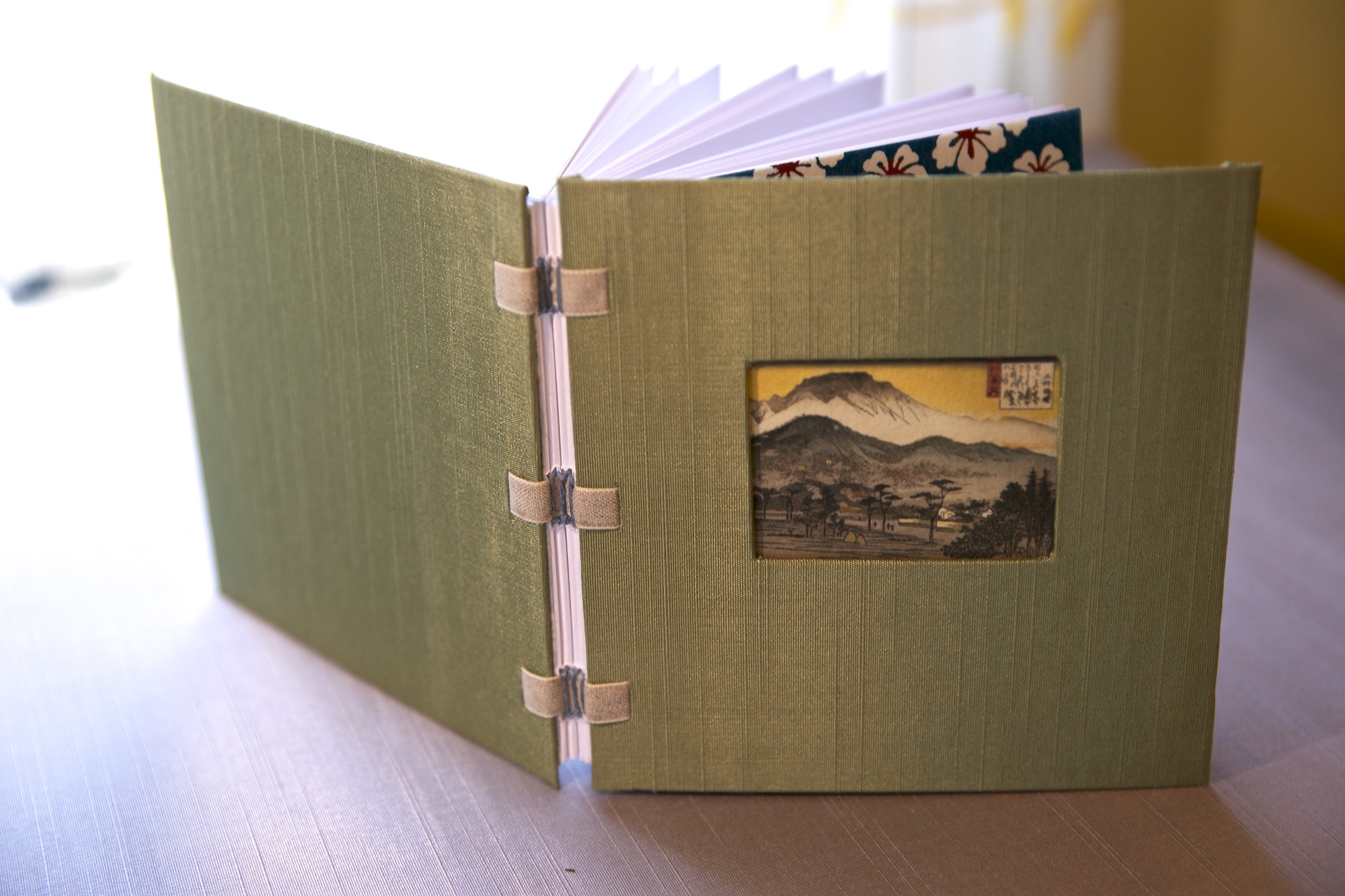
The book below is covered with Japanese linen. I used an exposed stitch on the spine, and exposed linen tape. This is the first time I’ve cut a hole in the cover. Appropriately (see last week), I found a Hiroshige painting in the creative commons to use in the hole.

SONY DSC

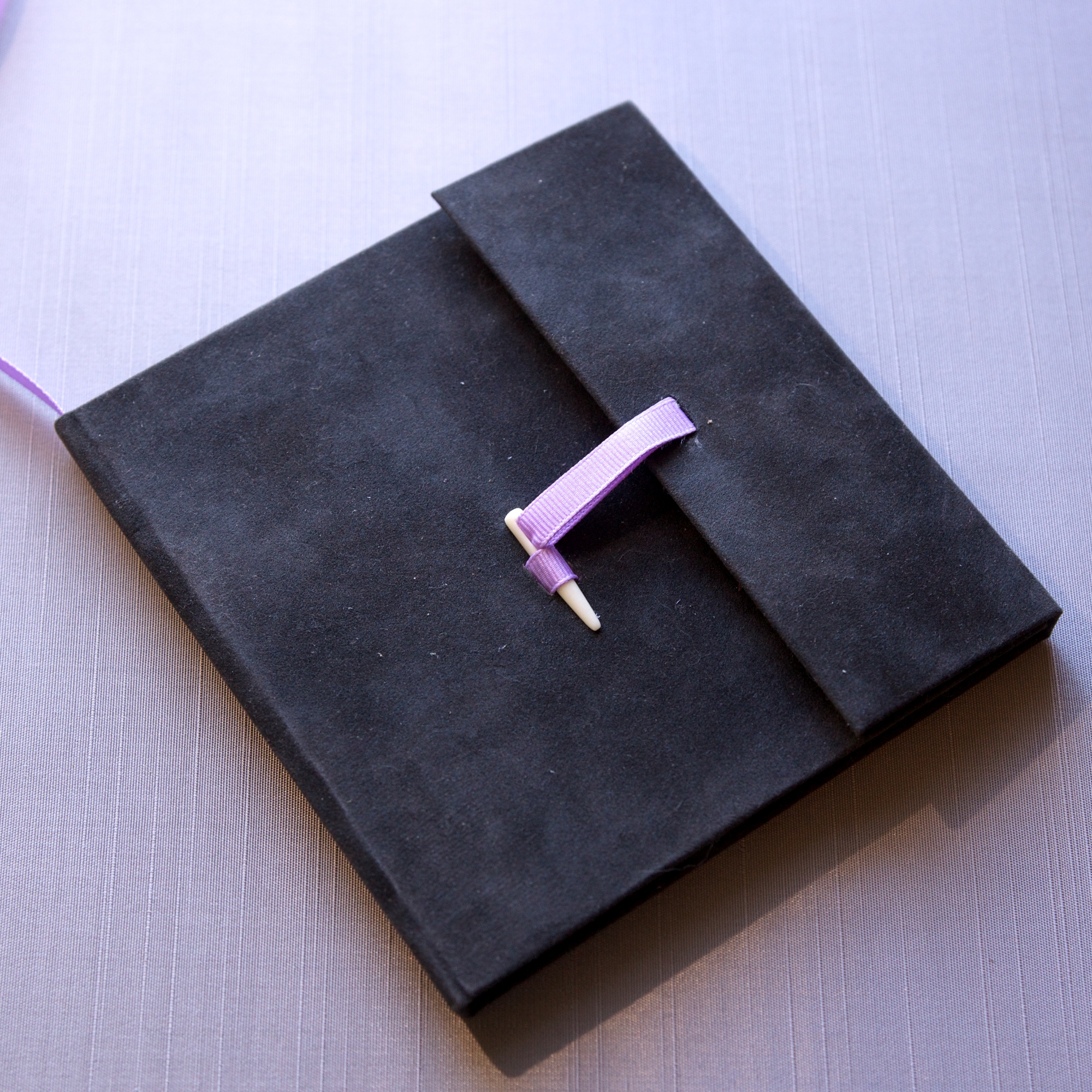
Next I made a book that closes in the front with a bone clasp. The cover is black imitation suede.

SONY DSC

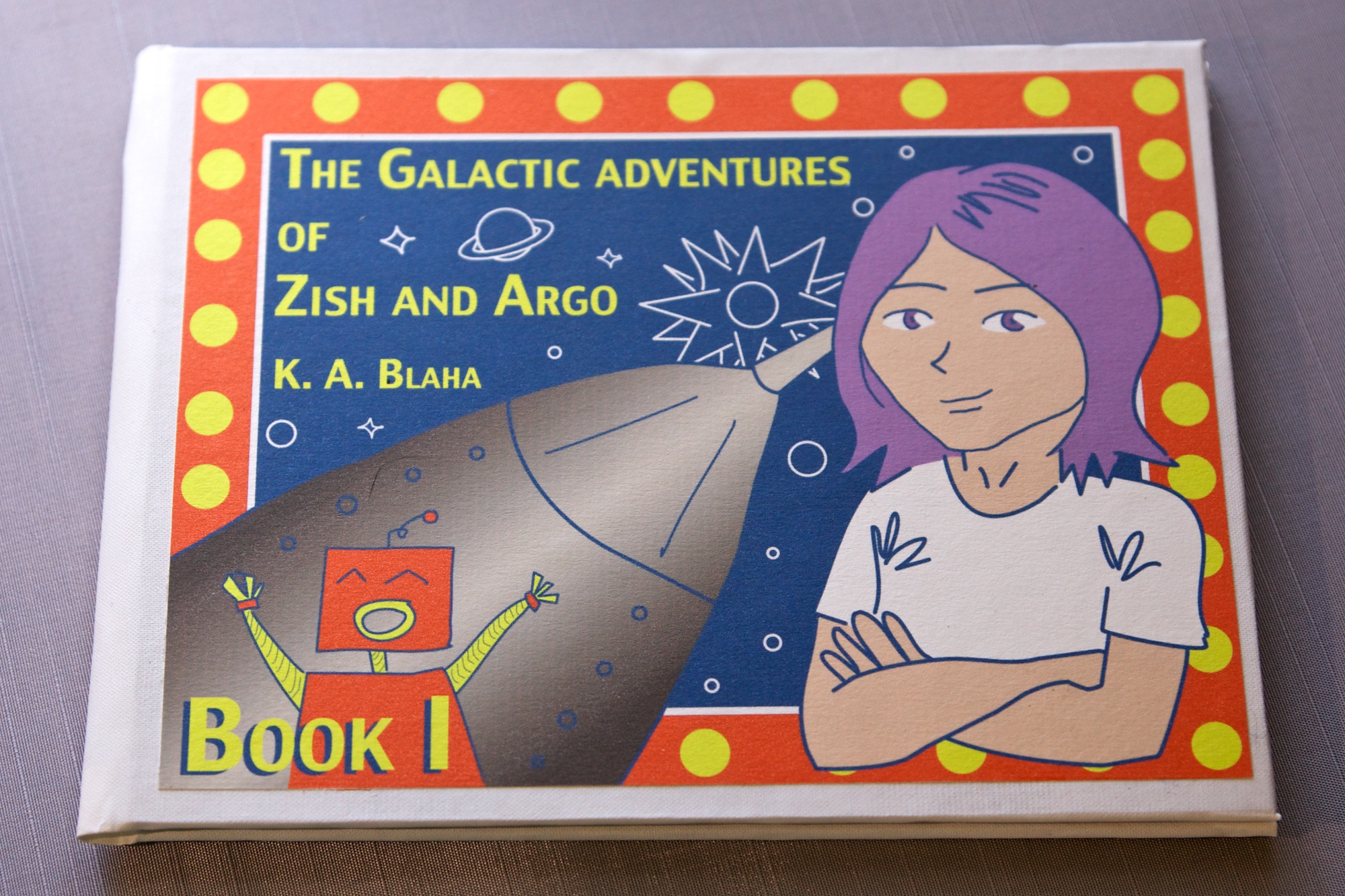
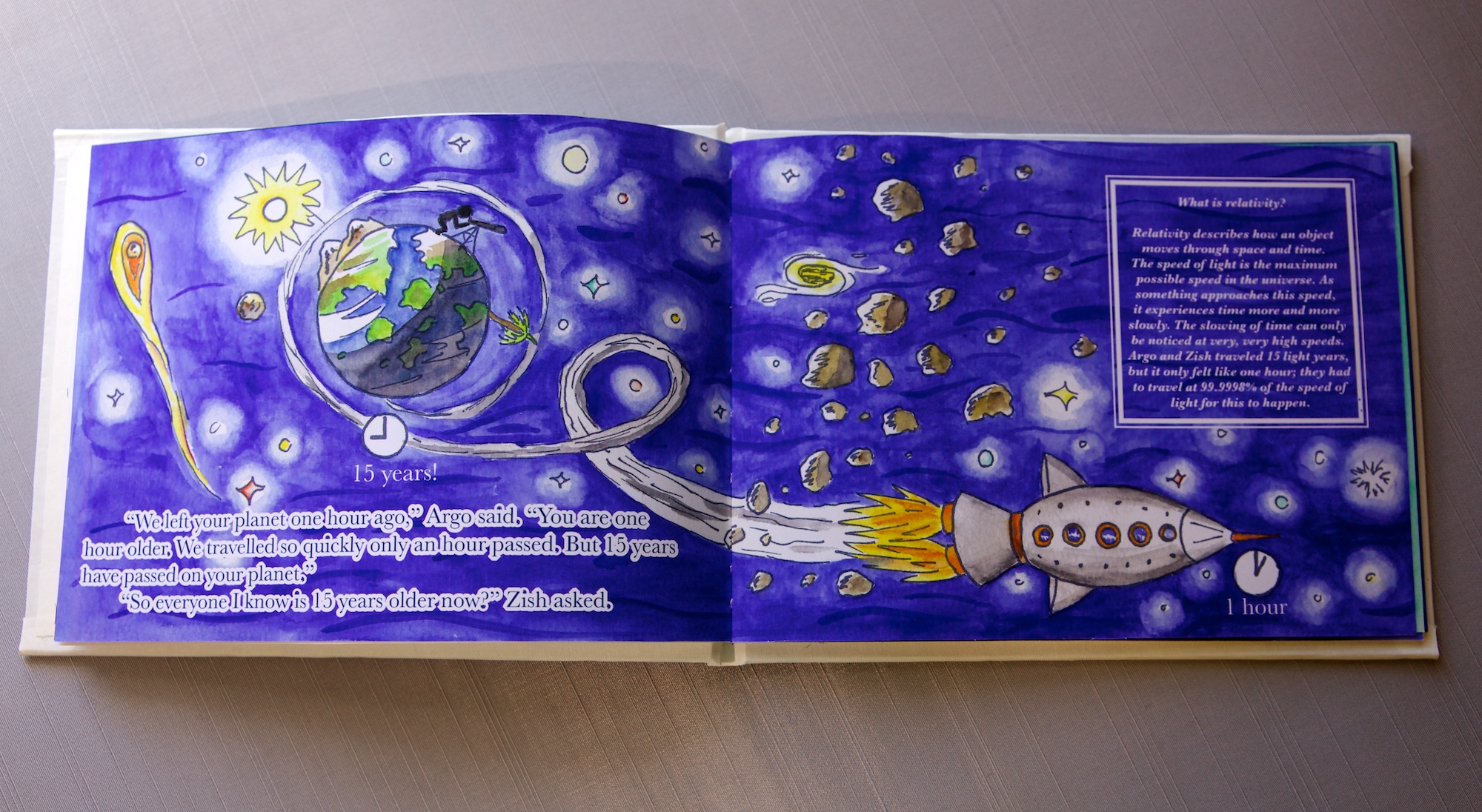
Finally I did a more formal binding of my Zish and Argo story. It’s a pretty simple binding with only a single 7 page signature, but I’m really pleased with the way it turned out. In the second picture below, you can see one of the spreads. All of the illustrations are digitized watercolor paintings.

SONY DSC SONY DSC

Americans are (statistically!) Weird

Have you ever wondered how social scientists conduct their psychological experiments? They mostly use volunteer American college undergraduates. This might seem obviously flawed; can a bunch of educated 20-year-olds possibly even represent the American spectrum, much less the world? The field hypothesized that the human brain structure is universal, and thus reasoning and decision-making as a consequence of that structure should be universal. The article “Why Americans are the Weirdest People in the World” explores the research of Joe Henrich. The article discusses how different cultures solve different problems, and how truly diverse thinking processes are across the globe. And wouldn’t you know it, Americans are crazy, crazy outliers in all of the problems.

Economics often uses behavioral experiments of game theory to understand choices that people make. In the famous “prisoner’s dilemma”, two “prisoners” may choose whether or not to rat out the other prisoner. Depending upon the choices of the two, there are four possible outcomes. If both betray, they are collectively worst off (say two years of prison each). If A betrays B and B does not betray A, A goes free while B gets 3 years of prison, and likewise for the reverse. If neither betray, they are collectively best off, and get a year each. The constructs of the game reward deceit.

Joe Henrich played such games with natives in Peru. The Ultimatum game is a version of the prisoner’s dilemma. Player 1 is given $100. He must make an offer to player 2. If player 2 feels the offer is too low, he may reject it, in which case both players keep nothing. Both players know the rules. Player 1 is compelled to offer enough so that player 2 does not feel cheated. In the US, the offer is typically close to $50, and lower offers are typically rejected. In Peru, the offer was much lower, and it was typically accepted. The people in Peru figured money was money, why reject it? Different cultures displayed different reactions to the Ultimatum game yet. The US is relatively typical of the west in this game. The researchers supposed that in a western society, people have grown to accept some inconvenience on their own behalf to punish dishonesty or greed, such as taking the time to write a complaint to the Better Business Bureau.

The article goes on to detail that Americans are outliers statistically. This has major implications for economics and sociology and psychology. It’s a great read, and for my part, I think a reason to take these kinds of sciences with a grain of salt. They are definitely fields worthy of study, but definitive conclusions are difficult. We know most that we know little about the human brain. Even if you aren’t particularly interested in the science, the article is a fascinating read just for the variety of human thinking.

Sports photography

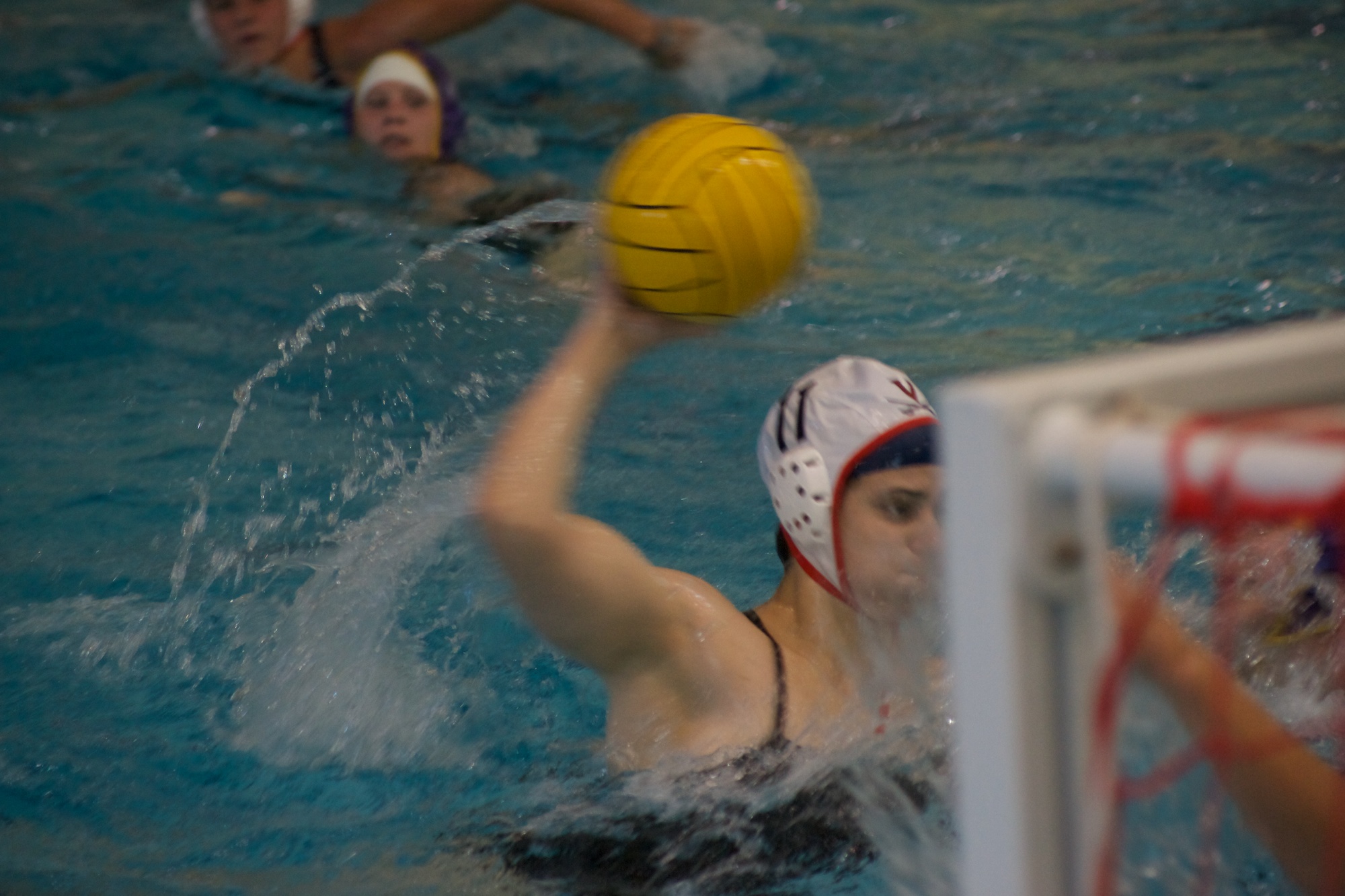
When I go to sporting events, I like to take pictures. Sports photography is really challenging, especially if you operate on a limited equipment budget and don’t get any kind of special access. I’ll list a few challenges I’ve encountered, and how I solved them. I shoot with a Sony α-850, but learned on a Sony α-100, so my experiences should translate to any basic SLR camera.

Challenge 1: The lighting isn’t strong enough

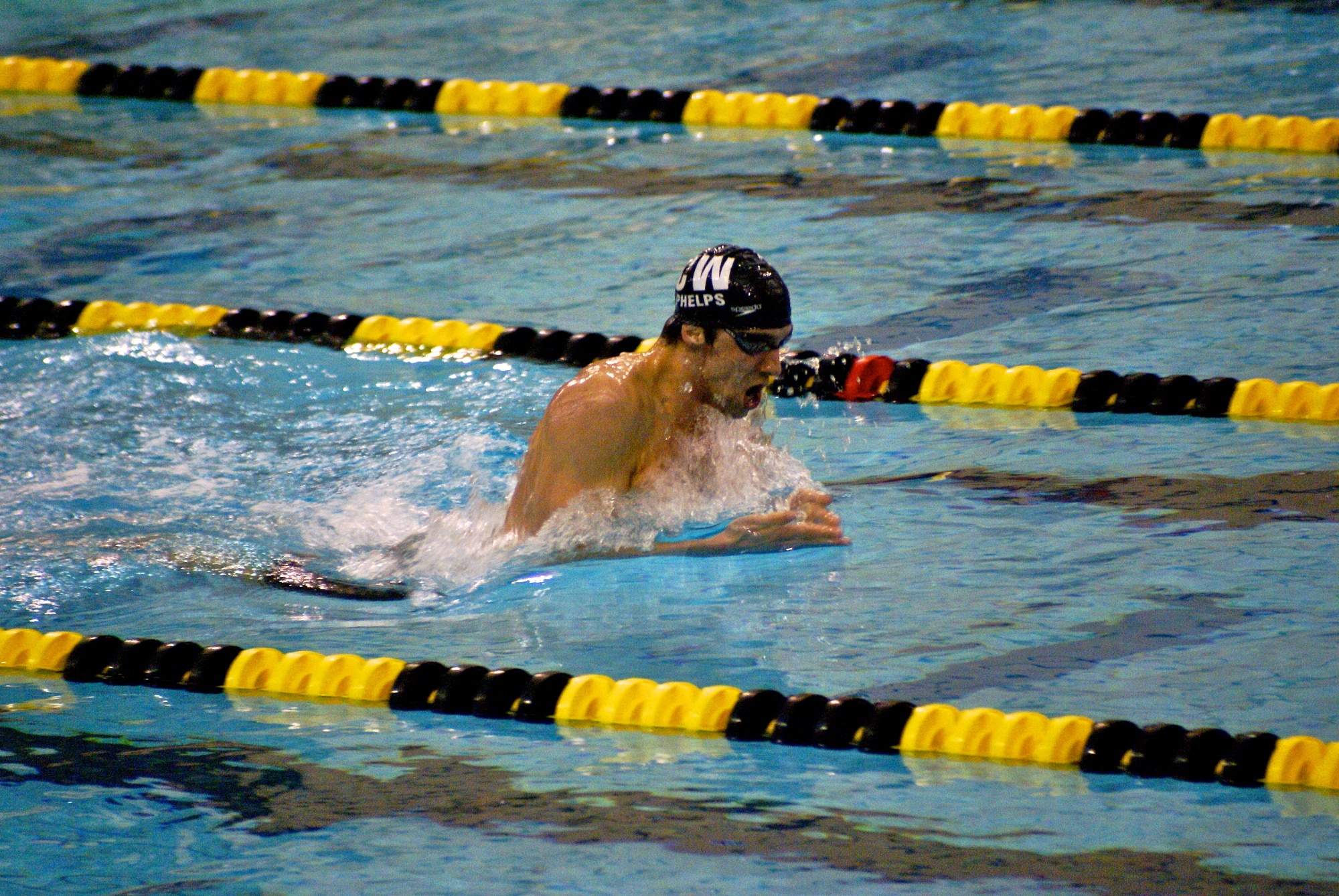
Whether you are indoors or the light of day is fading, this immensely effects the kind of photos you can take. My camera is susceptible to graininess at higher ISO numbers, which I hate. I set the ISO to the highest number I can stand, then I shoot in aperture priority mode in the smallest f-number (largest aperture) possible at the zoom required. I like to turn down the exposure by a couple of stops; it is easier to add brightness to an image than to remove blur. You may also need to add some saturation if you under-expose.

I used this procedure to take the picture of Michael Phelps swimming, below. Incidentally, this is the picture for breast stroke and swimming on wikipedia, and for swimming on Facebook. If you aren’t trying to make money off your photos, you can have some great fun seeing how they spread if you add them to the creative commons. (support the creative commons!)


SONY DSC

Challenge 2: The lighting is not white light

This can happen both outdoors with twilight or cloudy conditions, or indoors with certain types of lighting. The indoors case is a lot harder to deal with because it is harsher and more unnatural. There are a couple of different strategies– you can be proactive and take a reference picture of a white object during your shoot. You can change your white balance to match this reference during then shoot, or later in the post processing (I post process in Aperture), you can set the temperature/tint for all the photos to the combination that makes the reference shot a neutral color. If you change angle, the color of the light may change, so if you shoot from many angles this gets hard no matter your strategy. I always do my color changes in post-production. If you wish to, it’s important to shoot in raw (rather than jpg), otherwise you can degrade the image.

The pair of images below show a picture with and without temperature/tint correction. (I have also increased the brightness and saturation, but little else.) Note that the skin tone is more ashen in the first picture. I used the bonnet and the goal posts to hone in on a good neutral.

SONY DSC SONY DSC


Challenge 3: The focal plane changes rapidly and fast movement

When shooting sports, I always want to shoot with the largest aperture. This way, I can shoot at a lower ISO (i.e., less noise) and still have fast photos. Additionally, uninteresting stuff in the background gets blurred out by the focal depth. However, this shallow focal range ruins the picture if the objects of interest aren’t in that range. For some events, getting the objects in the focal plane is harder than capturing without motion blur, so I increase my aperture to the f5-f8 area.

Below is a picture I took at a horse race. Horse races are the best example of what I described above– the horses thunder towards you so quickly that in the time it takes for a cheaper SLR to focus, the distance of the horse has changed a lot. If the focal depth is shallow, the horse is likely not in it. But there is plenty of natural light, so I can increase the f-number without getting too slow.SONY DSC

Happy photoing! There are myriad other sports photo problems to solve, but I think I’ve been long-winded enough for today.


The Value of Play for Adults

The value of play for adults is something I must believe in… or else I waste a great deal of my time. Last Monday I wrote about playing with dolls; not long after that, I saw an article on boingboing about the value of self-directed play. The article discussed what we understand about play scientifically, and its functions for children and adults.

One quote from the article I particularly appreciated: “The opposite of play is not work. The opposite of play is depression.” For me, play is the remedy to worry, both at work and at home. As a scientist, the days that can feel like play are far and away the best and most useful. Sometimes I wonder if academia suppresses this needed time for play, as new professors are spending more and more time writing grants, which I cannot imagine as a play activity.

Play is also a reason I massively value unscheduled time. I like to have hours and hours of undevoted time. If my time is parsed and allotted, there is no time for valuable wanderings of the brain. In my unscheduled time over the years, I have learned some of the things I use a lot now, like sewing, bookbinding, drawing and painting.

There is also research that suggests that when play turns to work, creative output is damaged. For us many aspiring writers and creatives here on wordpress, I think that these are topics to keep in mind.

A little on watercoloring

This week I am spending most of my time painting the line-art from The Galactic Adventures of Zish and Argo. One of the things I really like about watercolors is that they travel well. I’m on the road for the next couple of weeks, but it is just as easy to paint here as it is at home. A major reason for the portability is the type of materials I use. I bought a Windsor-Newton field box set several years ago, pictured below. At $50, you might experience a bit of sticker shock. I’ve only recently had to start replacing pans; it lasts and lasts.

I have used the liquid watercolors as well. I find I enjoy the quick set up of the solid colors. There is no need to dole out paint as you go, and you only use what you need. Plus it’s easier to travel with. The solid paints can still deliver good intensity and brightness. I roll all my brushes up in a bamboo case like this one, and then I’m ready to go anywhere and paint anything. If you have a pigment-ink printer, you can economize on your watercolor paper by selectively choosing what you print. I discuss that more in an old entry, here.

I read a watercolor book a few years ago that I found helpful as well: Watercolor Tricks and Techniques, by Johnson. If you are curious, it is worth a look.

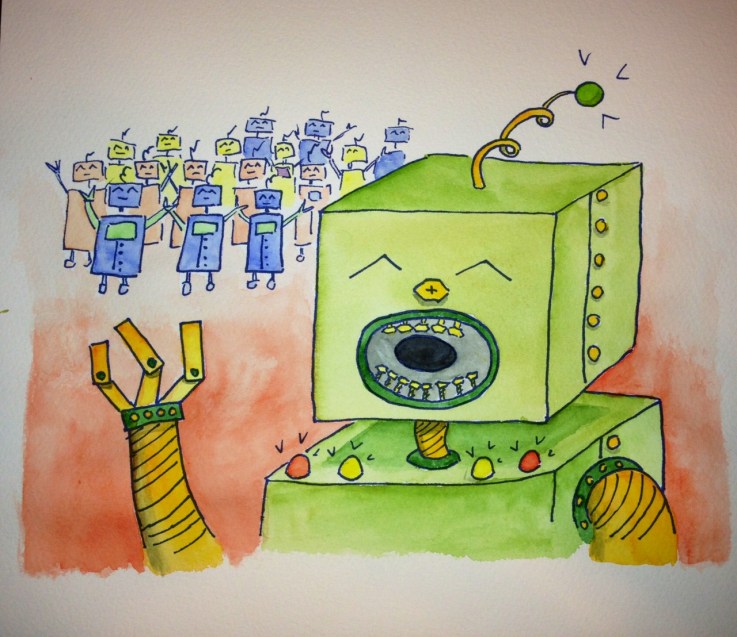
So there are 13 paintings for the core of the Zish and Argo book. I have 7.5 paintings done, so I’m over halfway! The Robotoids say hello!!robot

Getting creative with a printer

Last year I got a medium format pigment printer (epson r2000). With research, you can get a decent deal on these kinds of printers. I purchased mine for $300 (with rebate) while it now lists for $550 (but remember, the ink is always a swindle). If you know how to use color profiles and tune your screen’s color, these printers can be a ton of fun. Printing photos was the main motivation for my purchase, but the other less expected uses have been equally exciting.

Watercolor painting and pigment printing

Pigment inks are waterproof after they dry. Long ago I learned the hard way that normal ink jets are not waterproof. This feature of pigment inks has helped my watercolor process immensely. Now I can do line art on low quality paper. Then I scan the line art in and I can digitally fix it. This can mean a number of things: I can remove a badly placed stroke, or I can rearranged items in space. For the Zish and Argo stories, I did preliminary line art, and moved things to satisfy the needs of the page layout.

Once the line art is optimized, then I can print to the expensive watercolor paper. I probably only use half of my preliminary line art, which is an awful waste of premium watercolor paper. But now I can be efficient. Printing line art is additionally attractive because it uses little ink. Additionally, I can print several copies, and have several chances to get my work just right. I did the featured image art using this procedure.

Printing on fun materials

The printer can also print to some fun surfaces. It can print to basically anything you feed through it, like poster board, wood, foam board, canvas, or other sufficiently heavy fabric. Obviously, it can also print to any sturdy paper as well (I print frequently to drawing and watercolor paper).

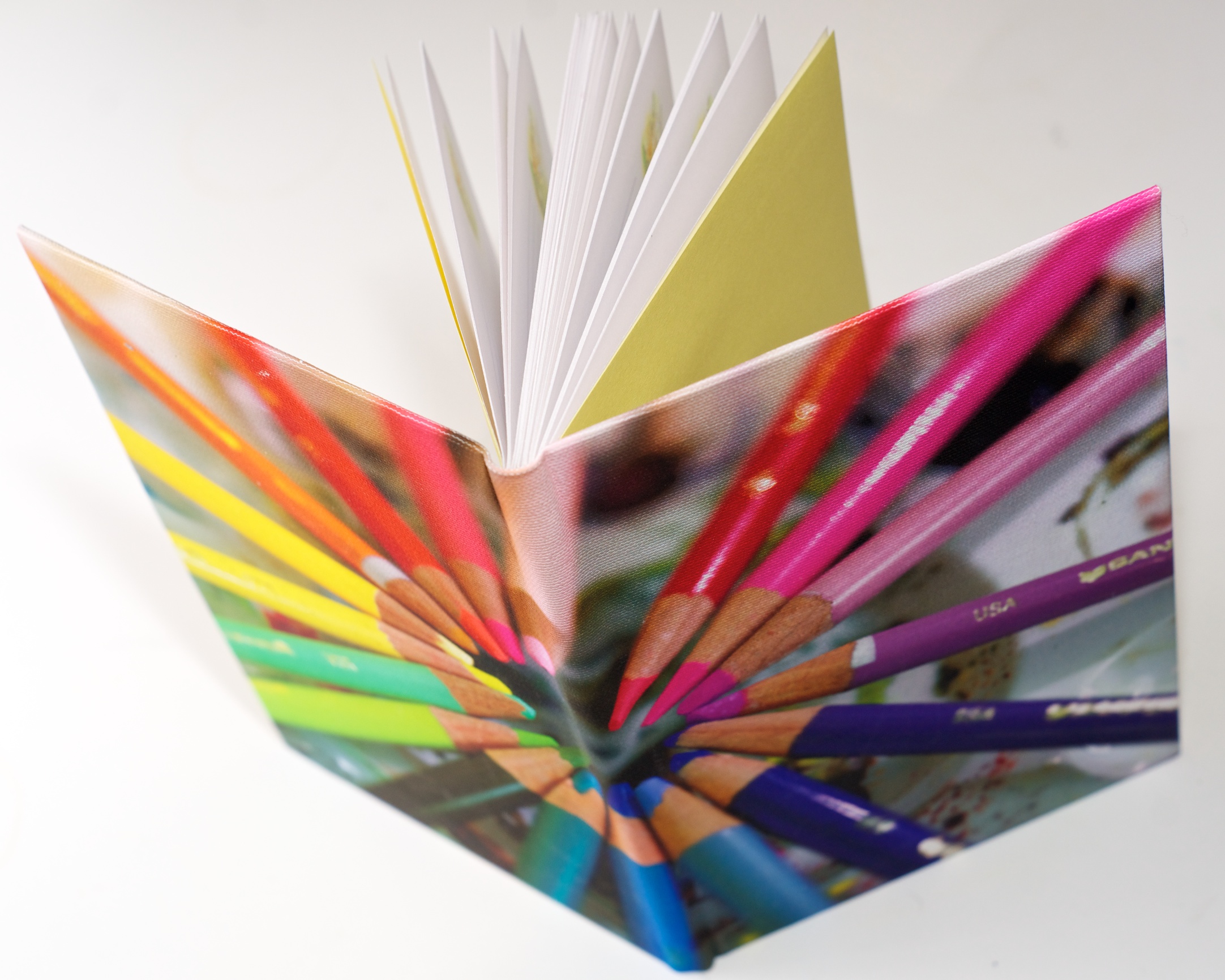
I recently did my first project printing to canvas. I then used this canvas to cover a book, shown below. This canvas is also designed to stretch over a frame like any canvas.

Any additional ideas on creative printing? There’s nothing better than using a tool on hand in a different way.

Style: Aboriginal Art

I like to use different art styles for my various different stories. Lately there is nothing better than trying to find attractive illustrations of various origins. A few months ago, I found a children’s book at a library sale, very much by accident–Enora and the Black Crane. Enora is a lovely story, and the illustrations are beautiful. Before happening upon this book, I had seen little aboriginal art.

I wanted to incorporate aboriginal designs into my in-progress short story collection. Luckily, I live near the only dedicated aboriginal art museum in the United States, The Kluge-Ruhe Aboriginal Art Collection in Virginia. This was a nice resource for additional inspiration. The illustrations for the collection are black and white woodblock style (as I mentioned in my previous entry). Aboriginal design uses a lot of color. I tried to capture some of the spirit while maintaining consistency with the woodblock theme. I ended up with the featured image for this entry. I ended up knowing a bit more about aboriginal design, and my final design was richer for it.

Upon Book Binding- Getting started and some useful things

Book binding is pretty simple. I do not mean it is necessarily easy or fast, but that you do not need much equipment or knowledge to get started. I think when I first started binding (not much more than a year ago) that this knowledge was a big surprise to me. So, if you are interested in trying your hand at binding, take heart!

Most of what I have learned came from three sources: observation, YouTube videos (such as this one on the coptic stitch style), and this nice book on book craft. With the help of the library, this info is all free.

I once imagined that bookbinding required extensive tools. It is true that the books themselves take certain special materials (you can’t fake nice paper, for example), but the tools required for putting them together is dead simple. I use four g-clamps and a couple well-bound oversize books, shown below. Every book I have ever made was with these four clamps and these two books. Very soon I will be making myself some new presses according to this tutorial, except that I intend to use cutting boards instead of fiberboard.

The only truly essential materials are strong thread (beading thread or linen thread works well), paper, an awl, a cutting board, a cutting implement, book board, and copious quantities of elmer’s glue. I like to order my decorative papers and cloths from Hollanders, and most other supplies like book board, elmer’s glue, and linen thread from Amazon.

The first few times I made books, they were not great looking. There were two primary reasons for this: 1) I did not let the glue dry sufficiently before moving to the next step. Then when I did the next step, the unset material would wrinkle, bubble or tear, and 2) Some papers are really unforgiving and will bubble and wrinkle very easily. Copy paper for example is not designed to be absorptive, and thus takes some skill to handle. I recommend starting with drawing papers or high cotton content papers. These papers will not buckle with too much glue or bubble with too little.

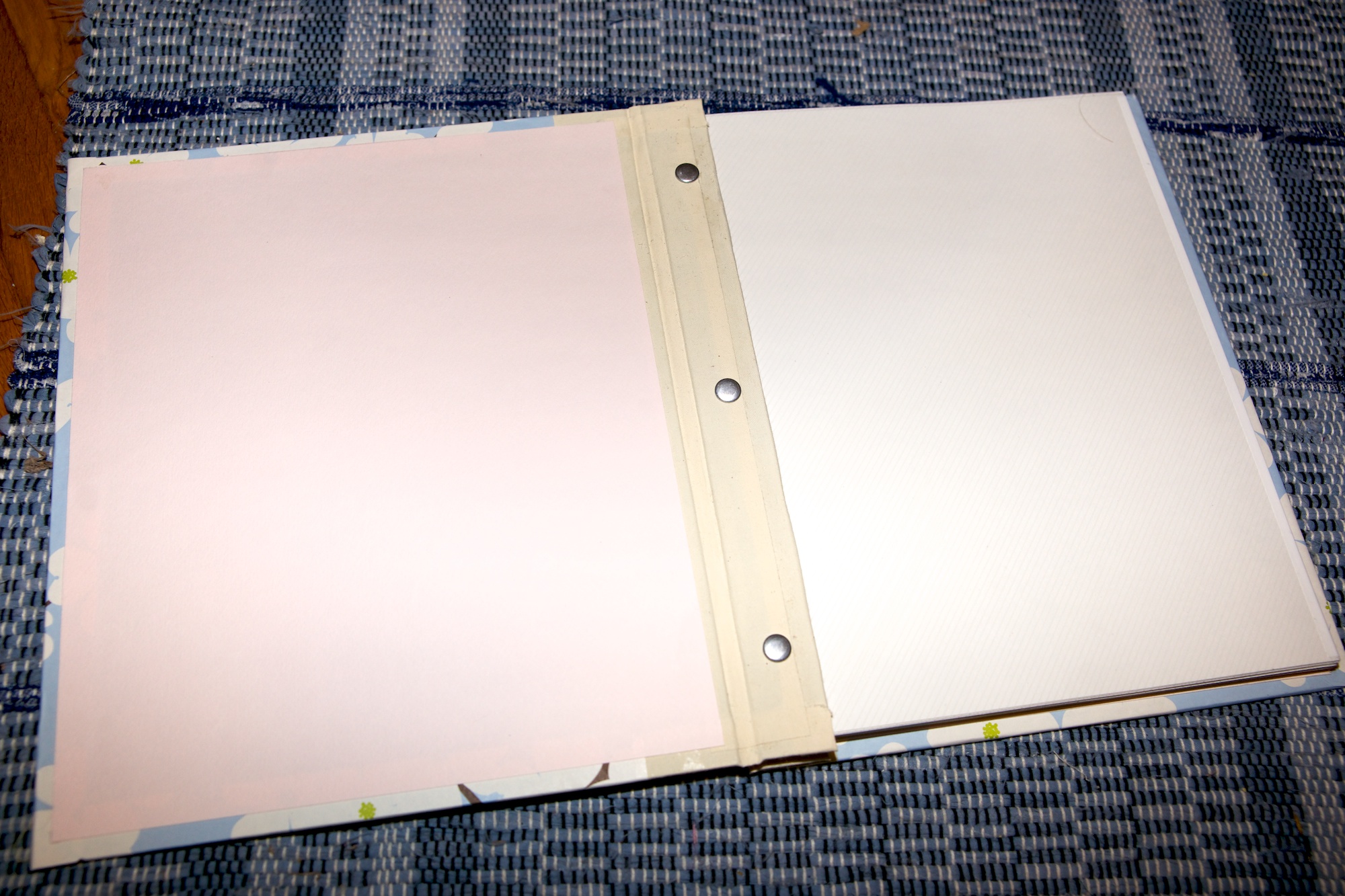
Below are four books I did in the first six months of learning. You can’t see here, but all of them have some little wrinkle or foible here or there. Each was still really exciting; I still had made books! I hope this little discussion is helpful to anyone who is interested, or getting started. I find joy in every book I put together, sometimes to an extent that seems strange. For more pics (of more recent efforts), or if you are interested in my books, check out my Etsy store.