Category Archives: Photography

Sports Art: Water Polo

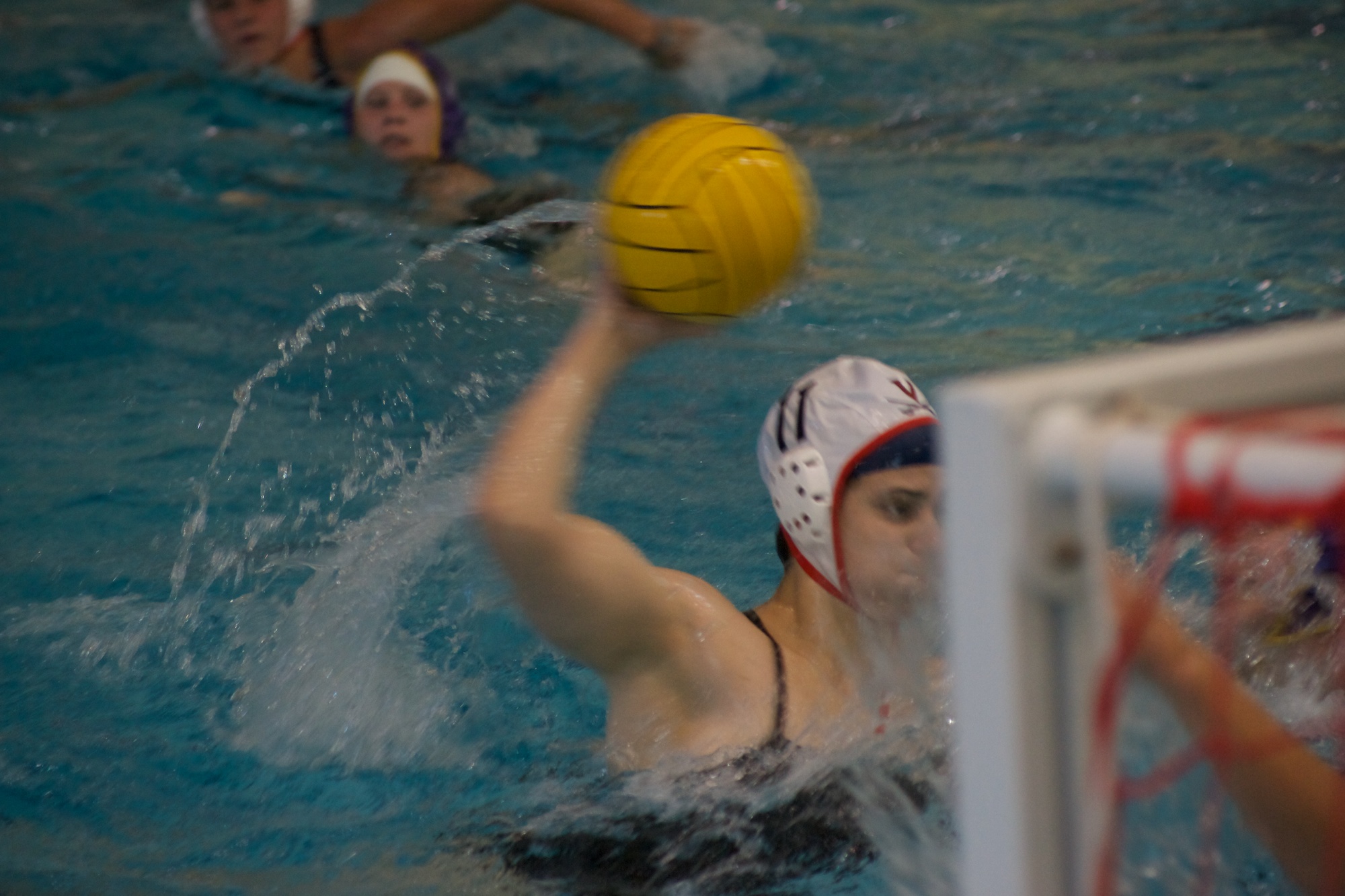
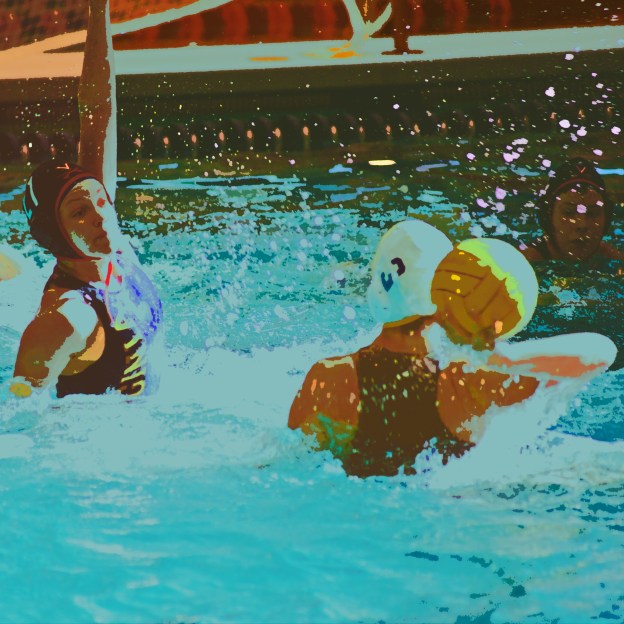
This weekend I’m playing a water polo tournament. When I’m not playing, I like to do a little polo-themed art. I love day-dreaming about playing, and sketching the lines of motion put me right in the water too. When I’m not playing, I also love to photograph the games. In the split seconds, you see parts of the game that disappear at full speed. Plus, there is not a great deal of water polo art, besides that destined for t-shirts. Maybe I can share some of the beauty I see in the game.

Mucha-inspired water polo art

polo-mucha

An in-progress work, with the source photo:Scan-linesSC4A9993


Maori-warrior interpretation of water polo:

littepic4


The backhand shot in water polo, taken from the offensive center position. The offensive center treads 2m in front of the goal, facing away from the goal, with a defender behind.

cutout

Scan 1

Sports photography

When I go to sporting events, I like to take pictures. Sports photography is really challenging, especially if you operate on a limited equipment budget and don’t get any kind of special access. I’ll list a few challenges I’ve encountered, and how I solved them. I shoot with a Sony α-850, but learned on a Sony α-100, so my experiences should translate to any basic SLR camera.

Challenge 1: The lighting isn’t strong enough

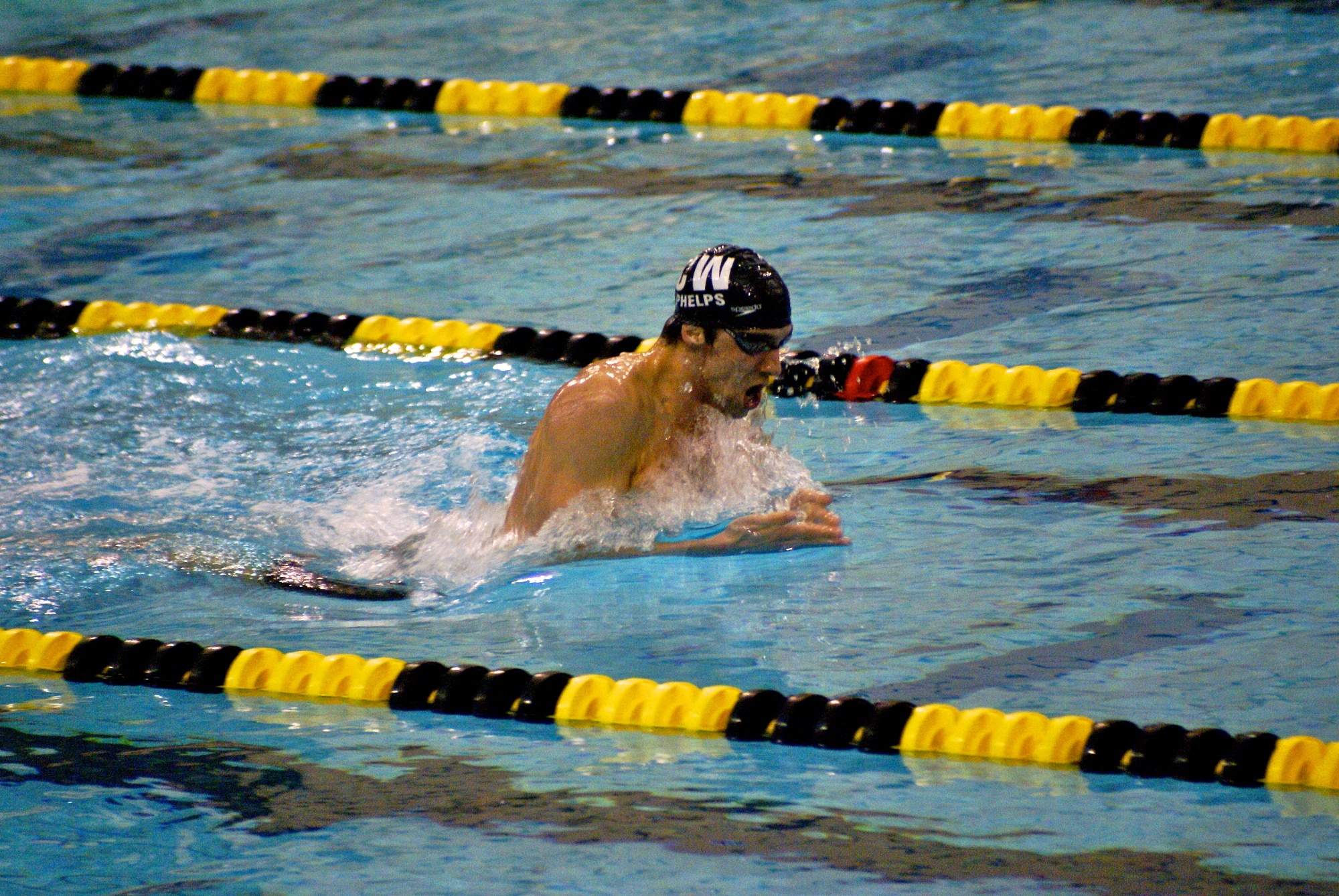
Whether you are indoors or the light of day is fading, this immensely effects the kind of photos you can take. My camera is susceptible to graininess at higher ISO numbers, which I hate. I set the ISO to the highest number I can stand, then I shoot in aperture priority mode in the smallest f-number (largest aperture) possible at the zoom required. I like to turn down the exposure by a couple of stops; it is easier to add brightness to an image than to remove blur. You may also need to add some saturation if you under-expose.

I used this procedure to take the picture of Michael Phelps swimming, below. Incidentally, this is the picture for breast stroke and swimming on wikipedia, and for swimming on Facebook. If you aren’t trying to make money off your photos, you can have some great fun seeing how they spread if you add them to the creative commons. (support the creative commons!)


SONY DSC

Challenge 2: The lighting is not white light

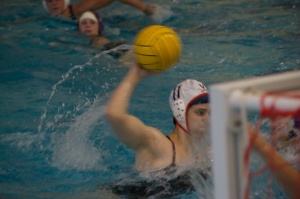
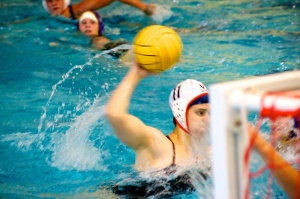
This can happen both outdoors with twilight or cloudy conditions, or indoors with certain types of lighting. The indoors case is a lot harder to deal with because it is harsher and more unnatural. There are a couple of different strategies– you can be proactive and take a reference picture of a white object during your shoot. You can change your white balance to match this reference during then shoot, or later in the post processing (I post process in Aperture), you can set the temperature/tint for all the photos to the combination that makes the reference shot a neutral color. If you change angle, the color of the light may change, so if you shoot from many angles this gets hard no matter your strategy. I always do my color changes in post-production. If you wish to, it’s important to shoot in raw (rather than jpg), otherwise you can degrade the image.

The pair of images below show a picture with and without temperature/tint correction. (I have also increased the brightness and saturation, but little else.) Note that the skin tone is more ashen in the first picture. I used the bonnet and the goal posts to hone in on a good neutral.
SONY DSC SONY DSC


Challenge 3: The focal plane changes rapidly and fast movement

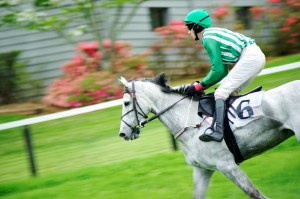
When shooting sports, I always want to shoot with the largest aperture. This way, I can shoot at a lower ISO (i.e., less noise) and still have fast photos. Additionally, uninteresting stuff in the background gets blurred out by the focal depth. However, this shallow focal range ruins the picture if the objects of interest aren’t in that range. For some events, getting the objects in the focal plane is harder than capturing without motion blur, so I increase my aperture to the f5-f8 area.

Below is a picture I took at a horse race. Horse races are the best example of what I described above– the horses thunder towards you so quickly that in the time it takes for a cheaper SLR to focus, the distance of the horse has changed a lot. If the focal depth is shallow, the horse is likely not in it. But there is plenty of natural light, so I can increase the f-number without getting too slow.SONY DSC
Happy photoing! There are myriad other sports photo problems to solve, but I think I’ve been long-winded enough for today.

 

The Beautiful Lab

Across the country, thousands of labs study thousands of topics. In my lab, we study nonlinear dynamics in electrochemical oscillators. The dynamics of these oscillators can be used to make math models for other oscillators we might be very interested in, like heart cells, breathing, and neurons in the brain. Oscillators and their dynamics show up in many places. In a previous post on synchrony, I discuss some of these dynamics.

My experiments aren’t particularly much to look at. The beauty in mostly in the data. But here are a few of my better snaps over the years. There can also be science in the photographic technique. The bottom two photos were taken using reverse lens macro, a cheap way to do great zoom shots.

From top to bottom the photos below show: the electrochemical 3 electrode cell, the variable resistance resistors for each electrode, and a capacitor. The featured image is of some resistors.

SONY DSC

SONY DSC SONY DSC

Exotic Florida: A Zoo of Lost Pets

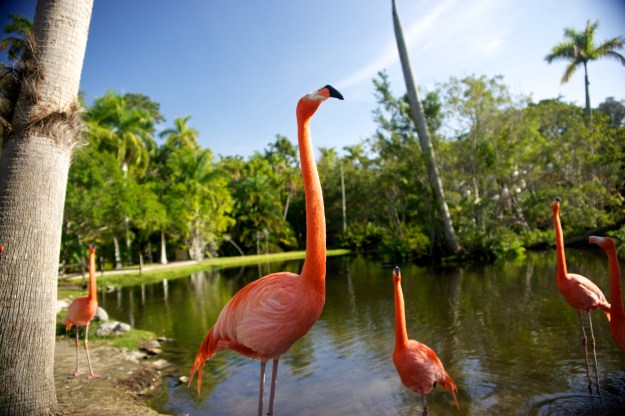
I’m late posting today, because we went up to Sarasota and had a photo expedition. We went to Sarasota Jungle Gardens, a private zoo garden with birds and reptiles and nice foliage. Most of the animals in their collection were the cast offs of collectors who lost their interest. A good reminder to be responsible when you choose a pet! Thankfully, the garden takes good care of their critters and we get to enjoy the aspects that make them so alluring (and then we can leave the parrots and their shrill greetings).

SONY DSC SONY DSC SONY DSC

Winter in Florida

Every year, I trek south to Florida for the holidays. The sun and warmth are great, but I especially like the feeling of going to a different world. The land is flat and riddled with little inlets and brackish creeks. Here in southwest Florida, there is a feeling that man does not control the wilderness. Things grow at an insane rate and they fight for space. The landscape takes on that wild, violent look. I like the greenery and the beaches and the boats and the sunsets all. And I like to drag my camera along for documentation.

Happy Friday!

SONY DSC SONY DSC SONY DSCSONY DSC

Fractals in Life: photos

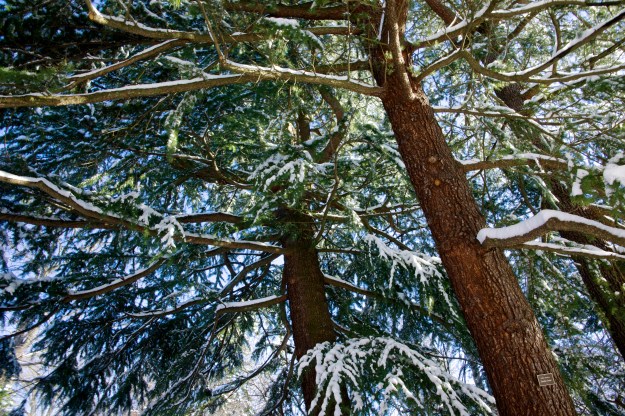
Fractals are a branch of math that better describes nature. Before fractals, there was Euclidean geometry, the geometry of lines, planes, and spaces. Euclidean geometry cannot give the length of a rough coastline; neither can it give the surface area of shaggy tree bark. The answer you arrive at in Euclidean geometry depends upon the scale at which you examine an object– intuitively the distance an ant travels over rough terrain is different from the distance we cover walking. The ant interacts with the terrain at a different length scale than we do. Fractal geometry is designed to handle objects with multiple meaningful length scales.

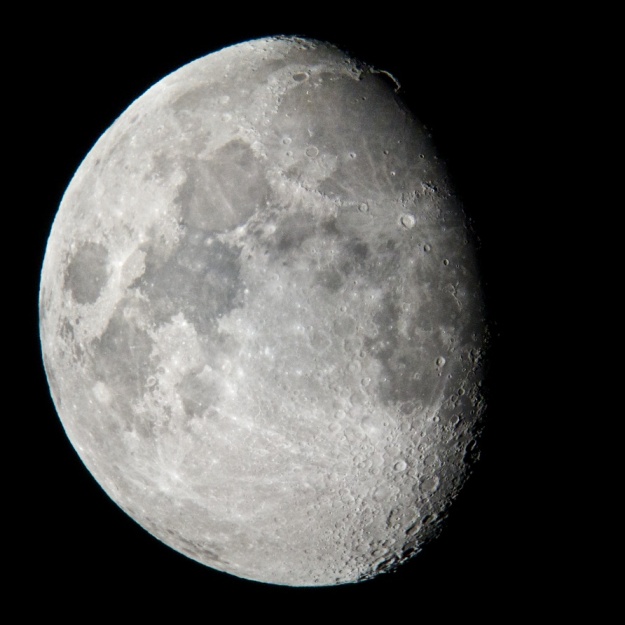
Fractal objects are sometimes called “scale-free“. This means that the object looks roughly the same even if examined at very different zooms. Many natural objects look similar at multiple zooms. Below, I include a few. The craters on the moon are scale-free. If you keep zooming in, you could not tell the scale of the image.

frac (1)

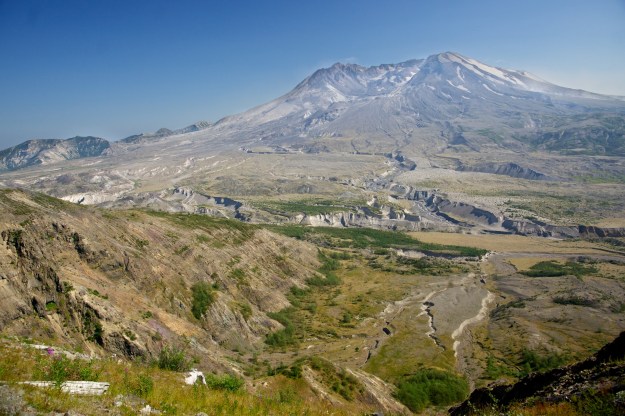
Terrain is often scale-free in appearance– a few years ago there was a joke photo with a penny for scale. The owners of the photo subsequently revealed that the “penny” was actually 3 feet across. I couldn’t find the photo, but you cannot tell the difference. The reveal was startling. Below is a picture of Mount St Helens. The top of this mountain is five miles (3.2ish km) away. Streams carry silt away from the mountain, as you can see more towards the foreground. They look like tiny streams. These are full-sized rivers. Mount St. Helens lacks much of the vegetation and features we would usually use to determine scale. The result is amazingly disorienting, and demonstrates scale invariance.

SONY DSC

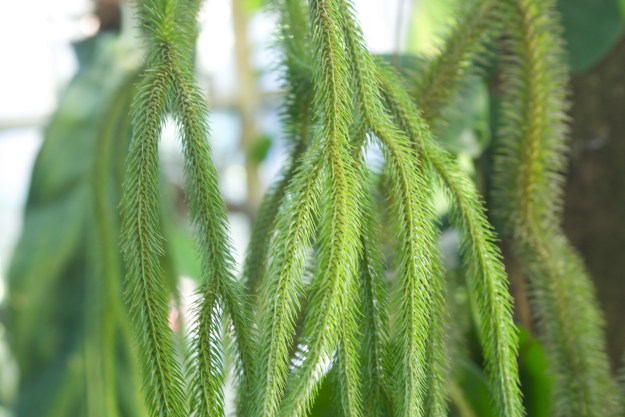
Plants are often scale free too. Small branches are very similar in appearance to large branches. Ferns look very fractal. Below is a picture of Huperzia phlegmaria. Each time this plant branches, there are exactly two branches. Along its length, it branches many times. It is a physical realization of a binary tree.

SONY DSC

For more about fractals, read my posts about fractal measurement and the mandelbrot set.

Summer is gone, waiting for spring

Tomorrow is the first day of December. In the last week, the last of our colorful leaves have fallen. Even the confused daisy shrub in my yard is no longer in bloom. The daylight is short, and the foliage is bleak. This time of year, I love to review photos from more colorful times. The colors will be back before very long. Starting in February, the Lenten roses and the crocuses will return. Until then, photos can be our flowers. Every year when spring breaks, I walk through the gardens at least once a week and see what new flower has opened.

Check out my Flickr feed for thousands of other photos. 95% of my Flickr photos are fair use for non-commercial purposes, so feel free to use them, but please attribute and link to my flickr.  Most of all I love seeing where my photos get used. (Side note: the first picture on the Wikipedia swimming article is mine. That’s neat!)

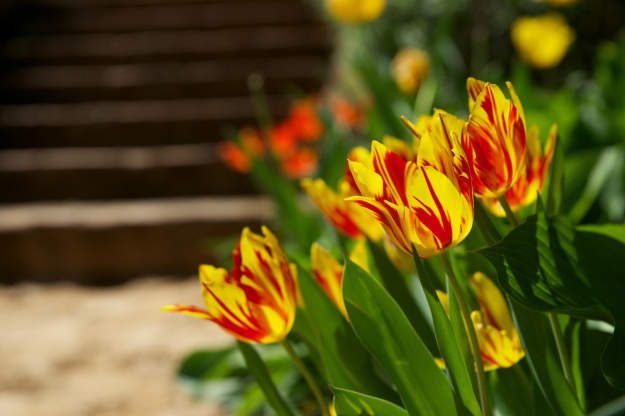
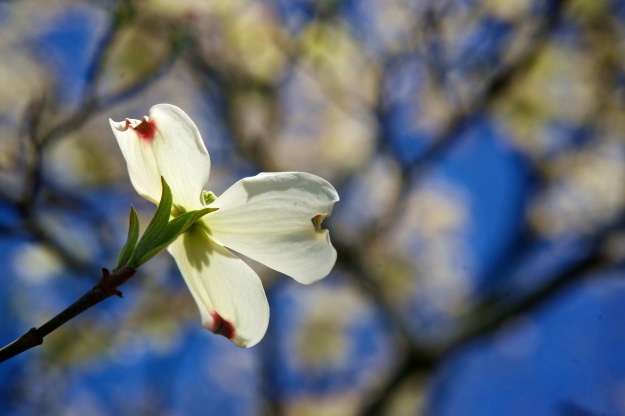
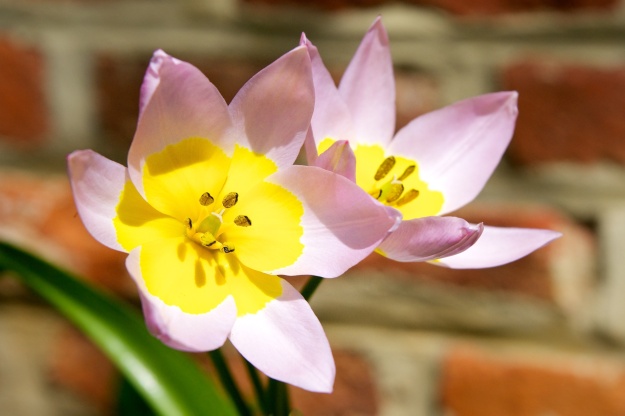
Here’s some color for your Friday.


SONY DSCSONY DSCSONY DSCSONY DSCSONY DSC