Author Archives: Vironevaeh

Fun Science: Crystals Everywhere!

I went on a trip to DC last fall. Almost accidentally I ended up in the Natural History Smithsonian Museum. Wow! Especially worthy is the section on minerals. I assume there are other museums with such displays, but I hadn’t been to one. The Hope diamond is displayed also in the minerals section, but fancy jewels I can’t touch are way less interesting than all the minerals and natural crystals.

I find crystals fascinating because they tell you so much about the microscopic structure of the material. Where else in life can you just look at an object and see what it does down to the nanometer? So naturally the camera came out. Below are a few favorites, and some comments about what we can infer from the pictures.
IMG_2197

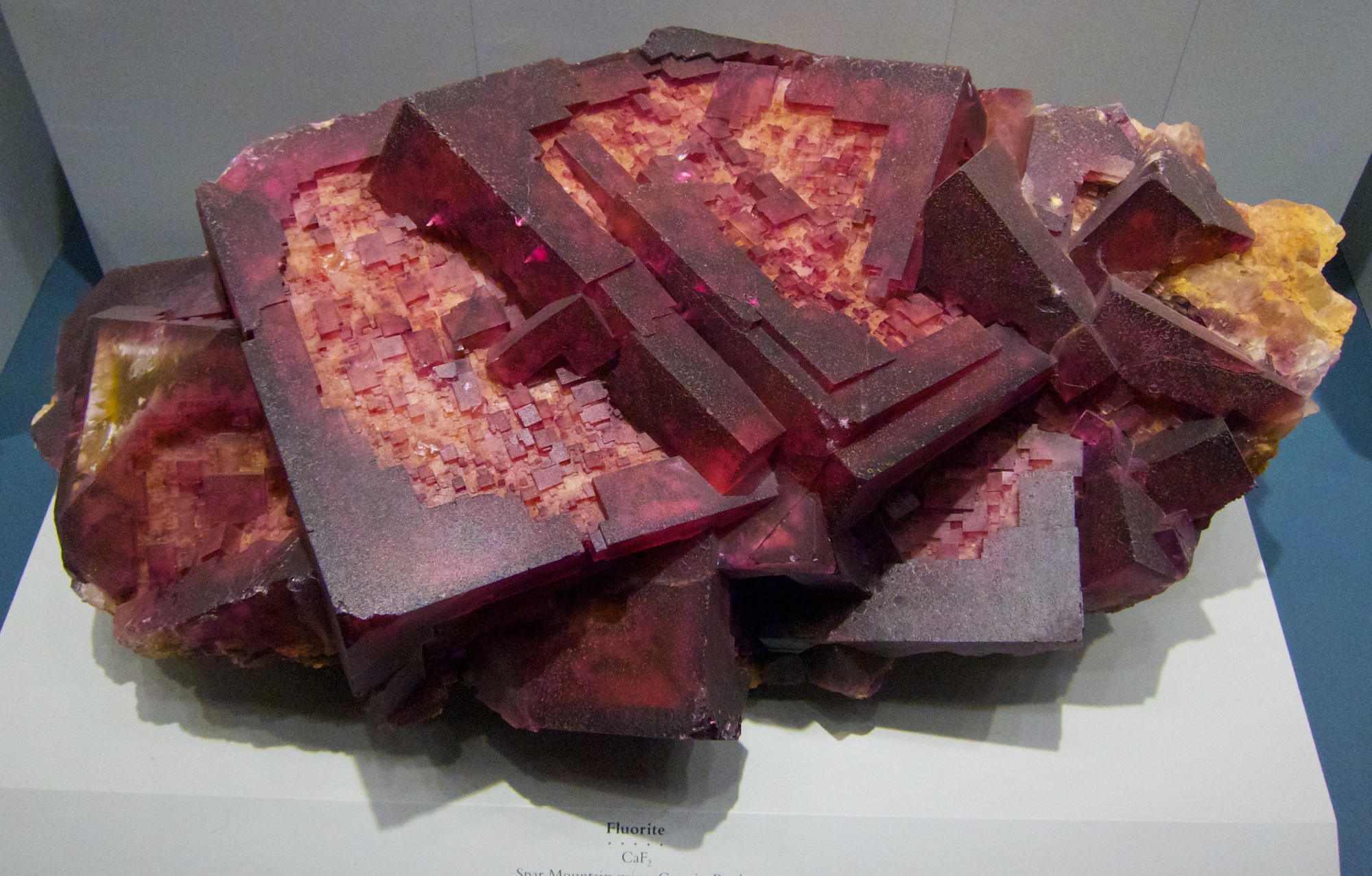
Fluorite (CaF2): As you can see, Fluorite has a cubic crystalline structure. Fluorite can come in basically any color. Color can be due to impurities, exposure to radiation, or defects in the crystalline structure. Fluorite was originally so named due to fluorescent properties; fluorite can fluoresce in a variety of colors depending upon the impurities present.
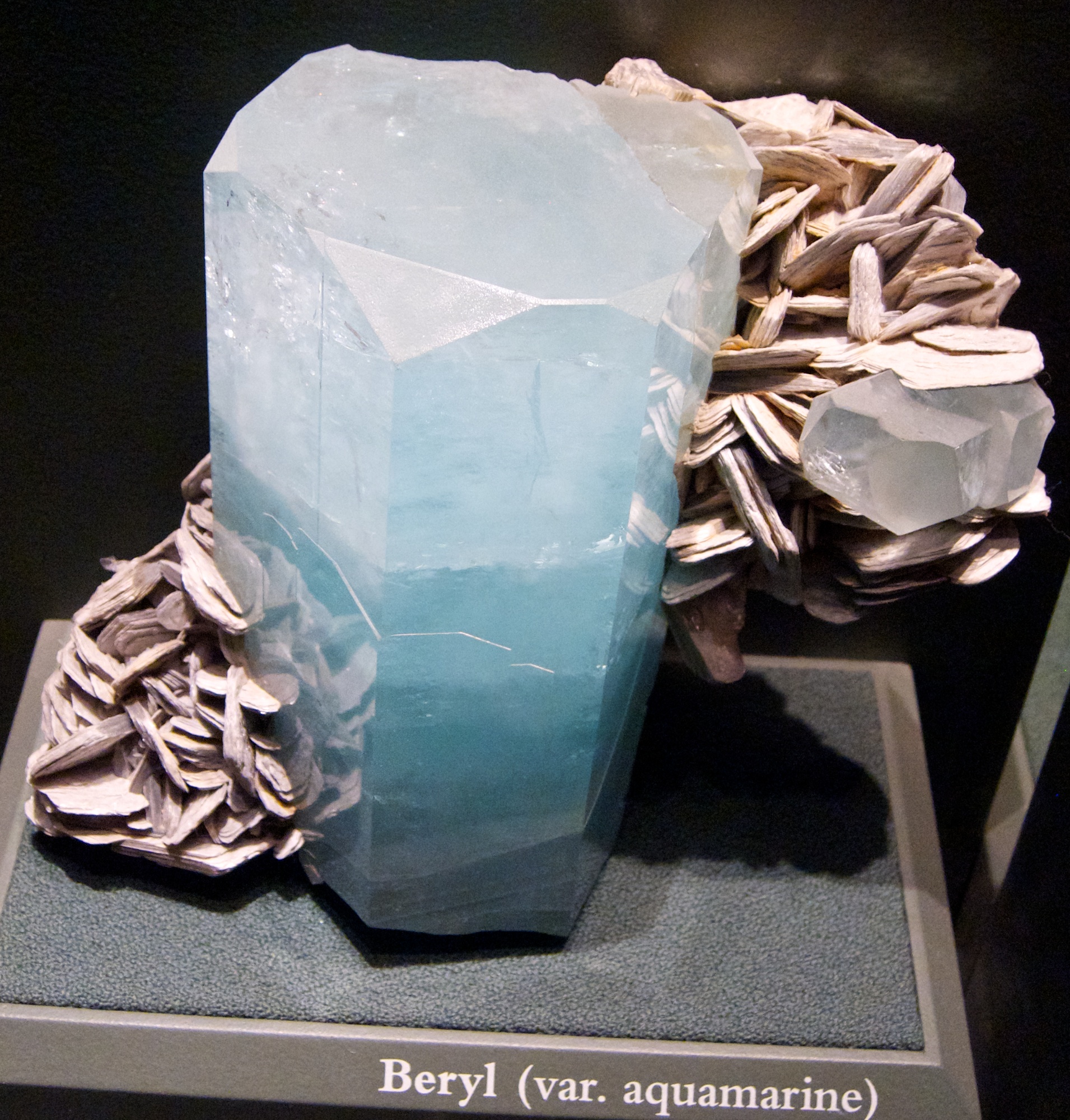
IMG_2139Beryl (Be3Al2(SiO3)6): You might be more familiar with other names for Beryl, such as aquamarine or emerald or morganite. Beryl is naturally clear, but takes on color in the presence of impurities. Emerald, for example, has chromium or vanadium present. Aquamarine coloration results when the Fe2+ oxidation state is present. Fe3+ results in yellow coloration. You can see in the image above that beryl has a hexagonal crystal structure. You can also see that this is one big hexagonal crystal, unlike the population of cubes in the fluorite picture. This tells us a lot about how the crystal grew. If the crystal grew very fast, there would be a number of columns, because crystallization would be faster than the time for the mineral components to diffuse to one specific column. So this crystal grew pretty slowly.
IMG_2136


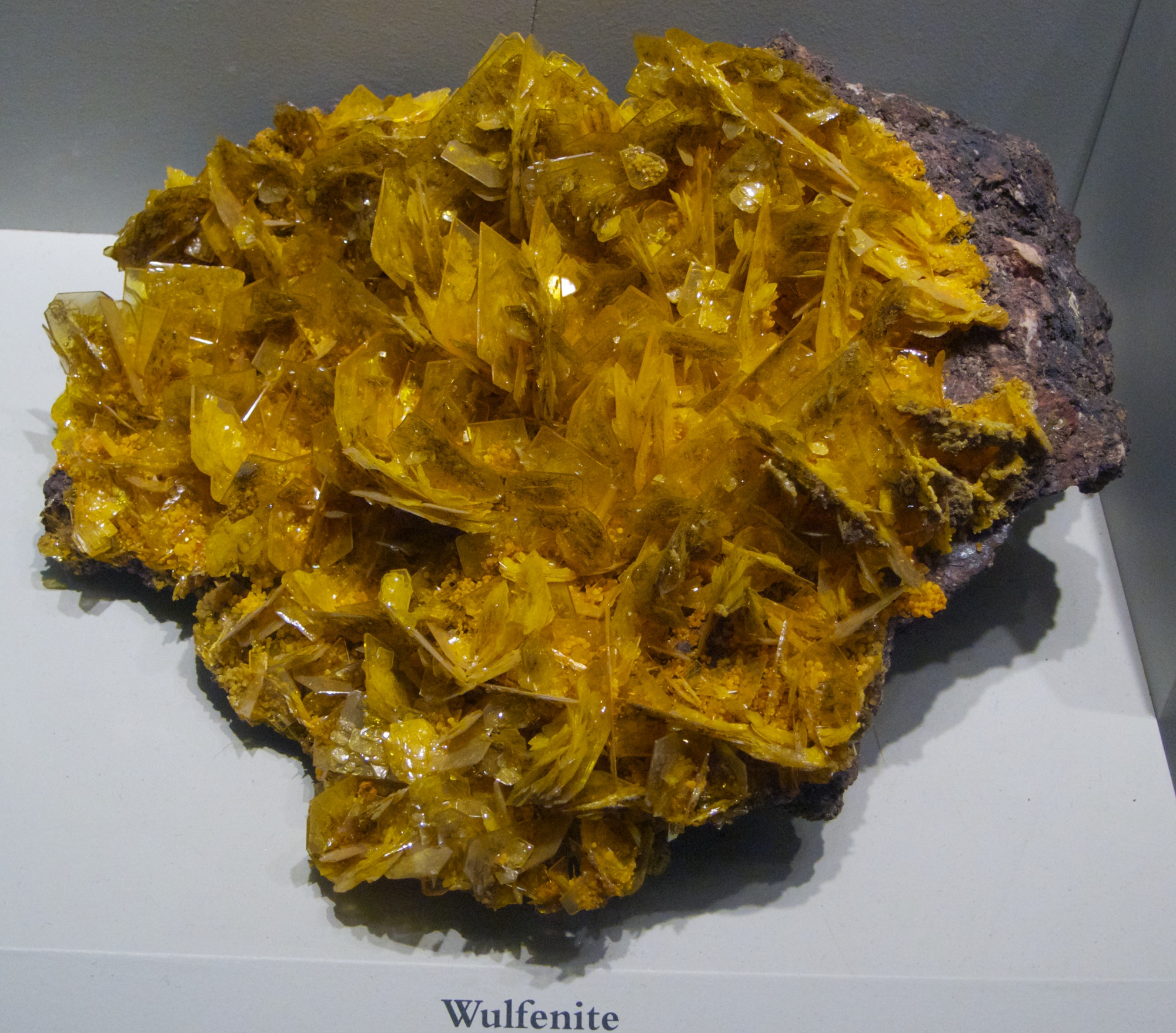
Wulfenite (PbMoO4): Wulfenite is often found around lead deposits, which makes sense since it contains lead. It has a tetragonal crystal structure, and tends to be yellow or orange or brown in color. You can see that the crystals are much smaller in this picture than the beryl crystal. Clearly these crystals grew quickly from many nucleation sites. The size to which crystals tend to grow is a property of the crystal too; some only form a ton of small crystals, some form a few very large ones. It depends whether it is lower energy to just form another crystal, or if it is lower energy to allow diffusion to an already established crystal. This is related to thermodynamics. Wulfenite seems to favor lots of small crystals. Some wulfenite has a really cool property called piezoelectricity; when there is the right kind of pressure on the crystal, an electric charge accumulates.
IMG_2219


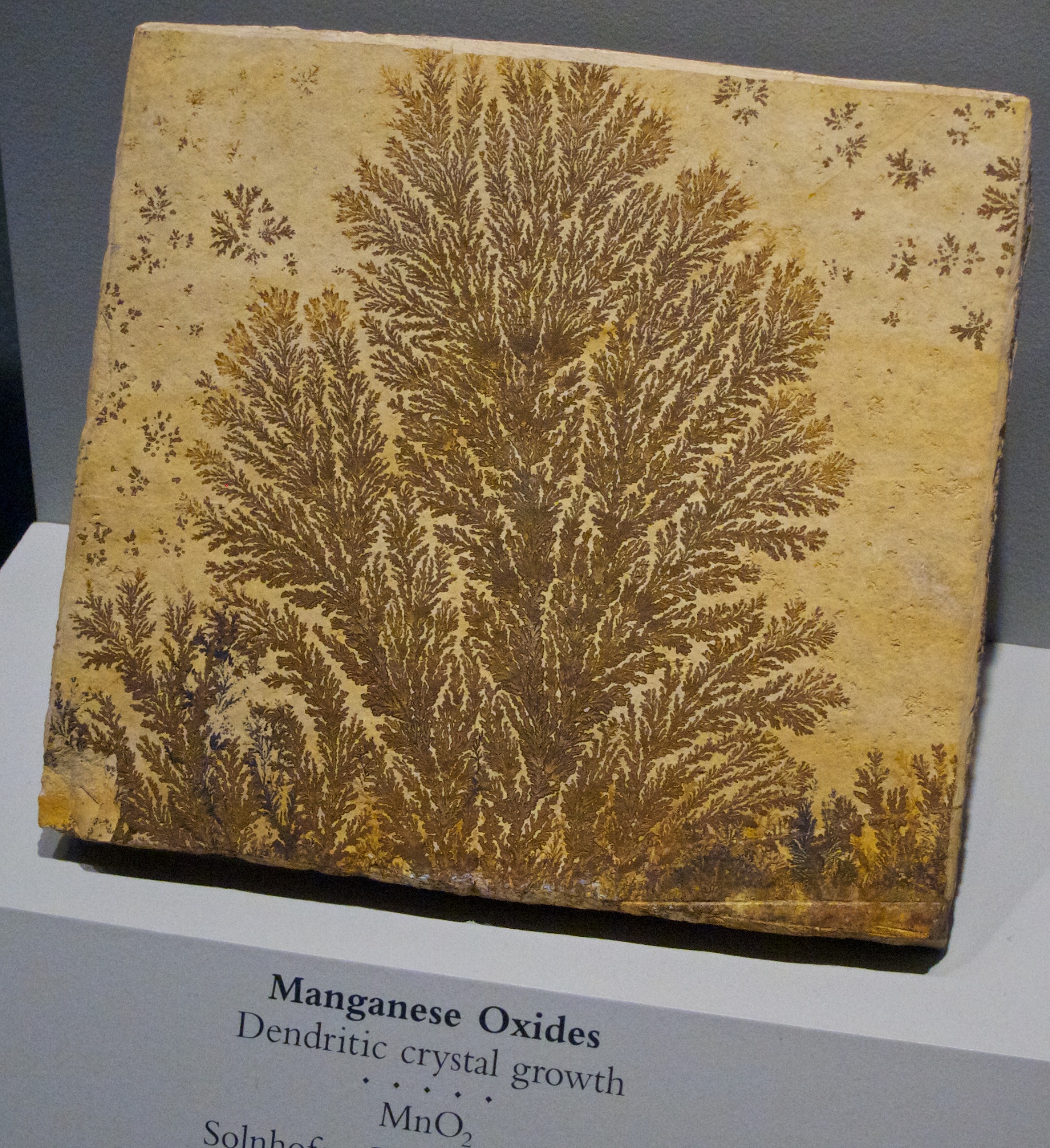
Manganese dioxide (MnO2): This manganese dioxide has grown in a dendritic fashion. It might look like frost or snowflakes, which grow in similar ways. These dendrites are very fractal, a favorite topic of mine. Here diffusion was definitely limited, so crystals grew where the materials were present.

IMG_2174


Chalcedony (SiO2): Chalcedony is a type of silicon dioxide, which is the chemical composition of most sand. Chalcedony is composed of two different silicon dioxide minerals: quartz and moganite. Quartz and moganite have different crystalline structures which grow together at a fine scale in chalcedony, which is probably why it looks far less geometric than the other crystals I’ve shown. Agate is a type of chalcedony.
 

Creatures on Parade

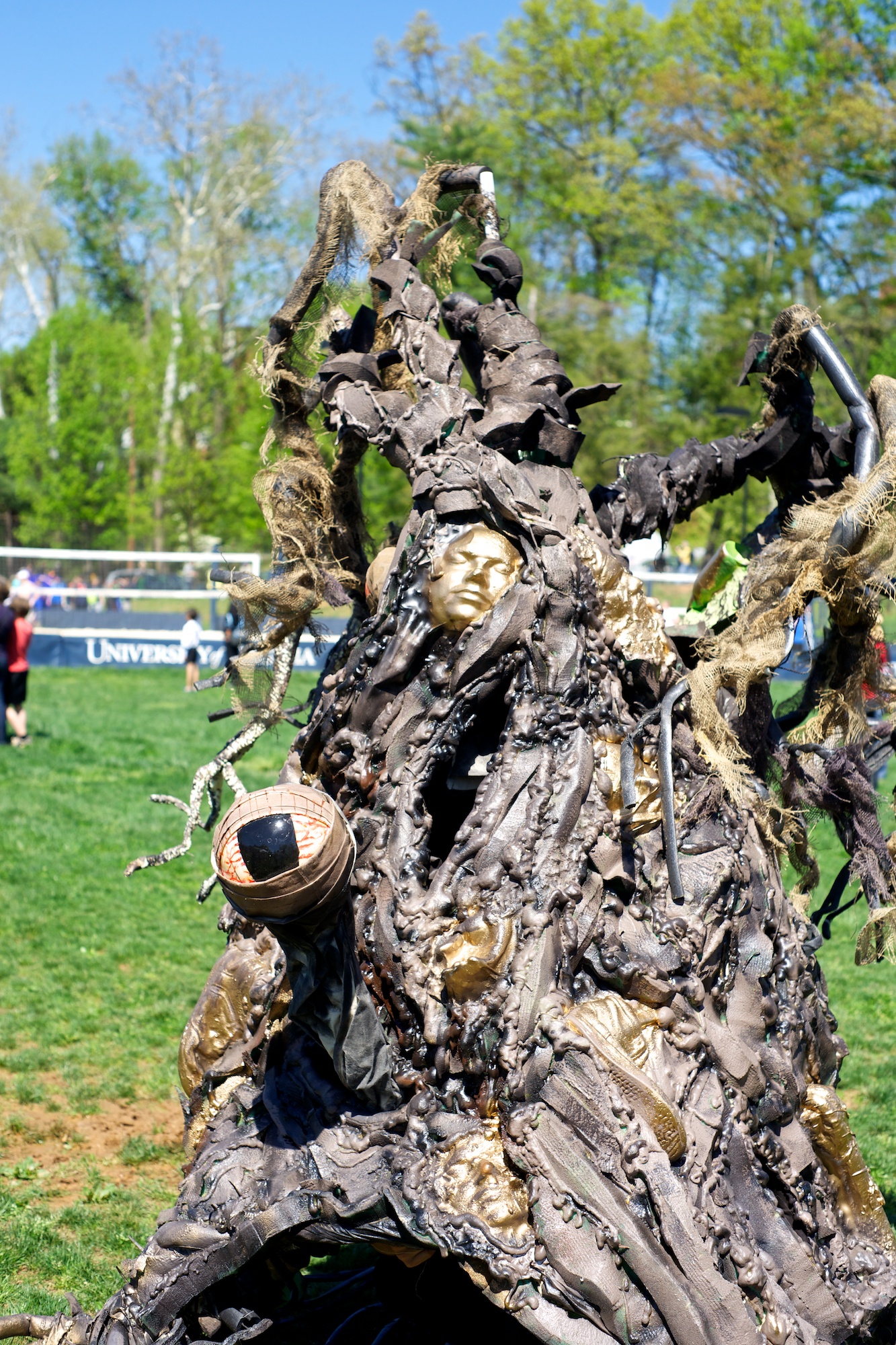
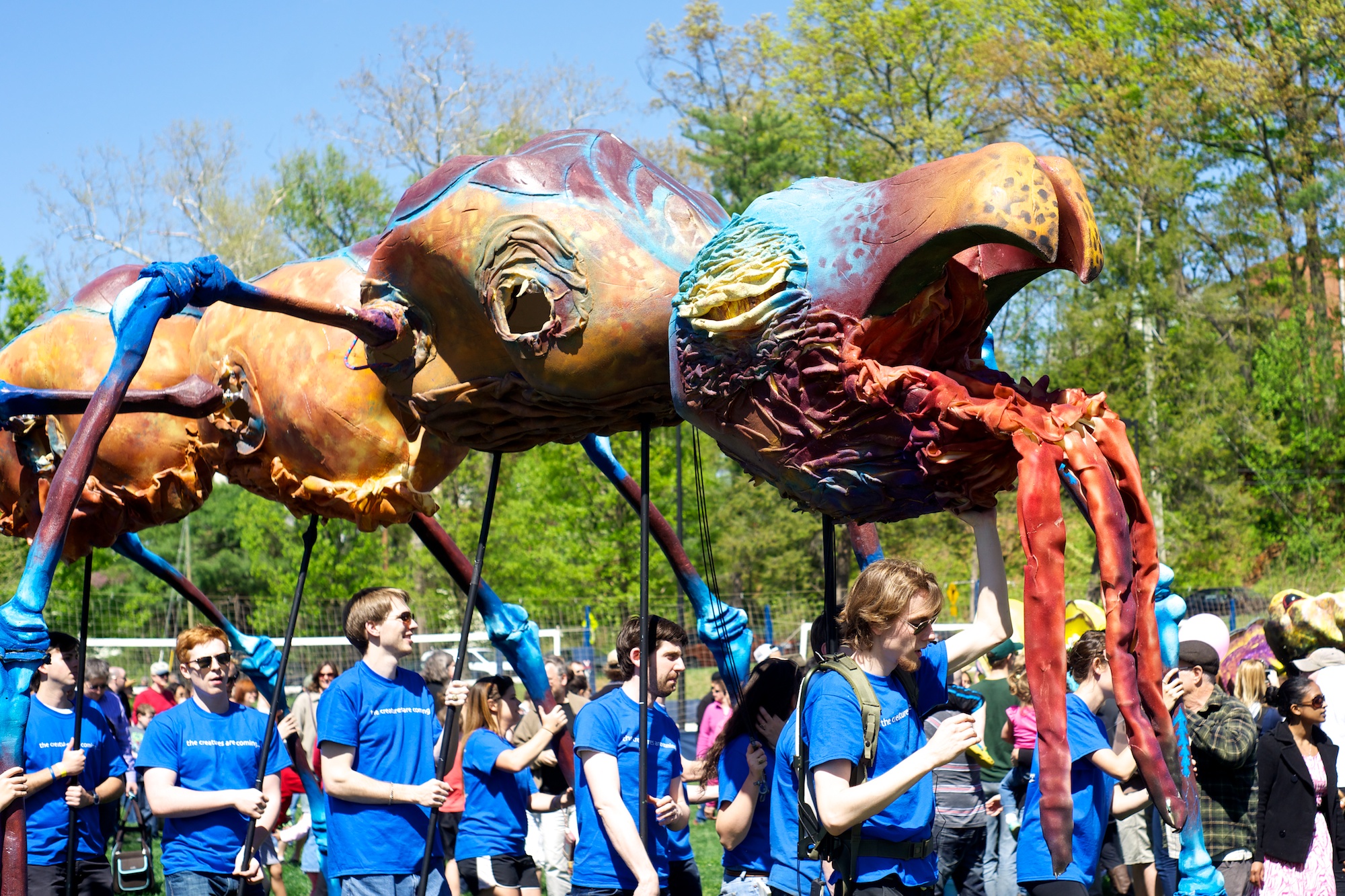
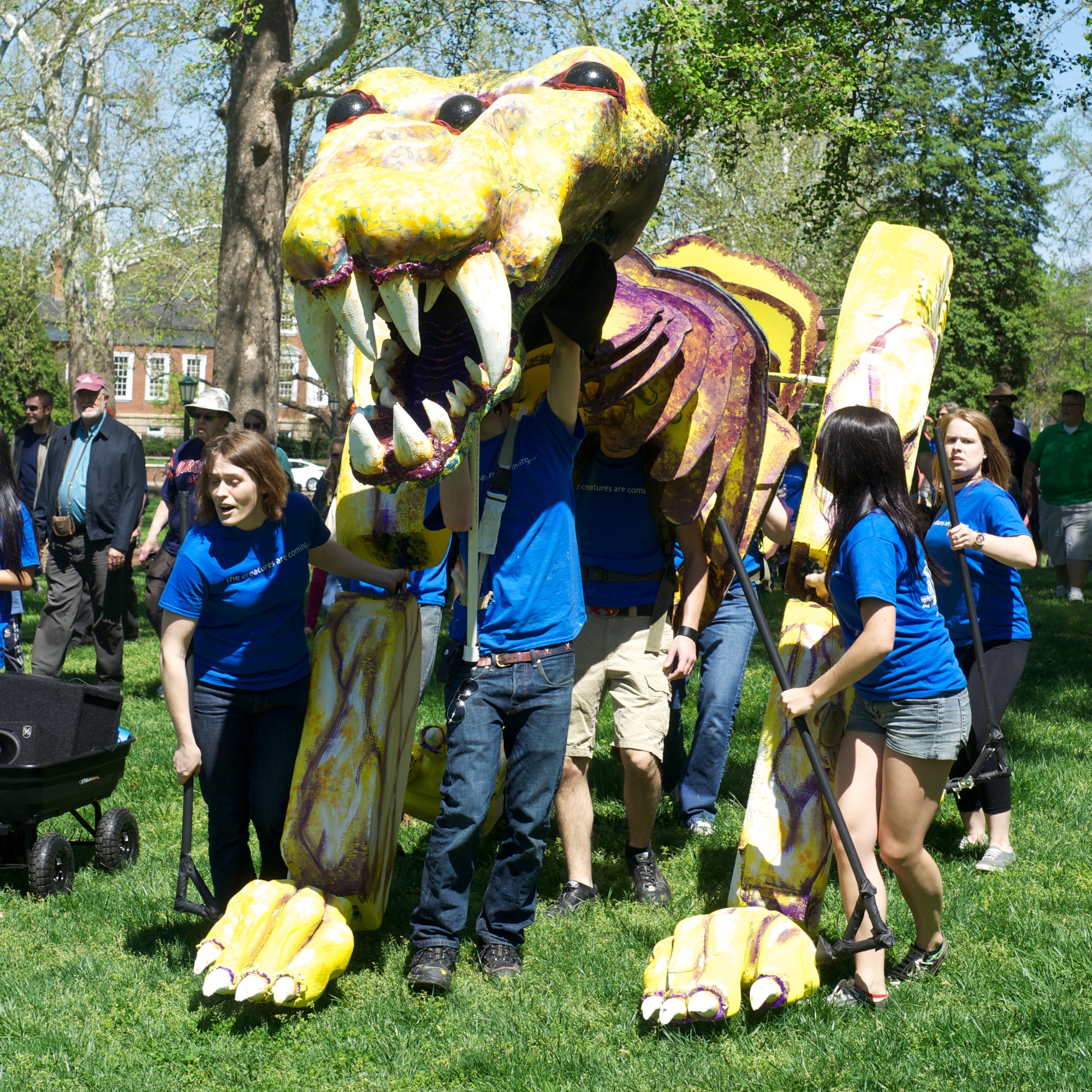
This weekend the art department at the university put on a creature parade. Alum Stan Winston made creatures for Jurassic Park, Avatar, and others. So the art school made some creatures and some sound tracks for those creatures and paraded them around grounds. It made for a nice photo outing. The students were very proud of their creations and seemed to have fun with it. Little kids didn’t know quite what to make of the beasts, but gave them a healthy space for safety.

SONY DSC SONY DSC SONY DSC SONY DSC SONY DSC SONY DSC

Victor Horta: Art Nouveau Architect

I pretty much love anything art nouveau. So whenever I go to European cities, I look to see if they have any art nouveau icons. In Prague there is Mucha, in Berlin there is the Bröhan museum, and in Brussels there is Victor Horta. There is a Horta Museum, as well as a number of buildings he and others designed nearby. A bunch of walking tours (like this one with a nice video) can help you cover the various buildings or get a peek from wherever you currently are via the pictures.

Like many architects of the period, he also designed the furniture, wallpaper, and interior structures like staircases. The museum has great examples of these. Alas no pictures were allowed and there aren’t any fair use pics. But if you’re curious you can google for yourself. Here are some pictures of his lovely buildings:

SONY DSC

Hôtel Tassel in Brussels

SONY DSC

Hôtel Solvay

SONY DSC

Horta museum building

SONY DSC

Horta museum building

IMG_0287

Old England building, designed by Barnabé Guimard, closer to the Grand Place in Brussels. (not Horta, but still very cool. This hosts the instrument museum so you can go inside and enjoy that too.

Staircase from Horta museum


Writing: Maintaining Enthusiasm

Last week I started headlong into an attempt to write my first novel. This is not my first time trying to write novel, but another attempt to finish one. I suspect this isn’t an uncommon problem. It seems to be an enormous leap of faith to write something ~80,000 words long. You have to set aside that time, in the first place. And then what if it isn’t good enough, what did you do with all that time? I think in every past attempt I reached about 25k words and said, where exactly am I? This isn’t going to get read and then I will have an 80k time sink in my hands.

I think such worries never leave. But in other areas of my life I have been able to push through worries of failure. It’s that old cliché that lack of trying guarantees failure. Each time I try, I try to do it a little different. This time I wrote it first as a short story. Then I outlined it at a rough level. As I go I outline the next part in more detail. So far it seems to be working for me. I got to figure out who my characters were in the short story. I’ve also been trying to set more realistic writing goals. I used to write as much as possible on a day that felt good. That would leave me tired and sick of writing the next few days. Then when I’d come back, the material would be unfamiliar, and I’d spend time trying to pull myself back into the mindset.

It’s still early, but this time feels better and different. I just reached 8,000 words. The idea that I have 90% or so still remaining is really daunting. Each day will help. And really, what better to do than work to improve?

Some other possibly helpful posts, since what do I know… I keep quitting each time (I thought there used to be a related articles function,  but it isn’t showing itself… so I’ll link them myself):

Happy 16th Anniversary, Vironevaeh!

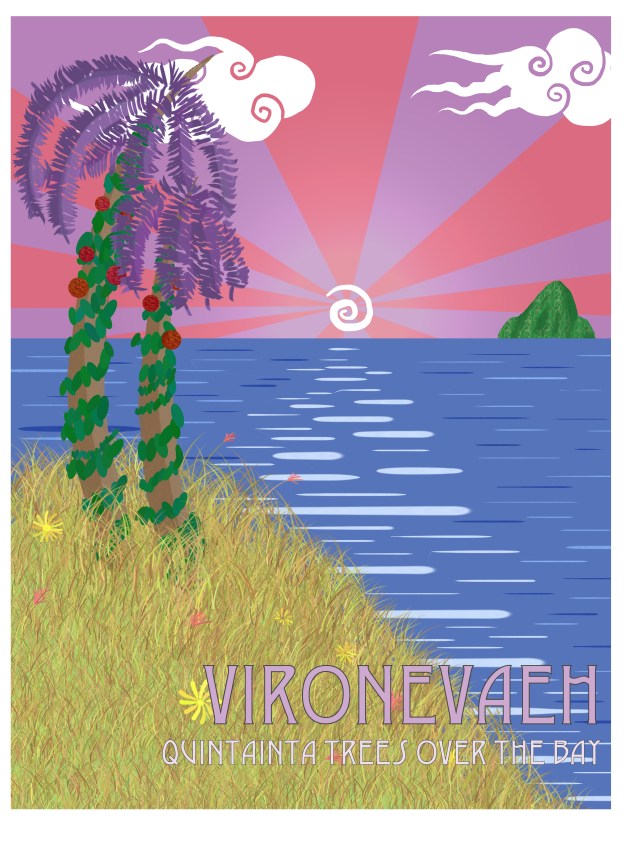
Sixteen years ago I first started writing about Vironevaeh, the extraterrestrial city that is the namesake for this website. In middle school I was that kid– I told everyone who would listen that I was an alien. I was so bizarre kids didn’t know how to bully me, not that they didn’t try. I happily kept inventing my world.

In high school I started to read the classics of sci-fi (my top 20 scifi books). Before that, I think Vironevaeh was an alter-ego–I had a different identity there, and knew different people. Advanced having of imaginary friends. The classics gave me a different perspective, the perspective of world-building. I’ve been slowly plugging away ever since. There’s a spreadsheet with a thousand years of history, some more densely detailed than others. There’s a list of the 1027 first Vironevaeh. There’s a ton of pointless info, as there is so much pointless info in life. But all of it was a labor of love, through all the years of perplexed looks.

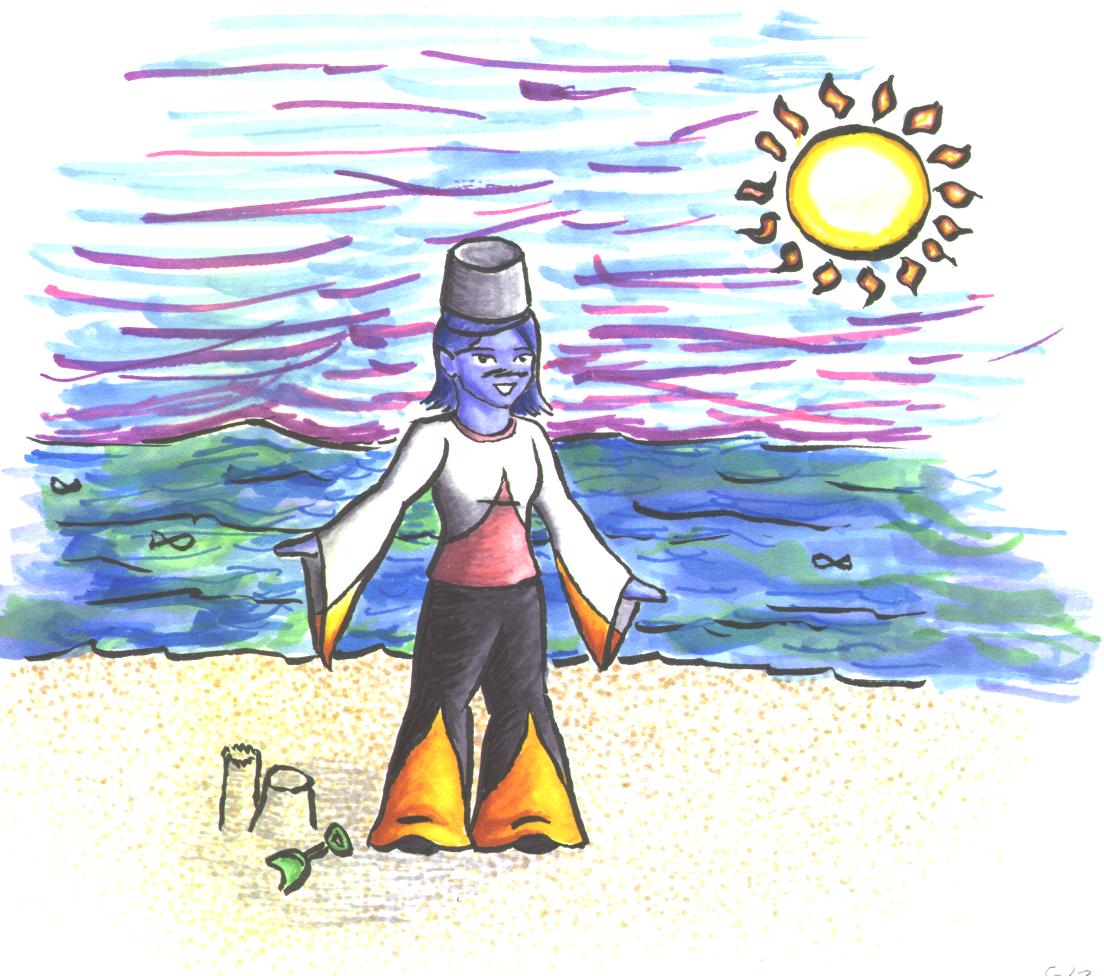
For your delight, some of the works from over the years. It is good to pause at times and review the path. I’ve posted a lot more recent works on this blog; here are some oldies. Drawing for Vironevaeh forced me to push myself. (Many other illustrations are also available in Vironevaeh: Science Fiction Fairy Tales, which is free on the iPad.) Some things are worth the long-haul.

Jainus Aillette Torwin Trarce at beach_marker

My alter-ego, Jainus. From 2004.

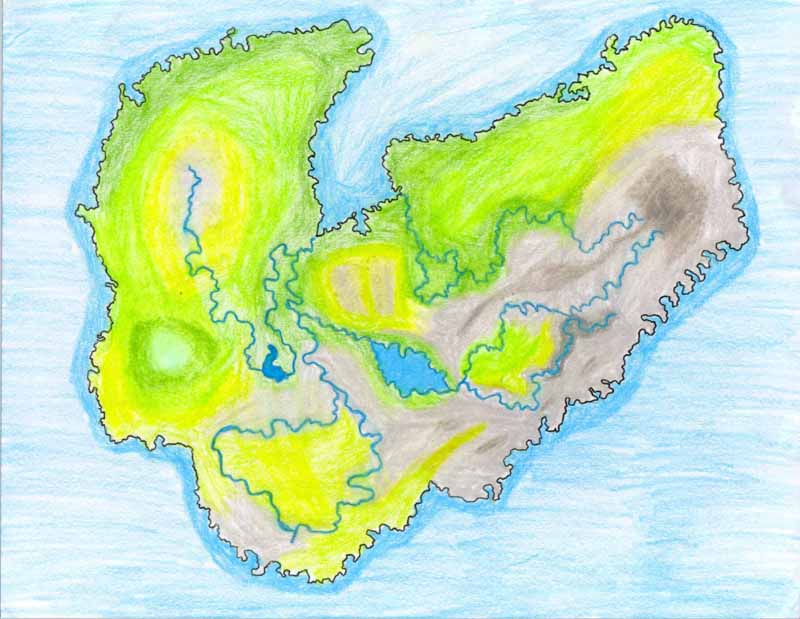
Vironevaeh relief map 800pix

Map of the island of Vironevaeh, from 2004 or before.

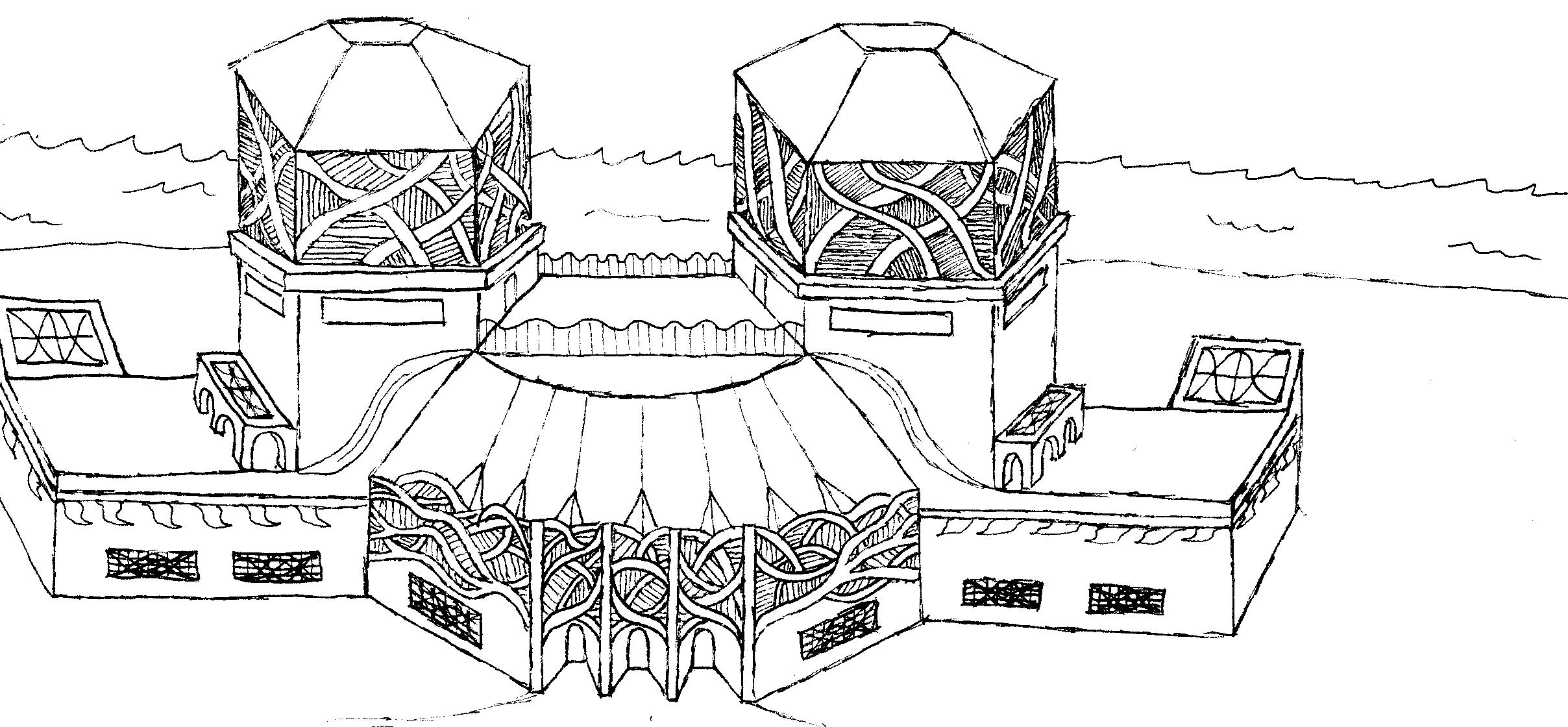
building Palace_at_Vironevaeh_Proper

Palace, 2003.

clothing1 v2

Clothing from one historical period, 2007.

ChibiTempest

One of Jainus’ sisters, 2001.

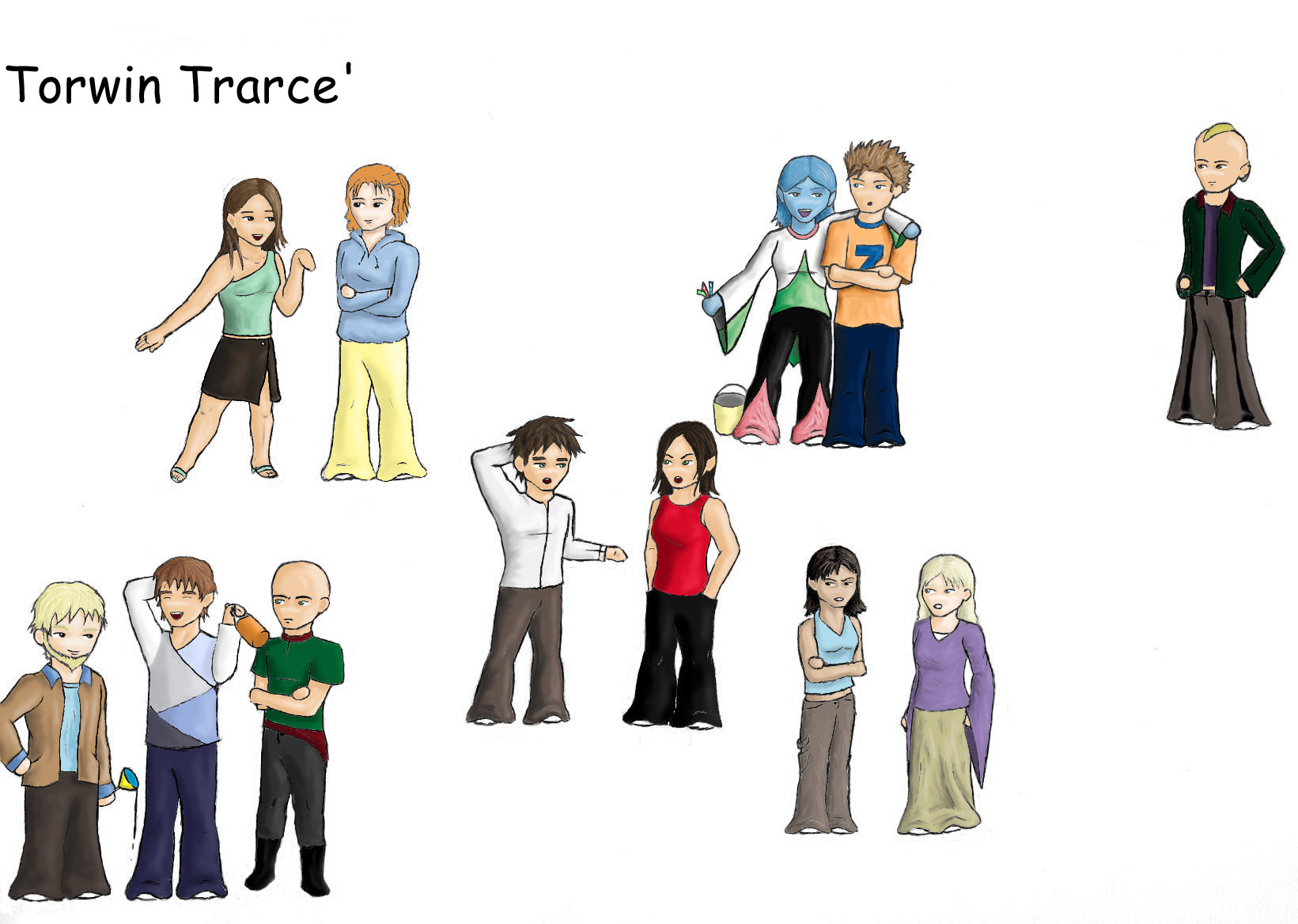
Torwin Trarce chibi pencil tablet

Jainus and her 11 siblings, 2004.

Kolo Kolo Whit in Color

Kolo, a notorious political traitor, 2004.

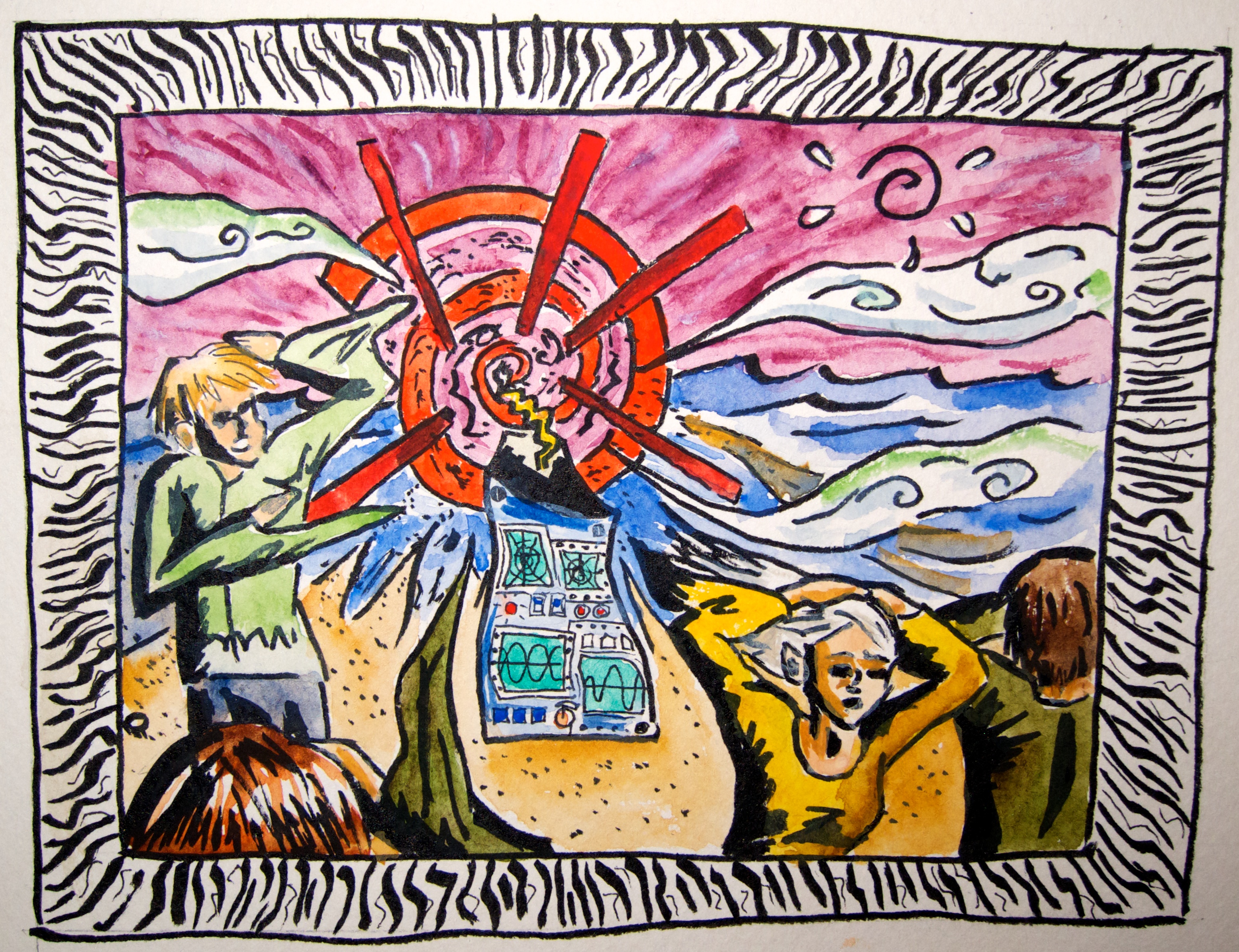
wormhole invention

Wormholes!, 2011.

Jait Anda Torwin_psd

One of the first Vironevaehns, 2004.


A quick Friday post

Today’s post will be brief. As I mentioned Wednesday, I have dived head-first into a novel-writing effort. Since then I have written 3500 words, which is a pretty rip-roaring pace for me. I work in such fits and starts I have to take the inspiration as it comes. We all work differently; above all else we have to find what works for us.

This weekend I’m taking a science fiction class by Edward Lerner. 7 hours, Saturday and Sunday. I’m looking forward to seeing what he has to say. He worked in the tech industry for many years before becoming a full-time science fiction author.

Next Monday it will be 16 years since I started writing about Vironevaeh. I’ll have to think about something fun to post for that. Happy Friday!

A novel attempt

I finally decided that I will try to write and finish a novel. Of course, I’ve been entertaining such ideas for years, as I suppose a lot of people have. So why do I feel like I can do it now, when I’ve only failed before? You gotta keep trying, but there’s that old Einstein definition for insanity: doing the same thing over and over again and expecting different results. So I am trying again, but I’m doing things differently, and hopefully this will lead to more success.

1. I first wrote the plot arc as a short story. It was originally meant to be a short story but there were so many things I wanted to touch on that I didn’t have time for, even at 7000 words in length. I know how I want the characters to develop, how they feel about each other, and what their motivations are. I know all kinds of societal details that play into the characters actions and motivations.

2. I’m in a writing group now. I know a bunch of people who might have suggestions on how to do better, or what to do if I hit a wall.

3. I’m approaching the writing differently. In the past I said, whelp, 100,000 words, here I go. Around 25k, I got bored, felt like my work was unfocused, and quit. This time I’m thinking of it as a series of short story ish chapters. I have a bunch of little stories to tell in 2-5k words or so. Per point 1, I already have a rough outline of the overall story. As I go, I’m outlining a few chapters forward with further details– what scenes happen in each chapter and where do they happen. So I have a macroscopic outline of everything and a microscopic outline subject to the flow of events. We’ll see how it goes. I’m planning on writing one chapter a week, with weeks off allowed for alternate projects.

I’ll continue to post my progress. It will be interesting to see what works for me and what doesn’t work for me. Any suggestions are welcome too! But basically, it’s time to just write. Chapter 1, here we go…

Sources of Sci-Fi Inspiration: City Culture of Prague

Setting is a critical element to most stories. It frames the actions of the characters and provides a rich and interesting backdrop. Often the environment motivates the character. As most portraits of people would be less interesting on a white backdrop, most stories of people would less interesting without the setting. New Orleans gives Ignatius a good playground in “A Confederacy of Dunces;” “White Fang” would be reduced hugely without the north, and “One Flew Over the Cuckoo’s Nest” would be slightly different without the asylum.

As a writer of science fiction, setting is both a problem and one of my favorite things. How do you draw in the culture and idiosyncrasies of a place that doesn’t exist? They have to be imagined, and imagined plausibly, by the writer. All of my favorite science fiction books have strong settings: In “The Left Hand of Darkness“, we learn about the sexual culture of a differently gendered humanoid species. Through their myths and traditions, we get to learn how they eat, how they like their weather, what is taboo, and what is an insult. In “A Canticle for Leibowitz“, we start at a Catholic abbey in post-apocalyptic New Mexico several centuries in the future. In “The Moon is a Harsh Mistress“, the setting is a lunar colony that feels bullied by earth. We learn about their principles, their marriages, and their aspirations. They can be a little closer to home, too. In “Holy Fire“, the protagonist travels from future San Francisco to future Munich to future Prague. Some sci-fi stays closer yet to home, but I find that I love crazy settings; thus I prefer Vernor Vinge’s “A Fire Upon the Deep” to his “Rainbow’s End“. (For others see my top 20 scifi books post.)

When I write my stories, I don’t want the settings to feel like the Midwestern United States plopped onto Mars or Alpha Centauri. I want them to feel like products of their interstellar, future environments. So I try to understand how settings influence culture currently and historically. I spent a summer in Prague, and in that brief time I tried to learn what I could about the culture. I tried to go where the Czechs go, eat what they ate, and read what they read. My host in town was a retired Czech professor who liked to talk (derisively) about the communist days. I worked half days at a chemistry lab out in suburban Prague. One of my coworkers smoked at her desk only feet from various chemicals and dressed like a 60-year-old teenager. I took frequent walks to Vyšehrad, an ancient fortress in Prague (pictured below).

I most appreciated the Czech sense of humor. As a country often conquered, the country developed a strange sense of absurdism. Under the Petrin Tower in Prague, there is a museum to Jara Cimrman, the best Czech man, who never existed. I can hardly say I understand everything there is to know about Prague and Czech culture, but a few months there certainly showed me a type of people I hadn’t seen before. Hopefully this will aid me in constructing a people we haven’t met before.

Some worthy Czech reading:

Side note: No post this past Friday; I broke my toe and then I had a lot of traveling to do this weekend. Happily, the toe is already much improved, and today it’s 80 F (25 C) out.

Fun science: scale-free networks

A scale-free network is a network with self-similar structure. As you zoom in on parts of the network, the sub-network resembles the overall network. In this way, scale-free networks are the network analogy of fractals. (Read previous posts about fractals, or fractals in nature.) Fractals arise in many natural systems like coastlines, snowflakes, and topology; likewise many naturally arising networks are self-similar. Examples include links on the internet, social networks, and protein interaction networks. Understanding the structure of a network helps us to understand the types of behavior that can occur on the network. Some network structures are more prone to failure or instability, or different types of failure or instability.

Scale-free networks have a sort of hub arrangement. Some elements connect to a bunch of other elements, while most connect to just a few. Going back to the social network analogy, the hubs are those people with 1500 friends on Facebook, while most people have 100 or so. In the picture below, a random network is shown on the left, and a scale-free network is shown on the right (hubs shown in grey). In the random network, all the elements have roughly the same number of connections, with some slightly more, some slightly less. The scale-free there has more variation in number of connections amongst elements.

From Wikipedia page on scale-free networks.

Getting more mathematical, the number of connections an element has gives its degree. An element with 3 connections has a degree of 3. We can say, hypothetically, that element 1 has a degree of 2, element 2 has a degree of 6, element 3 has a degree of 2, etc. We have degrees for all of the elements of the network. If we organize this set of degrees into a histogram (where we bin by degree value– in our example, we had counted two of degree 2, and one of degree 6) we get a degree distribution.

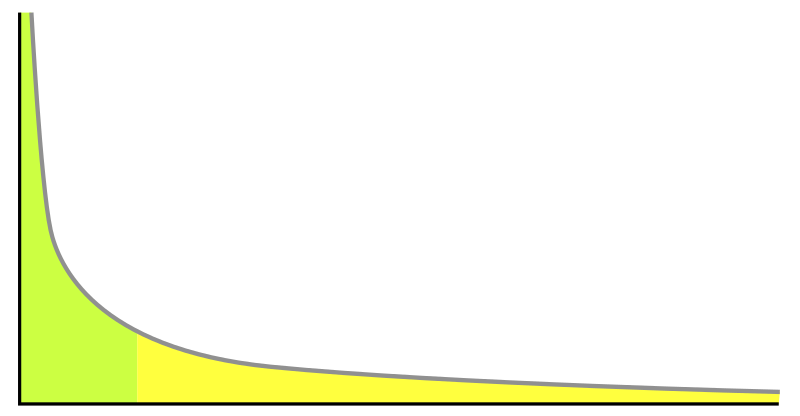
If something is distributed normally, the histogram has a bell-shape to it, like the first picture below. If you did a histogram of the height of all the people in your city, it would be a normal distribution. If it is distributed in a scale-free fashion, there are a few high value elements (high degree in our case), and a lot of low value elements. This gives the bottom picture, with a peak at a low value and a long tail into the higher values. The wealth distribution in your city probably looks like the scale-free distribution. If you take the log of the values on the scale-free distribution, you will get a straight line. This is because the logarithm is the inverse of the function 10^x; if you take the log of something, you can see its behavior on the 10^x scale, which gives you insight into how it behaves across multiple powers of 10, or its “scaling free” behavior.

From Wikipedia article on normal distribution

From Wikipedia article on power-law distribution

If you are interested in other basic explanations of more advanced science, also check out my posts on synchrony, chaosnetwork theory, and small-world networks.